
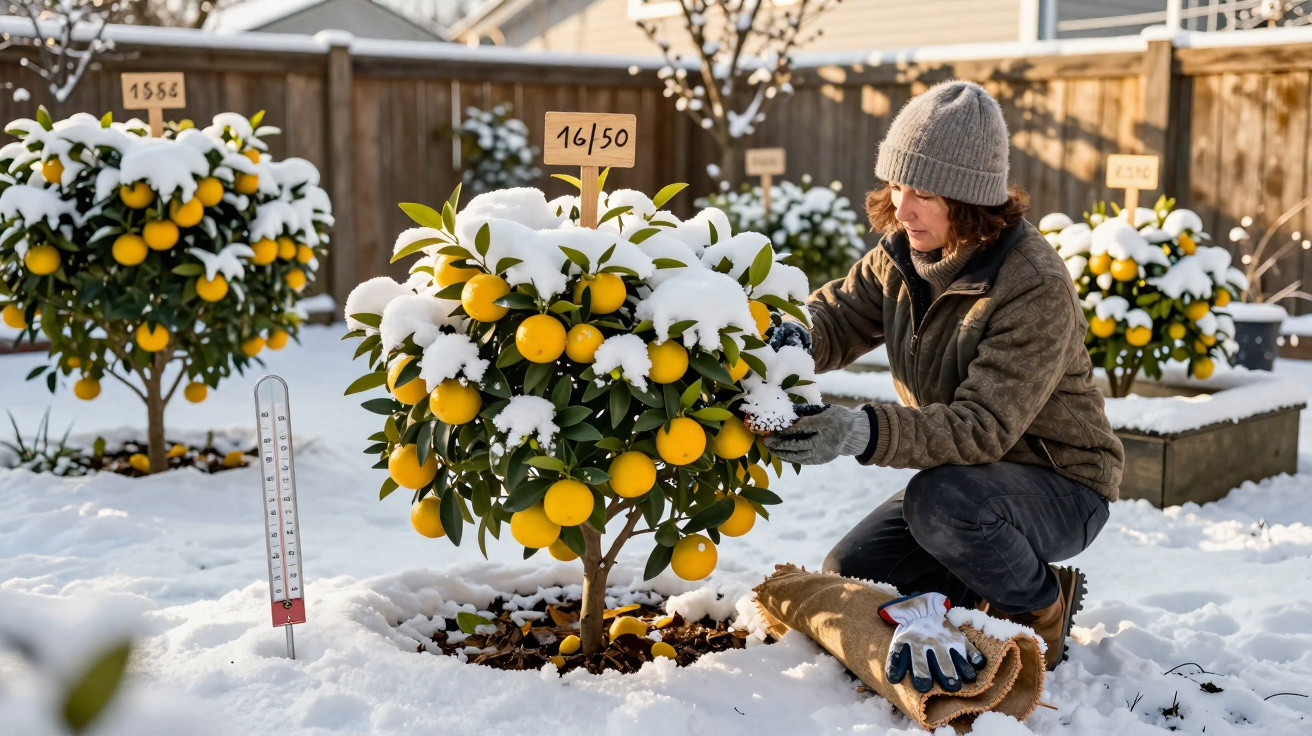
Many garden owners dream of glowing yellow fruit just outside their door, only to watch the carefully chosen lemon tree turn black after its first frosty night. Citrus plants are considered difficult, almost “only for the Riviera”. Yet that is only partly true. Some citrus plants cope with a surprising amount of cold and can remain outdoors even in harsher areas.
What frost hardiness really means for citrus plants
Anyone reading labels at a nursery will quickly come across claims such as “frost-hardy down to –12 °C”. That sounds reassuring, but it often causes confusion. As a rule, this figure refers to:
- a mature tree;
- a deep, vigorous root system;
- free-draining soil without waterlogging;
- a brief cold snap rather than weeks of persistent frost.
Wood, foliage and fruit also respond to frost in different ways. A Yuzu tree may withstand –12 °C for a short time, but its fruit often splits and spoils much earlier. Kumquats are similar: the shrub survives, while the fruit can show obvious damage from around –5 °C.
Frost hardiness is not a fixed value, but always the result of the variety, age, position, soil and duration of the cold spell.
Citrus plants can broadly be divided into three frost categories:
- very hardy species: down to roughly –15 °C, with individual exceptions down to –20 °C;
- moderately hardy species: around –8 to –12 °C;
- sensitive classics: already at serious risk at –3 to –5 °C.
The discreet star: the exceptionally frost-hardy trifoliate orange
The botanical name of this hardy species is Poncirus trifoliata, commonly called the trifoliate orange or hardy orange. In many nurseries, it is chiefly found as a rootstock for grafted citrus varieties: the unseen “engine” beneath the actual fruiting variety.
| Latin name | Poncirus trifoliata |
|---|---|
| Common name | Hardy orange / trifoliate orange |
| Mature size | approx. 3–5 m tall, 2–4 m wide |
| Position | Sun, sheltered site, free-draining soil |
| Frost hardiness | down to around –20 °C in well-drained soil |
| Leaves | deciduous, very thorny |
This tree is regarded as the benchmark: if it dies back in a garden, no other citrus is likely to succeed there over the long term. Its fruit is small, yellow and very bitter-more of a culinary curiosity, though visually appealing. Because it sheds its leaves, it copes with deep winter cold better than evergreen citrus species.
Edible citrus varieties that withstand genuine cold
Those looking for more than a decorative exotic, and who also want aromatic fruit, can choose from several frost-hardy citrus species that have already proved reliable in sheltered locations.
Yuzu: the aromatic all-rounder for cold sites
Yuzu (Citrus junos) enjoys cult status among professional chefs. Gardeners value it because it tolerates approximately –12 °C, provided the soil stays free-draining and the site is sheltered from wind. This bushy shrub develops plenty of thorns and bears small yellow fruit rich in intense oils during winter.
Its juice tastes like a blend of lemon, mandarin and grapefruit. It works well in:
- marinades for fish and poultry;
- salad dressings;
- refined desserts and sorbets;
- tea or sparkling water as a flavouring.
Ichang lemon: large-fruited and robust
The Ichang lemon originates from crosses with Poncirus and inherits some of its toughness. It handles cold winters far more calmly than the standard lemon tree, while producing large yellow fruits with plenty of juice. It is ideal for homemade lemonade, marmalade or baking.
Satsuma mandarin: sweet, seedless and cold-resistant
The Satsuma mandarin tree (Citrus unshiu) is particularly appealing for family gardens. It tolerates temperatures around –11 °C and ripens early: its usually seedless fruit can be harvested in autumn. In sheltered urban settings in southern and western parts of the UK, it can stay outside with some winter protection.
Kumquat ‘Meiwa’: small fruit, impressive presence
The Kumquat ‘Meiwa’ variety is considered comparatively cold-tolerant within this fruit group. Established plants can cope with around –8 to –9 °C. Its small orange fruit is eaten with the peel, as the skin tastes sweeter than the flesh. In a front garden or large container, the plant creates striking colour in winter.
Finger lime hybrids: interesting, but check carefully
Some newer crosses involving the so-called finger lime withstand approximately –10 °C. However, quality varies greatly between varieties. Anyone interested in them should check the precise frost rating on the label and ask critically which region the practical experience comes from.
Anyone wishing to grow citrus permanently in a border should always rely on documented frost ratings for the individual variety-general statements are not enough.
The classics: mandarin, clementine, lemon and orange in the cold test
Many amateur gardeners instinctively choose familiar names: mandarin, clementine, orange, lemon and grapefruit. However, these widely grown varieties are much more frost-sensitive than the specialists listed above.
- “Standard” mandarin trees tolerate only around –8 °C.
- Clementine trees cope with roughly –7 °C.
- The common lemon tree, sweet orange and grapefruit tree generally show visible damage from –5 °C onwards.
In mild coastal locations or sheltered wine-growing areas, such trees can stay in the ground with effective protection. Across most of the UK, garden owners are safer growing them in large containers and moving them indoors or to winter quarters during winter.
How to protect sensitive citrus plants from frost damage
Anyone who still wants to display heat-loving citrus species in the garden needs a plan for cold nights. The following measures have proved effective:
- Overwinter somewhere bright but cool: a conservatory, a bright frost-free hallway or an unheated guest room is ideal. 5–10 °C is entirely sufficient.
- Outdoor winter protection: during short cold spells, horticultural fleece prevents frost injury. Drape it loosely around the canopy so that air can circulate.
- Insulate the root zone: a thick layer of bark mulch, leaves or straw protects roots from severely low soil temperatures.
- Water less: wet, cold soil increases frost damage. In winter, water only enough to prevent the root ball from drying out completely.
- Do not fertilise during the cold season: fresh, soft shoots are especially prone to frost damage. Start feeding again only in spring.
The right position determines success or failure
Even a hardy variety will fail in an unsuitable position. The ideal site offers:
- a fully sunny, warm house wall facing south or south-west;
- protection from cold easterly winds;
- a slightly raised bed or slope so cold air can drain away;
- free-draining, relatively sandy soil with good drainage.
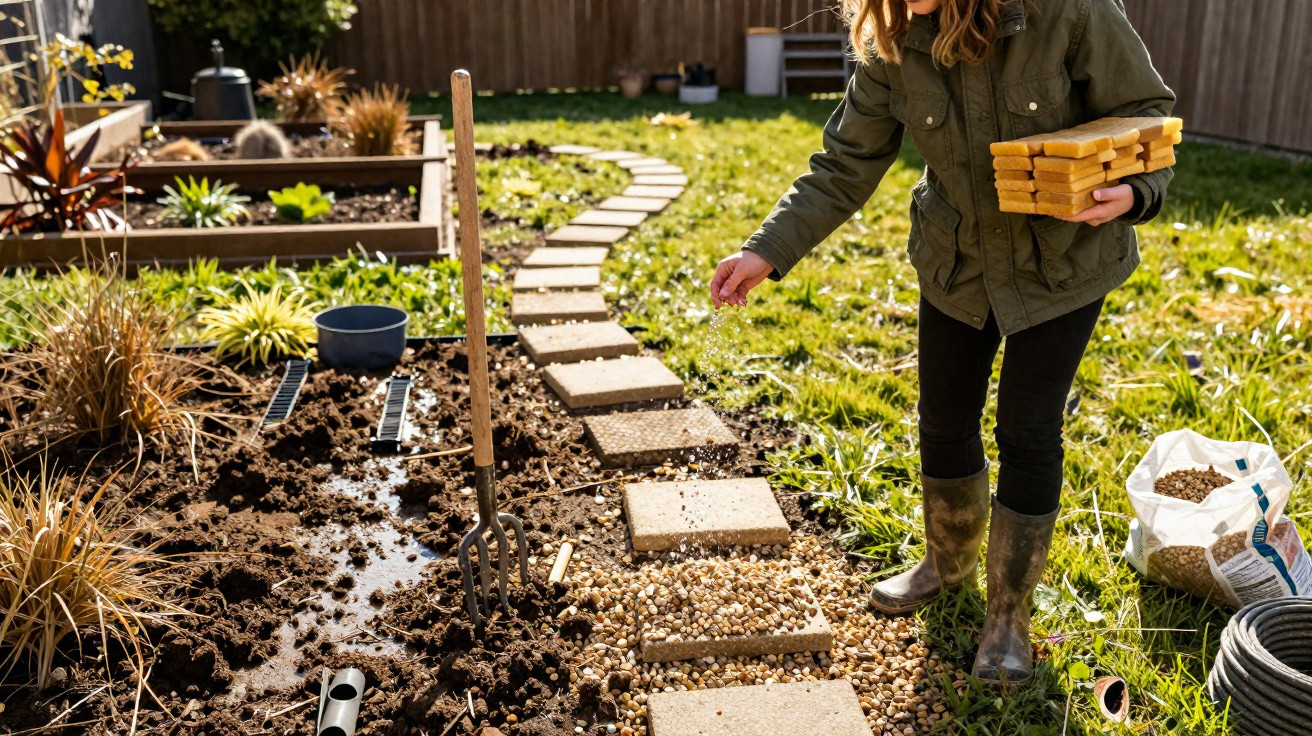
Frost-hardiness ratings in particular often apply to “well-drained” soil. Where the ground is heavy clay, it is worth improving it with sand, grit and compost, or creating a raised bed. If water sits around the roots, the plant will succumb to frost much more quickly.
What beginners should consider before buying
Anyone planting a citrus plant in the garden for the first time benefits from starting small. A young tree or shrub still fits comfortably in a pot, can be moved more easily into the best position and transferred quickly to winter quarters if needed.
A sensible strategy: start with a hardy exotic such as Yuzu or Satsuma mandarin, then add more sensitive species later.
Fruit ripening time matters alongside frost hardiness. In cooler regions, summer is often neither long nor warm enough for late-ripening varieties to develop their flavour. By choosing early-ripening types, you can harvest in autumn before the truly hard frosts arrive.
Practical examples, risks and worthwhile combinations
In urban gardens, courtyards or terraced-house developments, homes and walls create their own microclimate. Experiments with frost-hardy citrus species work particularly well here because:
- walls store warmth and release it slowly overnight;
- wind is reduced;
- cold air does not settle as heavily as it does in an open field.
To reduce risk, citrus can be combined with other hardy, Mediterranean-looking woody plants, such as olive trees on frost-hardy rootstock, figs, or hardy herbs including rosemary and thyme. This creates a Mediterranean appearance even if one specimen does not survive an extreme winter.
The greatest danger does not always occur in the depths of winter, but during late frosts. Many citrus species begin growing early when a mild February is misleading. If temperatures fall well below zero again in March or April, young shoots quickly freeze. Light horticultural fleece or a wheeled container on the patio provides vital security in these situations.
Anyone who understands the different frost levels and adjusts the position and care accordingly can harvest their own citrus fruit far north of the Riviera-from bitter ornamental Poncirus to fragrant Yuzu in a winter city garden.

Comments
No comments yet. Be the first to comment!
Leave a Comment