
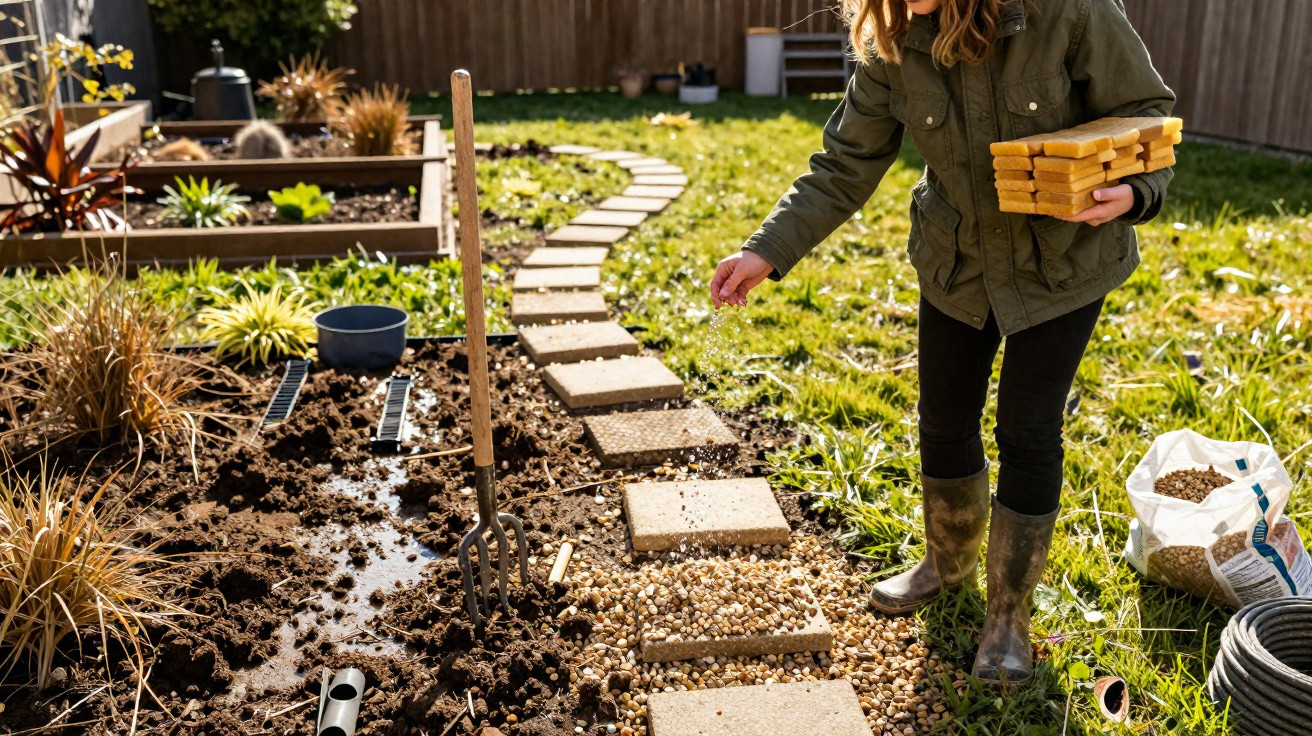
Every winter, it is the same problem: the lawn turns into a slippery expanse of mud.
A few well-chosen measures can prevent it.
Anyone left walking across nothing but brown sludge in winter soon loses their enjoyment of the garden. Yet tried-and-tested professional landscaping methods can keep a lawn considerably drier, even during prolonged rain and on heavy soils.
Why lawns become muddy wastelands in winter
Before taking action, it is important to assess the cause clearly. Mud rarely appears for no reason; it is almost always the result of several factors working together.
- heavy rainfall at low temperatures
- poorly draining soil, often loamy or clay-rich
- frequent foot traffic across wet grass
- no slope, or an unsuitable slope, in the garden
- compacted soil layers caused by equipment or vehicles
Loamy soil absorbs water slowly. When water remains on the surface, every footstep damages the turf and churns the ground into sludge. Each puddle then further weakens the soil structure, until eventually nothing dries out at all.
“A muddy lawn is almost always a sign of compacted soil and insufficient drainage for rainwater.”
Improve soil drainage: the key step against winter mud
For a lasting solution to mud, the ground beneath the lawn must be addressed. Professionals rely on three main elements: aerating, improving the soil structure and directing water away.
Aerate the lawn and break up compaction
Aeration is virtually essential for troublesome areas.
- Use a garden fork or hand aerator to make deep holes in the ground at intervals of 10–15 cm.
- For larger areas, use a powered scarifier with an aerator roller or a dedicated lawn aerator instead.
- Leave the holes open rather than closing them again; they act as channels for water.
These openings allow rainwater to seep into the soil more effectively, provide the roots with additional oxygen and gradually loosen the ground again.
Work organic matter into the soil
Loamy and clay-rich soils benefit greatly from stabilising amendments.
Suitable materials include:
- mature compost, finely sieved
- garden soil with a high humus content
- well-rotted farmyard manure in small quantities
- sand combined with compost for very heavy soils
A mixture of sand and humus breaks up dense soil layers and creates a more crumbly texture. Rainwater can then spread through the ground more easily instead of pooling on the surface.
Quick relief: materials that make mud safer immediately
If winter has already arrived and shoes are sinking into the ground, an immediate solution is needed first.
Covering problem areas
The following materials are suitable for covering paths and heavily used sections of lawn:
- sharp sand, not play sand
- fine gravel or grit
- woodchips or bark mulch for transitional areas
A layer several centimetres deep absorbs excess water and offers some grip underfoot. This approach usually lasts only one winter, but it reduces pressure on the soil until longer-term measures take effect.
“Those who reduce the strain sensibly now can stop the turf from being completely destroyed during winter.”
Stable paths instead of worn tracks: slabs, grids and stepping stones
Most lawns have familiar trouble spots: the route to the compost heap, patio or garage. These are precisely the places where deep muddy holes develop every winter.
Lawn grids and stabilisation panels
Plastic or concrete lawn grids spread the load and keep the surface firm enough to use.
- Excavate the topsoil to the required depth.
- Install and compact a load-bearing layer of hardcore or gravel.
- Add a thin layer of sand, then lay the grids on top.
- Fill them with soil and grass seed, or with grit.
The route remains walkable without deep ruts forming. More robust, higher-load systems are available for frequently used driveways.
Stepping stones as an attractive feature
Large natural stone slabs, often called stepping stones, create a solid route through the garden. They are particularly well suited to naturalistic gardens while also protecting the lawn.
The slabs should be installed so that they sit slightly above the grass but remain completely stable. A layer of sand beneath them provides both support and levelling.
Plants that love water and ease pressure on the soil
Where water repeatedly collects, planting can form part of the answer. Certain trees, shrubs and perennials draw substantial moisture from the soil.
Typical “water-drawing” plants include:
- willows
- poplars
- alders
- birches
- moisture-loving ornamental grasses
They are best suited to garden borders or areas close to hollows. A tree would generally be impractical directly within a working lawn, but positioned nearby it can significantly reduce the pressure on the wider system.
“Woody plants placed in the right locations act like natural pumps and improve the garden climate over the long term.”
Prevent mud permanently: act early instead of complaining every year
Anyone with a problem lawn should not react only in winter, but work on its structure throughout the year.
Spread regular lawn care across the year
- Aerate the lawn in spring or early autumn.
- Apply a thin layer of compost or a sand-and-compost mix once a year.
- Avoid mowing too short so that the turf remains strong.
- Walk or drive over the lawn as little as possible when it is wet.
Over time, the soil becomes looser, rain can drain away more quickly and the area can tolerate greater use without immediately turning to mud.
Drainage for persistent problem areas
In gardens shaped like a bowl, or where water is constantly standing, surface care alone is rarely enough. In such cases, a purpose-designed drainage system is often the only effective option.
Typical options include:
- drainage pipes below ground that carry water to a collection point or rainwater tank
- a shallow swale or soakaway basin where water can gradually drain downwards
- reshaping the ground to create a gentle fall away from the patio or house
For this kind of work, advice from a landscaping contractor is often worthwhile, ensuring the pipes are correctly positioned and water does not collect against the house.
Practical extra tips for everyday winter gardening
A few simple changes in behaviour can make a significant difference when protecting a lawn:
- Place temporary walkways made from timber boards across particularly wet areas.
- Put play equipment on firm ground during winter, rather than in the middle of soft lawn.
- Do not park cars on the lawn, even “just for a moment”.
- Clear leaves in good time so that a damp matted layer cannot form underneath.
The less stress the soil has to withstand during wet periods, the faster it can recover.
If the lawn is already ruined: start again, but do it properly
Sometimes an area is so badly damaged that starting afresh is the only sensible option. Anyone reseeding in spring should correct the mistakes of the past at the same time.
- Loosen compacted layers with a spade or powered cultivator.
- Incorporate sand and compost until the soil has a loose, crumbly structure.
- Choose a hard-wearing lawn seed mixture suited to high-use areas.
- Include paths and stepping areas at the planning stage, so that nobody has to walk across the future lawn.
Those who tackle this fresh start consistently have a good chance of facing far less mud next winter.
One further point is often underestimated: many gardeners mistake damp soil for soil that is “rich and fertile”, then apply excessive fertiliser. Too much nitrogen, however, encourages soft, vulnerable grass that is easily damaged. A soil test helps tailor fertiliser use to the lawn’s actual requirements, creating a tougher turf that withstands foot traffic.





Comments
No comments yet. Be the first to comment!
Leave a Comment