
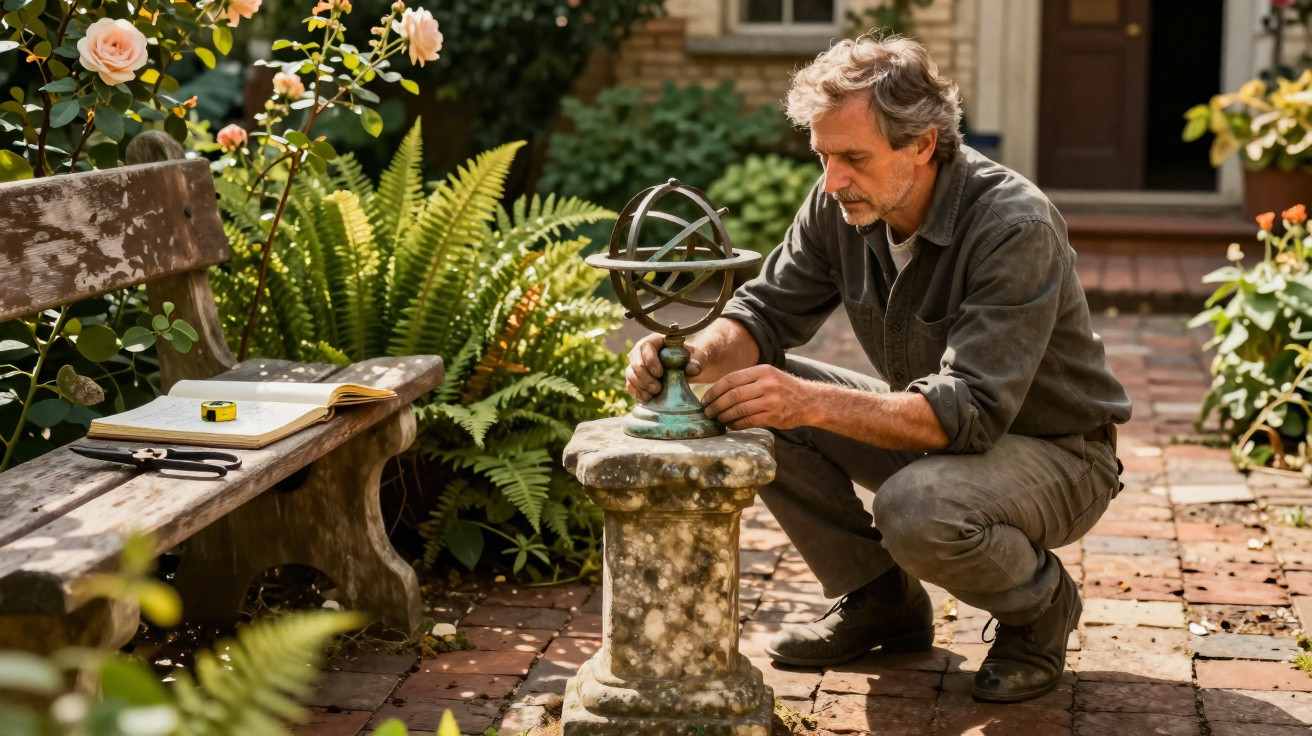
Many amateur gardeners dream of a romantic retreat that feels more like an old farmstead or an English cottage garden than a newly built back garden. The good news is that no expensive landscape architect is required. One thoughtfully placed second-hand piece can often transform the mood of an entire garden, taking it from “quite nice” to “wow, what a place”.
How an antiques dealer turned his grounds into an open-air laboratory
In the United States, an antiques dealer and garden designer demonstrates just how much impact a single historic object can have. Behind an early-19th-century farm complex, he has shaped his garden with old columns, balustrades, stone vessels and iron gates – all items that were originally destined for the tip.
His central idea: Take something that others would throw away, place it in the right spot – and suddenly the garden tells a story.
A weathered stone urn now provides a focal point where there was once only lawn. An old, partly rusted iron fence forms a backdrop for roses. A broken marble step serves as a small seat at the end of a gravel path. Every area appears to have witnessed decades, if not centuries, of use.
That is precisely the appeal of so-called “old garden charm”: nothing looks as though it has just been installed. Instead, the whole setting seems to have developed gradually, carrying the marks of time, weather and stories.
The principle: one striking piece is enough when it is well placed
The idea at the heart of this approach is surprisingly straightforward: rather than placing decorations everywhere, choose one object deliberately and let it set the tone. Design professionals refer to this as a garden “focal point”.
Typical examples of such focal pieces include:
- a large, weathered stone urn or amphora
- an old iron gate that now simply leads “into the greenery”
- a natural-stone water trough repurposed as a planter
- a short row of historic balusters used as a low garden wall
- a substantial wooden bench with visible signs of wear
Its condition matters less than its character. Chipped surfaces, rust, faded paint and scratches are not flaws here; they are exactly what creates that aged charm.
The three best locations for a historic garden feature
To get the greatest effect from such a find, avoid decorating at random and think strategically instead. These placements are often particularly successful:
- At the end of a path: A vessel or statue naturally draws the eye along a gravel path or stepping-stone route.
- In the middle of a border: An urn or old fountain at the centre of a herbaceous border can feel like the garden’s heart.
- On an axis visible from the house: What can be seen directly from the living room, kitchen or patio shapes the atmosphere every day.
Rule number one: the decorative piece must be visible – ideally from inside the house as well.
Materials that genuinely stand the test of time outdoors
Not every old item is suitable for permanent outdoor use. To avoid unnecessary work and frustration, look specifically for durable materials that can cope with rain, frost and sunshine without complaint.
| Material | Suitability outdoors | Typical appearance |
|---|---|---|
| Stone (limestone, granite, marble) | very good | elegant patina, moss, lichens |
| Cast iron | very good | veil of rust, dark character |
| Teak | good | silvery-grey surface, fine grain |
| Zinc / galvanised metal | good | matt, slightly mottled, rustic |
| Plaster / stucco | poor | prone to cracking and flaking |
Plaster figures and cheap hollow decorative objects often look good only briefly before crumbling in frost. Solid stone or metal pieces age far more gracefully and require very little upkeep.
How to check whether a found object is truly garden-ready
When browsing flea markets, salvage yards or properties being demolished, keep a few simple questions in mind:
- Is the object heavy enough? Lightweight decorations can easily topple over in wind or when handled by children.
- Does it stand securely? Its base and centre of gravity need to be right, otherwise it may become a trip hazard.
- Can I actually move it? A 300 kg stone trough needs logistical planning in advance.
- How does the material respond to damp and frost? Otherwise, cracks and flaking are almost inevitable.
- Are children or pets likely to be around it? Sharp edges and loose parts are then out of the question.
One solid, safe object is better than five unstable eye-catchers that cause concern with every storm.
Plants that perfectly complete the “old garden look”
Without suitable planting, even the most beautiful antique can soon look isolated. It is the combination of hard materials with soft, abundant vegetation that creates the image of a historic garden.
Plants that work especially well include:
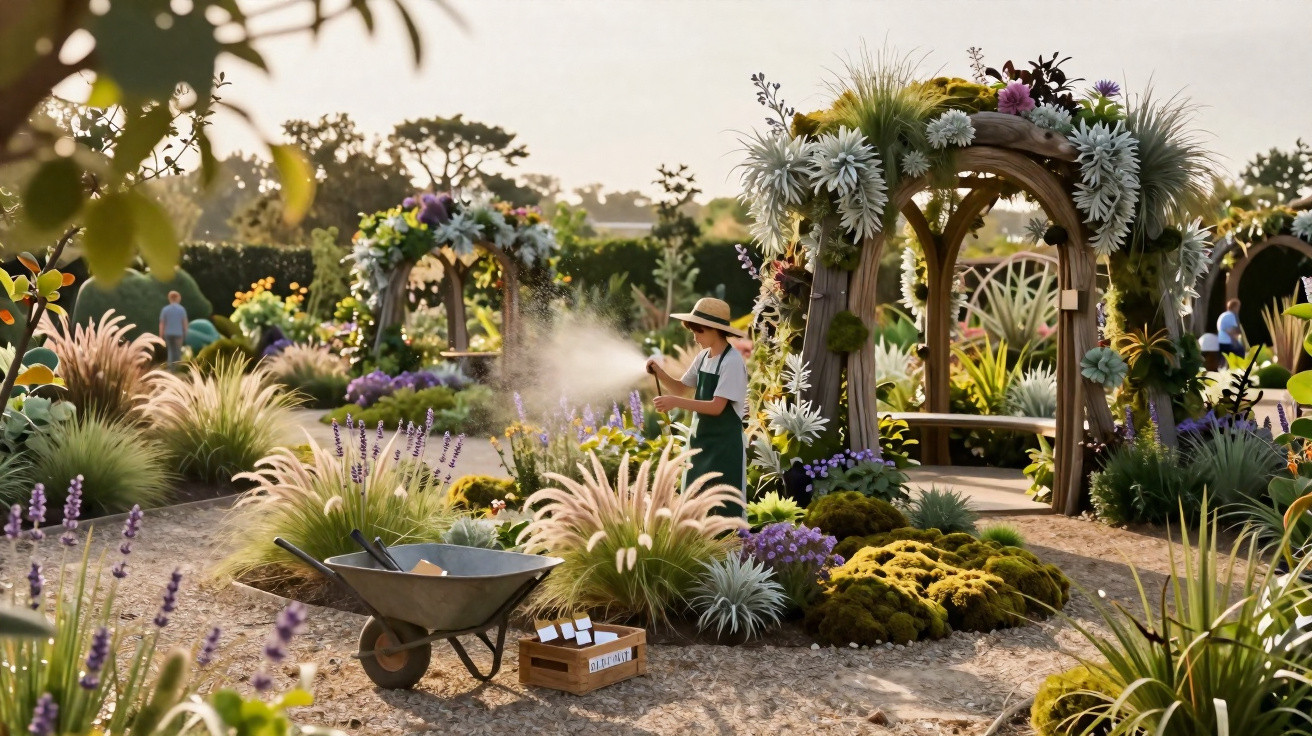
- Lavender and rosemary – for fragrance and a Mediterranean feel
- Thyme and other herbs – ideal for pots, wall crevices and steps
- Old rose varieties – preferably allowed to arch gently over iron arches or fences
- Yarrow, lady’s mantle and cranesbill – to soften edges and plinths
- Ivy, honeysuckle and clematis – to cover gates, columns and trelliswork
For a particularly rural feel, combine these with half-standard fruit trees, a simple vegetable plot and herbs in pots. An old zinc tub filled with mint, an enamel jug used as a flowerpot or a weathered wooden crate turned into a herb bed all reinforce the impression of historic country houses.
Garden decoration from the leftovers pile: create a scene rather than cluttering the space
Old building materials have enormous potential. Paving stones from a yard, removed shutters or a discarded railing can all be reimagined for the garden.
Practical examples include:
- Old paving stones can become a small seating area for two chairs.
- A single shutter can provide a backdrop for climbing roses.
- A section of railing can be turned into a mini “balustrade” in front of a herb bed.
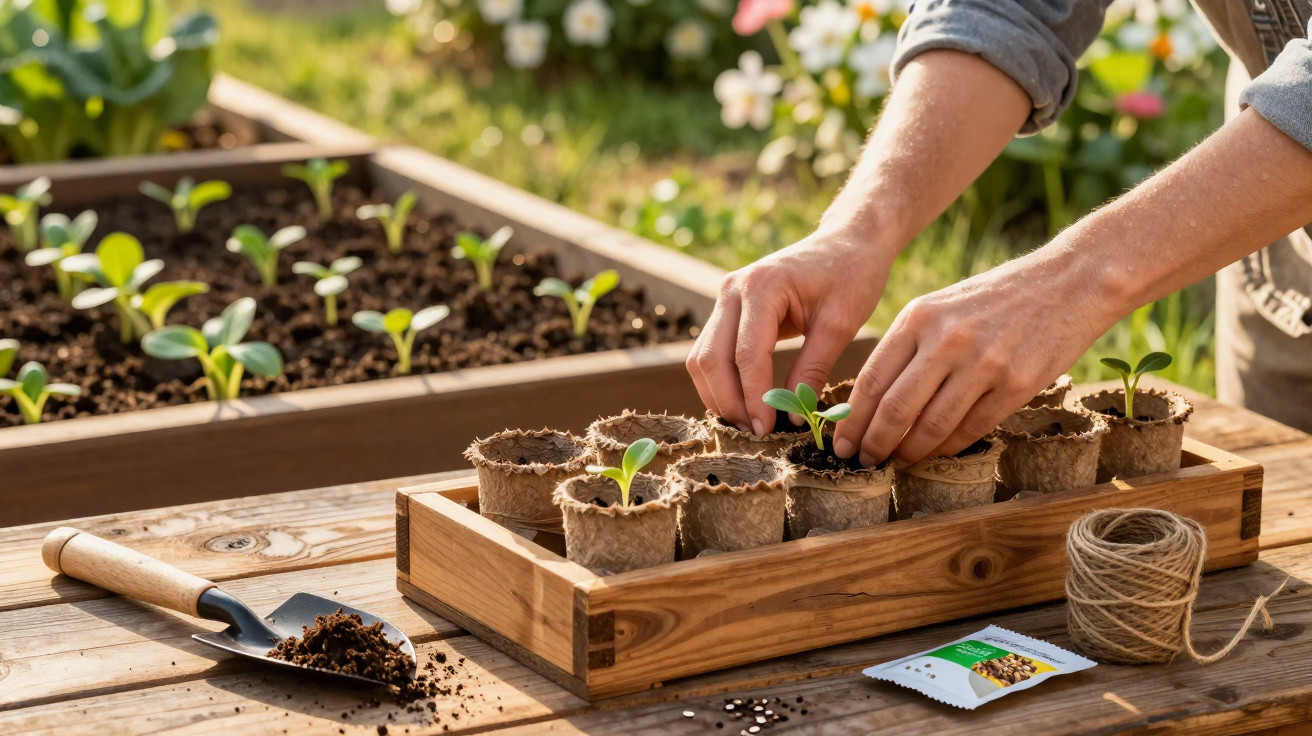
- An old, partly weathered wooden table can become a work surface for sowing and potting.
The key is not to make everything pretty. A certain roughness is part of the old garden atmosphere.
Rather than filling the garden with decorative items, it pays to leave deliberate gaps. Air and open space give the main pieces greater impact. Too much clutter quickly makes a garden look like a bric-a-brac market.
How to find the right “key piece”
Many people believe they need costly antiques to achieve this look. In reality, the appeal often comes from fairly simple objects that suggest a history: a former feeding trough, a fragment of a church pew or a hand-forged gate from a demolished town house.
If you are still unsure, begin with a small object – such as an old metal vessel or a single piece of stone – and test the area around it. If you like the effect, a larger piece can be added later.
It is also useful to look closely at historic sites, old cemeteries, castle gardens or village squares: which shapes, materials and proportions appear again and again? Such examples provide valuable clues about what will also look authentic in your own garden.
Practical advice to keep the vintage look from feeling artificial
One common mistake is trying to make everything look old at once. Newly painted “shabby” furniture beside factory-new decorative figures can quickly feel like a costume. The result is more convincing when genuine signs of ageing take centre stage and newer elements remain in the background.
- Let new pots weather gradually instead of painting them immediately.
- Do not decorate every corner – plan areas of visual calm.
- Avoid modern materials such as plastic, or conceal them carefully.
- Use no more than two or three strong objects in a small garden.
By maintaining this approach, the garden can develop piece by piece: start with the central object, add compatible plants, then perhaps introduce a second historic element in another corner later on. In this way, a believable story evolves instead of the garden becoming overloaded with decoration.
This approach is especially appealing when budgets are tight: a rescued fragment of architectural history, positioned well and surrounded by suitable plants, can turn a standard garden into a place that feels like an enchanted courtyard from another time. And it can do so without having to redesign the entire garden.


Comments
No comments yet. Be the first to comment!
Leave a Comment