
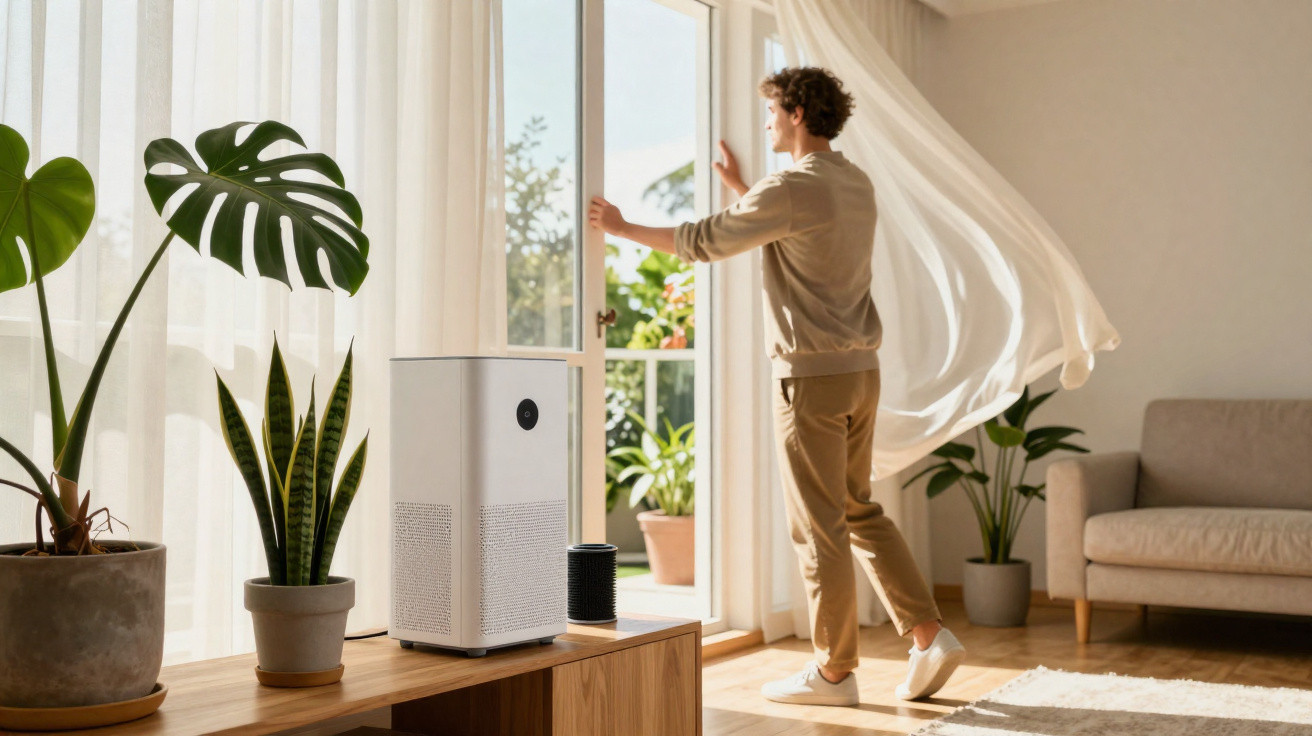
The question appears straightforward, but the answer becomes more nuanced than a simple "yes" or "no" when the measurement science is considered.
The notion of houseplants acting as air purifiers stems from a 1989 US study undertaken for NASA during its investigation of closed-loop life-support systems for space stations.
In sealed, controlled chambers, particular plant species lowered levels of volatile organic compounds (VOCs). VOCs are substances that readily evaporate into the air at room temperature, and include potentially toxic chemicals such as benzene, trichloroethylene and formaldehyde.
The underlying science was valid. The difficulty lies in applying findings from a sealed NASA chamber to an ordinary living room.
That difference is hugely important and lies behind almost all of the exaggerated reporting on houseplants' air-purifying capabilities since then.
Houseplants and indoor air: laboratory studies versus homes
Most research indicating that houseplants remove pollutants has one central feature in common: it uses small, sealed chambers where artificially high pollutant concentrations are added as one large dose.
A plant is put into the chamber, pollutant levels are tracked over time, and researchers calculate a removal rate. This approach is useful for comparing one plant with another.
However, it is not well suited to forecasting what will occur in a home.
The key omitted factor is the air exchange rate, as building scientists describe it. This refers to the speed at which outdoor air naturally replaces indoor air via gaps, walls and ventilation systems.
Within an actual building, this ongoing dilution is already responsible for much of the reduction in pollutant concentrations.
A 2019 study that modelled plant performance against real-world air exchange rates concluded that between ten and 1,000 plants per square metre would be required to equal the effect of a building's passive ventilation.
The answer that can therefore be supported by science is this: houseplants can remove certain pollutants, but they do not provide an effective stand-alone method of cleaning household air.
This does not make the earlier studies "wrong". Rather, their findings were frequently extended too far into daily settings, where indoor-air physics operates very differently.
More recent reviews draw a distinction between potted plants and engineered plant-based systems. Certain botanical biofilters, which use fans to force air through plant-root substrates, could offer useful air-cleaning capacity. However, this is a different technology from having several ornamental plants on a windowsill.
Why real indoor pollution is more complicated
The assertion is also commonly overstated because actual indoor spaces are not fixed environments. Unlike many chamber tests, pollutants are not generally released on one occasion and then allowed to fall away in a sealed area.
At home, emissions can be ongoing or sporadic, arising from cooking, cleaning, furniture, consumer goods, heating and traffic pollution drifting indoors from outside. Temperature, humidity, household occupancy and ventilation likewise vary over the course of a day.
Each of these influences the way pollutants are released, diluted or deposited indoors. Consequently, real exposure conditions are considerably more complex than the controlled circumstances used in many plant experiments.
Effective ways to improve indoor air quality
For these reasons, the most reliable public-health guidance is still simple.
Start by reducing or eliminating the pollution source. This might mean no longer using fume-emitting products, including aerosol sprays or powerful chemical cleaners, and fixing building issues such as dampness or leaks that encourage mould to develop.
Next, enhance ventilation and use efficient filtration. Ventilation may be improved, for instance, by opening windows and doors, and by using kitchen and bathroom extractor fans that discharge outdoors.
The amount of outdoor air can also be increased through combined heating, ventilation and air-conditioning systems, which can be highly effective at filtering air.
Portable air cleaners fitted with high-efficiency particulate air (HEPA) filtration may reduce airborne particles. Meanwhile, ventilation - including opening windows or operating extractor fans - dilutes indoor pollutants where outdoor air quality is acceptable.
The quality of air cleaners differs, however.
For routine use, choose a unit sized appropriately for the room which clearly confirms that it contains a True HEPA filter. This indicates that it is designed to capture at least 99.97% of very small particles.
It is also useful for the appliance to carry an AHAM Verifide label, indicating that its clean air delivery rate (CADR) has undergone independent testing. As a basic rule, a higher CADR means the cleaner can remove particles from the air more quickly. The packaging will normally state the room size for which the unit is intended.
Most air cleaners are primarily made for particles, including dust, pollen, pet dander and smoke.
For assistance with gases or odours as well, including VOCs, select a model with an activated carbon filter, as HEPA filters alone are principally intended for particles. Packaging generally states whether a unit is designed for particles, gases or both, although no air cleaner removes every pollutant.
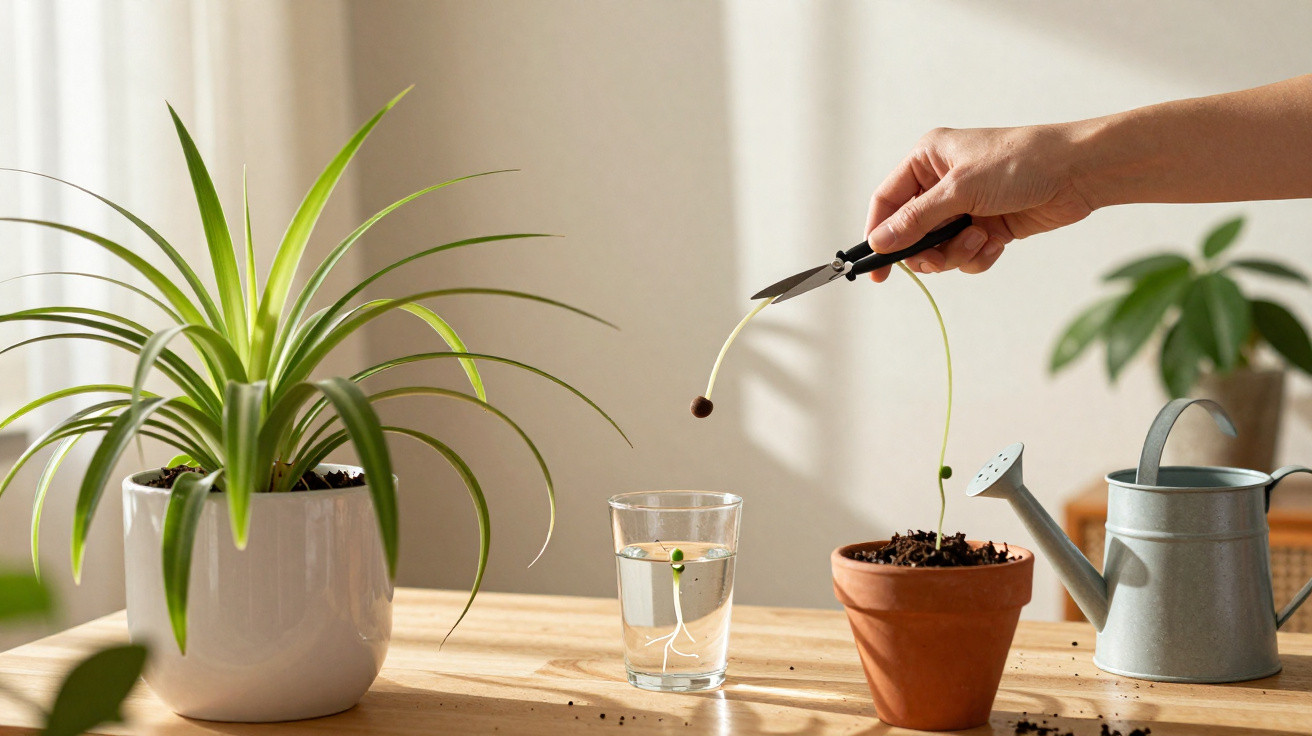
It is worth bearing in mind that plants need maintenance too. Excessive watering and neglected pots may add to indoor moisture issues or microbial growth. In this respect, the advantages of indoor plants also rely on how well they are cared for.
The value of houseplants beyond air cleaning
Does this make houseplants pointless indoors? Certainly not.
Although their direct air-cleaning impact in real homes may be limited, plants can still bring benefits.
Research indicates that they may enhance perceived comfort and psychological well-being, and may in some instances have a small effect on humidity or the indoor microenvironment.
Keep houseplants if you like them, and because they can make indoor areas more appealing and soothing. They can help a home feel more enjoyable, which has worth in its own right.
They should not, however, be promoted as a practical answer to significant indoor-air problems.
Pedram Vousoughi, Post-Doctoral Researcher in Biological Sciences, University of Limerick
This article is republished from The Conversation under a Creative Commons licence. Read the original article.

Comments
No comments yet. Be the first to comment!
Leave a Comment