
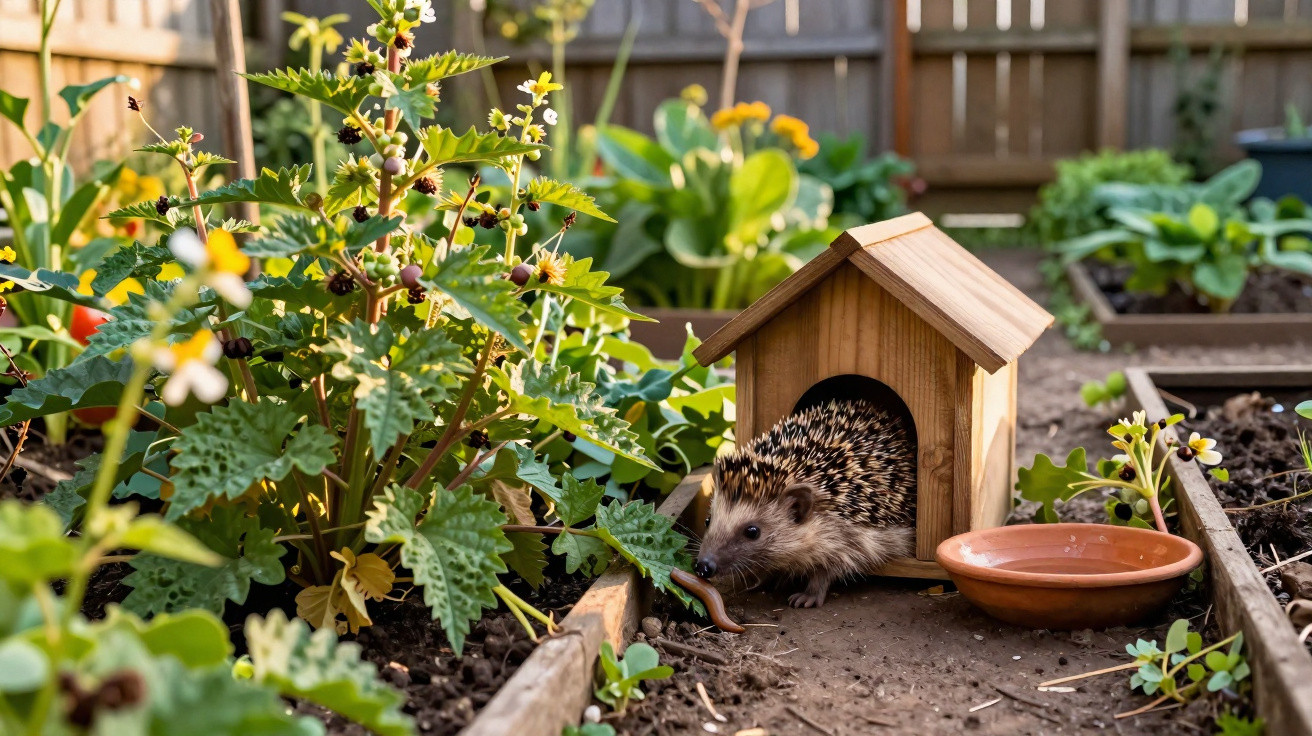
Anyone who keeps every centimetre of lawn clipped short and removes every supposed weed immediately is missing an unexpectedly simple opportunity: one deliberately untamed plant can provide hedgehogs with shelter, beneficial wildlife with a feast, and a natural defence against slugs that strip lettuce beds bare.
Why nettles are so attractive to hedgehogs
Most people know nettles only for the burning itch they cause on the skin, and they are often treated as a nuisance in the garden. For hedgehogs, however, they are a real stroke of luck. Their stinging stems create dense cover that is almost impossible to penetrate. Foxes, dogs and cats are more likely to avoid these patches because they cannot move through them easily.
“Among nettles, a hedgehog finds a protected refuge – ideal for dozing, raising young and retreating on hot days.”
Such thickly planted islands have become rare in gardens that are constantly mown and pruned. A single nettle corner can act as a small fortress. Beneath its leafy canopy, conditions stay cool and damp; leaves gather there and small cavities form – precisely the kind of features that make a hedgehog feel safe.
There is also a second crucial benefit: nettles attract insects in large numbers. Aphids, caterpillars and larvae all feed on the leaves or sap. What may look like pests to a gardener becomes an evening meal for a hedgehog.
The plant therefore supports a miniature ecosystem: insects feed on the nettle, spiders and beetles hunt those insects, and the hedgehog then eats whatever is moving about. This creates a lively small habitat that offers far more than any “immaculately maintained” border.
Curious behaviour: hedgehogs and the “nettle bath”
Observers repeatedly describe an unusual habit: hedgehogs deliberately rub themselves against nettles. This behaviour has not yet been conclusively researched. Specialists suspect that skin irritation may drive away parasites such as fleas or mites, or stimulate the metabolism. Some birds use ant baths in a similar way to rid their feathers of irritants.
Hedgehogs as natural slug control in the vegetable garden
Anyone who has seen a single night of slugs halve their lettuce crop knows the value of a hungry ally. Hedgehogs particularly eat:
- slugs and small snails with shells
- caterpillars and larvae of insect pests
- wireworms, chafer grubs and other soil-dwelling creatures
- beetles and spiders
These are exactly the animals known for raiding beds or gnawing at roots. Where a hedgehog regularly forages, slug pressure drops noticeably. This spiny visitor works like a mobile pest-control service – with no poison, traps or effort required.
“A single hedgehog can consume countless slugs in a season – making many chemical products unnecessary.”
Poison in the garden is dangerous for hedgehogs, however. Slug pellets containing metaldehyde are especially lethal. Hedgehogs may eat the bait directly or consume poisoned slugs; either can lead to a painful death.
Making your garden hedgehog-friendly with a few simple steps
Attracting hedgehogs does not require a major garden overhaul. A few targeted measures are entirely sufficient.
1. Deliberately leave one corner wild
Rather than keeping everything “tidy”, it is worth designating a corner as a wild area. A narrow strip by a fence or behind the shed is ideal. Let nettles and other native wild plants grow there, then add:
- a loose pile of wood made from branches and roots
- a heap of leaves left in place over winter
- an untrimmed hedge or row of shrubs
Together, these features provide hiding places, nesting material and a damp microclimate – exactly what hedgehogs like.
2. Create gaps in fences
Hedgehogs range over large territories and travel several hundred metres at night. When they encounter sealed fences, their search for food can quickly end in a dead end. Ground-level openings of around 13 centimetres in several parts of the fence link neighbouring gardens into a larger habitat.
“Completely fenced-in gardens are like walls to hedgehogs – small openings turn separate gardens into a connected network.”
3. Build a simple hedgehog shelter
A hedgehog house does not need to be an expensive purchase. A few sturdy wooden boards, a flat roof and a narrow entrance are enough. Fill the inside with dry leaves or straw. Important points are:
- an entrance that does not face directly into the wind
- a quiet site in partial shade
- light cover from leaves or branches so the house “disappears”
This creates a place for hibernation or for raising young. Do not disturb the shelter in autumn, as animals may already be asleep inside.
4. Water yes, milk no
Hedgehogs can suffer from a lack of water, particularly during dry summers. A shallow dish of fresh water placed on the ground can make a vital difference. It should be cleaned and refilled every day to prevent germs developing.
Milk may seem “kind”, but it makes hedgehogs seriously ill. Their digestive system cannot cope with it, causing diarrhoea and dehydration. Anyone wishing to provide extra food should instead choose specialist hedgehog food or high-quality cat food, preferably without gravy or seasoning.
Nettles: useful all-rounders rather than worthless weeds
This unpopular plant does far more than attract hedgehogs. In an organically managed garden, it is practically a basic essential.
| Benefit of nettles | Practical garden use |
|---|---|
| Natural fertiliser | Prepared as a liquid feed, it supplies vegetables with nitrogen and trace elements. |
| Plant strengthening | Diluted nettle liquid feed boosts the natural defences of tomatoes, roses and berry bushes. |
| Wild vegetable | Cooked young shoots taste similar to spinach and provide especially high levels of iron. |
| Support for insects | An important food plant for the caterpillars of several butterfly species. |
To make liquid feed, fill a bucket with chopped nettles, cover them with water and leave the mixture to ferment for several days or weeks. The strongly smelling brew is then diluted with water before being applied to beds. This can save money on expensive liquid fertiliser, while keeping nutrients within the garden’s own cycle.
More biodiversity on your doorstep
Many hedgehog populations are declining because hedges are disappearing, front gardens are being turned into gravel areas and roads fragment their habitats. Every garden that permits a little wilderness helps counter this trend. Nettles, dead wood, leaf piles and open patches of soil together create a mosaic where not only hedgehogs thrive, but also lizards, toads, solitary bees and songbirds.
Designing a garden this way soon changes how people see “tidiness”: a perfectly straight lawn can suddenly seem lifeless, while a semi-wild corner is full of rustling, buzzing and snuffling. Children in particular can experience living nature at close quarters there and learn how important small habitats are.
Of course, not everyone can leave their entire garden untamed. Yet even one nettle zone, a gap in the fence and avoiding toxic substances send a powerful message. An ordinary garden can then become a small haven – for hedgehogs, for many other animals and, ultimately, for a healthy harvest free from a slug infestation.




Comments
No comments yet. Be the first to comment!
Leave a Comment