
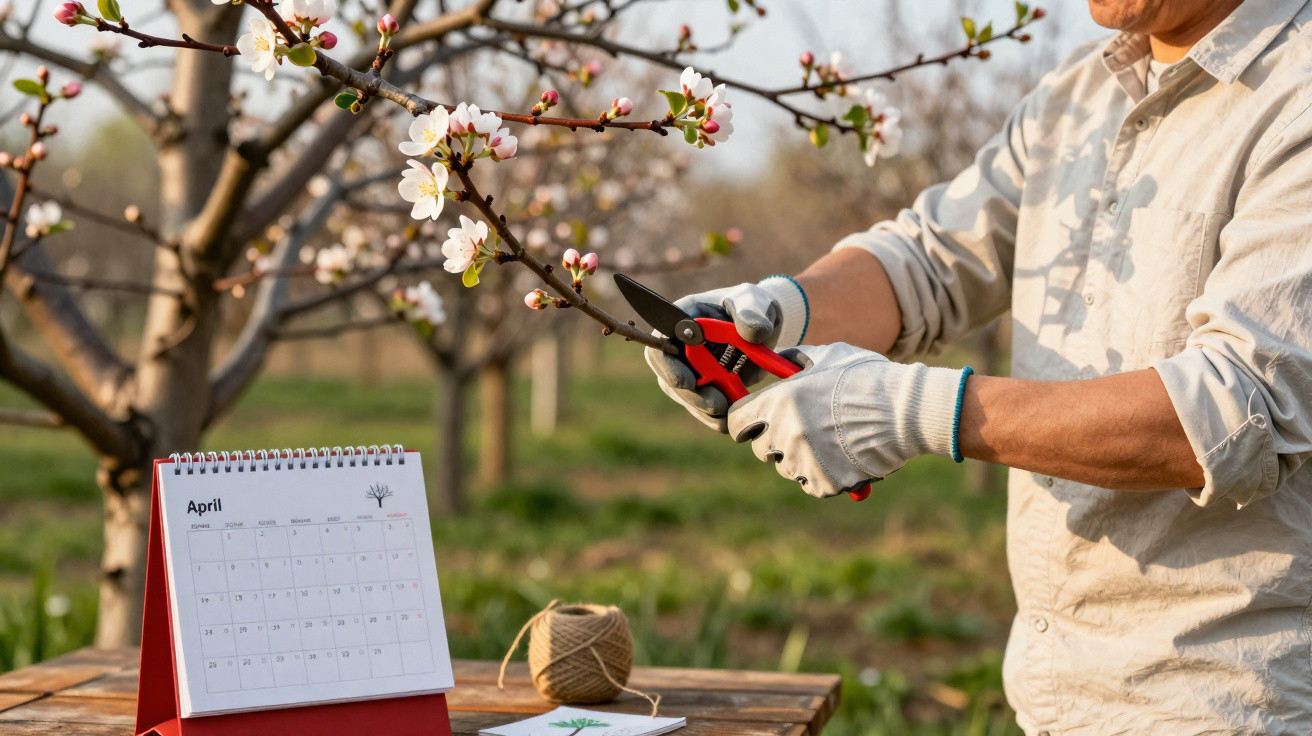
The buds are breaking, the garden is bursting into life – and many amateur gardeners reach for the secateurs on impulse.
That mistake can prove costly.
Anyone walking through the garden in April sees fresh green growth and plump buds everywhere. This is often when the question arises: can fruit trees and ornamental shrubs still be pruned now, or will it do more harm than good? The answer depends heavily on the tree species, its stage of development and the purpose of the pruning.
Why pruning remains so important for fruit trees
Pruning is not merely a cosmetic task; it is a deliberate way of controlling growth. Done properly, it allows more light into the canopy, strengthens young shoots and improves air circulation. This lowers the risk of fungal diseases and encourages a sturdy crown.
For fruit trees, pruning often determines whether they end up carrying just a few weak fruits or develop into robust, productive trees. Ornamental shrubs benefit too: they retain an attractive shape and do not cast unnecessary shade over flowerbeds or the patio.
“Good tree pruning directs a tree’s energy into a small number of healthy shoots, rather than an impenetrable tangle of branches.”
Every cut does, however, have a consequence: the tree must seal the wound, temporarily loses energy and responds by producing fresh growth. This is exactly why timing matters so much.
April – too late already or still acceptable?
The further spring progresses, the more strongly sap flows through the tree. Pruning at that point makes the tree more sensitive. Wounds bleed more heavily, take longer to heal and carry a greater risk of infection.
The clearest clue is visible on the tree itself: its flowers and buds. Once buds are swollen and close to opening, or flowering has already begun, heavy pruning is almost always counterproductive. It simply removes potential flowers and fruit.
April is not an outright no-go, though. It is better seen as a period that calls for a careful touch. Minor corrections can often still be made, while drastic shaping or rejuvenation pruning is best postponed until the next dormant period.
Fruit trees compared: which trees should be pruned and when
Not every fruit tree responds in the same way. An apple tree tolerates pruning at a different time from a cherry tree, while peach trees follow another set of rules again.
In principle, there are two groups:
- Pome fruit trees (apple, pear, quince)
- Stone fruit trees (cherry, plum, damson, peach, apricot)
Pome fruit generally copes well with pruning in late winter. Stone fruit is more sensitive, especially when the wood is wet, and is often pruned after harvest or during dry spells.
A guide to common fruit trees
| Tree type | Recommended main pruning period | What can still be done in April |
|---|---|---|
| Apple tree | December to February, depending on the region until early March | Minor corrections, removal of dead branches |
| Pear tree | December to March | Small interventions are possible, but no heavy cut-backs |
| Plum / damson | Winter or immediately after harvest | Prune only dead wood or minor obstructions |
| Peach | Late autumn until before mid-March | From April onwards, intervene only minimally |
| Cherry tree | Restrained pruning, often after harvest | Remove individual dead or rubbing shoots |
| Citrus plants | March to May, depending on their condition | Shape correction is possible provided there is no vigorous flowering growth |
The issue is easy to see: April falls exactly within the period when many trees are emerging from winter dormancy. Their reserves are being channelled into buds and new shoots, making it a poor time for drastic cuts.
Ornamental trees and shrubs: very different rules apply
Ornamental woody plants are chosen mainly for their form, foliage or flowers. Here, pruning is more about appearance and safety: removing dead branches, shortening overly long shoots and keeping paths clear.
Spring is only partly suitable as the main pruning season. Many gardeners prefer to use saws and secateurs in autumn or late winter, once the leaves have fallen and the tree’s structure is clearly visible. At that time, the tree deals with wounds more calmly and expends less energy.
For flowering ornamental shrubs, a simple rule of thumb applies:
- Spring-flowering plants (for example forsythia, ornamental cherry): prune immediately after flowering
- Summer-flowering plants (for example hibiscus, buddleia): prune in late winter or early spring
Japanese maple, crab apple and buddleia respond very differently. Some barely tolerate pruning, while others need it almost every year to prevent them becoming overgrown and unproductive. If unsure, first observe how and when the plant flowers and produces new growth before removing large branches.
What is genuinely still worthwhile in April
In April, the focus should no longer be major structural changes but gentle maintenance. Taking this approach can even benefit trees.
“In late spring, the rule is: tidy up rather than cut back radically. Small corrections protect the tree and the coming harvest.”
Suitable jobs in April include:
- Removing clearly dead branches
- Cutting off shoots broken by wind
- Taking out individual branches that rub heavily or protrude into paths
- Thinning water shoots where they are growing in particularly unsuitable positions
As soon as buds have opened or flowers are already visible, it is worth considering very critically whether pruning is truly necessary. Sometimes it is enough to delay the work until late summer or the following winter.
The most important checks before the first cut
Before the secateurs make their first cut, give the tree a few minutes of attention. A brief inspection prevents many mistakes.
- Check the stage of development: Are the buds still closed or already open? Are swollen flower buds hanging from the shoots?
- Assess its health: Are there cracks in the bark, fungal infection or severely dried-out areas?
- Keep an eye on the weather: Do not prune during severe frost, persistent rain or prolonged wet periods.
Next come the tools. Clean, sharp secateurs make smooth cuts that the tree can seal more quickly. Blunt tools crush the wood and create a larger entry point for pathogens. Cleaning a knife in alcohol or hot water, or disinfecting a saw, helps prevent the spread of viruses and fungi.
There is another key point: it is better to prune too little than too much. Many trees cope better with a year without pruning than with a deep, poorly placed cut made at the wrong time.
A simple reminder for choosing the right time
Those who do not want to follow complicated calendars can use one straightforward rule:
“While the tree is visibly dormant, pruning is usually acceptable. Once sap pressure and the explosion of buds are fully under way, you should become very restrained.”
For many fruit trees, this threshold falls around the middle of March. In cooler locations, it may occur slightly later, while in milder regions it can arrive earlier. In any case, April calls for a close inspection before larger branches are removed.
Common mistakes – and how to avoid them
Much of the damage caused to trees does not result from pruning itself, but from poor timing and technique. Frequent problems include:
- Radical cut-backs during active growth, which place enormous stress on the tree
- “Topping” the crown rather than cutting cleanly back to a side shoot
- Pruning in wet conditions, which encourages rot and fungal disease
- Untidy, ragged cuts made with blunt tools
Those who work in stages, inspect regularly and would rather let a year pass than remove too much through impatience will usually get better results. Trees are more forgiving of patience than excessive intervention.
Why trees react so badly to incorrect pruning
Many gardeners are surprised when a tree barely flowers after a late, hard cut, or produces only leaves. From the tree’s perspective, this is logical: it has suddenly lost a large amount of wood and tries to replace its canopy quickly. Its energy then goes into long, thin water shoots rather than flower buds.
Pruning too late in spring can therefore cause a tree to respond with reduced fruiting for one or two years. Some species, including cherry and plum, are especially sensitive in this respect. Anyone focused on yield should leave them undisturbed once their buds have visibly swollen.
Practical additions: alternatives to pruning
Anyone uncertain in April does not need to remain inactive. Instead of making major cuts, other maintenance tasks can strengthen the tree over the long term:
- Mulching around the base of the tree to protect the soil from drying out
- Applying compost or organic fertiliser in moderation
- Removing suckers from the rootstock, for example from the roots or lower trunk
- Checking for pests and diseases before they spread
Especially with young trees, a stake that provides stability can achieve more than a late shaping or training cut. The tree can then grow steadily, build up strength and be trained more precisely during the following winter season.



Comments
No comments yet. Be the first to comment!
Leave a Comment