
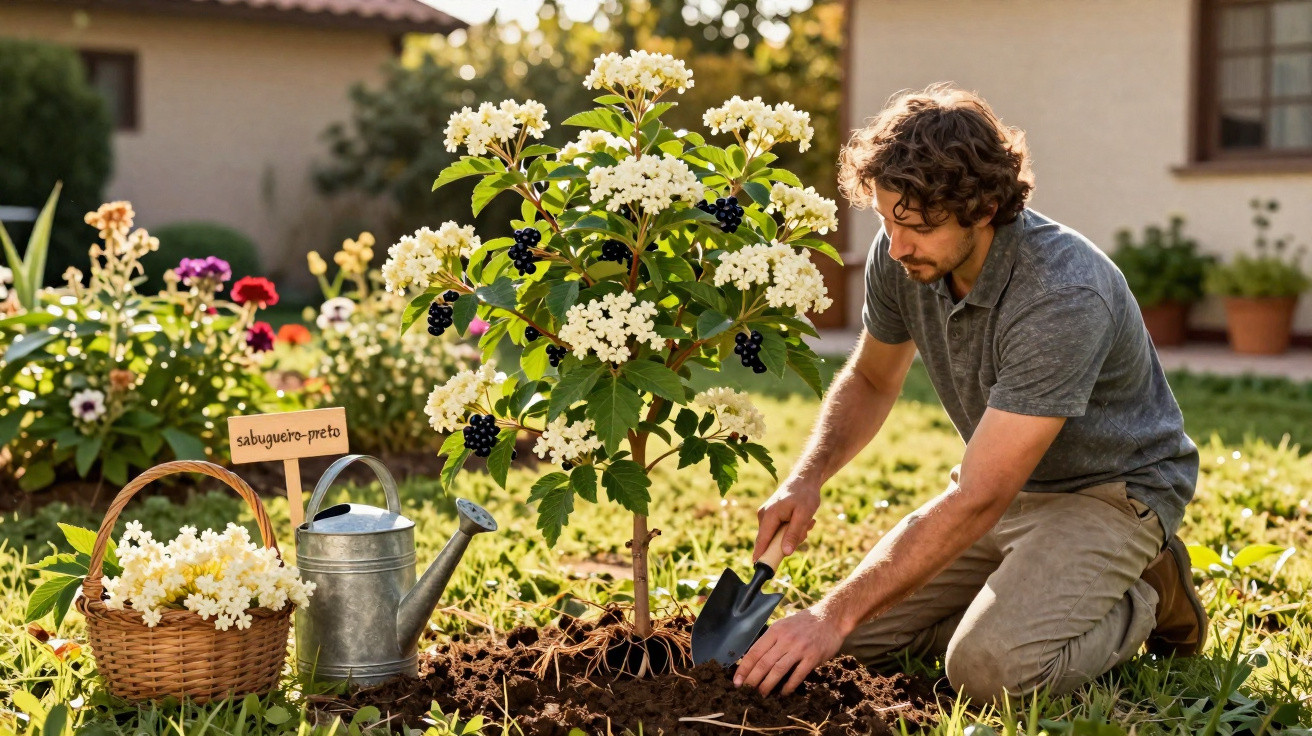
Many amateur gardeners pass it by without a second thought, even though it may be growing right in front of them. Yet this native shrub draws insects and birds in spring, brightens bare corners of the garden and also provides ingredients for the kitchen. The key point is this: plant it now and it will make a big impression as early as next season.
A familiar old shrub many people no longer notice
Black elder, botanically known as Sambucus nigra, has grown around settlements, villages and field margins for centuries. During winter, it often stands bare and inconspicuous beside the shed, behind the garage or at the back of a hedge – so understated that it is easily overlooked.
Once the days become brighter and warmer, however, its appearance changes entirely. The shrub becomes covered in large, creamy-white flower heads that seem to float through the garden like pale clouds. Their fragrance is instantly recognisable and attracts a wide range of insects.
Where an elder grows, a small ecosystem develops – from life in the soil to birds in its crown.
Growing to around 3 to 6 metres tall and 2 to 4 metres wide, this shrub is ideal for screening, as a backdrop to herbaceous borders or as part of an informal wildlife-friendly hedge. It is also exceptionally hardy, tolerating temperatures down to approximately minus 20 degrees Celsius without difficulty.
Why black elder is so valuable for gardens and wildlife
This shrub performs well in several ways – visually, ecologically and in the kitchen:
- A flower magnet for insects: Its flat flower heads provide food for bees, hoverflies and butterflies.
- Bird food on the doorstep: In summer, the flowers develop into dense clusters of dark-purple berries that attract many bird species.
- A native wild plant: As an indigenous species, it is perfectly suited to wildlife gardens and traditional orchard areas.
- Easy to care for: It grows in ordinary garden soil, forgives mistakes and needs very little pruning.
- Versatile to use: Both the flowers and ripe fruits can be used in the kitchen.
As elder is widely established locally, it supports species that depend on native shrubs. Unlike many exotic ornamental woody plants, it provides pollen, nectar and fruit that offer genuine value to wildlife.
The right time: why you should plant now
March and April are the best months, while the soil still contains sufficient moisture and is gradually warming up. This allows the shrub to establish its roots well before summer and make strong growth in its first year.
Choose a sunny or partially shaded spot. Varieties with especially dark or yellow foliage retain their colour much better in bright positions. Very dry, hot south-facing sites directly beside walls are best avoided, particularly during the first few years.
Site and planting: laying the foundations for black elder
Anyone who observes a few straightforward planting rules will be rewarded with a vigorous shrub:
- Dig a generous hole: It should be at least twice as wide as the root ball.
- Improve the soil: Work in a little mature compost or well-rotted garden humus.
- Water it in: Water thoroughly after planting so that no air pockets remain.
- Apply mulch: A layer of leaves, grass clippings or bark mulch helps retain moisture in the soil.
- Keep an eye on wind: Young plants need more frequent watering at first in strong, drying winds.
Once it has established well, elder manages with surprisingly little care – the crucial minutes are spent at planting time.
Care: little effort, great results
Black elder is not a woody plant that needs meticulous shaping every year. A natural, slightly wild habit suits it well. A brief annual care check is sufficient.
In spring, remove:
- dead shoots;
- branches that cross or rub heavily against one another;
- surplus root suckers that are in the way.
Every few years, the shrub can be rejuvenated more firmly by removing old, thick branches close to ground level. This encourages black elder to produce fresh, strong shoots and continue flowering freely. The best time is between late winter and very early spring, when the buds are beginning to swell but have not yet opened.
A culinary treasure: what flowers and berries can do
Elder offers far more than ornamental appeal, providing plenty of possibilities in the kitchen. It takes very little effort to turn it into familiar homemade recipes.
Harvesting and using the flowers
Pick the flowers on a dry day after the dew has dried. Freshly opened flower heads with a strong fragrance are ideal. The flowers can be used, among other things, for:
- Syrup: Steep flower heads with water, sugar and lemon – a classic for lemonades and desserts.
- Battered flowers: Dip the flower heads in a light batter and fry them in a pan until golden.
- Infused vinegar: Leave the flowers to steep in mild vinegar – ideal with summer salads.
Anyone who has homemade elderflower syrup at home will usually never want to return to the shop-bought version.
Handling the berries: enjoy with care
The deep-dark berries that ripen from late summer are not merely decorative; they can be used to make jelly, juice or purée. Careful handling is important:
- Harvest only fully ripe, dark-purple berries.
- Always heat the fruit before eating it, for example when preserving it.
- Eat them raw only in very small quantities, as they may otherwise irritate the stomach.
It is fine to leave some berries on the plant – blackbirds, thrushes and many other bird species will gladly feed on them, rewarding the garden with lively activity.
Risk of confusion: how to identify the right shrub
Anyone intending to use elder should know how to distinguish it from other species. The herbaceous, low-growing dwarf elder, often described as poisonous, causes particular uncertainty. Several features can help with identification:
| Feature | Black elder (Sambucus nigra) | Problematic relatives |
|---|---|---|
| Growth habit | Perennial woody shrub or small tree | In some cases herbaceous, without a true trunk |
| Location | Often found by hedges, fences and buildings | Frequently found in nutrient-rich, open areas |
| Flower arrangement | Flat, broad flower heads | Different forms, often less expansive |
When in doubt, do not use unfamiliar plants and rely only on shrubs that have been identified with certainty, ideally those growing in your own garden.
Planning elder cleverly into the garden
This shrub works particularly well in gardens that are not intended to look sterile and “tidy”, but lively and varied. Typical places to use it include:
- as a boundary feature at the end of the plot;
- as a backdrop for borders planted with perennials and grasses;
- in wildlife-friendly hedges with wild roses, blackthorn or Cornelian cherry;
- beside the compost area as a source of light shade.
It becomes especially striking when varieties with coloured foliage are used: dark-red or yellow forms create bold accents without losing the shrub’s naturally robust character. These cultivated forms are particularly worth considering in smaller gardens.
What you should know before planting
Anyone bringing elder into the garden should be aware of a few points. The shrub grows quickly and can reach considerable proportions within a few years. In very small gardens, it is better to allow some distance from the patio or paths.
At the same time, it offers many benefits:
- improved microclimate through shade and evaporation;
- habitat for beneficial creatures that help keep pests under control;
- natural screening from prying eyes;
- a visible annual cycle, from bud and flower to winter dormancy.
Plant now and you will soon see how this long-underestimated shrub transforms the garden from a quiet backdrop into a lively stage – with buzzing insects, pecking birds and the scent of freshly harvested flowers in the kitchen.
Comments
No comments yet. Be the first to comment!
Leave a Comment