
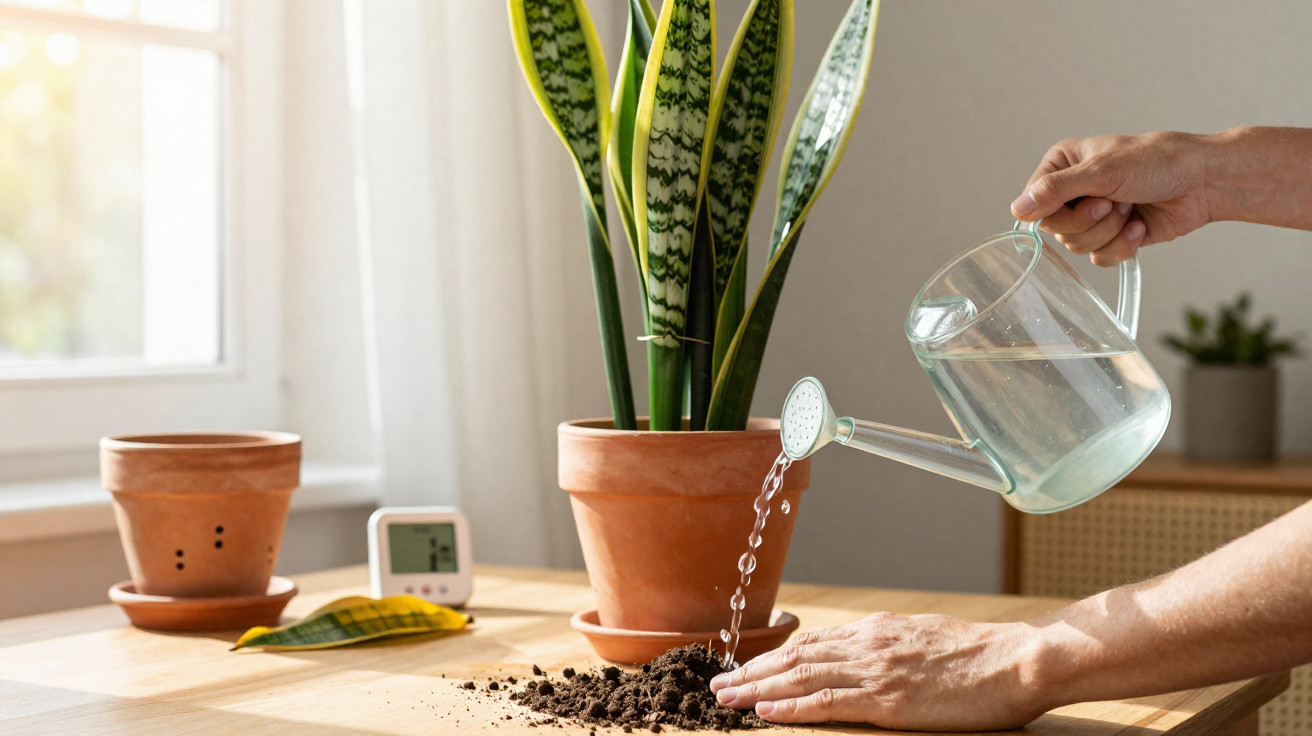
The snake plant has become a familiar feature in homes and offices because it is considered hardy and low-maintenance. Even so, a few essential measures directly affect leaf health and root growth, particularly indoors with limited ventilation, where watering mistakes are more frequent.
What is a snake plant and why is it so hardy?
The snake plant, also known as Sansevieria or mother-in-law’s tongue, is a succulent native to Africa’s arid regions. Its stiff, upright leaves store water, allowing it to withstand long spells without watering and adapt successfully to indoor settings.
It copes with anything from bright indirect light to moderately lit spaces, including offices and flats. However, its tough nature does not remove the need to consider the soil, pot and water, as these factors determine whether the plant simply survives or grows strongly and produces new shoots.
What is the biggest mistake when watering a snake plant?
The most frequent mistake is overwatering in combination with poorly draining compost, which causes the roots to rot. Because it holds moisture in its leaves and thick roots, the plant cannot cope with remaining in waterlogged soil for extended periods, especially where there is little air circulation.
Fixed routines such as “water twice a week” overlook the climate, pot type and light levels, raising the chance of unnoticed waterlogging. In these circumstances, the plant can no longer absorb nutrients effectively; its leaves wilt, darken at the base and may fall over, creating the impression that it “died suddenly”.
How should you water and pot a snake plant correctly?
The safest approach is to check the compost rather than following set dates. As a rule, water only once the top layer of soil, around 2 to 3 centimetres, feels dry to the touch. Depending on the season and ventilation, this may mean watering every fortnight or even monthly.
Before watering, carry out a quick check to refine your care without overdoing it and to prevent issues caused by retained moisture:
- Check the soil: touch the compost to see whether it is still damp;
- Look at the leaves: firm, upright leaves show that hydration is adequate;
- Assess the setting: cooler places or areas without direct sunlight require less water;
- Inspect the saucer: never leave standing water after watering.
When watering, dampen the compost only, rather than pouring water into the centre of the clumps, and allow the excess to run out through the pot’s drainage holes. A pot with effective drainage, a layer of gravel or expanded clay, and a light mix of topsoil, coarse sand and well-rotted organic matter greatly lowers the risk of waterlogging and makes recovery easier after minor overwatering.
Which signs show incorrect watering, and how can you revive a snake plant?
The plant usually signals when something is wrong, whether it has received too much or too little water, chiefly through its leaves. Dark patches at the base, a strong damp smell, soft leaves and mould on the soil surface indicate waterlogging. Wrinkled leaves, dry tips and extremely slow growth, on the other hand, suggest insufficient watering.
If you notice these symptoms, alter how often you water and check whether the pot and compost provide suitable drainage. In more serious cases of excess moisture, it may be necessary to take the plant out of its pot, remove rotten sections and repot it in lighter soil. Leave a longer gap before watering again so that the roots can recover safely.


Comments
No comments yet. Be the first to comment!
Leave a Comment