
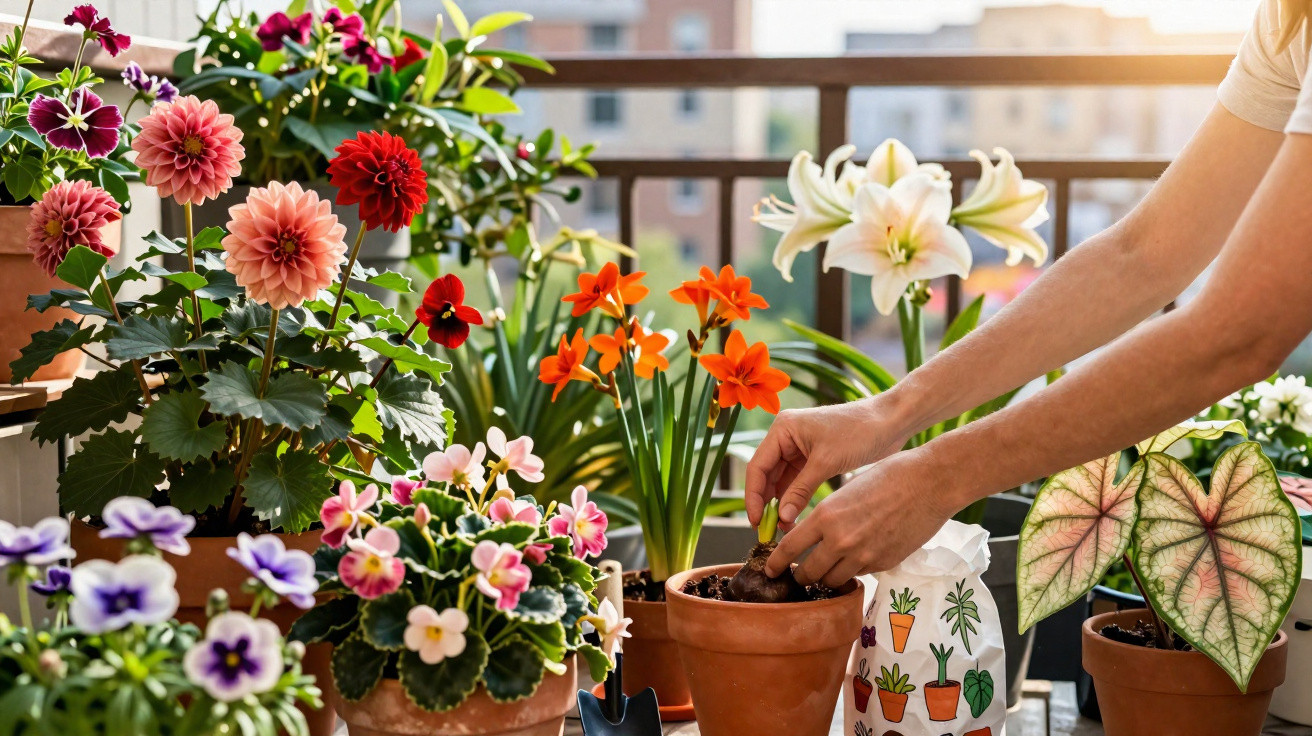
With a few well-chosen planting jobs in spring, you can transform the picture completely.
Anyone choosing tubers and bulbs between February and May can look forward to lavish flowers, exotic foliage and fragrant containers by high summer. The key is selecting the right perennial varieties, along with a few straightforward planting and care tips.
Why spring-planted tubers are the secret to a brilliant summer
When people think of flower bulbs, tulips and daffodils usually come to mind. These are planted in autumn and flower in spring. For a truly impressive summer display, however, choose tubers and bulbs planted in spring that naturally grow as perennials.
“Plant in spring and you will enjoy a full summer in the same year, with benefits that continue for several seasons.”
The reason is that these plants first store energy in an underground structure - a tuber, bulb, rhizome or rootstock - before producing vigorous new growth. Many summer tubers have already experienced the necessary cold period while in storage. As soon as the soil is frost-free, they can be planted outdoors and will get going straight away.
- Planting window: roughly February to the end of May, depending on the region
- Position: soil should drain as freely as possible, with no waterlogging
- Planting depth: as a rule of thumb, cover with soil to around twice the tuber’s height
- Benefits: some return for years, require fewer replacement purchases and create more established beds
How to plant perennial summer tubers correctly
The basic method is much the same for nearly every variety, whether the packet describes it as a tuber, bulb or rhizome. A few details determine whether the plants genuinely flourish later on.
Getting started in beds and containers
First, loosen the soil and remove stones and old root debris. In heavy ground, coarse sand or horticultural grit helps excess water drain away more quickly. Then it is time to plant the tubers.
- Plant tubers with the pointed end facing upwards
- Refill the hole and gently firm the soil
- Water thoroughly once, so the soil makes contact with the tuber
- In pots, add a drainage layer of clay pebbles or gravel at the base
Many of the varieties listed here can remain in the ground through winter in mild areas. In colder locations, more tender types should be lifted again in autumn and overwintered somewhere frost-free, such as a cellar or garage.
The 10 essential spring-planted tubers for a spectacular summer
Among the many options available, ten varieties stand out in particular. They work equally well in typical home gardens and on urban balconies, and combine easily with one another.
1. Amaryllis – exotic giant flowers for sunny spots
This familiar houseplant is just as striking outdoors in a container. Given sunshine and loose, nutrient-rich compost, it produces impressive trumpet-shaped blooms. It is ideal for patios where even one pot can become a focal point.
2. Anemones – airy flower carpets for bed edges
Anemones lend beds an open, almost wild character. Planted in groups, they form colourful drifts that suit border edges or spaces beneath shrubs. The soil must not dry out, but it should still remain loose.
3. Tuberous begonias – bursts of colour for shady corners
Tuberous begonias thrive where other plants struggle. They enjoy partial shade to shade and flower continuously for months when watered regularly and fed occasionally. Their tubers need bringing indoors in autumn, otherwise frost will kill them.
4. Caladiums – foliage that looks hand-painted
Caladiums stand out less for flowers than for their spectacular leaves: heart shapes in white, pink and green, often marked by contrasting veins. Native to the tropics, they are particularly happy in warm, sheltered positions or as container plants. During winter, the tubers are best stored indoors somewhere dry and warm.
5. Canna – holiday atmosphere in your own garden
Large-leaved canna instantly evokes faraway places. Broad leaves, often patterned in red or yellow, together with bold flower spikes create a true jungle feel in sunny positions. In a border, it needs plenty of water and nutrients. In cold regions, lift the rhizomes in autumn and keep them through the frost period in a box filled with dry soil.
6. Crocosmia – fiery fountains of orange and red
Crocosmias produce loose, arching flower stems in warm shades. They fit well among herbaceous perennials because they do not appear overly bulky. In mild areas, their tubers survive winter in the ground; a light protective covering of leaves or bark mulch is usually enough.
7. Dahlia – the unrivalled queen of the border
From high summer until the first frost, dahlias provide a continuous show of colours and forms, from small pompoms to huge dinner-plate flowers. Plant the tubers once the last frost has passed. Regularly removing faded flower heads extends the flowering season considerably.
“Dahlias give back more than they demand - lift them in autumn and store them somewhere cool, and you can enjoy the same tubers for years.”
8. Gladiolus – elegant, upright stars for the vase
Gladioli have a formal yet elegant appearance. Their tall flower spikes are perfect for summer bouquets. Planting fresh tubers at two-week intervals extends the flowering period considerably, as the plants will open in succession.
9. Lily – an elegant, long-lasting scented plant
Lily bulbs are regarded as particularly long-lived. Once established in the right position, they surprise gardeners each year with flowers that can be strongly scented. Many varieties prefer sunshine on their blooms but cool, shaded “feet”. Companion plants such as lady’s mantle or cranesbill do this job well.
10. Tuberose – intoxicating fragrance for balmy summer evenings
Tuberose remains something of an insider’s choice. Its white flower spikes release an intense fragrance in the evening, making it ideal near seating areas. The tubers are sensitive to cold and must always be overwintered indoors, protected from frost.
Which position suits which tuber?
Not every variety is suited to every location. Choosing the position carefully will prevent a great deal of frustration later.
| Position | Suitable varieties | Note |
|---|---|---|
| Full-sun border | Dahlias, canna, crocosmia, gladiolus, lily, tuberose | Provide good nutrition and water regularly |
| Part-shaded balcony | Tuberous begonias, anemones, caladiums | Use large pots and avoid waterlogging |
| Shady area of the garden | Tuberous begonias, caladiums, anemones | Humus-rich soil improves growth |
How tubers survive many winters
The biggest mistake is wet conditions during the cold season. Many tubers are more likely to rot than freeze. In areas with severe winters, it is therefore worth carrying out an additional job in autumn.
- Cut back above-ground growth after the first frost
- Lift tubers carefully and shake off most of the soil
- Leave them to dry for several days in an airy place
- Then store them in boxes containing dry soil, sand or wood shavings
- Keep them dark and frost-free, at a few degrees above zero
This makes it easy to use dahlias, canna, tuberous begonias, caladiums and tuberoses for several consecutive years. It saves money and lets you gradually build up an impressive collection.
Practical advice for beginners without green fingers
If you have little experience with tubers, it is best to begin with resilient varieties such as dahlias, gladioli and lilies. They forgive minor mistakes and respond quickly with visible growth - an encouraging result, especially on balconies.
A simple plan on paper is worthwhile: where is sunny, where is shaded, and how tall can plants grow without blocking neighbours or windows? This prevents tall varieties from overwhelming delicate companions or obstructing the view.
Mixed planting schemes are also effective: low anemones at the front, dahlias or gladioli behind them, and cannas at the back as a backdrop. This creates depth in the border and makes the garden appear much larger. Combining different flowering periods keeps the summer display lively for months.
One final point: many of these summer-flowering plants are genuine insect magnets. Open-flowered dahlias, lilies and crocosmias attract bees and butterflies, making the garden not only beautiful but also full of life.


Comments
No comments yet. Be the first to comment!
Leave a Comment