
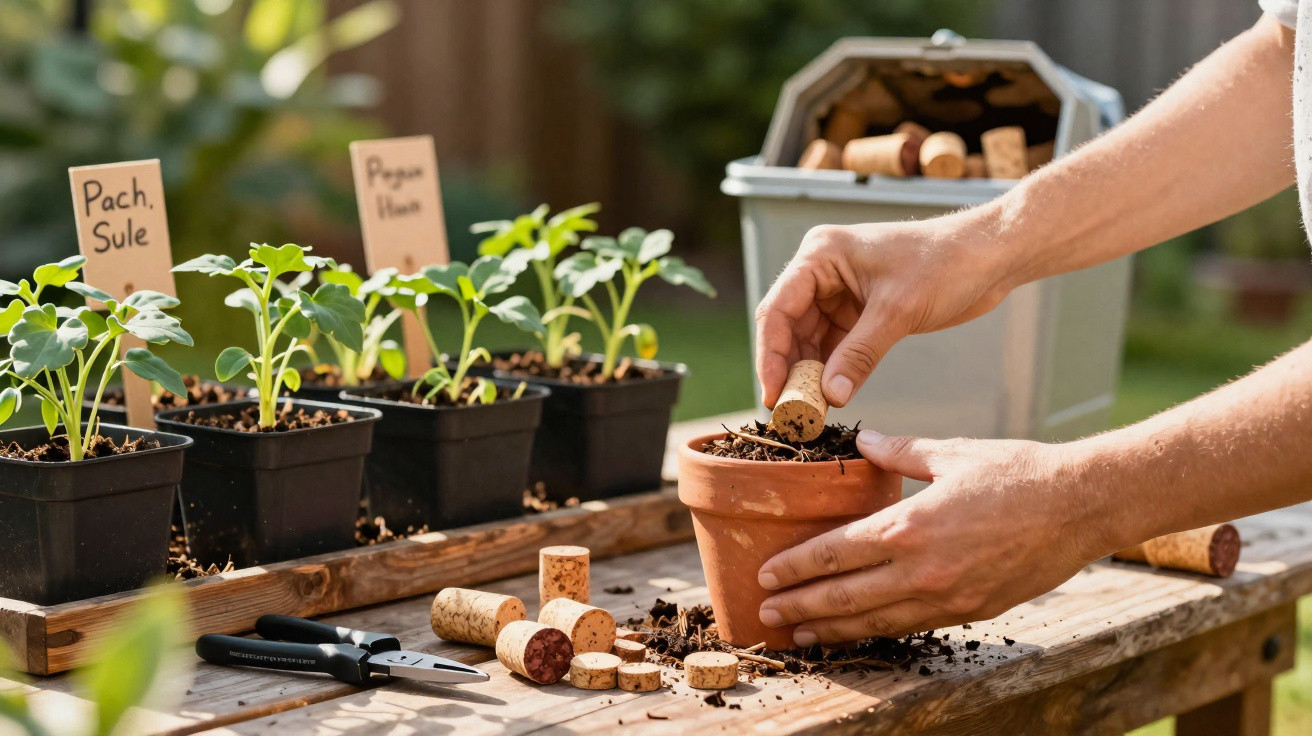
In spring and again at the end of summer, potted plants need extra care. Water collecting at the bottom of a container, compost drying out within hours or seedlings that have not been labelled properly can quickly cause problems for gardeners. One straightforward solution is to save the plant-based stoppers from bottles. Provided they are genuinely natural rather than synthetic, they can be used in pots, planters, compost or seed rows.
A lightweight material for the bottom of pots
Their first use is for drainage. Plants grown in containers often suffer from excess moisture, particularly if the saucer remains full after watering or rain. Their roots are then deprived of oxygen. They may turn brown, become soft and eventually rot.
The small cylinders made from cork oak bark have an air-filled structure. When cut into pieces, they form an uneven layer at the base of a container. This prevents the compost from sitting directly against the drainage holes, helping water to flow away.
When using a pot, the essential first step is to check that it has drainage holes. No material placed in the base can make up for a completely sealed container.
This method can replace some of the materials usually bought to make plantings lighter. It is especially suitable for houseplants, balcony herbs and annual flowers grown in large planters.
Preparing the drainage layer
- Use only items made of natural plant material, with no plastic or metallic coating.
- Rinse them if they have touched a drink, then leave them to dry for several days.
- Carefully cut them into two or three pieces on a stable board.
- Lay a thin layer over the holes in the pot.
- Add compost, then position the plant without firming it down too much.
Do not fill half the container with this material. An overly thick layer leaves less room for compost and can hinder root growth. Just a few pieces are more than enough in a small pot.
A discreet mulch to prevent compost drying out
The same pieces can be scattered over the surface of a planter. This works in a similar way to mulching: the soil is covered to lessen direct exposure to sun and wind.
On a south-facing balcony, the compost in a trough can become very hot. Water then evaporates quickly, sometimes before the roots can benefit from it. A light covering slows this process. It also shields the compost from splashes during heavy rain, which can otherwise compact it.
These fragments are not a substitute for a thick mulch of dead leaves, straw or shredded branches in a large vegetable garden. They are more useful in compact spaces: basil pots, tomato plants in containers, a flower-filled balcony or seedlings placed beside a window.
An imperfect barrier against slugs
The dry, uneven surface of this material may make it harder for some gastropods to move across. However, it does not provide guaranteed protection. Following a very damp night or a spell of rain, slugs can cross the barrier easily.
To protect young lettuces and courgettes, it is better to combine several measures: remove damp hiding places, water at the base in the morning, set out reused shelters to monitor where they pass, and encourage natural predators such as ground beetles and birds.
A natural barrier may reduce damage, but it is no replacement for regularly checking young shoots, which are particularly vulnerable.
Long-lasting markers to avoid mixing up seedlings
Another useful option is to make labels. When several varieties are sown in similar pots, mistakes happen quickly. A row of radishes may be mistaken for rocket, while young tomato plants all look alike during their first few weeks.
The material withstands moisture well. Using a permanent marker, you can write the variety name and sowing date on it. A small wooden stem can then be inserted to create a marker that is easy to push into compost.
- Write the plant name on the rounded side.
- Add the sowing or planting date.
- Make a small hole in the base with a fine point.
- Insert a wooden skewer or a short straight twig.
- Position the label beside the pot without touching the young stems.
This tip avoids single-use plastic labels. It also gives crops grown on a terrace a simple, warm appearance.
In compost, a material to use patiently
These items can go into the compost bin, though not without preparation. They break down slowly because the bark they are made from is naturally durable. If thrown into the bin whole, they may remain visible for a very long time.
They should therefore be cut into small pieces before being mixed with kitchen waste. They then count as carbon-rich materials, alongside dry leaves, unprinted brown cardboard and small twigs. These balance out very wet additions such as peelings, coffee grounds and fresh grass clippings.
Understanding compost balance
Compost that is too wet can sometimes smell strongly and lack air. Conversely, a heap made up almost entirely of dry matter will decompose slowly. Alternating moist and dry materials feeds the organisms that gradually turn waste into humus.
| Type of material | Examples | Role in compost |
|---|---|---|
| Moist and nitrogen-rich | Peelings, grass clippings, coffee grounds | Encourages biological activity |
| Dry and carbon-rich | Leaves, brown cardboard, small bark fragments | Absorbs moisture and aerates the mixture |
Avoid stoppers made from bonded cork, as well as varnished, painted or plastic versions. Natural cork models can be identified by their uneven texture and compressed-bark appearance. They may occasionally carry writing, which does not prevent them from being reused in the garden.
This small step will not, by itself, transform poor soil or a neglected plant. It does, however, make use of an everyday object, reduce a few purchases and encourage closer observation of what crops really need. In a garden, the most useful solutions are often those that become part of a routine: collect, sort, prepare and then use them in the right place.


Comments
No comments yet. Be the first to comment!
Leave a Comment