
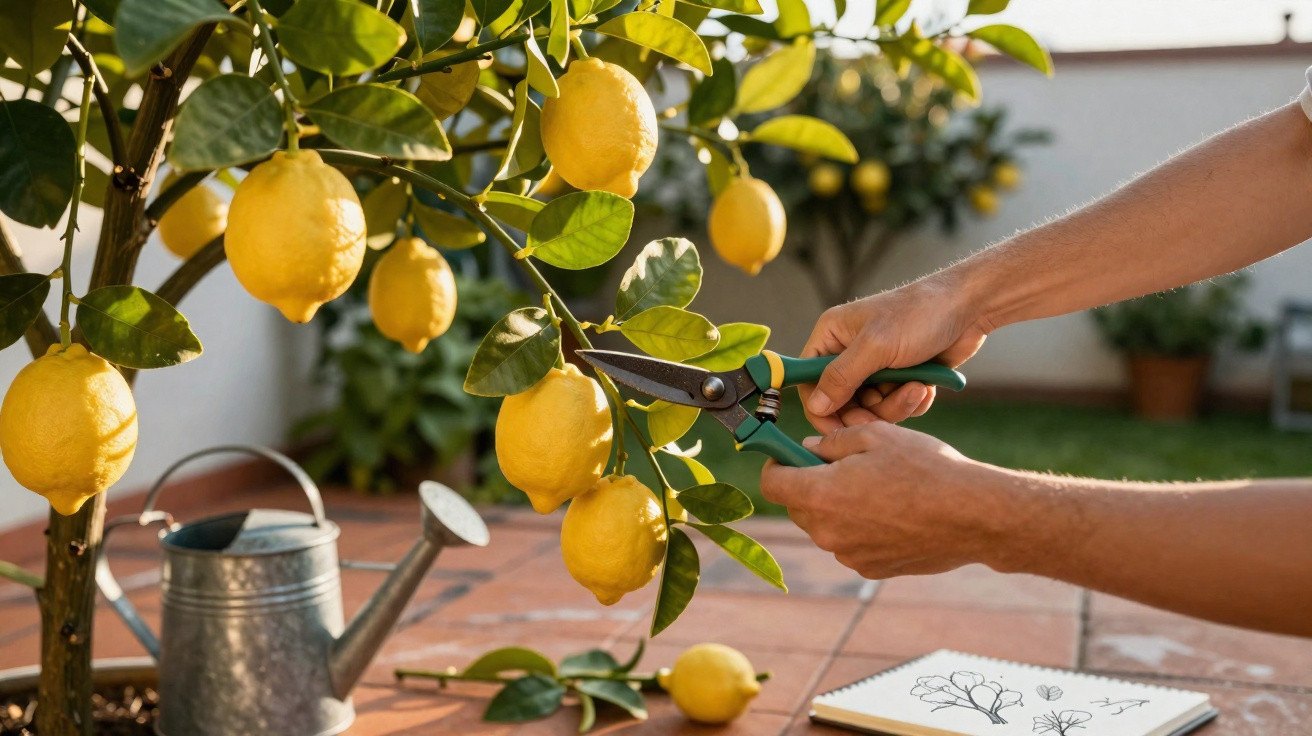
Pruning a lemon tree correctly helps it grow more vigorously, lets more light reach the inside of the canopy and directs energy towards fruit production. It should not be pruned indiscriminately, as excessive cutting can weaken the tree and reduce fruiting. The key is to remove what is getting in the way, create room for air circulation and keep the lemon tree’s structure balanced.
Why does pruning help a lemon tree produce more?
For healthy development, a lemon tree needs sunlight, air movement and well-spaced branches. When the canopy becomes overly dense, inner branches receive less sunshine, moisture is trapped and the plant may expend energy on weak, dry or unproductive growth.
Pruning addresses precisely these issues. Removing diseased, crossing or poorly placed parts allows the tree to direct its strength more effectively towards healthy branches. Over time, this encourages a better-ventilated canopy and a more even crop of lemons.
When is the best time to prune a lemon tree?
The best time to prune is generally outside periods of intensive flowering and peak fruit production. Dead, broken or diseased branches can be removed whenever they appear, but more substantial pruning should be carried out carefully, when the plant is carrying less fruit.
In general, choose a drier, milder period, avoiding very cold, very rainy days or extreme heat. This helps cuts heal more effectively and reduces the stress caused to the lemon tree.
Watch the video below from the Spagnhol Plantas channel, which shows how to prune a lemon tree:
Which branches should be cut first?
Before picking up the secateurs, inspect the tree carefully. Start by removing branches that are dry, broken, diseased or showing signs of pests. Then assess branches growing into the canopy, crossing over one another or blocking light from entering.
It is also worth removing shoots emerging very low on the trunk or below the graft union, where applicable. These branches usually draw energy from the plant without helping to form a productive canopy.
- remove dry and broken branches;
- cut diseased or very weak shoots;
- eliminate branches growing inwards;
- remove crossing branches that rub together;
- control low-growing, unproductive shoots.
How should you make cuts without harming the tree?
Use clean, sharp secateurs. Each cut should be clean and decisive rather than crushing the branch, because uneven wounds take longer to heal. For small branches, cut close to the base without injuring the main trunk. Take greater care with larger branches to avoid tearing the bark.
There is no need to remove a large number of branches at once. A lemon tree responds better to light, considered pruning than to severe cuts. If the canopy is very dense, open it up gradually, retaining the main branches and preserving its natural shape.
What post-pruning care makes a difference?
After pruning, collect the removed branches and dispose of diseased material away from the plant. This prevents fungi, pests or diseases from remaining near the lemon tree. Balanced watering, suitable fertiliser and attention to the soil are also important, because pruning alone will not ensure fruit if the plant is weak.
The secret to a more productive lemon tree is to prune moderately and regularly. When the tree has light, air and space to grow, healthy branches develop more successfully and the fruit is of better quality. Proper pruning does not force the plant; it simply helps the lemon tree use its energy in the right way.





Comments
No comments yet. Be the first to comment!
Leave a Comment