
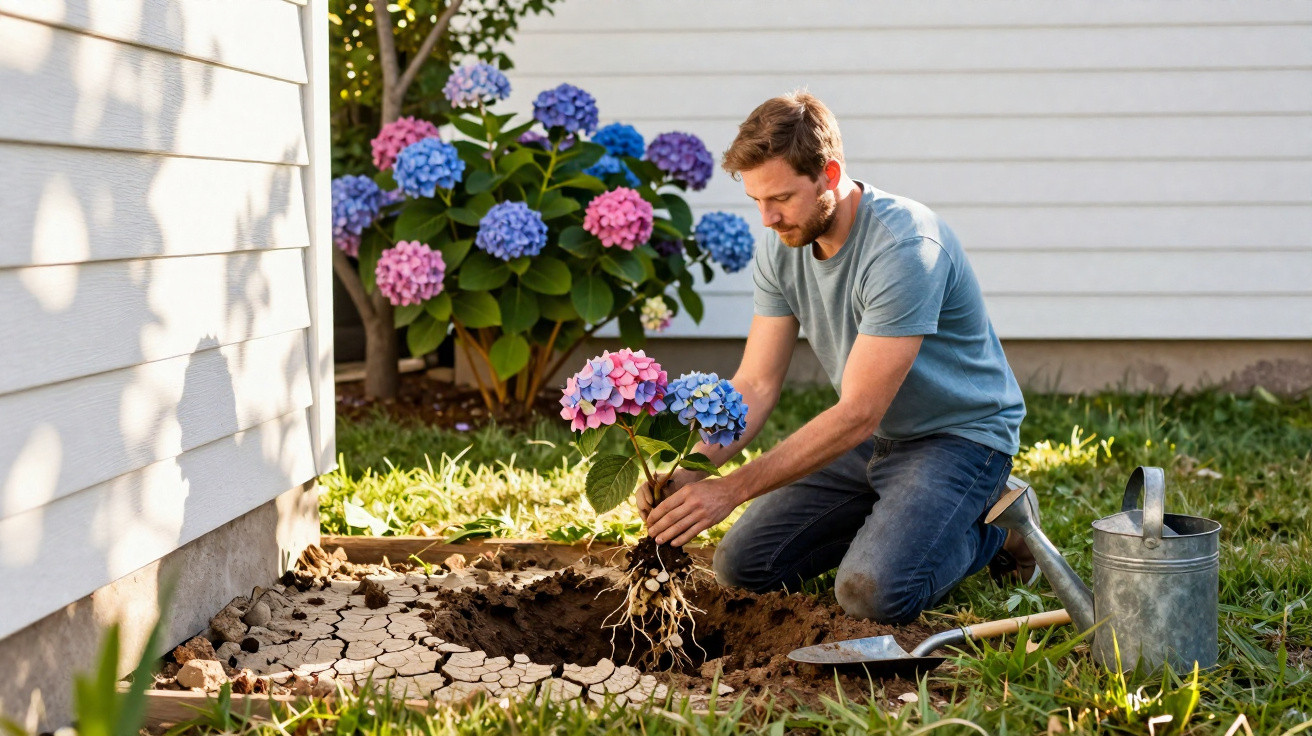
Many amateur gardeners plant hydrangeas where they will make the biggest visual impact: against the house wall, beside the patio or right in full sun. At first, everything looks wonderful, but then the leaves scorch, the flowers turn brown and the plant always appears thirsty. The problem is rarely the variety; almost every time, it is the location.
Why hydrangeas so often suffer by a house wall
The familiar image is a white façade with a rounded hydrangea border in front of it – a picture-postcard scene. In reality, this position can quickly become a heat trap for the shrubs.
When a plant is positioned directly in front of a south- or west-facing wall, several issues occur at once:
- the sun beats directly on leaves and flowers for hours
- the wall stores heat and radiates it back towards the plant
- patio slabs, gravel or chippings intensify the “oven effect”
- the soil can dry out again within just one or two days
Typical warning signs include drooping leaves by midday, brown flower heads and a noticeably shorter flowering period – despite regular watering.
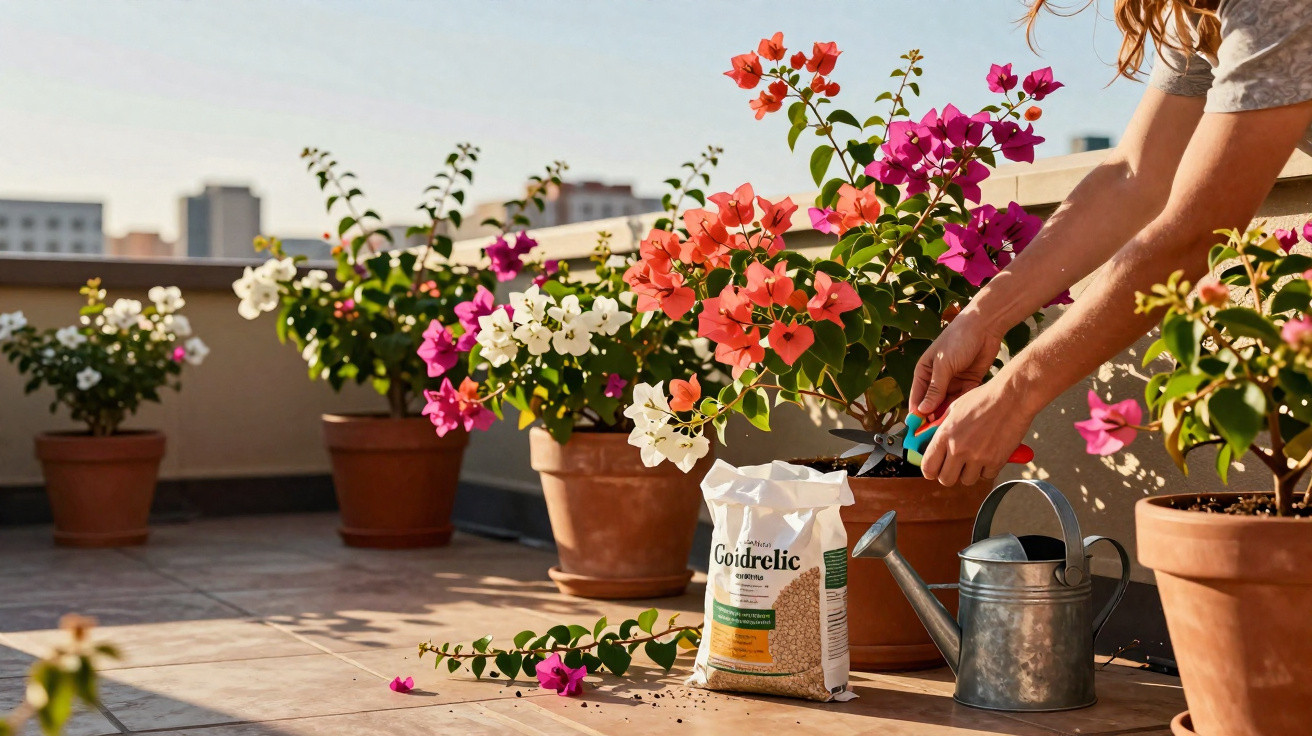
The situation is even more problematic for hydrangeas in containers placed on stone or timber decking. The pot itself then becomes very hot, moisture evaporates exceptionally quickly and the roots remain under constant stress.
Growing hydrangeas beneath large trees: shady but still too dry
Many gardeners try to protect hydrangeas from the sun by placing them below a large tree. It seems sensible at first, but several plants are then competing for a very limited supply of water.
The vigorous roots of oak, maple or horse chestnut remove moisture from the ground far more quickly than a hydrangea’s fine roots can. As a result, the shrub suffers continual water shortage even though it is in shade.
- the soil seems dry although it was watered only recently
- fresh shoots remain small and soft
- flowers are smaller, or fail to appear altogether
What hydrangeas really need: gentle light and fresh soil
Once you understand where hydrangeas originate, it becomes clear why a spot against a south-facing wall is so damaging. In nature, many species grow along bright, relatively moist woodland edges – not in exposed ground under blazing sunshine.
Hydrangeas thrive in bright, airy positions with light but no fierce midday sun, and in soil that stays consistently slightly moist.
The best light for hydrangeas: partial shade rather than full sun
The ideal position is best described as bright partial shade. In practical terms, this means:
- sunshine in the morning or late afternoon
- shade, or at least no direct sun, from roughly 11:00 to 17:00
- no ground that continually dries out beside stone walls, paving or gravel areas
In more northern areas, an east- or north-east-facing side of the house is often sufficient. In warmer locations with recurring heatwaves above 30 degrees, hydrangeas perform best in a bright shaded spot, such as at the open edge of a wooded area or behind a house that blocks the strongest midday heat.
The right soil: rich, loose and always slightly moist
The soil surrounding the shrub matters just as much as the available light. Hydrangeas prefer:
- loose soil rich in humus
- a slightly acidic pH value, rather than heavy soil rich in lime
- soil that remains gently moist but never waterlogged
Anyone gardening on very sandy or very clay-heavy ground should improve it generously when planting, using compost, well-rotted leaves and a little composted bark. This helps moisture remain around the roots for longer without causing waterlogging.
The worst mistake: hydrangeas against an unprotected south-facing wall
The combination of full sun, a reflective façade and dry ground is one of the most reliable routes towards losing a hydrangea. Even heavy watering provides little lasting solution, as the plant has to battle heat and water stress every day.
Anyone planting hydrangeas directly against a south-facing house wall without shade or a layer of mulch must expect to lose the flowers after only a short time.
Particularly during the increasingly hot summers of recent years, this once desirable setting has become a troublesome one. Rather than putting energy into growth and flowers, the shrubs use it simply to survive.
How to spot a location that causes problems
A careful look around the garden quickly reveals whether a position is risky. Check the following in particular:
| Feature | Risk for hydrangeas |
|---|---|
| South/west-facing wall | very high – intense heat and dryness |
| Ground covered with gravel or chippings | high – it heats up and dries out faster |
| Patio slabs or paving all around | high – heat builds up and there is little soil moisture |
| Large tree immediately beside it | medium – tree roots take up substantial amounts of water |
| Sun from midday until evening | very high – typical leaf scorch |
Moving hydrangeas can save them – how to change their position
The good news is that many weakened hydrangeas recover if they are moved to a more suitable spot in time. The shrub does not even need to travel far; a few metres is often enough.
Moving a hydrangea into partial shade can turn a constantly unhealthy plant back into a vigorously flowering shrub.
The best time to transplant hydrangeas
Two periods of the year are ideal:
- autumn, once the most intense heat has passed while the soil is still warm
- late spring or the end of winter, provided frost is no longer expected
At these times, the plant puts less energy into flowering and can focus more effectively on establishing new roots.
Step-by-step guide to relocating hydrangeas
- Choose the new position: bright partial shade, sheltered from wind and without heat build-up from walls or stone surfaces.
- Dig a generous planting hole: at least twice the width of the root ball.
- Improve the soil: incorporate compost, leaf mould or bark mulch.
- Lift the hydrangea with a wide root ball to minimise damage.
- Plant it at the same depth, firm the soil well and water thoroughly.
- Mulch the area around the shrub with leaves, bark pieces or grass clippings, for example.
Mulch, variety choice and containers: keeping hydrangeas healthy long term
Alongside the right site, several small measures help keep these sensitive flowering shrubs healthy over time.
Mulch as a water store and heat shield
A straightforward layer of organic material protects the roots and noticeably reduces evaporation. Particularly suitable materials include:
- leaves from non-toxic trees
- shredded branches and prunings
- bark mulch applied in a moderate layer
A layer of mulch keeps the soil cooler and moist for longer – reducing stress during hot spells and saving watering effort.
Choosing the right variety for hot gardens
Not all hydrangeas react to sunshine in the same way. Those gardening in an especially dry or hot area will often do better with more robust types:
- Panicle hydrangeas (Hydrangea paniculata) tolerate more sun and heat.
- Smooth hydrangeas (Hydrangea arborescens) cope better with changing conditions.
- Large-leaved mophead hydrangeas, by contrast, are considerably more sensitive and require greater protection.
Special considerations for hydrangeas in containers
Compost in a pot dries out much faster than soil in a border. If the container is also standing on a hot patio or beside a façade, water can become scarce within a few hours. The following measures help:
- light-coloured pots, which retain less heat
- saucers that provide short-term water reserves
- a location that is shaded during the afternoon
Many gardeners now also use a watering bag or drip irrigation for container plants, so they do not have to keep using a watering can during heatwaves.
Why the right location can even affect colour in the long run
Hydrangeas respond not only to water and light, but also to the soil’s pH value. In slightly acidic soil, certain varieties can develop their characteristic blue or violet shades, while in more neutral ground they tend to turn pink.
Repeated watering with very hard water gradually alters the soil, and therefore the flower colour too. Rainwater or soft tap water supports the characteristic blue and lilac tones more effectively than highly calcareous water. In practice, it is therefore worthwhile keeping a bucket to collect rainwater, especially in areas where the mains supply contains a lot of lime.
Success or failure in a hydrangea border ultimately depends not only on care, but above all on the garden position. Taking the time to see where summer sun truly becomes intense and where the ground stays dependably fresh prevents many dried-up flowers – and brings more enjoyment from the large, colourful blooms in partial shade every year.
Comments
No comments yet. Be the first to comment!
Leave a Comment