
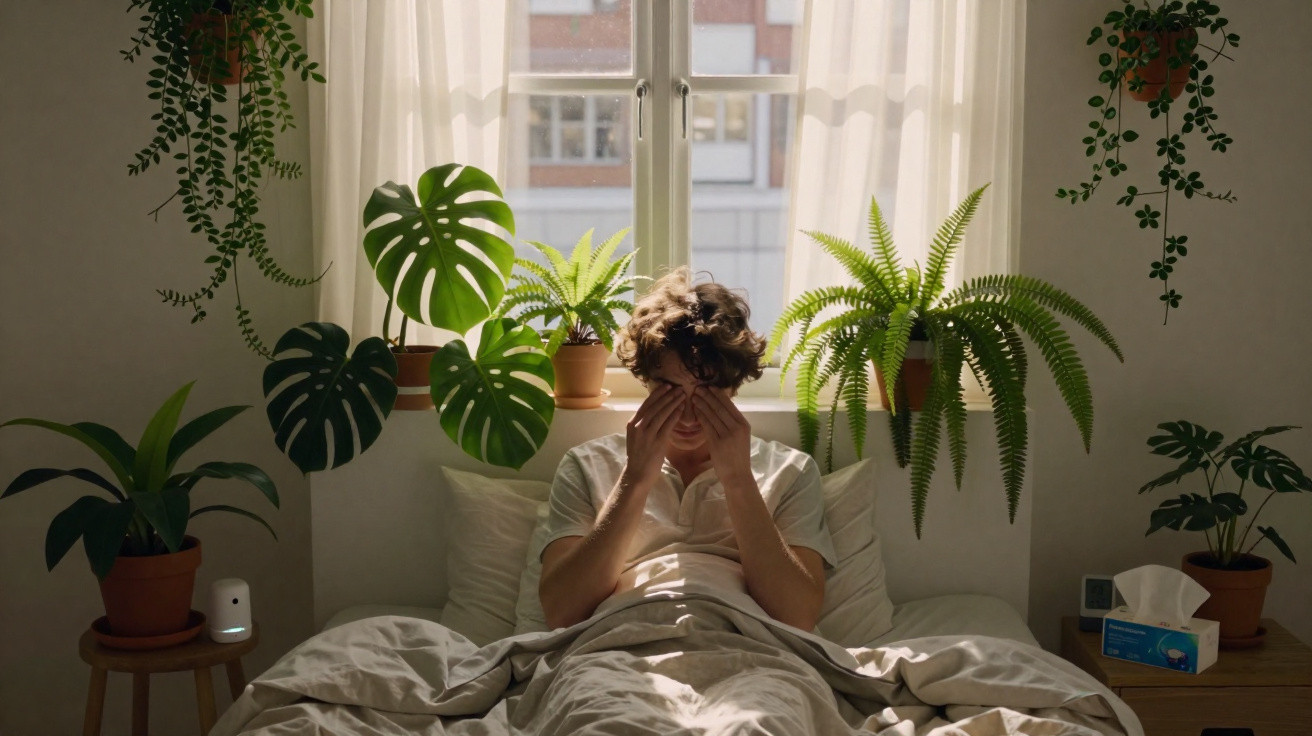
You know that quietly smug feeling when you step into your bedroom and it resembles a small, carefully curated Instagram jungle?
Fairy lights cast a gentle glow, shiny leaves reflect the evening light, and there is a faint earthy scent that makes you feel as though you have mastered adulthood. A few years back, that was exactly my arrangement: a huge monstera, a line of succulents and a peace lily that seemed to be striking a pose in the corner. My bedroom was a peaceful green retreat, and I loved it.
There was one small catch: I was sleeping badly. I woke feeling foggy, sometimes with a mild headache, and occasionally found myself inexplicably alert at 2am. I blamed my job, my phone and late-night scrolling - everything except the plants. They were surely the positive part of the room, weren’t they? It took an offhand chat with a sleep scientist, followed by a mildly alarming late-night Google spiral, for me to wonder whether my cherished bedroom jungle was quite as harmless as it appeared.
The Bedroom Jungle Dream vs. Your Tired Brain
There is a reason the “plants by the bed” trend has taken off. We are exhausted and stressed, screens surround us, and having something natural and alive nearby while we sleep feels unexpectedly reassuring. Images of ivy spilling over headboards and oversized palms beside white-linen beds seem to promise rest, tranquillity and control. It is a visual way of saying, “Look, my life is chaotic, but at least I keep this fern alive.”
Most of us have looked at an immaculately styled bedroom online and thought, “If I just buy a plant, maybe I’ll finally feel like I have my life together.” Plants now signal wellness in much the same way scented candles once did. Add a fabric pot and a fig tree, and suddenly your room suggests that you meditate twice daily and deliberately make green smoothies. Honestly, hardly anyone does that every day. Yet the bedroom plants stay put, quietly occupying the very space in which your brain ought to be switching off.
The odd part is that many people are sleeping poorly while steadily adding more items to their sleeping environment. There are lights, gadgets, books and clothes - plus living things that breathe, transpire and can sometimes give off pollen or mould spores. Today’s bedroom can be less a fresh sleep cave and more a discreet greenhouse. It photographs beautifully for Instagram. At 3am, however, it may feel rather different.
Plants Breathe Too – And Your Sleep Cycle Notices
At school, we learned that plants “give us oxygen”. That is only part of the picture. In daylight, plants photosynthesise, taking in carbon dioxide and releasing oxygen. After dark, that changes: photosynthesis slows down or stops, while the plant carries out ordinary respiration, like we do - consuming oxygen and releasing carbon dioxide.
A couple of small plants placed around the room will not transform your bedroom into an airless cave. Concerns begin when plants gather close to your head: on a bedside table, immediately above the headboard or in hanging pots only centimetres from your pillow. Within that compact zone of air you breathe all night, every stem and leaf becomes part of the mix. You are not going to wake up dramatically gasping for air, but a minor change in air quality may still push your sleep cycles off course.
Light sleep can become even lighter, while deep sleep may be slightly less deep. Your breathing could alter just enough to bring you out of a dream. You may never link the dots between a monstera hanging over your pillow and the way you suddenly wake at 4:17am with an oddly unsettled heart. All you know is that, despite supposedly spending eight hours in bed, you do not feel properly refreshed.
The CO₂ Bubble Around Your Bed
Think of your bed as having its own microclimate. Your duvet holds warmth, your body gives off moisture, and your breathing gradually increases carbon dioxide beneath the invisible layer of air above the mattress. Then place several plants on either side, all releasing CO₂ overnight too. This is not a dramatic warning about “too much carbon dioxide”; it is about a marginally heavier, more stagnant air pocket exactly where your mouth and nose remain for hours.
Research indicates that elevated bedroom CO₂ levels may disrupt sleep, even if people do not consciously feel breathless. You may simply turn over more often, slip in and out of dreams, or wake earlier than necessary. One night is not disastrous, but over months it can create a gradual decline. There is no flashing alert - only an increasing fatigue that you attribute to everything but the potted palm beside your lamp.
That Lovely Green Smell Might Not Be So Innocent
One pleasure of plants is how they alter a room’s atmosphere and scent. There is the smell of soil, a trace of damp earth after watering, and that cool feeling when you brush past a leaf. In a compact flat where fresh air can feel more theoretical than real, it makes the space feel alive. Yet warmth and moisture can also create a petri dish when no one is paying attention.
Many of us water plants in the evening, shortly before bed, because it is when we are at home and remember they are there. In a shut room with closed windows, the soil then remains wet for hours. Eventually, it can form an ideal mini-ecosystem in which mould and tiny spores flourish beneath the surface. Usually, you do not notice it at first. You might only catch a faint sweet, damp smell when you get close - rather like a greenhouse that has not been aired sufficiently.
The Allergy You Didn’t Realise You Had
For anyone with asthma, hay fever or even minor dust allergies, damp compost and any mould or fungus around plant pots may act as a quiet disruptor. You might not have an obvious sneezing attack. Instead, you could wake with a dry throat, a blocked nose or a chest that feels more weighted than usual. Perhaps you blame “winter air” or a dusty flat, promising yourself that you will eventually deep-clean beneath the bed. Somehow, that day never arrives.
Allergens coming from soil, leaves and even certain plant pollens may mildly irritate your airways overnight. Your body does not care that the source is attractive and housed in a terracotta pot. As you lie there, your immune system may remain subtly alert, drawing you out of deep sleep to monitor the situation. You do not wake in outright panic; you simply feel as though you have slept on a plane - technically lying down, but not genuinely rested.
Light, Shadows and the Subtle Stress of Shapes in the Dark
A curious shift occurs when a room is filled with tall, striking plants: after nightfall, the space takes on a different personality. In daylight, a large fiddle-leaf fig looks graceful and sculptural. At night, lit from behind by a streetlamp or the stubborn glow of a digital clock, it can cast unusual moving shadows across the wall. Your survival-wired brain notices shapes, including harmless ones.
We do not discuss often enough how reactive the sleeping brain can be to small visual signals. There is the barely perceptible movement of a leaf in a draught, or the imposing outline of a large plant by the door that looks unfamiliar enough when you half-wake at 3am and glance across the room. Your conscious mind knows what it is. A more ancient, primitive part of your brain is less convinced and answers with a trace of stress.
This can mean minor adrenaline surges and those partial awakenings when you turn over, rearrange the duvet or check the time on your phone. You get back to sleep, but your night has become punctuated by interruptions. It is not dramatic enough to mention to friends, only enough to leave you feeling slightly worn at breakfast, as though something unseen had rearranged your sleep.
The Glow of Plant Care Gadgets
Once you become invested in plant care, it is easy to commit fully. Moisture meters, grow lights for darker months and humidifiers for treasured tropical plants all add extra light, sound and activity to a bedroom. The muted purple or white glow intended to support your plants can leave your brain sufficiently alert to disrupt melatonin, the hormone that tells your body it is time to sleep properly.
Even a quiet humidifier hum can be significant for light sleepers. Night-time noise does not have to be loud to interrupt sleep; it merely needs to be inconsistent. There may be a brief whirr as the device starts, a gurgle as the water level falls, or a beep at 2am when the tank runs dry. Individually, none of these things is a problem. Repeated over weeks, they become the backing track to broken sleep.
When “Self-Care” Becomes Another Thing in the Way
There is also an emotional aspect that is often overlooked in conversations about plants. They are more than decoration: they are a task. They require watering, pruning, repotting, turning and pest inspections. Every plant represents another small obligation in a life that may already contain too many. Gradually, a bedroom that was once a refuge becomes another room with “stuff to do”.
On evenings when work or worries have already left you overstimulated, a neglected, drooping plant in the corner is unlikely to be calming. Instead, it quietly reproaches you. Brown dry leaf edges and soil shrinking away from the pot are small visual signals that you are behind even on the supposedly relaxing parts of life. As you lie there, you begin thinking that you should water it tomorrow, perhaps move it nearer the window, or search online for the reason the tips have gone yellow. Rest becomes a subdued mental checklist.
Behind all the soothing greenery, there’s sometimes a quiet anxiety: if I can’t even keep a snake plant looking healthy, what does that say about me? We rarely admit this because it sounds absurd. Still, that quiet self-criticism can linger at the edge of your thoughts while you are trying to fall asleep. The room stops being solely a place for rest and becomes a mirror of everything you believe you are failing to manage properly.
How to Keep Your Plants – And Get Better Sleep
None of this means hauling every plant out of your flat and living in a sterile beige box. Plants are wonderful. They can lift your mood, soften severe interiors and offer something gentle to care for in a fairly unforgiving world. The real issue is not “plants or no plants?” but “where, how many, and how close to my pillow?”
Begin with the easiest adjustment: create distance. Move most larger plants away from the bed - to the other side of the room, beside a window, or into the hallway or living room. If one small, easy-care plant truly helps you feel more relaxed, keep it in the bedroom, but do not turn your bedside table into a greenhouse shelf. This alone can alter the microclimate around your head during sleep.
Make Your Bedroom a Sleep Space First
Properly ventilating a room is not glamorous and is unlikely to feature in an Instagram caption, but it may benefit your sleep more than even the smartest plant display. If possible, open the window for several minutes in the morning and evening. Let air circulate properly, even if you need to wear a jumper for ten minutes. That fresh, faintly cool air is the genuine luxury your nervous system wants at night.
As far as you can, keep plant care separate from your bedtime routine. Water plants in the morning or early evening instead of just before you go to sleep. If you use grow lights or humidifiers, programme timers so they turn off a full hour or two before bedtime. Reduce the gadgets and illuminated objects in your bedroom until the space feels almost dull. Dull supports sleep. Dull is peaceful.
If you find yourself in bed staring at the silhouette of a huge plant hanging over you, ask one straightforward, mildly uncomfortable question: is it there because it helps me rest, or because I thought it would look good in a photo? The answer may sting slightly. It may also be the first move towards the sort of sleep that no fashionable bedroom jungle can truly provide.





Comments
No comments yet. Be the first to comment!
Leave a Comment