
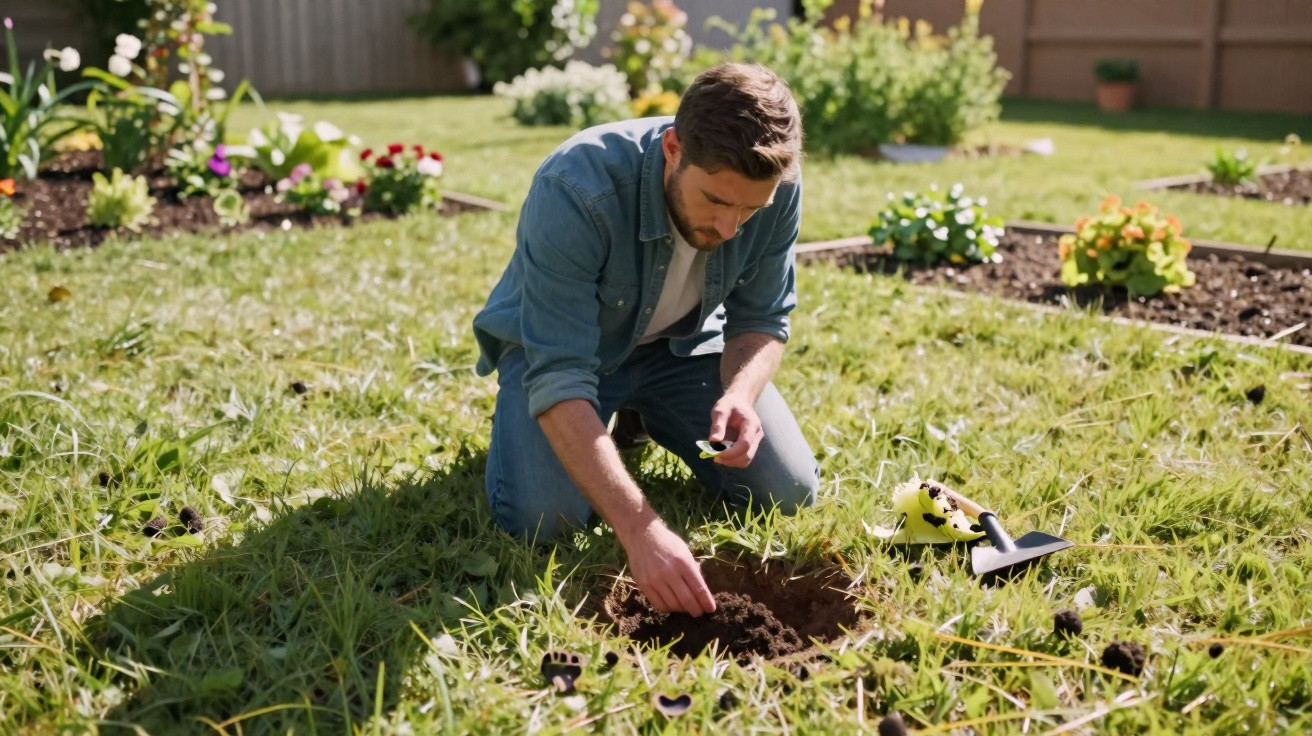
They can be intriguing and, at times, worrying. They expose unseen activity affecting your garden every day.
These openings are more than a superficial curiosity. They can indicate movement through the area, a search for food or, in some cases, a permanent shelter. Reading the signs correctly helps reduce damage and limit risks to people, animals and structures.
Why these holes matter
A poorly positioned hole may weaken a slab, patio or low wall. Extensive tunnels can dry out a lawn and loosen plants at the roots. Cavities close to underground services can make a water leak harder to deal with. Some species carry parasites or bacteria, while others sting when their nest is disturbed. Injuries in the garden often occur when someone steps into a void hidden by vegetation.
Wildlife specialists report a peak in sightings during spring and autumn. Loose soil attracts burrowing animals. Lawns that contain plenty of beetle larvae are likely to be dug up overnight. Areas beside buildings and woodpiles also provide favourable conditions for burrows.
“Look at the whole scene first, not just the hole. Its position, the displaced soil, tracks and timing all tell the story.”
Key signs to look for
Location
A hole in the centre of a lawn often points to an animal hunting insects. An entrance beside a slab or beneath a shelter is more suggestive of a rodent. Openings at the base of a hedge can mark out a discreet route. Digging in a vegetable patch is commonly linked to a search for bulbs, roots or seeds.
Size and shape
Measure the diameter. An opening measuring 2 to 3 cm can be consistent with burrowing insects. Between 3 and 5 cm, a vole may be the visitor. At 5 to 8 cm, rats or field mice often make use of the space. Over 10 cm, consider rabbits, foxes or badgers, depending on the setting. Shape matters as well: a volcano-like cone of soil suggests a mole, whereas a clean opening with no spoil points to a regular, unobtrusive route.
Time of activity
Damage that has appeared by early morning usually indicates activity overnight. Areas turned over in broad daylight may be the work of squirrels, corvids or rabbits. Insects repeatedly flying in and out around midday reveal ground-nesting wasps.
Other evidence
Look for footprints, droppings, fur, smells and food remains. Cylindrical droppings close to a broad burrow are suggestive of a rabbit. Greasy marks around the edges of an oval hole can reveal a rat. Large, fresh clumps of soil may indicate a badger. Finely sifted soil and unearthed larvae point to fox digging.
“A recent hole has sharp edges, soil that is still damp and fresh marks. An older hole subsides and becomes green.”
Quick guide to signs and likely animals
| Sign on the ground | Hole diameter | Displaced soil | Typical activity | Possible culprit |
|---|---|---|---|---|
| Lawn, numerous small openings | 1–2 cm | Little | Sunny daytime | Ground-nesting wasps, solitary bees |
| Lawn, short and multiple holes | 3–5 cm | Almost none | Daytime and dusk | Vole, field mouse |
| Conical mound, blocked tunnel | Not visible | 20–30 cm mound | Throughout the day | Mole |
| Oval edges, greasy marks | 5–8 cm | Little | Night | Brown rat |
| Wide entrance, nearby droppings | 10–15 cm | Soil pushed outwards | Dawn and dusk | European rabbit |
| Large burrow, substantial clumps of soil | 15–30 cm | Significant | Night | Badger or fox, depending on the setting |
What experts say
Urban wildlife technicians stress one simple principle: a hole never appears on its own. Cockchafer larvae beneath turf attract digging animals. Continuously irrigated ground becomes easier to excavate. Cluttered surroundings provide cover and therefore safer travel routes. A reliable diagnosis is based on several signs considered together. The most effective response combines making the area safe, observing it and taking targeted action.
“Measure, photograph, mark out. These three steps speed up diagnosis and prevent unnecessary repairs.”
What to do immediately without making matters worse
- Mark off the area to prevent falls, particularly near a patio or steps.
- Record the diameter, depth and whether spoil is present. Write down the date and time.
- Scatter a small amount of flour around the opening to reveal tracks overnight.
- Do not fill in an active burrow before identifying the species. Sealing it too soon merely moves the problem elsewhere.
- Remove pet bowls, uncovered compost and bags of seed, as these attract rodents and foxes.
- Monitor the area with a trail camera or a smartphone set to time-lapse mode.
- Avoid non-selective biocides. They put pets and protected species at risk.
Preventing further garden damage
Lawn and soil
Cut back on continuous watering, which leaves the ground too soft. Aerate the soil in spring to reduce compaction. If beetle larvae are abundant, use suitable nematodes according to the recommended schedule. Scarify to reduce the thatch that shelters insects. Keep the grass slightly longer in summer to protect soil life without encouraging it excessively.
Vegetable patch and flower beds
Fit galvanised wire mesh with 6 mm openings beneath raised vegetable beds, at a depth of 30 to 40 cm. Protect young trees with rodent guards. Shield sought-after bulbs using wire baskets. Choose non-toxic scent repellents and reapply them after rain.
Buildings and vulnerable areas
Fill gaps around pipes with mortar and mesh. Raise wood stores on pallets. Keep green waste away from walls. Install anti-entry mesh to a depth of 20 cm at the base of slabs.
Particular cases not to overlook
Very numerous, tiny holes with insects entering and leaving often indicate ground-nesting wasps. Keep children and animals away. A large burrow accompanied by a strong smell and food remains may point to a fox. Keep your distance and secure the henhouse if you have one. Areas turned over in broad patches, without clear holes, can sometimes indicate wild boar in suburban areas. Contact the local council to report recurring damage.
“If you see wasps, hornets or a burrow close to a pipe, contact a professional.”
When to call a professional
Call promptly if cavities are beneath a patio, steps, an above-ground pool or near gas or water services. Seek advice if you suspect a regulated or protected species, such as a hedgehog. Where rodents repeatedly return or a building is affected, a specialist can diagnose the issue, implement targeted solutions and reduce risks to non-target animals.
Useful tools and methods at home
A tape measure and notebook are enough to make an accurate record. Take photographs with a size reference, such as a two-euro coin. Create a “test track” with fine sand to show movement routes. Put down a flour-covered tracking board to read footprints. This evidence makes identification more reliable and speeds up decision-making.
Taking things further with sustainable measures
Create refuge areas away from the house to direct wildlife elsewhere. A pile of stones at the back of the garden can sometimes draw a burrow away from the immediate surroundings. Diversify plant species and reduce additions of animal proteins to compost. A balanced garden attracts fewer opportunistic diggers and protects useful wildlife, including ground beetles and insect-eating birds.
You can estimate the extent of a tunnel network by watching for repeated subsidence after watering. Mark the affected areas in chalk on a plan and monitor changes over three weeks. This follow-up provides a clear picture, prevents impulsive action and guides targeted soil reinforcement or mechanical protection.


Comments
No comments yet. Be the first to comment!
Leave a Comment