
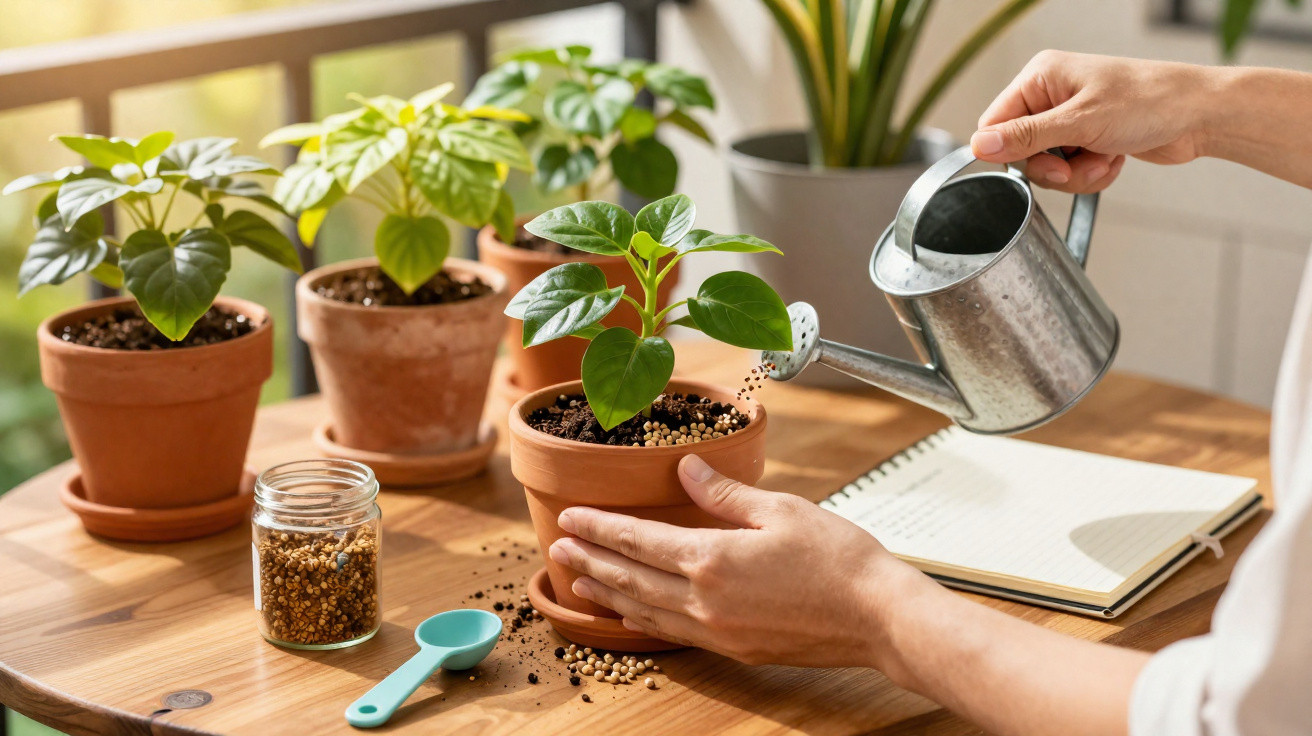
A pale, leggy basil plant stretches towards the window as though pleading for rescue. Beside it, a neat geranium is pushing out fresh buds as if it has discovered a hidden power supply. The peace lily nearby simply looks… exhausted. They share the same room, light and owner, yet their lives could not look more different.
The reason is not affection or care. It is nutrition. What we tend to describe as “good soil” is often only a temporary starter supply, which is used up within months. After that, plants must cope with a limited amount of depleted compost. You water them, turn them towards the light and talk to them (be honest), yet their growth still grinds to a halt.
Some houseplants in pots fade away slowly and without fuss, while others erupt into lush greenery. Fertilising is often the surprisingly straightforward difference between the two – or the quiet mistake that holds a plant back.
Why fertiliser matters more in pots than in the ground
In a garden border, roots can travel, compete and draw nutrients from surrounding soil. A pot is more like spending your entire life in a studio flat with a single food cupboard. Once that cupboard has been emptied, there is nothing else available. This is why potted plants can shift from flourishing to floppy without any obvious disease.
Within that small ecosystem, fertiliser is not an indulgence; it is the food shop. When it is applied regularly and in balance, healthy growth can seem almost effortless: fresh foliage, continuing flowers and colours that stay deep rather than fading. Apply it erratically or too strongly, however, and roots can burn, leaves may turn yellow, and a plant gradually moves from thriving to merely coping.
A balcony gardener in London once showed me two identical planters filled with petunias. They had been planted on the same day, received the same light and used the same shop-bought compost. From spring until late summer, one planter received liquid feed every 10 days. The other had no feed after planting. By August, the fed petunias formed a thick purple cascade. The unfed plants resembled the forlorn remnants on a clearance stand: sparse, leggy and half bare.
He had not used a specialist product. It was simply a standard all-purpose liquid fertiliser from the supermarket, diluted in a watering can. That small routine produced twice as many flowers and extended the colour for another month. No apps or spreadsheets were involved – only a habit that worked quietly in the background while he got on with everything else.
Research from horticultural institutes tells the same story in more scientific terms. With standard compost, potted plants generally exhaust their available nutrients after around 6–8 weeks. Nitrogen, potassium and micronutrient levels then steadily decline. Above ground, this appears as reduced growth, smaller foliage and fewer flowers. Below the surface, it means weaker roots and a plant that is more vulnerable to heat, missed watering or being moved.
When you think of fertiliser as steady, slow “snacks” rather than occasional “vitamin shots”, it becomes far less daunting. It also feels strangely relatable.
Fertilising pots comes down to a simple three-part calculation: what you use, how often you apply it and how gentle the feed is. Most people focus entirely on the first part – the product – and overlook the other two. That is why so many fertiliser bottles end up gathering dust in the shed.
Frequency is where the real difference lies. Small, frequent doses tend to work better than powerful, rare ones. Plants do not benefit from a feast followed by famine. Their roots prefer a dependable supply they can process, particularly in small containers where salts build up quickly. Gentle feeding can mean diluted liquid fertiliser, slow-release pellets or organic additions that release nutrients gradually instead of delivering everything at once.
The principle is straightforward: a pot is a closed system. Whatever you put into it remains until the plant absorbs it or watering carries it away. Add too much feed and the growing medium becomes harsh. Feed gradually and the container becomes a dependable store cupboard. That is when leaves grow fuller, flowering repeats and your usual watering routine begins to deliver better results.
Practical, low-stress fertilising methods anyone can keep up
For most people, the simplest approach is to add a weak liquid fertiliser to normal watering every second or third time during the growing season. Use the same watering can and follow the same route around your flat or balcony. Add a capful or measured amount, then stir. If the label recommends one cap per litre, use half a cap instead and feed a little more frequently. It turns watering into a mild, ongoing nutrient supply rather than an occasional heavy dose.
If you tend to forget tasks – as most of us do – slow-release granules or pellets worked into the upper layer of compost can be a quiet lifesaver. Scatter them, lightly mix them in and water as normal; they dissolve over several weeks or months. You will not see dramatic results overnight, but you will have a reliable nutritional foundation that keeps plants growing, particularly on balconies where watering already feels like enough of a job. It’s the closest thing to “set and mostly forget” in plant care.
One rainy afternoon in Manchester, I watched a friend repot her snake plant. She removed the root ball, brushed away some dry, dusty compost and then did something unexpected: she blended a small handful of worm castings into the fresh growing mix. There was no careful calculation, only a casual gesture of “roughly this much”.
Three months later, that snake plant had produced thicker, glossier leaves and even a modest flower spike – something many people never see on an indoor plant. The only changes had been the slightly richer compost and one diluted liquid feed during summer. There was no timetable pinned to the fridge or guilt when life became hectic, just two easy fertilising practices incorporated into what she was already doing.
Examples like this are not miracles. They are simply what happens when roots receive more than the bare minimum for survival. Each new leaf is effectively a vote of confidence: the plant expects favourable conditions to continue, so it puts energy into growing rather than merely enduring.
After noticing a problem, many people overcompensate. Yellow leaves prompt them to apply a strong feed like an emergency energy drink. The plant becomes stressed, its roots may scorch slightly and the situation looks worse. Fertiliser then gets the blame, rather than the amount used. Let’s be honest: nobody really does this every day with a perfect logbook routine.
A softer strategy begins with the plant’s natural pace. Fast-growing plants and heavy flowerers, including tomatoes, petunias and basil, appreciate regular feeding throughout their active season. Slow growers such as succulents and snake plants need much less – often no more than monthly, and none at all in winter. If you are uncertain, feed too little and observe. Pale new leaves, sluggish growth and fewer blooms usually mean “more food, please”. Brown tips or crisp leaf edges after feeding generally mean “too strong”.
We have all watched a formerly contented plant begin to sulk and felt a little guilty whenever we passed it. Fertiliser is not a cure-all, but it can quietly affect whether a plant recovers from underwatering, repotting shock or a week on a cold windowsill. Consider feeding a way to support resilience, rather than a punishment after a plant has already begun to collapse.
“Plants in pots live on our schedule, not nature’s. When we feed them little and often, they stop surviving like hostages and start behaving like they’re actually at home.”
To make the process manageable, turn fertilising into tiny habits rather than major jobs. Write your regular dilution ratio on the watering can. Store liquid feed beside your plant mister. Choose one weekday each month to work slow-release pellets into outdoor pots. These small prompts reduce the mental effort involved.
- Use half-strength liquid feed more frequently instead of full-strength fertiliser only occasionally.
- Do not fertilise when compost is bone dry – water first, then feed next time.
- Stop feeding most plants in late autumn and winter, when growth slows down.
- Every few months, flush pots with plain water to prevent salt build-up.
- Use a separate routine for cacti and succulents: less fertiliser, less often.
Letting your plants tell you what they need
After a season of fertilising, a subtle change happens: instead of studying the bottle, you begin to interpret the leaves. Basil that suddenly tastes sharp and weak instead of rich and sweet is asking for more nutrition. A geranium producing plenty of leaves but no flowers may have too much nitrogen and too little of everything else. When a once-glossy rubber plant becomes duller and each new leaf is slightly smaller, it is quietly signalling that its food supply is running low.
This is where it becomes relatable again. You do not need flawless knowledge of NPK ratios to spot smaller spider plant babies or notice that a chilli plant flowers but drops those flowers before fruit forms. Consistent, modest feeding can often reverse these patterns within a few weeks. It is not an instant transformation, but a gradual improvement that becomes clear when you compare photographs or remember how the plant appeared a month earlier.
Once fertilising becomes part of this quiet exchange with your plants, it no longer feels like a chore. It is another form of noticing – of paying attention to the small green lives that share your home. Some people will explore compost teas and bespoke mixes, while others will rely on one dependable bottle beneath the sink. Either approach can create thriving pots on a windowsill that once felt like a plant graveyard.
| Key point | Detail | Benefit for the reader |
|---|---|---|
| Feed little and often | Choose low, regular doses of liquid fertiliser | Reduces the risk of scorch and supports steady growth |
| Match feeding to plant type | Hungry plants and slow-growing succulents need different schedules | Prevents over-fertilising and saves product |
| Combine liquid and slow-release fertiliser | Use granules in the growing medium alongside light fertilised watering | Creates a simple nutritional “baseline” that is easy to maintain |
FAQ:
- How often should I fertilise my potted plants? For most leafy and flowering plants, use a half-strength liquid feed every 2–3 weeks in spring and summer. Slow growers such as succulents generally only need feeding monthly at most.
- What’s better: organic or synthetic fertiliser? Either can be effective. Organic choices, including worm castings, seaweed and composted manure, release nutrients more slowly and may improve soil life. Synthetic liquid feeds work faster and allow more precise dosing.
- Can I fertilise in winter? Usually not. Most indoor plants slow their growth or partly rest in winter. Feeding at this point can encourage weak, leggy growth. Start again in spring when fresh leaves appear and the days become longer.
- Why are my plant’s leaf tips turning brown after feeding? This often indicates fertiliser burn or salt build-up. Change to a weaker solution, flush the pot with plain water and leave a gap before feeding again.
- Do new potting mixes already contain fertiliser? Many modern mixes contain starter nutrients that last for 4–8 weeks. After that, begin a gentle feeding routine to maintain growth.

Comments
No comments yet. Be the first to comment!
Leave a Comment