
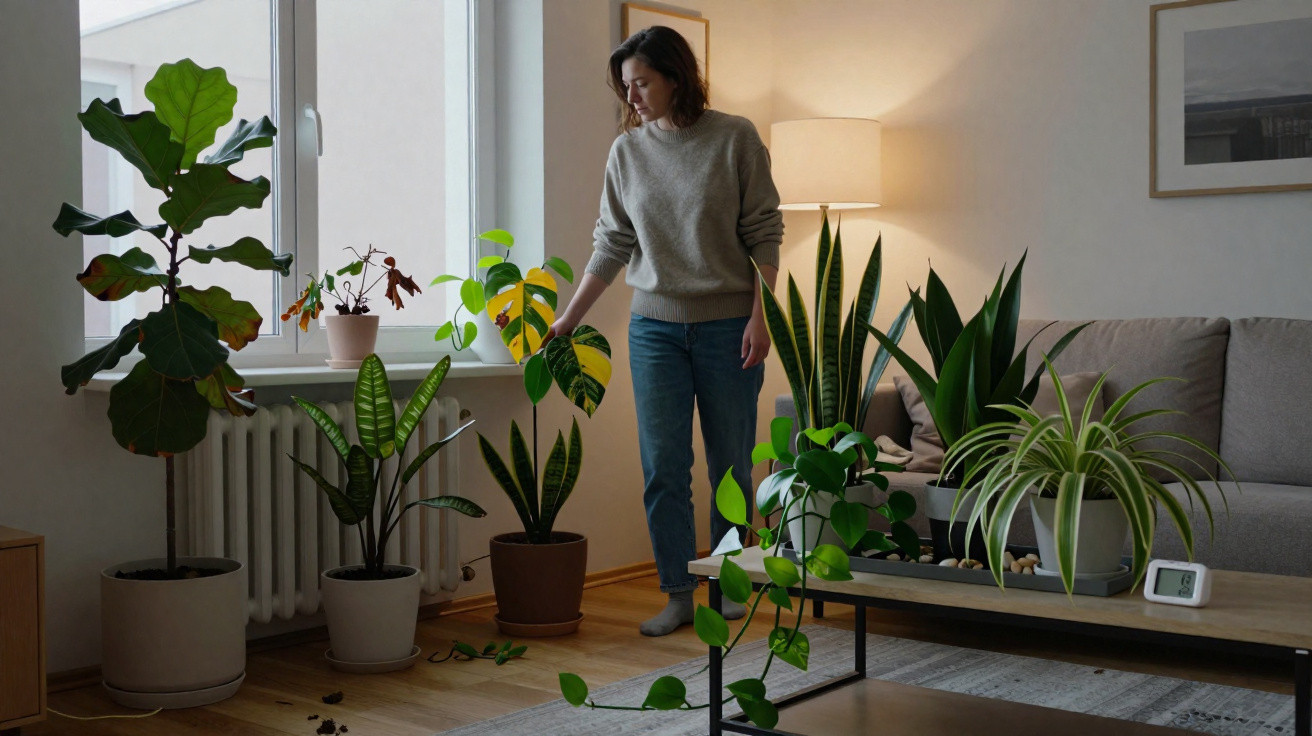
With the heating running and windows kept closed, your “urban jungle” can quietly shed leaf after leaf before Christmas arrives.
This winter, millions of plant enthusiasts across the UK and US will buy the same glossy-leaved favourites and Instagram stars, only to see them fail in dry air, weak light and inconsistent watering. By December, the result can resemble a subdued green graveyard rather than a flourishing jungle.
Why winter 2025 could be brutal for trendy houseplants
Energy-efficient properties, double glazing and constant central heating produce an environment that many fashionable houseplants cannot cope with. Winter days are brief, radiators strip moisture from the air, and indoor temperatures tend to remain static. Yet many plants heavily promoted in garden centres and across social media need precisely the reverse: bright light, reliable humidity and cooler nights.
The biggest indoor plant problem this winter is not “bad gardeners”, but plants completely mismatched with modern flats and houses.
Beyond the immaculate “shelfies” on social feeds is a group of around 28 species that horticulturists regularly identify as unsuitable for typical living rooms. They have much in common: striking appearance, sensitive root systems and almost no tolerance for mistakes once the thermostat rises above 20 °C and curtains remain drawn.
The usual suspects: 28 plants that struggle in real homes
Although experts’ lists vary a little, the same plants repeatedly appear in discussions of species that perform badly in winter flats. They are not inherently “bad” plants; they simply require an environment more like a greenhouse than a rented flat with one north-facing window.
| Plant | Why it fails indoors in winter |
|---|---|
| Indoor azalea | Requires cool, damp conditions and cannot tolerate dry, heated rooms |
| Gardenia | Needs cool nights, high humidity and consistently moist compost |
| Calathea and related “prayer plants” | Require high humidity and even warmth |
| Fine-leaved ferns | Radiators and dry air quickly scorch their fronds |
| Ficus lyrata (fiddle-leaf fig) | Highly reactive to draughts, relocation and inconsistent watering |
| Monstera variegata | Needs strong light; its white sections can readily burn or rot |
| Hydrangea in pots | Their shallow roots dry rapidly in heated rooms |
| Miniature roses | Favour outdoor light and cool air, and are prone to pests |
| Spathiphyllum (peace lily) | Does not cope well with cold draughts or overwatering in poor light |
| Delicate orchids (beyond common phalaenopsis) | Require particular night-time temperatures and humidity levels |
The remaining members of the “risky 28” include numerous large-leaved alocasias, several bark-mounted epiphytes, fine-leaved marantas and various tropical climbers marketed as statement plants. Their common vulnerability is poor tolerance of dry air, temperatures consistently over 21–22 °C, and watering that alternates between being forgotten and panic-level soaking.
Indoor azaleas: the perfect December flower that rarely survives January
Azaleas in peak flower are a familiar December sight in European and US garden centres. Compact and covered in blooms, they appear to be instant Christmas decoration. What the sales message seldom explains is that they need conditions almost no lounge can provide.
For indoor azaleas to remain well, they need cool surroundings, preferably 12 to 18 °C, bright light and compost that stays evenly, lightly moist. Put one in a sitting room at 22 or 23 °C, beneath a curtain or beside a radiator, and it can deteriorate quickly. Flower buds shrivel before opening, foliage curls and the entire plant may collapse within weeks.
One deep dry-out can throw an indoor azalea off for the entire season; many never fully recover after a single missed watering.
Rather than placing them beside the television, azaleas are better suited to unheated spare rooms, well-lit stairwells or enclosed porches where soil moisture can be monitored.
Hidden enemies: heating, drafts and dry winter air
From London to Chicago, winter interiors often create a sharp divide between cold window glass, hot radiators and almost no circulating fresh air. Plants experience this conflict far more severely than people.
- Cold air falling from windows chills foliage while the roots remain in warm compost.
- Radiators accelerate evaporation and draw moisture from delicate leaves.
- Short winter days reduce growth, meaning water lingers in pots and roots are more likely to rot.
- Brief bursts of ventilation cause severe temperature changes around balcony doors.
Peace lilies, for instance, respond poorly when their pots rest on freezing tiles or directly above a heater. Epiphytic plants, including certain mounted ferns and unusual aroids, may even alter the composition of their sap if they are repeatedly chilled to near 0 °C and then warmed again. This can leave them weakened and more irritating to skin or pets.
The most dangerous spot is often the “borderline zone” - that apparently harmless corner between a cold window and a hot radiator.
A few straightforward adjustments can reduce harm: stand pots on cork or wood, position them 30–50 cm from cold glass, and do not keep sensitive plants in poorly insulated porches or garages merely because they seem “greenhouse-like”.
Why Instagram’s favorite plants keep dying in normal flats
The so-called worst 28 indoor plants share another characteristic: they look exceptional in photographs. Variegated monsteras, huge alocasia leaves and pristine fiddle-leaf figs generate engagement and sales, but most such images are taken in greenhouses, studios or homes arranged carefully around the plants, rather than in ordinary rooms.
These plants commonly need:
- Very bright but indirect light for most of the day.
- Consistently high humidity above 60%, without cold draughts.
- Night-time temperatures lower than those found in most centrally heated homes.
- Regular and accurate watering, alongside effective drainage.
- Very little relocation, as they object to being moved between rooms.
Many are also toxic when eaten, especially by cats and dogs. Ficus, peace lilies, some alocasias and certain rare aroids can irritate mouths and digestive systems. As plants decline over winter, their leaves yellow and fall more readily, increasing the likelihood of children or animals chewing them.
How not to turn your living room into a green graveyard
Plant specialists increasingly advise regarding these 28 demanding species as “advanced level” plants, not beginner options. This approach aims to reduce failures among new houseplant owners and curb the annual pattern of impulse purchases followed by quiet composting.
For newcomers, hardier plants are much better equipped for winter:
- Snake plant (sansevieria): copes with low light and dry air.
- ZZ plant (zamioculcas): withstands missed watering and dim corners.
- Pothos and philodendrons: tolerate temperature changes and moderate neglect.
- Spider plant: manages heated rooms and bounces back quickly.
- Cast-iron plant (aspidistra): thrives even in older, draughty properties.
When these plants are growing well, it is more sensible to introduce an indoor azalea, gardenia or statement alocasia, as you will already understand your home’s light levels, cold areas and watering routine.
Treat fragile indoor plants like you would a classic car: beautiful, but demanding, and not your daily run-around.
Three small changes that save a lot of plants
Researchers and specialist growers frequently point to the same simple measures for helping fragile plants survive December.
- Shift, don’t drown: When a plant appears unhappy, first move it a little nearer a window or further from a radiator rather than immediately doubling its water.
- Group for humidity: Arrange several plants together on a tray of pebbles with a shallow layer of water to boost local humidity without misting the entire room.
- Use a cheap thermometer: Check overnight temperatures on floors and window sills; many apparently cosy spots become colder than expected.
What December 2025 buyers should ask before picking a plant
Garden centres and online retailers will continue promoting exotic foliage during the festive period. Before putting another glossy pot in the trolley, asking a few quick questions can help avert a future green graveyard.
- Where, exactly, will this plant be placed from December to March, hour by hour?
- Will that location receive direct winter sun, or virtually no light at all?
- How warm is it overnight, particularly near glass or external walls?
- Who shares the home with the plant – pets, toddlers or housemates who use dehumidifiers?
- In practical terms, how regularly will somebody check the compost moisture?
Comparing the answers with the plant label - or preferably having a brief conversation at the nursery counter - can turn a decorative purchase into a living plant with a reasonable chance of lasting beyond New Year.
Beyond the list: using “plant zoning” like professional growers
Commercial greenhouses manage difficult plants successfully because they divide their space into zones according to light, humidity and temperature. A simpler version of the same system can also work in the home.
Rooms can be sorted into a handful of informal zones:
- Cool-bright zone: East-facing windows, unheated bedrooms and stairwells. Appropriate for azaleas, certain ferns and cyclamen.
- Warm-bright zone: South- or west-facing windows with blinds. Suitable for many monsteras, common orchids and succulents.
- Warm-dim zone: The back of sitting rooms and corridors. Keep this for robust plants such as snake plants and ZZ plants.
Assigning plants to zones instead of placing them at random helps households reduce losses, spend less on replacements and avoid the dispiriting view of another brown, drooping statement plant in January.
For anyone who still wants a dramatic plant that seldom dies, artificial alternatives have improved quietly. Some interior designers now combine resilient live plants with several high-quality faux focal points. This hybrid approach reduces upkeep while still delivering large leaves and winter greenery, without contributing to the seasonal green graveyard found on so many window sills by December 2025.


Comments
No comments yet. Be the first to comment!
Leave a Comment