
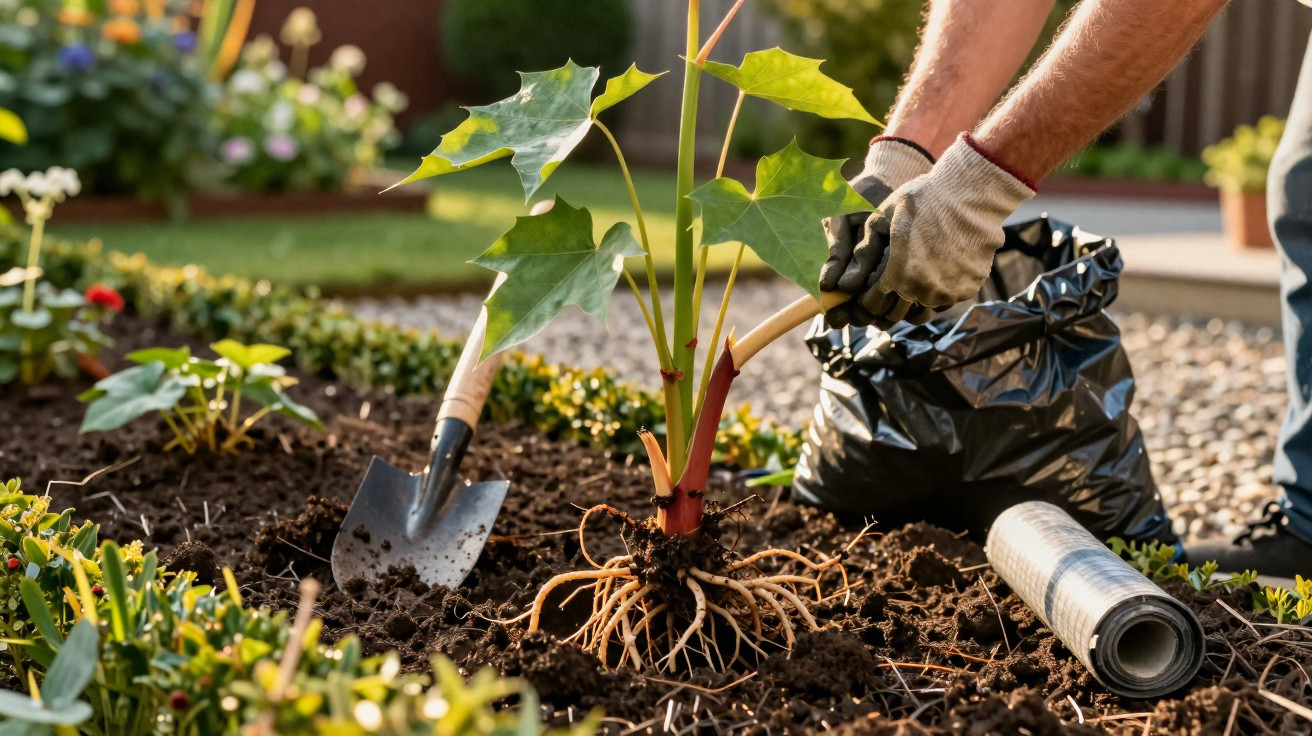
The woman leaned over her flowerbed, her brow furrowed in confusion. Between the lavender and roses, a thick green mass had begun to dominate the space, scrambling over the fence and pressing into the neighbour’s garden. “I’ve grown that all my life,” she said, almost insulted, while the council officer handed her a printed list. In bold type was the name of a plant once seen as harmless, even attractive, but now categorised as a threat.
He did not sound like a gardener. He sounded like an enforcement officer: fines, removal, a duty to eradicate.
The same situation is now unfolding in gardens throughout France. A once-familiar plant has discreetly changed status, going from cherished ornamental to prohibited invader across Europe.
Gardeners were not warned, and the surprise is profound.
From French garden favourite to prohibited invader
For decades, it blended into the scenery: a hedge in one garden, a windbreak in another, an easy way to conceal an unattractive wall or define the edge of a plot. Fast to grow, inexpensive and readily available from nurseries, Japanese knotweed (Fallopia japonica) entered French gardens with very little fuss.
Its high, bamboo-like stems and broad heart-shaped leaves brought an almost tropical appearance. For many people, that was precisely its appeal. It looked abundant, vigorous and resilient – a plant capable of coping with anything.
No one expected it to appear on the EU blacklist.
Then reports began to emerge. A driveway developed unexplained cracks. A patio slowly started to rise. An old stone wall, once solid, fractured under an unseen force beneath it.
In Brittany, a retired couple found that the “pretty screen” they had planted fifteen years before was growing below the fence, spreading into a ditch and taking over the nearby path. The town hall became involved, followed by the département authorities. Knotweed had spread everywhere.
Across France, local authorities started charting its expansion. In some valleys, satellite images revealed riverbanks almost entirely bordered by this one species. Biodiversity was disappearing beneath an uninterrupted green blanket.
Scientists had anticipated the problem. In suitable conditions, Japanese knotweed can grow by several centimetres a day. Even a tiny root fragment, no bigger than a fingernail, can establish a new colony.
It withstands pollution, poor ground and flooding. It produces leaves early in the year, casting heavy shade that smothers other vegetation. In time, it changes the soil, reduces biodiversity and damages the appearance of riverbanks.
That is why the European Union added it to its list of “invasive alien species of Union concern”, bringing strict restrictions into force. Once valued in French gardens, the plant is now officially prohibited from being planted, sold, transported or even encouraged anywhere in Europe. The boundary is clear.
What to do if Japanese knotweed is growing in your garden
The first practical response is starkly simple: stop interfering with it. Pulling it up, cutting it back or chopping it for the green-waste bin are all instinctive actions that can help the plant spread.
Begin instead by watching it closely. Locate every place where knotweed is present, from the main stand to the smallest fresh shoot appearing three metres away in the lawn. Make a rough map, even if it is only a sketch in a notebook.
After that, consider a strategy. Most specialists now advise a plan lasting several years, combining cutting at carefully chosen times, blocking out light, and tightly controlled removal of roots and soil. This is not a job for a single weekend. It requires patience over the long term.
For many gardeners, the prospect feels daunting. You bought a plant in good faith, enjoyed it for ten years, then suddenly learn that you are breaching European law. That can bring a strong sense of guilt.
Take a moment. You were not the person who introduced it during the nineteenth century for decorative planting and erosion control. You are one of countless ordinary people unexpectedly caught up in changing rules.
The real error now would be to disregard it. Putting knotweed off until “later” almost always means finding, five years afterwards, that it has doubled in area and silently reached the neighbour’s foundations. And, realistically, no one spends every Sunday inspecting each garden corner with a magnifying glass.
Technicians dealing with these plants every day make the same point:
“We don’t ask people to be perfect. We ask them to stop making the situation worse without realising it.”
So, what can you realistically do from this month onwards?
- Do not put knotweed into green waste or compost: it must be taken to a dedicated facility, or dried and incinerated.
- Never give neighbours pieces of root or stem, even if it is “just for a hedge”.
- Contact your town hall: many communes now provide dedicated procedures and support for invasive plants.
Rethinking gardens in the era of banned plants
Most of us know the feeling of entering a garden centre and immediately falling for a plant. It may be its shape, colour or a memory of a grandparent’s garden. It goes into the trolley before you have read the label properly.
The Europe-wide ban on Japanese knotweed requires a modest change in thinking. Alongside “Is it attractive?”, gardeners now need to ask: “What will it do if it gets beyond my garden?”
That does not mean gardening has to become a chore. It means rediscovering curiosity, as when you first put your hands into the earth and wondered what was alive there.
The knotweed story is also about trust. For years, gardeners relied on catalogues and nurseries to exclude risky species. Some did so; others followed trends and profit.
Today, the internet, local environmental organisations and specialist apps make it easier than ever to check a plant’s status within seconds. A quick search, a look at your country’s invasive-species list, or a conversation with a local group can prevent you from bringing home a future problem.
It is a small effort that protects riverbanks, farmland and even your own foundations, without requiring you to chain yourself to a tree.
Many French households have begun a quiet revolution. Rather than planting fast-growing exotic species along fences, they are returning to hardy native shrubs such as hawthorn, field maple, dogwood and spindle. Birds benefit from them. Insects return. The light in the garden changes.
Others are trying mixed hedges, with some fruit, some blossom and some evergreen foliage. The outcome is less “perfect” than a uniform green wall, but it somehow feels more alive.
Seen that way, banning one much-loved but dangerous plant is not simply a restriction. It is an invitation to garden in another way: more slowly, with a stronger awareness of what we plant and why.
The ban on Japanese knotweed throughout Europe is more than a legal notice tucked away in the Official Journal. It exposes the idea that our gardens are isolated spaces, separate from everything around them.
Every plant that crosses a fence, reaches a riverbank or emerges beside a railway line can reshape the landscape for decades, sometimes centuries. One gardener’s decision can turn into a problem for an entire valley.
This story is painful because it affects something personal: the bond between plants and memory. Many French people remember a grandparent proudly displaying “their” large, vigorous knotweed clump, admired for its shade and strength.
Discovering years later that the same plant is legally regarded as a biological time bomb can be unsettling and even seem unfair. Acknowledge that discomfort. Discuss it. Share photographs, experiences and uncertainties with neighbours or online. That is how new gardening practices take hold.
In a few years’ time, we may wonder how selling invasive species in garden centres ever seemed normal, much as we now cringe at old adverts promoting smoking on aeroplanes.
For the moment, we are living between two habits. The old instincts have not entirely disappeared, while the new ones remain fragile. That is where your garden stands: in a transition zone where a banned plant makes you examine every leaf, every root and every “easy solution” that appears too good to be true.
The law has spoken. What happens next depends on the people holding the spades.
| Key point | Detail | Why it matters to the reader |
|---|---|---|
| Plant status | Japanese knotweed is on the EU list of invasive alien species of Union concern | Understand why it is banned and what the legal implications are |
| Practical risks | It damages foundations, walls and pipes, while eliminating local biodiversity | Assess the genuine impact on your home and the surrounding environment |
| Steps to take | Stop its spread, plan control over several years and seek local advice | Know exactly how to respond if it is growing in your garden |
FAQ:
- Is Japanese knotweed really completely banned in Europe? It is prohibited from being planted, sold, exchanged, transported or deliberately spread throughout the EU. Existing populations must be controlled; you are not allowed to “encourage” it.
- Can I be fined for having it in my garden? You are unlikely to be fined simply for having it, but sanctions are possible if you plant more, spread it, or refuse to cooperate when local authorities require control measures.
- How do I recognise Japanese knotweed? It has hollow, bamboo-like stems with clear nodes, large shield- or heart-shaped leaves, and clusters of small creamy-white flowers in late summer. During winter, its canes become brown and dry but remain upright.
- Is cutting it down enough to get rid of it? No. Cutting alone generally causes it to regrow even more vigorously. Effective control involves repeated cutting at key times, covering and, in some cases, professional excavation over several years.
- What can I plant instead of knotweed? For a thick, quick-growing hedge, choose native species such as hazel, hawthorn, dogwood, viburnum or mixed hedges. They are safer for the environment and provide wildlife with food and shelter.

Comments
No comments yet. Be the first to comment!
Leave a Comment