
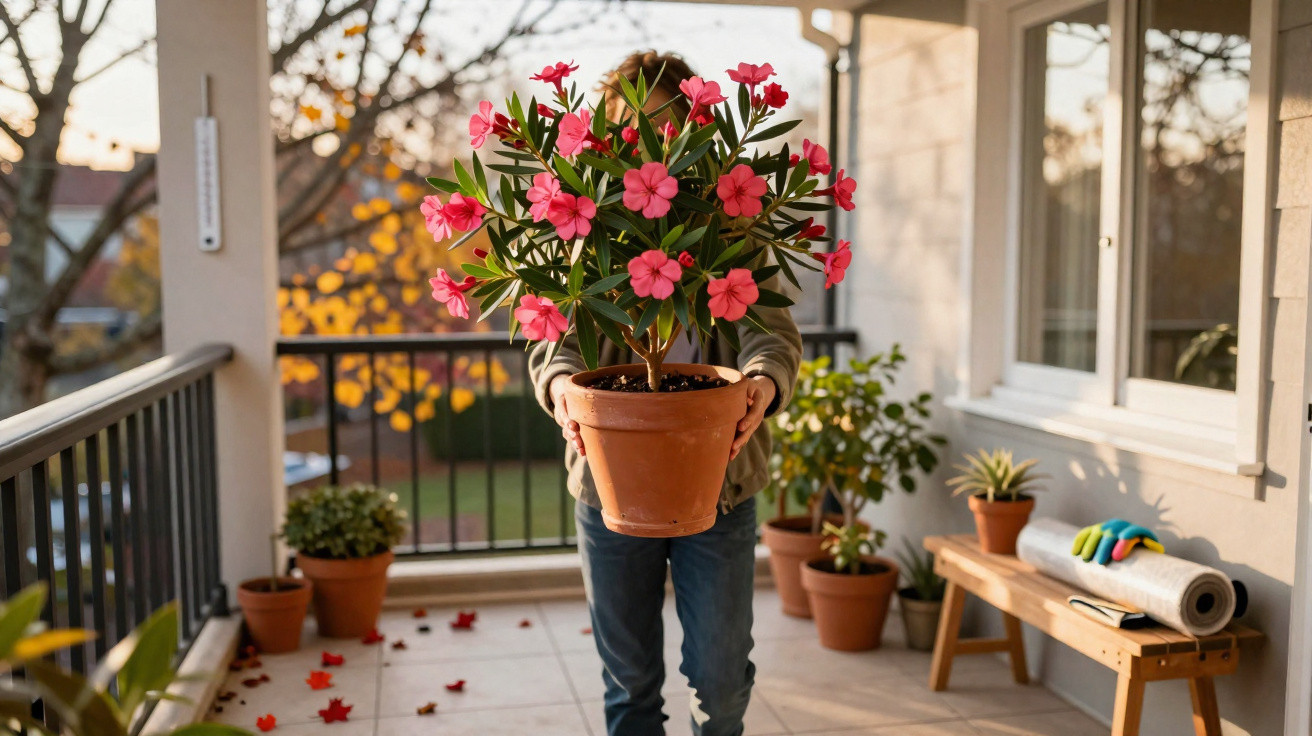
As temperatures fall, many gardeners fail to realise how rapidly a container cools, or how little time a Mediterranean shrub such as oleander has before frost reaches deep into its roots.
Why potted oleanders face a harsher winter than those in the ground
When planted in the ground, an oleander acts like a resilient shrub. Its roots can spread out through soil that retains some warmth from the deeper layers. In mild areas, established plants can often withstand short drops to around -5°C in these conditions.
The situation is different in a pot. The root ball is restricted to a small amount of compost, enclosed by relatively thin terracotta, plastic or metal sides. Such containers shed heat quickly, particularly overnight. Cold air surrounds every side of the pot rather than affecting only the surface.
When an oleander grows in a pot, the root system becomes the weak link: it chills earlier, faster and more deeply than the foliage.
Above the pot rim, the plant can still appear healthy and green while the compost beneath is nearing freezing point. Repeated exposure to cold first harms the fine feeder roots. As these roots absorb water and nutrients, their loss causes leaves to yellow, buds to shrivel and entire branches to die back within days.
Autumn’s changing temperatures add to the risk. Mild afternoons can be followed by crisp, cold nights. Compost loses warmth quickly even when the air at head height still feels comfortable. On balconies, gardeners often spot the issue only once the first leaf tips have turned black.
The October move that quietly decides whether your oleander survives
Garden centres often promote fleece, specialist fertilisers and elaborate winter shelters. However, for oleanders in pots, one action outweighs all others: putting them under cover before the first frost arrives.
The decisive gesture takes place in October: move the pot to a bright, sheltered spot while nights still stay above freezing.
Where to place your oleander indoors or under cover
The priority is to prevent the roots from freezing while providing sufficient light for the plant to survive, rather than grow strongly. Several locations can offer this balance:
- Unheated conservatory or sunroom: This provides an excellent combination of light and frost protection, with temperatures commonly ranging from 5°C to 12°C.
- Bright garage or outbuilding: This can work where there is a window for daylight and temperatures seldom drop below 5°C.
- Cold greenhouse: This gives good light while sheltering the plant from wind and direct frost, provided severe cold spells are monitored.
Avoid placing the plant in a dark cellar or an overly warm sitting room. In low light, oleanders become stretched, weak and more susceptible to disease. In a heated room at 20°C, they may continue attempting to grow, yet the short day length cannot support this, leaving stems soft and leggy.
Choosing the right time is just as important as choosing the right place. Many gardeners wait until a frost alert is issued before bringing containers in. By then, the pot may already have spent several nights near 0°C on a balcony floor. Damage can therefore begin within the root ball well before the foliage shows any signs of stress.
Essential prep before you move the pots inside
Moving a large pot indoors without first preparing it can bring in pests, fungi and rotting debris, all of which flourish behind glass during winter. A brief October checklist greatly reduces these risks.
Clean-up and trimming: light but strategic
First, examine the shrub carefully. Clear away dead foliage, faded flower clusters and visibly damaged twigs. Prune out crossing branches that rub together, since the resulting wounds may harbour disease. Keep pruning restrained: the aim is simply to improve air circulation and reduce the plant’s water needs.
This simple tidy-up removes potential winter hiding places for scale insects, mealybugs and fungal spores. It also makes it easier to inspect the compost surface for moss or weeds that compete with the plant for water.
Adjusting water: avoiding both drought and rot
After being moved under cover, an oleander grows more slowly. Cooler air and shorter days limit evaporation. Continuing to water as you did in July can leave roots sitting in constantly wet compost, encouraging rot.
In winter quarters, water becomes a rare but precise gesture: small amounts, spaced out, targeting slightly moist soil rather than saturation.
Allow the upper few centimetres of compost to dry before watering again. Check with your finger instead of relying on appearance alone. Water in the morning, allowing surplus moisture to evaporate gradually through the day. After 15 minutes, empty any saucers so water is not left standing around the root ball.
Ventilation has an understated but important role too. On milder days, briefly open a window or door in the conservatory or greenhouse to renew the air. This helps prevent humidity peaks that encourage fungal disease, without subjecting the shrub to severe draughts.
What to do if you have no indoor shelter at all
Urban balconies and compact patios often have no spare sheltered indoor area. If that is the case, regard the container itself as something that needs insulation, rather than merely an ornamental pot.
Simple outdoor protections that make a real difference
A few inexpensive materials can turn a vulnerable container into a surprisingly robust winter set-up:
| Protection | Role | How to use it |
|---|---|---|
| Fleece or winter fabric | Protects foliage from frost and wind | Wrap the shrub from the base to the top, keeping the covering slightly loose to allow air circulation. |
| Bubble wrap, straw or dry leaves | Insulates the root ball | Wrap or pack the material around the pot, particularly its sides, to reduce heat loss. |
| Bricks or pot feet | Prevents contact with frozen ground | Lift the container a few centimetres to reduce cold rising from concrete or paving. |
Placing several pots together against a south-facing wall can also be beneficial. Brickwork retains some daytime warmth and releases it slowly overnight, reducing sudden temperature changes. A group of containers forms a microclimate with reduced wind exposure and steadier air around the leaves.
Keep the fleece on during cold periods, but loosen it slightly on mild, sunny days to avoid overheating and let the shrub breathe. Repeating this modest routine throughout the season can be the difference between a plant that merely struggles into spring and one that resumes growth vigorously.
Why waiting for “real winter” often comes too late
Many gardeners decide when to act by looking for seasonal signs outdoors, such as bare trees, frozen puddles or snow-covered cars. For oleanders in pots, these signals tend to appear well after the risky period has started.
During October and early November, cold nights may produce no frost on the lawn while the shallow compost in a container has already reached damaging temperatures. Balconies made from paving or concrete also radiate heat outwards overnight, speeding the cooling beneath and around the pot.
The critical moment is not the first white frost on the grass, but the sequence of clear nights when the pot cools below what roots can manage.
Weather apps are useful, but they rarely reflect temperatures at root level on a windy balcony four storeys above ground. This is why many professional growers set an earlier deadline, generally around mid-October, treating any additional mild weather as a bonus rather than a reason to delay.
Extra winter care tips to keep your oleander ready for spring
Once the shrub is safely under cover or protected by insulating layers, a few seasonal practices will help preserve its condition. Do not apply nitrogen-rich fertiliser during winter, as it promotes soft growth that is easily damaged. Keep feeding until spring, when temperature and light levels can support fresh shoots.
Inspect the leaves for pests every few weeks. Sheltered or indoor locations can encourage scale insects and spider mites. Minor infestations can usually be dealt with by wiping leaves with a damp cloth or using a mild soap solution. Early action prevents a larger outbreak just as the plant should be resuming growth.
As late winter days become longer, look for signs that the shrub is waking up: small new buds, deeper green on newer leaves and compost that dries a little faster. Then increase watering gradually and ventilate the space more frequently to firm up stems before returning the plant outdoors.
This gradual return to open air is nearly as significant as bringing the plant inside early. A potted oleander moved directly from a still conservatory to a bright, windy terrace can develop leaf scorch and suffer broken soft shoots. Brief acclimatisation periods, with the plant spending a few hours outdoors each day, allow it to regain resilience.
Viewing a potted oleander as a seasonal traveller instead of a fixed shrub changes the approach. Every autumn, it requires passage to a safer microclimate, reduced feeding and a slower pace. Each spring, it needs time to extend, strengthen and adapt to more demanding outdoor light. Repeating this pattern year after year transforms an apparently delicate patio plant into a long-lasting feature that comes through winter with much less trouble.
Comments
No comments yet. Be the first to comment!
Leave a Comment