
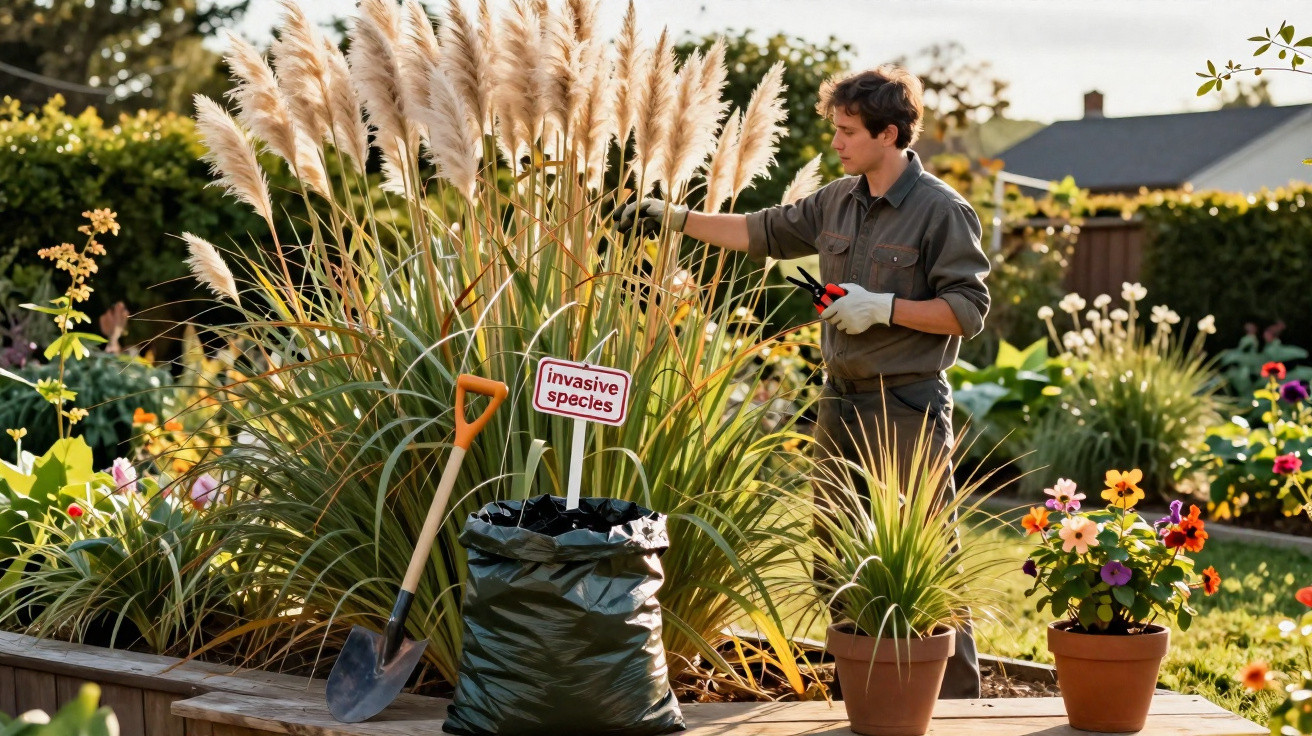
The elegant ornamental grass with its creamy plumes has appeared on France’s prohibited list since 2023. Authorities and conservationists no longer regard it as an innocent Instagram subject, but as an invasive threat to native plant communities. Many amateur gardeners are now asking: could I get into trouble if I have pampas grass in a border – and do I really have to dig it out?
Why pampas grass is considered a problem plant in France
Pampas grass, botanically known as Cortaderia selloana, originally comes from South America. In gardens, it forms dense clumps that can grow beyond two metres tall and reach a similar width. Impressive as it may look in a border, it can rapidly become problematic once it escapes into the wider landscape.
Each of its ornamental plumes produces hundreds of thousands of tiny seeds. Carried for kilometres by the wind, they spread across dunes, embankments, roadside verges and wasteland. They can germinate in large numbers, crowding out native grasses and perennials while altering entire habitats.
Pampas grass is now officially classified in France as a “non-native invasive species” capable of severely displacing indigenous flora.
The consequences are wide-ranging:
- Decline of rare plants adapted to particular sites
- Reduced biodiversity in dunes, embankments and wetlands
- Altered habitats for insects, birds and small mammals
- More difficult access for maintenance work along roads and slopes
There are also very practical everyday concerns. Its leaves are razor-sharp and can inflict deep cuts. People with pollen allergies may react strongly when it flowers. Furthermore, dried-out clumps burn readily – beside homes or roads, this may increase the fire risk.
What the French pampas grass ban actually covers
France responded to these concerns in 2023 through a dedicated order. The measure is based on environmental legislation and European rules covering invasive species. Cortaderia selloana has since been included on the national list of prohibited plants.
The ban covers every form of handling live pampas grass – from importing it to selling it.
In France, the following activities involving live pampas grass and all viable plant material are prohibited, among others:
- Importing it or releasing it into the wild
- Keeping it in a pot or garden border for ornamental purposes
- Propagating, dividing or newly planting it
- Trading, exchanging or transporting living plants or rhizomes
Nurseries, garden centres and landscaping businesses had to withdraw their stock from sale. Anyone who still offers or imports live plants risks substantial penalties under the Environmental Code, including heavy fines and imprisonment. In reality, inspections focus chiefly on professionals and imports rather than long-established individual specimens in private gardens.
It is important to note that dried plumes, such as those used in vases or decorative arrangements, remain permitted in France. They are no longer considered live and cannot spread further – provided that no viable seeds remain.
Can you keep pampas grass in your garden?
The key question for many garden owners is this: if my clump has been there for years, do I need to fetch a spade straight away? In France, the legal position is more nuanced.
There is no blanket requirement to remove existing plants immediately. Anyone who planted pampas grass before 2023 does not have to remove it overnight. However, owners remain responsible for preventing the plant from spreading further.
The recommendation is: if pampas grass remains in the garden, it should be kept under strict control – ideally with a view to replacing it in the medium term.
How to make an established pampas grass clump safer
Anyone with pampas grass in their garden should take the following precautions seriously:
- Cut back plumes in good time: Remove them no later than before the feathery heads are fully mature, so that seeds cannot be blown away.
- Do not divide or give it away: Do not split the clump or pass plant sections and roots on to neighbours or friends.
- Wear protective equipment: Use sturdy gloves, long clothing and safety glasses, as the leaves are extremely sharp.
- Dispose of waste securely: Put leaves, roots and plumes into sealed bags and take them to a local collection facility rather than adding them to your home compost.
People living close to sensitive locations such as dunes, wetlands or riverbanks are often given clear advice by conservation bodies: pampas grass in these areas should be removed completely over time. For very old, large clumps, employing a professional may be worthwhile, as the rootstock is exceptionally tough and difficult to remove.
How to remove pampas grass properly
Removing the plant is physically demanding and should be planned carefully. A staged approach is sensible:
- Preparation: Cut back the plumes and leaves as far as possible. This makes the clump easier to handle and reduces the risk of injury.
- Expose the rootstock: Use a spade or mattock to loosen the soil around the plant and uncover the roots.
- Remove the rhizomes: It is often only possible to lift out the root ball in sections. Collect every piece, as the plant can regrow from remaining fragments.
- Check again the following year: Inspect the area the next spring and remove any new shoots immediately.
Anyone with back or joint problems should not hesitate to hire a specialist firm. On slopes or near walls, incorrect use of tools can cause damage.
Which alternatives to pampas grass work well in the garden?
Many garden owners appreciate the airy, soft appearance of large grasses. That effect can be achieved without encouraging invasive species. Several decorative, non-problematic plants are suitable for Central Europe.
| Alternative | Growth habit | Special features |
|---|---|---|
| Stipa tenuissima (Mexican feather grass) | Fine, mobile stems, up to about 60 cm | Very light-looking, ideal for modern borders |
| Molinia (purple moor-grass) | Upright stems, 80–150 cm depending on variety | Autumn colour, well suited to naturalistic gardens |
| Fescues (e.g. blue fescue) | Compact, semi-spherical clumps | A structural plant that is also suitable for pots |
Those who prefer tall, striking grasses can choose larger Miscanthus varieties (Chinese silver grass), provided they are not classified as problematic in their own region. It is worth checking regional guidance or plant lists issued by conservation organisations.
What German gardening enthusiasts can learn from the French case
Although French rules cannot be transferred directly to Germany or Austria, the case highlights one point clearly: a plant that is popular in garden centres can still become an ecological burden. Many invasive species have reached the wider countryside through ornamental plant ranges.
Anyone creating a new garden or redesigning borders can make a real difference by asking a few straightforward questions:
- Is the plant classified as invasive in my country or federal state?
- Are there regional warning lists or recommendations from environmental authorities?
- Are native alternatives available with a similar appearance?
Experts are paying increasing attention to the risk of garden plants “escaping”, particularly in regions with vulnerable habitats such as coastlines, peatlands or river floodplains. Grasses that reproduce solely by division and produce few seeds are generally considered considerably less problematic in this respect.
How to identify invasive species in your own garden
Alongside pampas grass, other ornamental plants are also attracting attention across Europe, including certain goldenrods, Himalayan balsam and Japanese knotweed. As an amateur gardener, you can look out for several warning signs:
- The plant suddenly appears in joints, cracks and distant corners of the garden.
- It quickly grows over smaller perennials or grasses.
- It produces conspicuously large numbers of seed heads that are dispersed widely.
Anyone who spots such developments early can still take action – by cutting plants back before seeds mature, removing young plants and not passing them on to neighbours. This keeps a garden attractive without turning it into a problem for neighbouring natural areas.
Comments
No comments yet. Be the first to comment!
Leave a Comment