
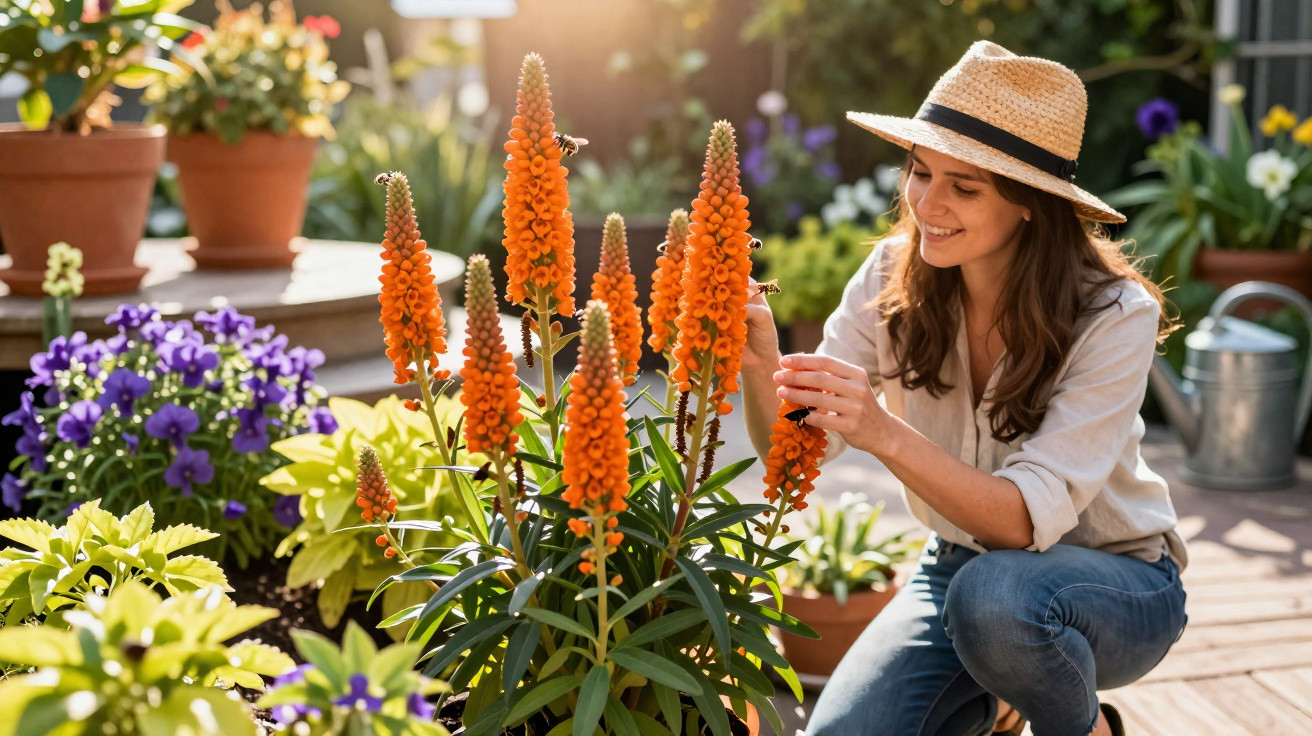
Many garden perennials are pleasant enough, yet can soon feel interchangeable. Others shape a space so powerfully that they remain unforgettable. Leonotis leonurus belongs firmly in the latter group: a spectacular perennial that is still rarely used here, but can turn even the most conventional herbaceous border into a glowing garden display.
A plant like fireworks: what makes Leonotis leonurus so distinctive
Originally from South Africa, Leonotis leonurus looks the part: sun-loving, spirited and impossible to overlook. It has a strongly upright habit, sending sturdy stems to around 1.80 metres high. Slim, elongated leaves line the stems, creating an almost graphic appearance.
The real show starts when flowering begins. Tiered rings of blooms develop up the stems, with each “tier” made up of numerous tubular, lightly hairy flowers in vivid, glowing orange. The result is more reminiscent of a designer light fitting than a conventional perennial.
The tiered flowers resemble small crowns of fire – a kind of glowing chandelier in the border.
This striking structure makes Leonotis stand out immediately in any planting scheme. It delivers height, form and colour in one go. Borders that feel slightly rigid or overly restrained benefit enormously from its sculptural presence.
Ideal for low-maintenance gardeners: little care, maximum impact
For all its dramatic looks, Leonotis is straightforward to grow. Its preferred recipe is simple: plenty of sunshine, free-draining soil and no waterlogging. Meet those needs and it is unlikely to cause difficulties.
Position: sunshine is essential
The key requirement is full sun. At least six hours of direct sunlight a day is advisable for abundant, dependable flowering. Partial shade produces longer, less sturdy shoots and substantially fewer flowers.
- A south- or west-facing position is ideal, such as in front of a wall or fence.
- Open, sheltered borders are preferable to tight spaces between tall shrubs.
- In cooler areas, a spot beside a warm wall that stores heat during the day can be helpful.
Soil and water: a drought-tolerant diva
Soil should be fairly light, humus-rich and well drained. Heavy, wet clay soils need improving before planting. Adding sand, gravel or fine grit to the planting hole helps excess water drain away more quickly.
Once established, you can leave the watering can alone more often. Leonotis copes remarkably well with dry spells. In an average summer, a thorough watering is needed only during prolonged drought. Constant wetness is far more troublesome for it than short periods of dryness.
Anyone going away for a weekend at the height of summer does not need to worry about their Leonotis – it is one of the more resilient sun-loving garden sculptures.
How hardy is Leonotis leonurus really?
Leonotis leonurus is not a traditional cottage-garden perennial that will shrug off -20°C without complaint. It tolerates temperatures down to around -8°C if the soil is reasonably protected. In many parts of the UK, this can work well with reliable winter protection.
In exposed locations, it is worth combining two approaches:
- In the border: apply a thick mulch of leaves, straw or bark around the root area, then add a little brushwood to protect against bare frost.
- In a pot: insulate the container with coir mats, horticultural fleece or an old blanket, and place it against a sheltered house wall.
For extra security, keep a small reserve of plants each year from cuttings or young plants. This preserves your stock even if an exceptionally harsh winter claims individual specimens.
The five most important rules for successful planting
| Rule | What to do |
|---|---|
| 1. Sun | Choose a site with long periods of direct sun; avoid shady corners. |
| 2. Drainage | Loosen the soil and incorporate sand or gravel if required; prevent waterlogging consistently. |
| 3. Nutrients | Add well-rotted compost or nutrient-rich planting compost when planting. |
| 4. Watering | Water regularly for the first few weeks, then only during extended dry periods. |
| 5. Winter protection | Mulch plants in the ground and protect container plants from frost, particularly when temperatures fall below -5°C. |
Which plants work best with Leonotis
Its upright shape and radiant orange tones make Leonotis an excellent companion for modern border designs. It pairs particularly well with airy grasses, dark flower colours and warm bronze shades.
Strong combinations for the summer border
Especially effective combinations include:
- tall ornamental grasses such as fountain grass or feather grass, which add movement
- blue-violet sage varieties, which provide a colour contrast to the orange
- bronze- or dark-leaved cannas, which reinforce the exotic character
- dark-flowering dahlias, which bring depth and drama
In naturalistic planting schemes, Leonotis visually links different areas together. Its plants rise from the border like crowns of flame, naturally drawing the eye from one corner to the next.
Leonotis is not just colour, but structure too – it gives a border a clear line and makes it legible from a distance.
A magnet for bees and butterflies
The tubular flowers are not merely decorative; they also provide food. Bees, bumblebees and butterflies use the plant as a dependable summer source. Anyone aiming to make their garden more insect-friendly is therefore making a good choice with this perennial for more than visual reasons.
Particularly in urban front gardens or on sunny terraces, Leonotis can make a small contribution to greater biodiversity. Once established, insects quickly make use of its bright, tiered flowers.
Practical tips for patios and balconies
For anyone without a large garden, Leonotis is also highly suitable as a container plant. The important points are a sufficiently large pot and an open growing medium, ideally a blend of quality multipurpose compost and mineral materials such as pumice or expanded clay.
Put the pot in the sunniest place your balcony or patio can offer. During summer, feeding every two to three weeks is enough; reduce feeding considerably in winter. Before severe frosts, many gardeners move the container temporarily into a bright, cool room.
Why this exotic plant is worth choosing
Anyone already refreshing a border in spring can use Leonotis to create a deliberate focal point. Rather than planting many small, interchangeable plants, a well-positioned group of this fiery beauty is enough to give the whole area character.
At the same time, it suits gardeners with no interest in daily maintenance. Once established, it demands little attention while creating an intense, almost theatrical summer scene. Combined with a few carefully selected companions, it produces a border that looks far more professionally designed than its maintenance demands would suggest.
It is also useful that the name Leonotis leonurus is appearing increasingly often in plant retailers. Young plants, seed and sometimes even pre-grown container specimens are becoming more widely available in spring. Anyone wanting a border with a “wow factor” without becoming immersed in complicated garden planning will find a very rewarding ally in this perennial.


Comments
No comments yet. Be the first to comment!
Leave a Comment