
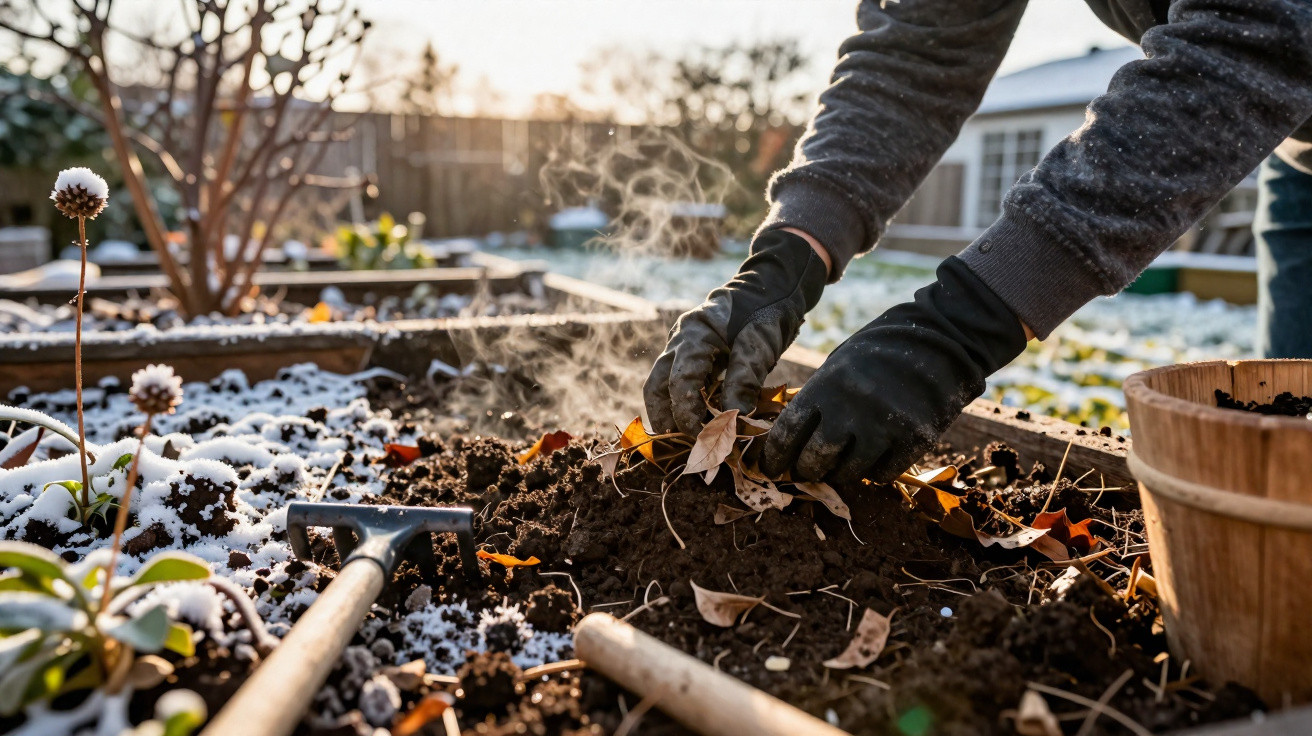
The frost had lingered across the lawn all morning: the sort that crackles beneath your boots and turns every exhale into what looks like smoke.
The beds that had once overflowed with dahlias and tomatoes were now level and drained of colour, a jumble of brown soil lumps and waterlogged leaves. A quick look through the kitchen window could make the garden seem finished for the year, as though life had simply been put on hold.
That is normally the point when people look away, draw the curtains and promise themselves they will “deal with it in March”.
But as I followed the path and crouched beside the soil, I picked up something different: a faint earthy scent, a slight softness beneath my fingers, and the feeling that this stillness was not lifeless, merely expectant. A neighbour spoke over the fence about one easy task she always carries out in January “for the worms”. It seemed far too simple to have much effect.
It was anything but simple.
Why “dead” winter soil is secretly alive
On a dull January afternoon, garden soil can appear to be a bad mood that has settled in permanently. There are no flowers, no insects humming around, and no bright green growth to confirm that last year’s work achieved anything. Instead, there is only exposed ground, pitted by rain and frozen in patches. For many people, that looks like a reason to stop paying attention.
In fact, this is when the unseen work begins.
Below ground, roots left from the previous season gradually decompose. The remaining autumn leaves are reduced to tiny fragments by fungi and bacteria. Earthworms retreat deeper, then return nearer the surface on milder days, pulling organic material through the earth like miniature ploughs. The garden may seem dormant, but beneath your boots there is a gentle, persistent activity if you stop to notice it.
As winter arrived, a Yorkshire gardener once showed me two adjoining plots. His “control bed” on the left had been cleared to an extreme: bare soil, carefully raked flat, with every scrap removed. The plot on the right looked untidy instead, covered with chopped stems and a rough layer of compost. By April, the contrast was almost embarrassing.
The exposed bed had developed a crust that was cracked and as hard as biscuit. Rainwater sat on top rather than sinking in, while the first seedlings struggled to get going. The mulched bed, by comparison, fell apart in his hand like chocolate cake: damp, dark and friable. Carrot seeds emerged there several days sooner and developed more strongly. A single trowelful of that “messy” bed contained more worms than an entire foot of the immaculate one.
Garden researchers have recorded comparable effects, observing that winter soil cover can raise microbial activity by double-digit percentages. You will not see that while looking at a muddy patch from the kitchen on a January morning. You see it later, when spring plants are unexpectedly vigorous and it is hard to say exactly why.
The deciding factor is straightforward: whether the soil remains uncovered or is given something to “wear”. When wind and rain batter bare ground throughout winter, they carry away its finest and most fertile particles. Nutrients wash down beyond the reach of plant roots. The surface becomes compacted, loses air and makes life more difficult for every organism below. Cover the soil, however, and the balance changes.
Organic matter works like a winter duvet. It reduces erosion, softens the force of rainfall and retains moisture. Microbes have food rather than scarcity. Worms gain a surface buffet and, as they pull it underground, form tunnels through which water and air can travel freely. That is why the garden that appears less tidy in January often wins the silent race into spring. It requires just one intentional step.
The simple January action that transforms spring soil
That neighbour’s “for the worms” method is this: give the soil a generous, loose covering in January. Apply a 2–3 inch layer of organic material to every accessible bare bed. It need not be sophisticated. It is simply winter mulch.
Use garden compost, leaf mould, partially rotted manure, chipped bark or even shredded leaves stored since autumn. Scatter it lightly over the surface as if icing a cake, rather than digging it into the ground. The soil beneath is left largely undisturbed, while its surface receives both nourishment and protection. Then leave winter to do the rest.
During cold spells, mulch prevents repeated freezing and thawing from damaging the soil structure. On gentler days, it holds enough warmth to activate microbes, which begin to break it down. By early spring, the divide between the “mulch” and the soil has already started to disappear, leaving a surface that a trowel enters as easily as butter. In January it seems insignificant; by April, it feels transformative.
It sounds, on paper, like the sort of neat task that you would complete faithfully every year. Let’s be honest: nobody really does that every day. Life becomes hectic, compost heaps do not materialise by magic, and the first icy wind can quickly extinguish winter motivation.
Begin on a modest scale instead. Concentrate on beds intended for the earliest spring planting: salad areas, pea rows or the patch reserved for early carrots. Mulching only one or two spaces will still reveal the difference. Do not dig the material in, as excessive disturbance may harm the very soil life you want to support.
Do not give in to the tempting idea of laying thick plastic sheeting “to keep it tidy”, unless your specific aim is to kill weeds. Plastic prevents air exchange and contributes nothing to soil biology. Fresh woodchips can also cause difficulties where tiny seeds will be sown, so reserve them for paths and around perennial plants. If your garden has heavy clay soil, avoid stepping on wet, uncovered beds altogether. A single thoughtless footprint can create a heel-shaped brick that remains for months.
We have all stood outside on a freezing Sunday, looked at the apparently lifeless beds and thought, I’ll sort this when it’s warmer. The understated reality is that this is precisely when the soil needs five minutes of kindness most. It need not be flawless; it simply needs doing.
“January is when you’re not really gardening for January,” says long-time grower Helen Marsh. “You’re gardening for that morning in April when you push your hand into the soil and it just falls apart. That feeling doesn’t happen by accident.”
After spreading that winter covering, a handful of easy practices will help it perform better without creating an exhausting list of jobs.
- After heavy rain, look for exposed areas and add a light top-up.
- Leave a small gap between mulch and woody stems to prevent rot.
- Make use of materials already available, including shredded cardboard, leaves and old straw.
- Retain a few areas of seed heads and stems for birds and insects.
- Avoid over-tidying: some “mess” is simply future soil waiting to form.
This is not about becoming a perfect gardener. It is about recognising the narrow gap between neglect and care, then gently choosing care.
Letting winter do the heavy lifting
Seeing January soil as quietly active rather than dead changes the way you relate to the garden. You no longer battle against the seasons, but work alongside them. A mulched winter bed is a promise to your future self and to the tiny organisms beneath your boots.
The amusing thing is how ordinary it may appear. There is no dramatic change within a week and no viral before-and-after image. There is only a dark, lightly covered surface keeping warmth below the frost. The genuine change becomes clear weeks later: the first forkful of soil lifts with ease, seedlings send roots deeper, and watering feels less urgent because the ground retains moisture like a sponge.
Covering garden beds in January is a small enough job to fit around an everyday routine. Spread a wheelbarrow of compost after work, or empty a bag of saved leaves on a Saturday morning. It is a way of saying that the garden is not paused but preparing. You become part of that preparation in the most grounded sense.
When spring comes, conversations over the fence may change too. Rather than exchanging complaints about unsuccessful seeds or hard, cloddy soil, you may share quiet smiles about how unexpectedly easy things felt this year. That is the kind of modest, practical magic people enjoy passing on, often beginning with the words: “You know what I tried back in January…”
| Key point | Detail | Benefit for the reader |
|---|---|---|
| Winter mulch “blanket” | Put 2–3 inches of compost, leaves or comparable organic matter over bare beds | Produces softer, more fertile soil by spring with less work and digging |
| Protecting soil life | Mulch protects microbes and worms while limiting erosion and compaction | Encourages healthier roots, stronger plants and fewer watering problems |
| Start with small areas | Focus first on beds intended for early crops instead of attempting to mulch the entire garden | Keeps the practice achievable and sustainable, even when time is limited |
Frequently asked questions
- Do I need to take away the mulch before spring planting? Usually not. Gently rake it aside to create a strip of soil for sowing seeds, or put seedlings straight through it. As it decomposes, it becomes part of the soil.
- What can I use if I do not have compost yet? Work with what is on hand: fallen leaves, grass combined with leaves, straw, or torn non-glossy cardboard beneath a lighter layer of organic material. The aim is to cover, protect and gradually feed the soil.
- Can I apply mulch to frozen ground in January? Yes. Even when the surface is frozen, mulch helps reduce temperature fluctuations and shields the ground from heavy rain after it thaws. Spread it carefully and do not walk over very wet areas.
- Can fresh manure be used in winter? Only apply it in a thin layer, and avoid areas where you plan to grow early edible crops. Fresh manure may be too strong and can contain pathogens, so it is preferable to compost it first or use it on future beds that will not be planted until later in the year.
- Does winter mulching attract pests? A sensible layer of mulch does not generally cause problems. It may provide shelter for beneficial insects and frogs that eat slugs. In slug-prone gardens, use a slightly thinner layer where delicate spring seedlings will be sown.


Comments
No comments yet. Be the first to comment!
Leave a Comment