
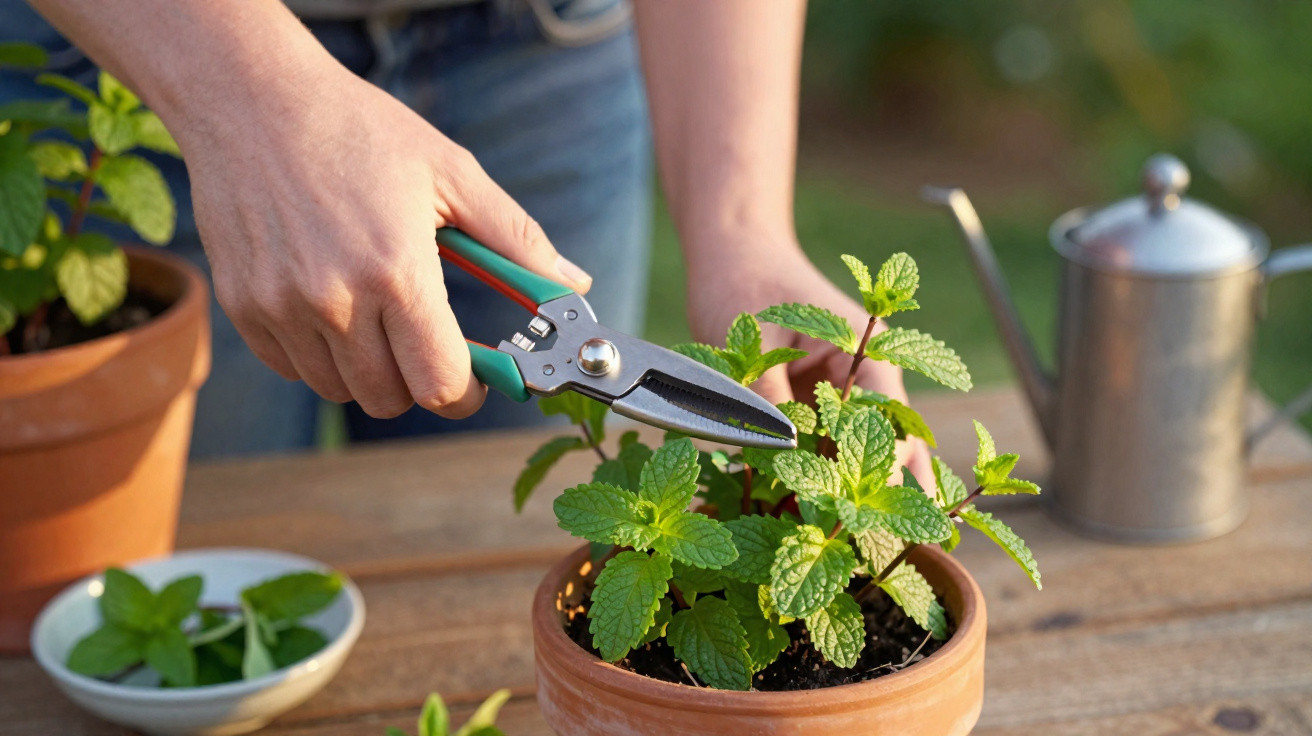
Gardeners often point to the weather, yet the plant itself offers a different explanation.
In garden plots and balcony containers, mint can be wonderfully green and aromatic one month, then tall, sparse and untidy the next. It is easy to put this down to poor luck or inadequate soil. However, outdoor mint predictably becomes leggy, and growers can use a straightforward practice to their benefit: harvesting it regularly.
Why outdoor mint becomes tall, thin and floppy
Mint is a robust perennial that is naturally programmed to spread quickly and secure light before competing plants do. In an outdoor setting, where sunlight moves during the day and plants compete for space, it switches into survival mode. This is when it begins to grow leggy.
Mint doesn’t stretch because it’s weak. It stretches because it thinks it’s in a race.
A number of outdoor factors can lead to tall, bare stems carrying only small leaf clusters at their ends:
- Uneven light: Part shade and congested borders make stems seek out brighter areas, lengthening the gaps between leaves and reducing foliage.
- Warm nights: Longer active growing periods speed up top growth, allowing stems to extend more quickly than leaves develop.
- Rich, nitrogen-heavy soil: Feed designed for tomatoes or lawns may encourage fast, soft stems rather than thick, fragrant leaves.
- Irregular cutting: When it is not harvested, mint moves away from producing leaves and towards flowering and setting seed, usually creating taller, woodier growth.
Indoors, mint commonly benefits from steadier light coming from more than one direction, along with fewer temperature changes. Outside, light from one dominant direction, paired with wind and nearby plants, encourages it to stretch, lean and eventually fall over.
The seasonal pattern behind “leggy” mint
Addressing the issue is easier once you know how mint directs its energy during the season. Its growth is not random: it follows a broad sequence.
| Stage | What mint does | What gardeners usually see |
|---|---|---|
| Early spring | Produces thick, leafy shoots from underground runners | Compact, bushy clumps with intense flavour |
| Late spring | Starts favouring height and longer stems | Taller shoots with fewer leaves near the base |
| Summer | Moves towards flowering and seed formation | Leggy upper growth, developing buds, and lower leaves that yellow or fall |
| Late summer / autumn | Toughens stems and stores energy in roots and runners | Woody lower stems, floppy growth and less intense flavour |
Without intervention, mint behaves much as it would in a meadow: it flowers, produces seed, dies back, and returns from its roots the following year. Home gardeners generally want another outcome: a reliable supply of leafy mint for tea, salads and cocktails throughout summer. That conflicts with the plant’s natural programme, unless pruning and harvesting alter it.
The regular harvest solution: make mint a shrub, not a ladder
Legginess is a matter of structure, not disease. The answer is to reshape how the plant grows. Firm, repeated harvesting makes mint branch outwards rather than continually growing upwards.
If you only “pinch a few sprigs” when you need them, mint wins. If you harvest hard on purpose, you win.
How to cut mint to stop legginess
Many gardeners treat mint too delicately, removing only soft tips while leaving lengthy bare stems intact. That is precisely how to create a leggy specimen. A more effective approach is as follows:
- Allow stems to reach 10–15 cm. Then remove roughly one-third to one-half of their length.
- Make each cut immediately above a leaf pair or node. Fresh shoots will grow from there, effectively doubling the number of stems.
- Harvest in sections. With a large patch, cut one area firmly one week and another area the following week, ensuring some lush growth is always available.
- Continue every 2–3 weeks during the growing season. Being consistent matters more than following an exact date.
This method gives the plant a clear instruction: “Leaf production is profitable, flowering is not.” It produces a fuller, tighter clump that remains useful, rather than rushing into bloom and then collapsing.
What to do with mint that is already floppy and leggy
When outdoor mint has already become a jumble of stems with leaves confined to their tips, a stronger response is needed:
- Cut the entire plant back firmly. In most climates, it is safe to reduce it to 5 cm above the soil in late spring or early summer.
- Water thoroughly once it has been cut. Damp soil enables new, strong shoots to emerge rapidly.
- Do not feed heavily. A compost mulch is sufficient; chemical fertiliser will set the leggy pattern in motion again.
A single ruthless cut in June often gives better mint in August than months of gentle, cautious snipping.
Mint grown outdoors has a powerful root system and normally recovers quickly. It may appear harshly cut on the first day, but by the third week it can be beautifully green.
Light, spacing and containers: the subtle causes of legginess
Although harvesting is the most important tool, the growing environment can either intensify or limit mint’s tendency to stretch.
Sun and shade: finding the balance
Mint will tolerate shade, but lower light encourages lanky stems. For mint in beds or containers, aim for:
- Morning sun and afternoon shade in warm climates, keeping the soil cool while maintaining high light levels.
- At least four hours of full sun in cooler areas, helping to create sturdier stems and fuller foliage.
Plants positioned behind taller crops, fences or walls will bend towards the brightest opening. This leads to one-sided stretching and often causes them to topple under their own weight. Repositioning pots or replanting mint in a more open area can correct the lean.
Why overcrowded beds worsen lanky mint
Mint may seem aggressive in an herb garden, yet it does not thrive in a traffic jam. Surrounded by taller plants such as tomatoes, sunflowers or shrubs, it stretches early in an effort to escape the shade. The result is the thin, weak growth that gardeners usually want to avoid.
Giving mint a dedicated bed, bucket or trough resolves two issues at once: its runners cannot take over the whole space, and every stem receives enough light to grow thicker.
Container size and compost
In a pot, restricted root space can subtly alter the way mint grows.
- Shallow, broad containers are preferable to tall, narrow pots because mint travels sideways on surface roots.
- Rich but free-draining compost promotes leafy growth; saturated compost produces soft, leggy stems that are vulnerable to rot.
- Dividing plants occasionally every year or two prevents the root mass from becoming congested and producing thin, struggling shoots.
Regular harvests change flavour as well as shape
Leggy mint often has a weary flavour, and its chemistry supports that impression. Young shoots growing actively contain more essential oils, giving them a stronger scent and a sharper taste. As the plant turns towards flowering, these oils often become diluted or shift in balance.
Keep mint young and slightly stressed by cutting, and it responds with better fragrance in every handful.
Frequent cutting prompts successive flushes of young shoots, each rich in the compounds that make peppermint cool and spearmint sweet. Gardeners who harvest only lightly and infrequently commonly get an excess of stems but too little flavour.
Beyond legginess: using surplus mint and controlling its spread
A regular cutting routine can create an unexpected issue: an abundance of mint. Still, excess mint is far easier to manage than disappointing, spindly growth.
Making the “problem” useful in the kitchen
Rather than allowing spare growth to flop over or flower, use it in easy household and kitchen preparations:
- Dry bunches for winter tea or spice jars.
- Freeze chopped leaves in ice cubes for cold drinks and sauces.
- Blend it with oil and a pinch of salt to make a quick herb paste for lamb, peas or couscous.
- Put stems in jugs of water in the fridge for an inexpensive, refreshing drink.
Once regular harvesting becomes a habit, mint is less an ornamental plant and more a constant ingredient. Cutting it back then feels useful instead of wasteful.
Regular cutting as a method of control
Mint has a reputation for taking over gardens, and that reputation is not entirely undeserved. Its runners may travel beneath fences, across lawns and through vegetable rows. Here too, harvesting serves two purposes.
Repeatedly removing above-ground growth limits the energy available for the plant to store in its underground network. Pair this with a physical barrier, such as a bottomless bucket sunk into the ground or a raised bed with solid sides, and you can have both a dependable harvest and a manageable patch.
How this rule extends beyond mint
The same approach that helps mint can also help other leggy herbs, including basil, oregano, thyme and lemon balm. The underlying pattern is the same: plants extend themselves when seeking light or hurrying to flower, and become thicker when routine cutting keeps them vegetative.
If a leafy herb looks like a ladder, cut it back until it looks like a cushion.
For new gardeners, this can feel counterintuitive. Cutting back a healthy plant seems dangerous. Yet for most culinary herbs, harvesting acts as training, encouraging the plant to branch and remain productive for a longer period.
The greater risk lies at the opposite extreme: leaving herbs uncut so that they can “grow bigger”, only for them to become tall, woody and disappointing. Gardeners who learn to harvest decisively usually have better-looking beds, more powerful flavour and far fewer plants that collapse beneath their own weight.
Comments
No comments yet. Be the first to comment!
Leave a Comment