
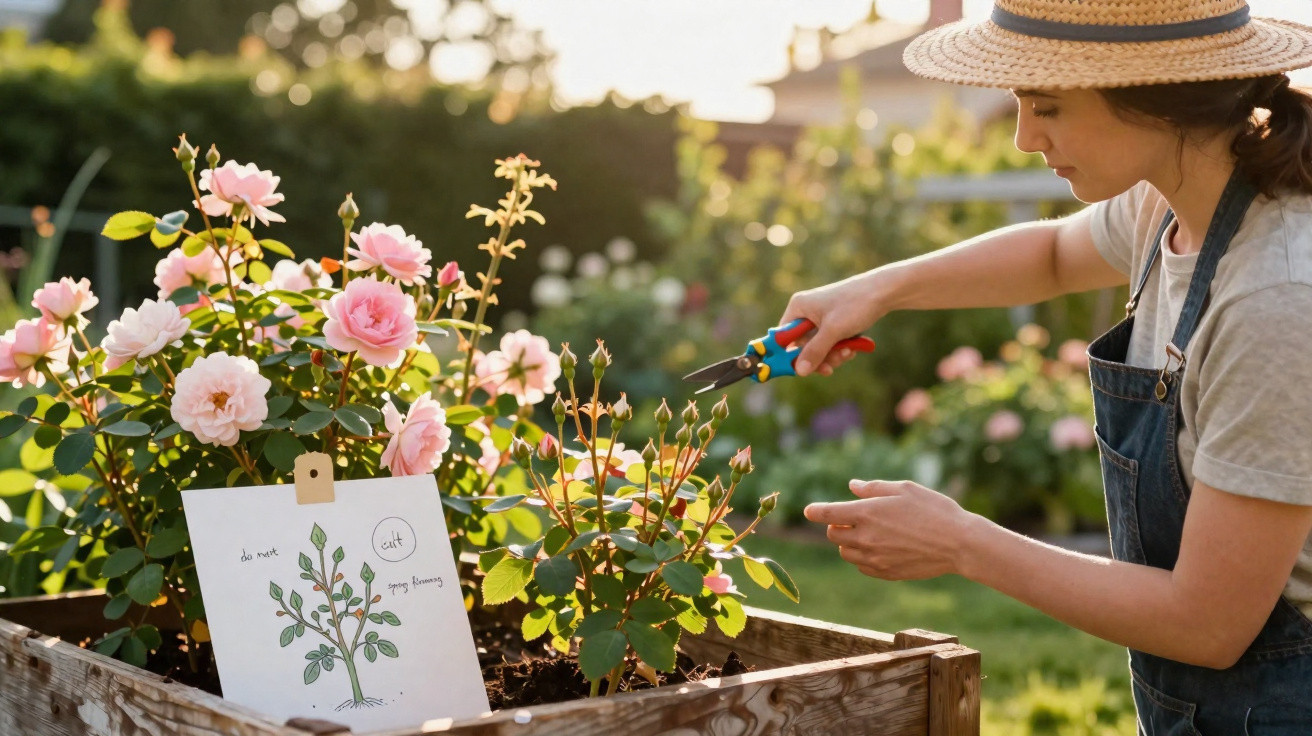
Dense green foliage, crisp outlines and not a single dead leaf visible: the sort of garden that makes neighbours pause with a slight twinge of envy. But when its owner looked closer, she noticed something was wrong. There were plenty of leaves but hardly any flowers. The roses were “healthy”, yet oddly silent. The dahlias offered plenty of potential, but no display.
She had adopted every time-saving maintenance trick she had spotted online: fast-feed fertiliser sticks, automated watering and severe pruning completed in a single session. On paper, the garden was being thoroughly looked after. In practice, it had stalled. There was no disease, yellowing or other obvious problem-only a strange absence of flowers.
That is the overlooked issue: certain gardening shortcuts do not kill plants; they simply silence them. One of the most frequent bloom thieves can initially seem like a sensible, efficient approach.
The subtle pruning shortcut that quietly kills your flowers
The deceptive shortcut is severe, one-size-fits-all pruning and trimming carried out “to save time”. One major spring cut, with a hedge trimmer used on everything, and the seasonal task is supposedly finished in ten minutes. Shrubs appear smart, borders are cut back to an even height and you feel impressively productive.
Viewed from a distance, the result can be genuinely pleasing. There are sharp shapes, no ungainly stems and nothing protruding where it should not. The garden looks controlled. However, many ornamental plants produce flowers on wood that grew the year before. Remove that growth in one sweep and you remove the following season’s flowers. As the plant remains alive, the error can go unnoticed.
A retired couple on a quiet suburban road in Kent followed precisely this routine. Each March, they brought out the electric hedge trimmer and “tidied everything” during one afternoon. Roses, hydrangeas, mock orange and even their old lilac were all included. They were not careless; they took pride in their system. Their neighbours admired the orderly green background it created. Still, year after year, they asked why the lilac “had stopped flowering” and why the hydrangeas were “just leaves now”. They put it down to age, while unknowingly cutting off every future flower.
A survey from a UK gardening charity found that over half of amateur gardeners said they “pruned when things looked messy”, rather than according to flowering time or growth habit. Online, fast “garden reset” clips showing every plant being cut in one sitting attract millions of views. They are strangely satisfying to watch. But the tidy result seen on screen can mean two or three flowerless seasons in a real garden. Because the harm is delayed and invisible, it is difficult to link the missing flowers to the earlier pruning.
From the plant’s point of view, pruning sets its priorities. If flower buds develop on the previous year’s wood, a hard spring cut tells it: “Forget reproduction, push leaves.” Its hormones and stored reserves are redirected into growth instead of flowers. Nitrogen-rich fertilisers, alongside regular generous watering, reinforce the instruction: “You have everything you need for foliage, so keep stretching.” The plant does exactly that. It does not wilt or show any dramatic warning signs. Instead, the garden stays quiet: all outfit, no party.
This is what makes the shortcut so damaging. You may believe that you are buying back time, but you are actually teaching plants to become expert stay-greeners. There is no clear symptom or urgent problem to solve-only months spent waiting for colour that never properly appears.
How to prune and care for plants without losing blooms
The change begins with one straightforward principle: prune according to the time a plant flowers. Spring-flowering shrubs, including lilac, forsythia, weigela and mock orange, generally bloom on the previous year’s wood. Prune them lightly immediately after flowering, rather than in early spring. Summer-flowering shrubs, such as many roses and some hydrangeas, flower on new growth and tolerate a firmer cut in late winter or early spring.
Replace the “one big haircut” with brief, focused sessions. For flowering shrubs, choose secateurs rather than a hedge trimmer. Start by taking out dead, weak or crossing stems. On established shrubs, then thin gently by removing one in four of the oldest stems at ground level. At first, this can seem more time-consuming. Within a season or two, though, the plant rewards you with additional buds positioned where air and light can reach them.
In reality, most people prune too much when they are exhausted or pressed for time. You get home from work, see the garden growing wildly and grab the quickest plug-in tool. It is not laziness; it is overload. This is exactly why creating micro-routines can help. Spend ten minutes on a Saturday morning checking one kind of plant. Keep a small pair of secateurs by the back door. Put a note in your phone saying: “Don’t touch lilac until after it blooms.” These small, almost ridiculous habits can prevent the single large shortcut that deprives you of flowers for months.
Let’s be honest: nobody really does this every day. That is perfectly fine. The aim is not perfection, but avoiding the one action that ruins everything while appearing “efficient”. Watering and feeding are often treated as the only routes to flowering. Yet light, timing and stress matter just as much. One harsh spring trim, coupled with constant moisture and rich fertiliser, can quietly push a garden into leafy overdrive.
Garden designer Nina Blake states it plainly:
“Most gardens I visit aren’t underfed, they’re over-tidied. The plants are desperate to flower, but their future buds get shaved off every year in the name of neatness.”
Keep this quick guide close to hand to make the change easier:
- Spring bloomers (old wood): Lilac, forsythia, weigela, mock orange – prune lightly right after flowering.
- Summer bloomers (new wood): Many roses, buddleia, some hydrangeas – harder prune in late winter/early spring.
- Climbers and ramblers: Take out a few old canes after flowering, then tie in new ones instead of cutting everything back.
If your garden is already “green but bloomless”, it is not beyond repair. Leave shrubs free from severe trimming for a year or two. Thin them gradually instead of shearing them flat. Cut back on high-nitrogen fertilisers, replacing them with a balanced feed or one with slightly more potassium. Allow some areas to appear a little untidy for one season. That can feel uncomfortable, particularly if you prefer immaculate edges and straight lines. Yet giving up that small amount of control is often when flowers return in abundance.
Spotting the quiet signs before flowering disappears
The difficulty is that this pruning shortcut seldom triggers an obvious warning. There are no brown areas or drooping plants. In fact, the plants may seem greener and thicker than they have ever been. The early clues are therefore understated: more foliage at the top, fewer noticeable buds along the stems, and flower clusters forced deeper within the shrub where very little light reaches them.
Perhaps a rose bush that once carried flowers from bottom to top now has its strongest scent only at shoulder height. Or a hydrangea may have lots of large leaves, while its flower heads are small, sparse and limited to the outermost edge. With a climbing rose, vigorous thick canes may race upwards while the flowers move alarmingly high-almost to the gutter. Each sign tells the same story: the shortcut is encouraging the plant to grow rather than to show.
This also strikes a human chord. During a busy weekday, the urge to “just get it done” is enormous: a quick trim, a heavy feed, a strong irrigation cycle, and the job is crossed off. At a deeper level, it reflects how we handle our own timetables: full, optimised and polished, but not necessarily joyful. On a still late-summer evening, when borders ought to be glowing and alive with pollinators, a leafy garden with few flowers can feel like a conversation that never happened. You did the work, but you did not get the moment back.
There is a gentler gardening approach that suits real life without relying on the damaging shortcut. Choose one small space to “experiment” with for a year: one rose bed, a hydrangea corner or the old lilac by the fence. Prune that area gently and according to the guidance. Hold back on the hard spring cut. Record the results with a couple of photographs each month. That small plot will teach you more than any guide. Once flowers return there, it becomes difficult not to reassess the rest of the garden.
With time, the worry about “losing control” of growth begins to disappear. You learn which shoots hold buds, which stems need time to age and which shortcuts are genuinely useful-and which are merely silent thieves of colour. The garden remains easy to read from the street and tidy enough to make you proud. But when you look closely, it comes alive again.
| Key point | Details | Why it matters to readers |
|---|---|---|
| One-size-fits-all pruning removes future buds | Spring-flowering shrubs often hold the following year’s buds on stems produced in the previous season. A hard trim in early spring removes these buds before they can open. | It explains why plants may look “healthy” yet produce very few flowers, helping readers connect their pruning routine with missing blooms. |
| Hedge trimmers flatten rather than shape | Power tools form a tight outer layer of foliage and short shoots, leaving few strong flowering stems inside the plant. | It encourages readers to use secateurs or loppers on important shrubs when they want more visible, longer-lasting flowers. |
| Too much nitrogen = all leaf, few flowers | Fast-release fertilisers and “lawn-style” feeds encourage lush green growth instead of bud production, particularly when paired with hard pruning. | It helps readers switch to more balanced or bloom-focused feeds, ensuring the time and money spent on fertiliser delivers colour. |
FAQ
- How do I know if I’ve been pruning at the wrong time? If shrubs are thick and green but their flowering period becomes shorter each year, the timing is likely to blame. Consider your routine: if you usually cut back spring-flowering plants in late winter or early spring, you are probably removing buds before they open.
- Can a shrub recover after years of hard spring pruning? Yes, although it can take a couple of seasons. Stop making severe early cuts, thin out a few older stems immediately after flowering and allow fresh shoots to mature. Flowering potential returns as the plant rebuilds a combination of young and older wood.
- Are hedge trimmers always bad for flowering plants? Not necessarily, but they are blunt instruments. They work well on non-flowering hedges or where flowers are not especially important. For roses, lilac, hydrangea and other ornamentals, hand tools offer much better control over the shoots you retain and remove.
- What fertiliser should I use if my plants are leafy but not flowering? Choose a product lower in nitrogen and with a reasonable amount of potassium, commonly sold as a “bloom booster” or “tomato feed”. Apply it moderately during the growing season instead of giving one heavy dose, and pair it with correct pruning.
- Is it ever okay not to prune at all? Light or occasional pruning is suitable for some plants. Many shrubs need only dead, damaged or crossing stems removed annually, along with a few older stems removed every couple of seasons. If a plant flowers well and is not taking over the path, minimal intervention may be the best option.

Comments
No comments yet. Be the first to comment!
Leave a Comment