
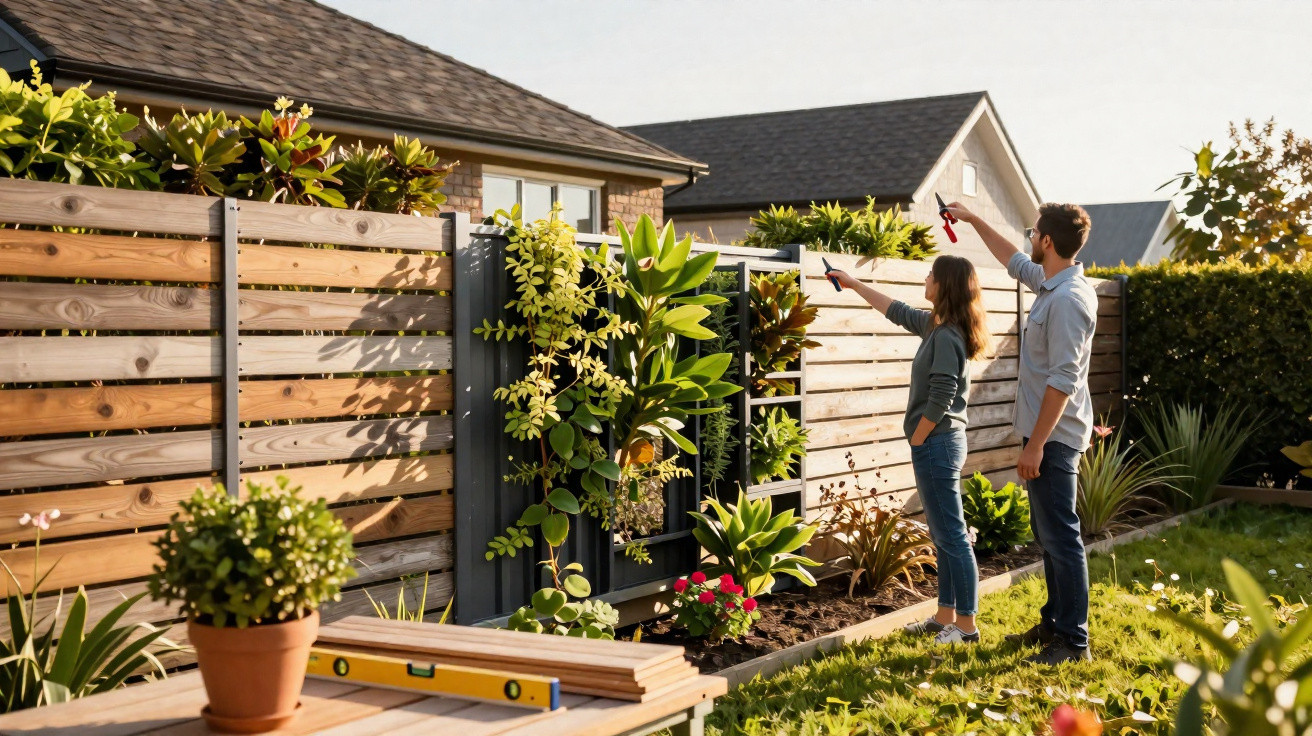
Many homeowners see a fence purely as a necessity or a boundary between neighbours. Yet this very feature can enhance the whole garden, give it structure and even show plants to better advantage. Choose the right materials and lines, add a few bold ideas, and an uninspiring boundary becomes a genuine design feature.
Why a garden fence is far more than a boundary
Whether it is shielding you from inquisitive neighbours, noisy roads or animals that might raid a vegetable garden, a fence acts as a visual protective zone. It defines the plot, directs the eye and influences the character of the entire outdoor space.
A well-planned fence provides privacy, protects the garden – and at the same time acts as a design frame for the house and plants.
The same principles apply to a large plot and a narrow terraced-house garden alike: create defined edges, manage sightlines and give the garden personality. The following 15 ideas span everything from a rustic kitchen garden to a minimalist urban garden.
Using materials and lines to give a fence character
Timber and wire: the overlooked classic
A structure of timber posts paired with wire or chain-link fencing works particularly well around beds and vegetable gardens. When designed well, this option can look surprisingly contemporary:
- Paint the posts in a dark shade to make the metal appear more delicate.
- Plan neat, linear panels rather than a patchwork of irregular sections.
- Train climbing plants across selected panels while leaving others open for unobstructed views.
The result is a fence that offers protection without looking heavy.
Wrought iron for nostalgic gardens
Wrought-iron metal fencing has an elegant appearance and suits period homes or romantic front gardens. It brings a hint of old-building charm outdoors. Finished in matt or gloss paint, it can echo colours found on window frames or doors, visually linking the house with the planting beds.
Decorative detailing creates a sense of “the past”, especially with roses, hydrangeas or lavender growing behind it. For a more contemporary feel, opt for pared-back patterns and simple vertical bars.
Horizontal slats for a contemporary look
Horizontally fitted timber boards or metal profiles are increasingly common in contemporary gardens. Their lines make a space appear longer while creating a calm, crisp effect. Combining them with vertical details, such as posts or inserts of upright boards, adds further interest.
Horizontal lines create a feeling of calm and spaciousness – ideal for making small urban gardens seem larger.
It makes sense to coordinate the colour palette with the façade, window frames or terrace flooring. This creates a cohesive appearance rather than leaving timber at the edge looking like an alien addition.
Weathered steel: industrial character for the bold
Corten steel, which is designed to rust, is among the most striking materials in modern garden design. Its surface develops over time, becoming warmer and more lively. Paired with ornamental grasses, perennials and gravel, it creates a high-contrast, almost sculptural effect.
These panels can form an entire privacy screen or be used as individual sections between timber or metal posts. This style is especially harmonious in restrained, graphic garden schemes.
Green rather than grey: living fences and hedges
Vertical gardens on existing fences
Where space is limited, make use of height. A plain wire fence or dull timber wall provides the ideal starting point for a vertical garden. Trellises, battens, plant supports and hanging pots can transform it into a green wall.
Particularly suitable choices include:
- Climbing roses for romantic corners
- Jasmine or honeysuckle to bring fragrance to a seating area
- Vines or kiwi plants for shade and produce
- Strawberries and herbs in hanging baskets for edible gardens
This makes double use of an existing fence: as a boundary and as planting space.
Rustic posts and natural materials
Reclaimed vineyard posts or irregular pieces of timber add plenty of atmosphere to country-style gardens. Deliberately imperfect in appearance, they suit fruit trees, herb beds and wildflower meadows, creating a soft boundary rather than a hard line.
These fences are ideal if you prefer a living, rather than a “perfect”, garden style – visually somewhere between a cottage garden and a country house garden.
Pruning hedges correctly to prevent bare growth at the base
Green hedges are the traditional answer to a living fence. After a few years, however, many people become frustrated by bare patches at the bottom. In most cases, incorrect pruning is the cause.
Pruning a hedge into a slight trapezoid – wider at the bottom than at the top – ensures every leaf receives light and the hedge remains dense.
For a hedge around 1.50 metres tall, the upper section should be roughly 10 to 20 centimetres narrower than the base. This lets light reach the lower growth and gives wind and snow less surface to catch.
15 practical ideas for greater privacy, security and style
Options range from almost transparent boundaries to fully opaque screening. Here are several ways to approach the subject:
- A woven willow fence as a cosy enclosure around the terrace.
- A waist-high wire fence with timber posts surrounding a vegetable bed.
- A tall, dark privacy screen for maximum seclusion by a pool.
- Trellis panels with climbing plants to create a green garden room divider.
- A loosely planted mixed hedge of shrubs instead of a sterile row of thuja.
- Corten steel panels as bold accents between timber sections.
- A modern slatted fence with alternating board widths for added movement.
- A wrought-iron fence with a rose arch at the entrance to create a strong first impression.
- Partially open timber slats that interrupt views while still admitting light.
- A low natural-stone wall topped with metal mesh.
- An upcycled fence made from old doors or shutters for those seeking individuality.
- A combination of wall, fence and hedge to divide different garden areas.
- A transparent fence facing open fields and denser screening towards the road.
- An animal-deterrent fence around vulnerable beds in areas with deer or other wildlife.
- A fence with a curved upper edge for a softer, more welcoming effect.
In places where browsing wildlife is common, protecting beds consistently with taller fencing can sometimes be the only option. If planned from the outset, even practical wildlife-protection fences can be incorporated attractively – with planting, carefully chosen colours or timber combinations, for example.
How fences, houses and plants create a cohesive scheme
One frequent mistake is treating the fence as a separate project. The result is much more harmonious when the colour and style take their cue from the house. Resourceful designers, for instance, look to window frames, gutters or window sills and repeat these shades in the fence.
The fence should not look like an alien element, but like a frame that logically connects the house and garden.
Small surprises can be particularly effective: an old mirror positioned at eye level among climbing plants, a slight curve along the top of an otherwise straight palisade, or a single coloured fence panel. Details such as these tell stories and turn a boundary into a design highlight.
Practical advice for garden fence planning and installation
Before putting a spade in the ground, it is worth checking the relevant legal requirements. Many local authorities set rules on maximum height or distances from the property boundary. Speaking with neighbours can also defuse potential disagreements at an early stage.
Anyone without much DIY experience is better off starting with modular systems from a DIY retailer or straightforward timber constructions. Complex metalwork, freestanding Corten steel panels and intricate woven structures are usually installed more reliably by a specialist contractor – particularly where wind loading and structural stability are concerned.
There is another often overlooked consideration: maintenance. Painted metal needs touching up from time to time, timber requires protection against moisture, and hedges should be cut at least once a year. If time is limited, choose hardwearing materials or slow-growing woody plants instead.
The effort is worthwhile: a thoughtfully designed garden fence brings everyday calm, protects plants, improves the overall appearance of the property and makes every view outside a little more attractive. That is considerably more than basic chain-link fencing can ever achieve.





Comments
No comments yet. Be the first to comment!
Leave a Comment