
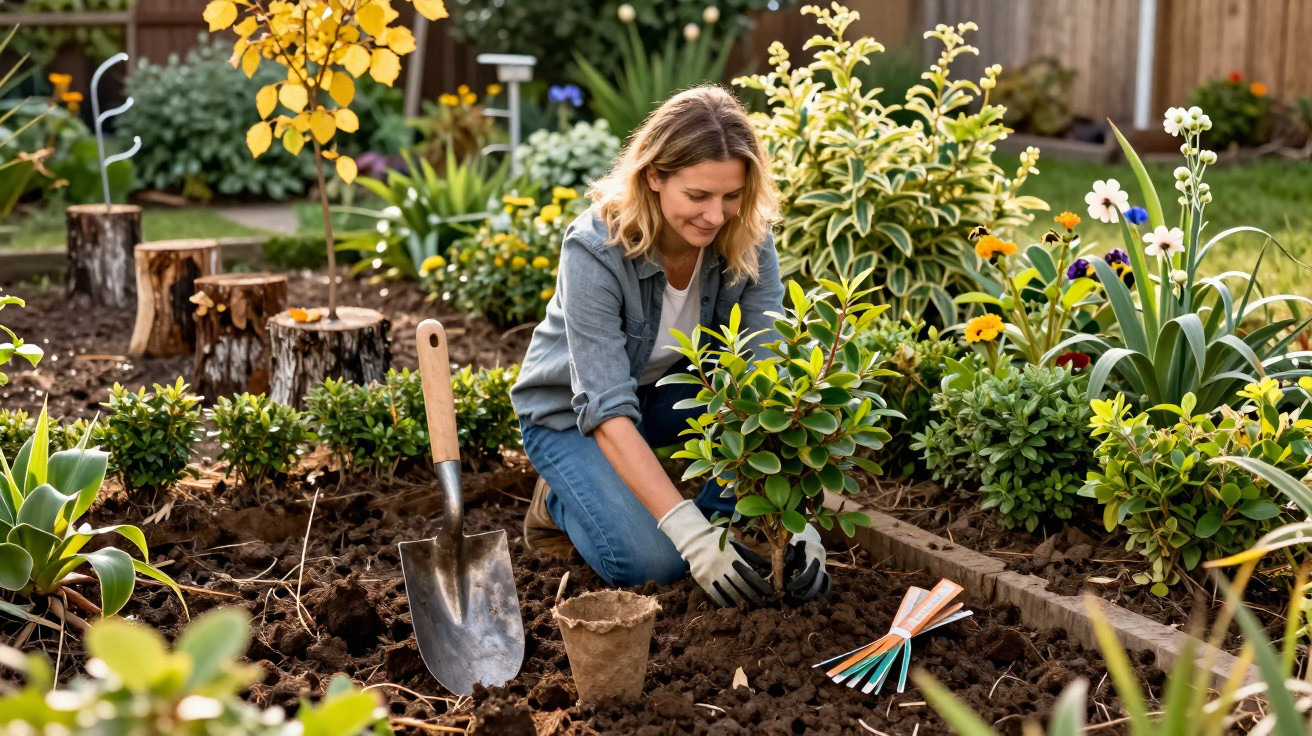
For years, anyone relying on Photinia for quick privacy screening has often ended up looking at brown patches, bare areas and an overall tired appearance. Garden experts are increasingly advising homeowners to replace this persistently troubled shrub. One undemanding evergreen is now firmly in the spotlight – and it could become the standard hedge of the coming years.
Why so many Photinia hedges are struggling
Photinia was long regarded as the ideal answer: it gained height quickly, produced red new growth and offered a contemporary look. It shapes entire streets in many housing developments. Recently, however, complaints have become more frequent. Rather than dense, glossy screens, these hedges show:
- leaves speckled with brown or red spots
- bare gaps around the base
- ragged, uneven outlines
One key cause has a complicated name: Entomosporium leaf spot, a fungal disease that spreads explosively during mild winters and wet springs. Small marks appear first; later, entire leaves dry out and drop off. This is now a familiar sight in many front gardens.
“Anyone who repeatedly replants diseased Photinia without changing the site is practically inviting the next wave of infection.”
Other common mistakes make matters worse:
- planting too closely together, leaving poor air circulation
- allowing diseased leaves to remain beneath the hedge as a source of infection
- failing to improve the soil after removing old plants
The mix of fungal pressure, climate and maintenance errors means that in many places Photinia is no longer the robust “problem-solver” it was once celebrated as being.
Pittosporum: the low-stress garden alternative
When garden designers discuss replacement planting, one name comes up increasingly often: Pittosporum. This shrub originated in milder climates, but has already proved itself in many parts of Central Europe – especially in sheltered positions.
What makes it so appealing?
- Evergreen foliage: privacy screening throughout the year without looking bare.
- Versatile varieties: ranging from deep green to bicoloured foliage, sometimes with a silvery sheen.
- Moderate growth: it puts on growth annually but does not race away.
- Easy to prune: one cut each year is usually enough.
Its growth habit is particularly well suited to gardeners who want structure without constantly reaching for the hedge trimmers. Pittosporum forms a compact screen without continually growing out of shape.
“Pittosporum is like a ‘low-maintenance compromise’: enough growth for privacy, but not so unruly that it becomes a permanent task.”
Choosing varieties with variegated, or bicoloured, leaves also brings extra brightness to narrow gardens. The effect remains welcoming even on dull days and makes the replacement of an old hedge immediately noticeable.
Why a mixed hedge is often the better option
Many experts take the idea a stage further, recommending not just replacement but a change in approach: move away from monoculture and towards a hedge made up of several species. This brings several benefits at once.
Greater resilience through variety
Relying on a single species means depending entirely on that plant’s health. If disease or a pest affects it, the whole hedge is at risk. In a mixture, a fungus will often simply run out of the right host plant instead of working its way metre by metre along the hedge.
Reliable companions alongside Pittosporum include, for example:
- Oleaster (Elaeagnus): highly robust, wind-resistant and salt-tolerant, making it ideal by roads or near the coast.
- Common dogwood (Cornus sanguinea): spectacular red winter stems and changing colour through the seasons.
- Hazel (Corylus): native, beneficial to wildlife and, at best, productive of nuts as well.
This combination of evergreen and deciduous species creates a lively picture throughout the year while making the garden more ecologically interesting.
More life in the garden
Different flowering and fruiting periods attract bees, other insects and birds. Anyone who enjoys listening to birdsong in the morning, or has children who should experience nature, gains a great deal from a mixed hedge.
“The hedge changes from a simple privacy screen into a small habitat at the edge of the property.”
Replacing your hedge: step by step towards a new planting
1. Assess and remove the existing hedge
The first step is an honest assessment: if only individual Photinia shrubs are affected, targeted replacement may be sufficient. Where damage extends over several metres, a complete fresh start is worthwhile.
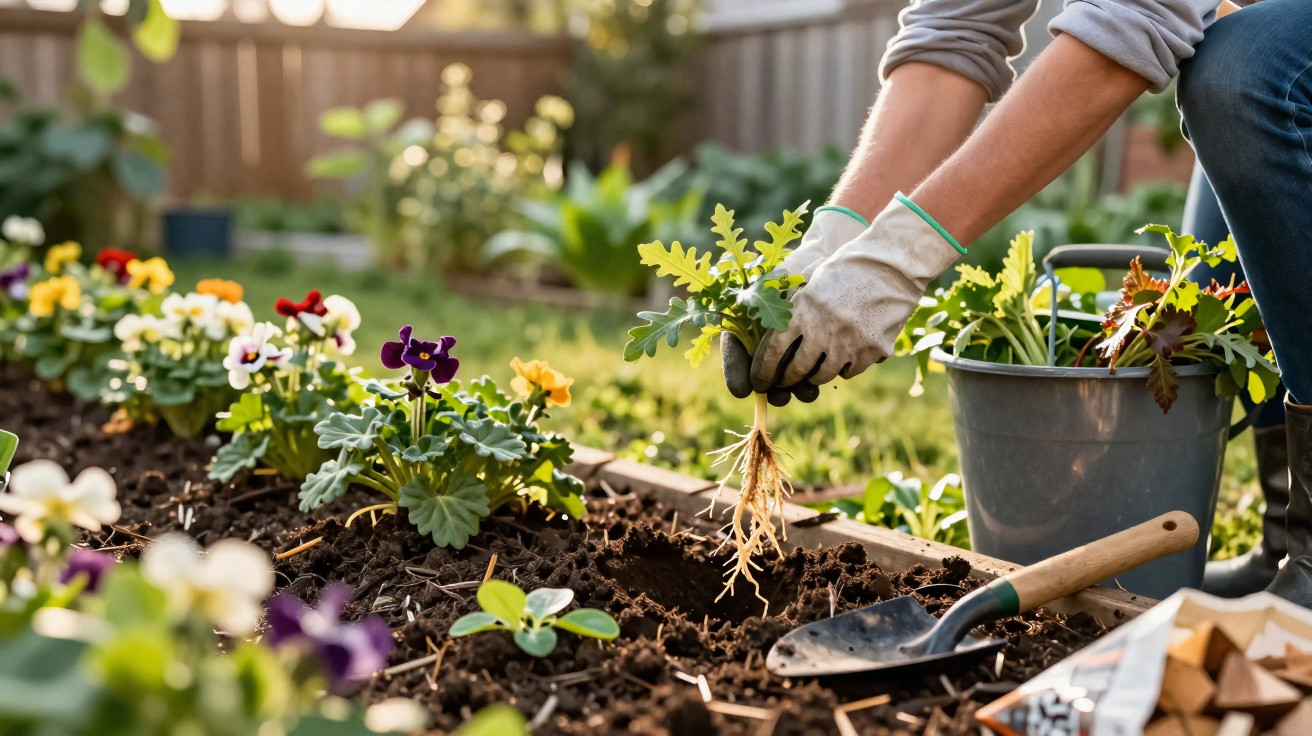
- Remove diseased plants completely, including their roots.
- Do not put affected foliage on the compost; dispose of it or burn it instead.
- Dig out larger roots so that new plants can establish well.
With heavy soils in particular, it is advisable to loosen the planting trench over a wide area. This allows oxygen and water to reach the new roots more effectively.
2. Prepare and improve the soil
The soil determines how quickly the replacement shrub gets established. A simple rule of thumb is to work around one bucket of mature compost into each planting hole. In very compacted soil, coarse sand or a layer of gravel in the lower section will also help prevent waterlogging.
Spacing is another key factor. Pittosporum does well with 80 to 100 centimetres between plants. For a 10-metre hedge, this means approximately:
- 10–12 Pittosporum shrubs in a single-species planting
- or, for example, 6 Pittosporum, 2 oleasters and 2 dogwoods for a mixed option
3. Plant correctly and provide protection
After planting, water each shrub thoroughly. A soil watering rim around the root area stops the water from running away. Then apply a layer of organic mulch, such as bark compost or shredded prunings.
“A mulch layer around five centimetres deep reduces watering needs and keeps weeds away from young plants.”
In exposed locations, a support stake is worthwhile for the first year. This lets the roots form a stable network without wind continually rocking the plants back and forth.
Low day-to-day effort: caring for Pittosporum and companions
The real appeal of the new hedge is its manageable maintenance requirements. The key points are:
- Pruning: one shaping or maintenance cut a year is generally sufficient. Those wanting very precise lines can give it a light second trim.
- Water: water regularly during the first months after planting, at around 10 litres per shrub once or twice weekly in dry weather.
- Nutrients: apply a moderate feed across the whole hedge in spring, guided by its length rather than enthusiasm.
Once established, the plants require noticeably less attention than many Photinia plantings in problematic locations.
Common mistakes and how to avoid them
Anyone making the effort to start again should avoid a few pitfalls:
- Do not plant so densely that branches overlap in the first year.
- Do not leave old, infected foliage in the soil – it remains a source of infection.
- Ensure good air circulation, particularly in shady corners.
- Do not overfeed out of impatience, as this encourages soft, susceptible growth.
If unsure, it is worth getting brief advice from a specialist nursery, at least when selecting varieties. Pittosporum includes cultivars for milder areas as well as types that cope better with cold when placed against a house wall or in a sheltered corner.
Practical examples and useful combinations
In practice, the following arrangement has proved effective for a 10-metre garden hedge:
| Position | Species | Function |
|---|---|---|
| 1–3 m | Pittosporum | evergreen privacy screen, basic structure |
| 3–5 m | Oleaster | robust, tolerates wind and exhaust fumes |
| 5–7 m | Pittosporum | visual repetition, calm in the overall design |
| 7–8.5 m | Common dogwood | winter colour, autumn structure |
| 8.5–10 m | Hazel | wildlife habitat, potential nut harvest |
This creates a band that looks dense in summer while still providing structure and colour in winter. Individual gaps can be filled with flowering perennials or grasses until the woody plants reach their final size.
Those with little time should choose larger, already well-grown specimens at planting time. They cost more, but they close the gap left by the former Photinia hedge more quickly and remove the pressure to have perfect privacy screening “immediately” again.
Over the long term, choosing Pittosporum and a mixed hedge pays off through less frustration, more stable plant health and a more varied garden scene. The setback of a diseased row of Photinia thus becomes an opportunity for a far more interesting, lively garden boundary.



Comments
No comments yet. Be the first to comment!
Leave a Comment