
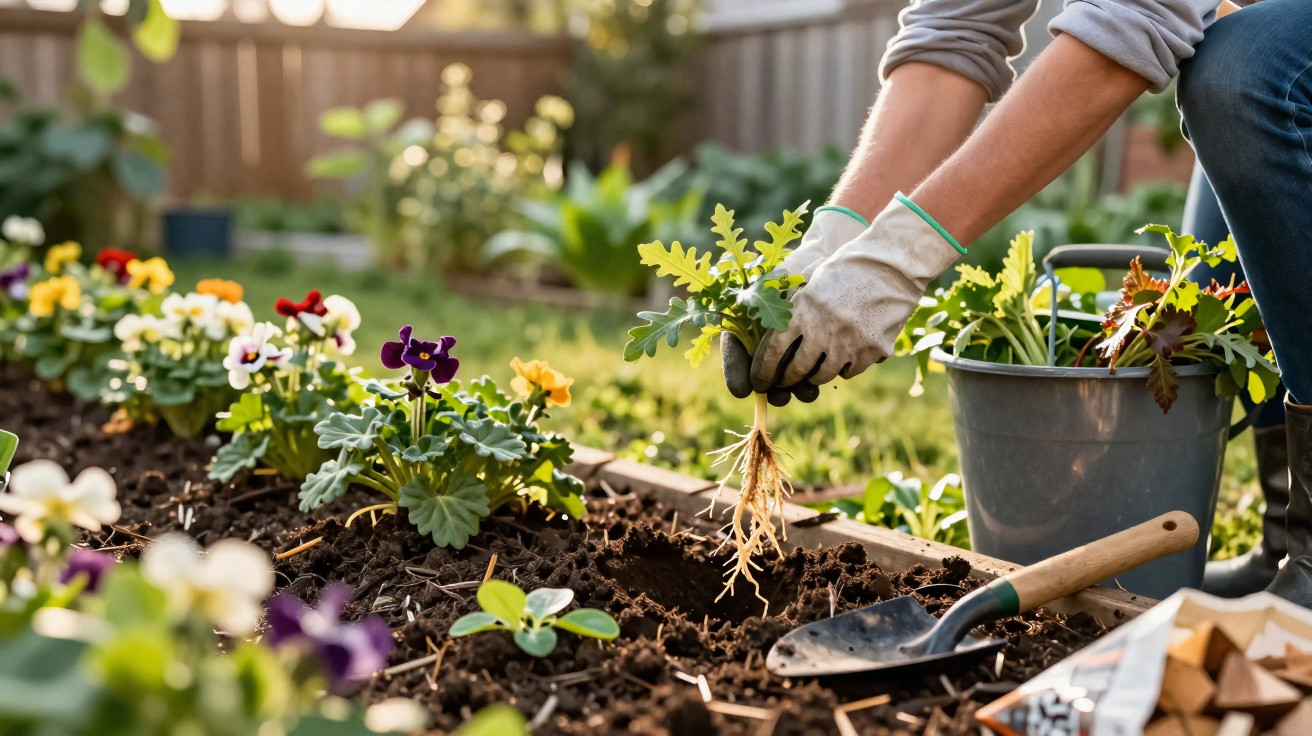
Five minutes: that was all the time you promised yourself you would give the flower bed last Sunday. You crouched down, pulled at the persistent green intruders, dropped them into a bucket and got back up with a surprising sense of achievement. Bare soil, tidy edges and plants with room to breathe again. Job done.
Three days later, though, you stepped outside and your heart sank. The same weeds had appeared in the same places, as though they had been waiting for your return.
Eventually, you stop blaming the weather, airborne seeds or your neighbour’s dandelions. Instead, you begin to question whether the issue is actually how you are removing them.
That is the point at which things begin to change.
Why the same weeds keep returning like a bad sequel
You lean down, grasp a clump of green growth and yank firmly. The visible top comes away with an oddly pleasing snap, and for a moment it feels like a win. Then you spot the small white strand still lodged in the ground.
That is the root, quietly smiling at you.
Removing the leaves rarely defeats most weeds. They are properly beaten only once the stored energy below ground has been exhausted. Taking away only the growth you can see is much like giving them a complimentary haircut, with every opportunity to return more strongly. It is no surprise that weeding can feel like a battle you never fully win.
Consider dandelions. They seem harmless: sunny yellow flowers that look simple to pull. However, one plant may put down a taproot of 25 cm or more. Pull it from above, snap the root part-way down, and the section left behind simply regrows.
Then there is couch grass, which works its way through beds via a web of creeping rhizomes. You may lift one section while leaving another five travelling sideways beneath the soil. That is why you can clear an area, enjoy it for a week, then find the same fine blades emerging exactly where you put in so much effort.
Gardeners often assume they are dealing with “invasive weeds”. In many cases, the roots are simply exceptionally persistent.
Seeds present another challenge. Many familiar weeds produce thousands of seeds per plant, each one ready to respond to a little exposed soil and sunlight. When you hoe roughly or tear up the surface, you are doing more than tidying: you are activating a buried seed bank that may have remained dormant for years.
The pattern is straightforward: remove the tops, break the roots, disturb the soil, then encourage seeds to germinate. The weeds reappear, sometimes in greater numbers than before. Your natural response may be to work longer, pull more quickly and dig further down, but that approach reverses the logic.
We do not beat weeds by doing more work; we beat them by working more intelligently and causing less disturbance.
How to remove weeds so they actually stay gone
Begin by changing one simple idea: aim to remove roots rather than leaves. That small adjustment changes how you use both your hands and your tools.
For deep-rooted weeds, including dandelions and dock, push a slim weeding knife, hori-hori or even an old kitchen knife into the soil beside the stem. Gently move it to loosen the earth, before easing the root upwards in one controlled action. Avoid rushing; allow the soil to release it.
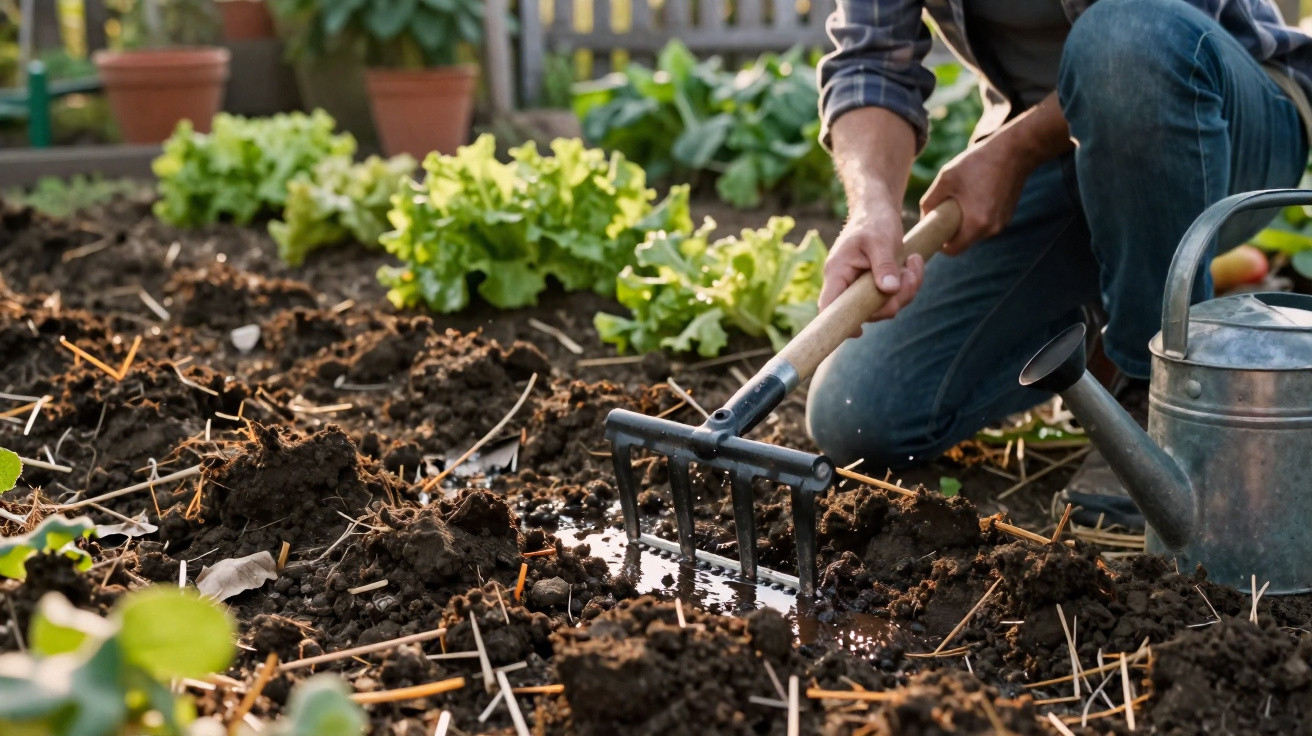
For weeds that spread by runners, such as couch grass and bindweed, use a “lift and trace” approach. Carefully raise a whole section of soil with a fork, then follow the white roots with your fingers and lift them out as if they were cables. The more complete the root network you extract, the fewer repeat appearances you are likely to have.
This is where many people fall behind: they wait to weed until the situation looks urgent. By then, roots have become substantial and seed heads may already be present. It feels daunting because, at that stage, it genuinely is.
Brief, routine sessions are far calmer and considerably more effective. Spending ten minutes walking around the garden with a bucket and a narrow tool, removing young weeds before they flower, achieves more than a three-hour session once a month. Realistically, no one manages this every day.
When the soil feels as hard as concrete, every task becomes more difficult. Watering lightly or waiting until the day after rainfall makes it easier to slide roots free rather than break them. A little careful timing can prevent a great deal of frustration.
“Weeds aren’t a sign you’re a bad gardener,” says one seasoned allotment holder I met, hands stained with soil. “They’re a sign the soil is alive. The trick is learning how to guide that life instead of fighting it blindly.”
Pull slowly rather than forcefully
Gentle leverage close to the base removes more of the root than fast, frustrated pulling.Remove the tops before seeds form
If you cannot dig out the root immediately, cutting off flowers and seed heads gives you more time.Keep soil disturbance to a minimum
Shallow weeding and mulching leave buried seeds dormant instead of encouraging them to sprout.
When weed control stops feeling like a fight and starts making sense
Once you alter the way you weed, there is a subtle moment of change. After a rainy week, you walk outside expecting disorder, only to find a few small invaders that can be pulled with two fingers. The bed still feels like yours rather than theirs.
That change is not the result of finding a miracle product. It comes from recognising what is happening beneath the surface and changing your actions rather than your expectations. Instead of attacking leaves, you disable roots; rather than stirring soil, you preserve its calm.
We have all had the thought: “Maybe I’m just bad at this.” You are not. Weeds are not passing judgement on you; they are merely following their own rules. Once you work with those rules instead of against them, the garden begins to look different - and your patience does too.
You may still crouch down and sigh when a new dandelion appears, but you will understand that it is not an endless conflict. It is simply another small, manageable exchange with the soil, tackled one root at a time.
| Key point | Detail | Value for the reader |
|---|---|---|
| Focus on roots, not leaves | Use steady leverage and deep tools to remove complete root systems | Fewer returning weeds and less time wasted doing the same job again |
| Weed early and regularly | Use short, frequent sessions before flowering and seed production | Stops seeds spreading and keeps the task small and manageable |
| Disturb soil gently | Weed lightly and mulch rather than digging aggressively | Limits seed germination and keeps beds cleaner over the longer term |
FAQ: Weed control
Question 1 Why do weeds return even when I pull them out by hand?
Often, this happens because part of the root or rhizome remains in the soil. The plant can grow again from these fragments, particularly where its root system is deep or spreading.Question 2 Should I weed when the soil is wet or dry?
Soil that is slightly moist is best. Roots tend to snap in very dry ground, while very wet soil compacts easily and may harm its structure.Question 3 Can I cover weeds with mulch and leave them alone?
Mulch is very helpful, but vigorous perennial weeds may still grow through it. It works best when you first remove as much of the root as you can, then cover the area.Question 4 Are hoes effective, or do they only cut weeds at the surface?
Hoes work well on very small, young weeds at the “thread” stage. On mature weeds with deep roots, they generally cut off the tops while leaving the roots in place.Question 5 Is herbicide the only way to stop persistent weeds?
Not at all. Thorough root removal, mulching, close planting and regular early weeding can greatly reduce weeds without chemical assistance.
Comments
No comments yet. Be the first to comment!
Leave a Comment