
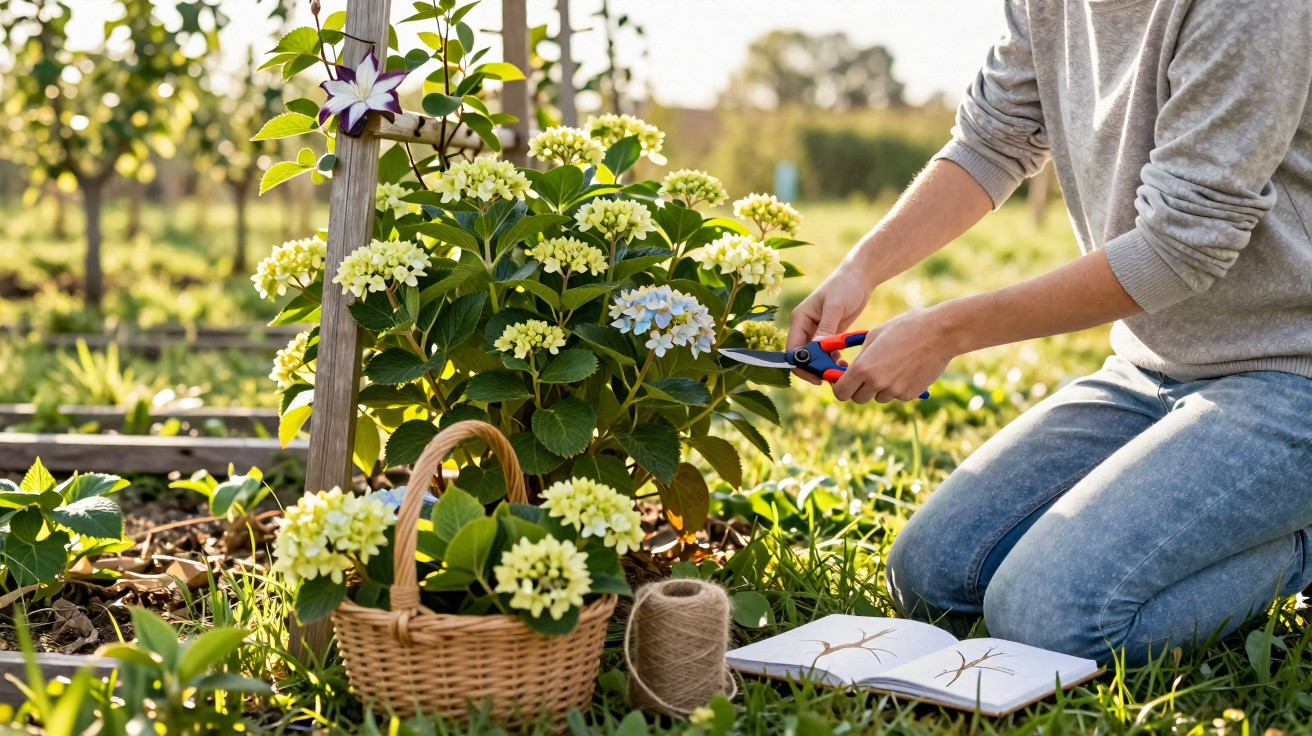
A few well-placed cuts in spring can turn an orderly garden into a real floral stage – provided the timing is right.
Many amateur gardeners reach for the secateurs in April and May without being sure where or when to make their cuts. The result can be a lack of flowers, stressed shrubs and dashed expectations. Yet a little background knowledge about three particularly rewarding plants is enough to make borders, trellises and fruit trees truly flourish in summer.
Why pruning in April and May matters so much
Spring is when nature is at its most active. Buds begin to swell, fresh shoots surge upwards and stored nutrients move from the roots into the branches. As a result, the effects of pruning become apparent almost immediately – for better or worse.
Cut too early and you will often remove flower buds that have already formed. Leave it too late and the plant will have already directed its energy into weak or poorly positioned shoots. The best time falls somewhere between these two points.
A simple rule of thumb: first establish whether the plant flowers on new or old wood – then prune.
Some species produce their flower buds on the current season's growth. Others rely on the woody framework formed the previous year and, in effect, prepare their flowers “in advance”. Understanding this distinction greatly reduces mistakes when pruning in spring and early summer.
Panicle hydrangea: hard pruning for large flowers
The panicle hydrangea (Hydrangea paniculata) has become a favourite for front gardens, borders and containers. Its long, cone-shaped flower panicles remain from high summer into autumn, often changing colour from white to soft pink or cream.
This type of hydrangea has one key advantage: it flowers on the season's new wood. New shoots therefore bring new flowers, making it ideal for purposeful pruning in spring.
The best time and the right technique
April is the ideal time, once severe late frosts are no longer expected. Proceed as follows:
- Shorten all previous year's shoots to one or two strong pairs of buds
- Remove weak, thin branches right down at the base
- Thin out branches growing inwards or crossing one another
If you prefer a lush but compact plant, do not be afraid to prune decisively.
The harder you cut back a panicle hydrangea, the fewer but considerably larger flower panicles you will get.
With only light pruning, the shrub will remain taller and bushier, while individual flowerheads will generally be smaller. Both approaches are valid – how hard you prune depends on whether you want a compact flowering spectacle or a looser, more natural-looking shrub.
Early-flowering clematis: use the secateurs straight after flowering
Spring clematis such as Clematis montana, armandii, alpina and macropetala transform fences, walls and pergolas into cascades of flowers in April and May. The drawback is that, without care, they quickly become overgrown, bare at the base and tangled into an impenetrable mass.
Why timing is everything
This clematis group forms its flower buds in the year before it blooms, on older wood. Pruning in winter or very early spring therefore removes a large proportion of the plant's flowers.
The answer is simple: enjoy the display first, then prune.
Prune early-flowering clematis immediately after flowering. This ensures next year's display remains secure.
How to prune clematis
Once the final petals have fallen, usually in late May, it is time for maintenance work:
- Remove dead or frost-damaged shoots completely
- Cut back overly long stems that have lost their shape
- Carefully thin congested sections so that light can reach the centre again
There is no need to fear being slightly bold: established plants will tolerate a substantially harder cut if it is done after flowering. They use the rest of the summer to produce new wood and, with it, the flowers for the following year.
Stone fruit trees: thin gently rather than cutting back severely
In the fruit garden, April and May are particularly relevant for stone fruit trees – including plum, damson, cherry, apricot and peach. They react more sensitively to heavy winter or summer pruning than apples and pears.
Spring pruning of stone fruit has a clear purpose: more light, better airflow, less risk of breakage and healthier fruit. It is not about completely “retraining” the tree, but about making gentle corrections.
A guide to spring pruning stone fruit
A few straightforward steps provide useful direction:
- Use clean, sharp tools
- Begin by cutting out dead, diseased or damaged wood
- Remove branches that rub, cross or grow strongly towards the centre
- Reduce or fully remove very upright water shoots
The aim is a light, open canopy that allows sunshine to reach the interior, helping fruit ripen more evenly.
A slightly opened canopy also reduces the risk of fungal diseases. Wet leaves dry more quickly, air circulates more freely, and as temperatures rise, pruning wounds often heal more easily than they do in the depths of winter.
These basic rules make pruning much easier
Anyone who uses secateurs regularly in spring should adopt a few standard habits that protect plants over the long term.
| Rule | Benefit in the garden |
|---|---|
| Always use clean, sharp blades | Prevents infections and creates smooth cut surfaces |
| Assess the growth habit before every cut | Helps retain the natural structure and avoid poor cuts |
| Never cut “to a bud leading nowhere” | Every cut should be directed towards a healthy bud or branch junction |
| Change only a little at a time | Makes it easier to observe plants and correct them gradually |
A cautious approach is particularly worthwhile with young woody plants. Light annual shaping prevents the need for drastic work later on, which places considerably more stress on plants.
What “flowers on new wood” and “old wood” means
The frequently mentioned difference between new and old wood is less complicated in practice than it sounds. “New wood” refers to shoots that grow during the current season. “Old wood” is anything that dates from previous years.
Panicle hydrangeas flower on the current year's shoots and therefore benefit from pruning in spring. By contrast, many early-flowering shrubs and climbers use the previous year's shoots to produce flowers, which is why they should be shaped immediately after flowering.
If you are unsure about a particular species, create a small garden reference note. Record when a plant flowers and when you pruned it during the year. After two or three seasons, patterns will emerge and you will be able to work far more precisely.
Avoiding risks and making the most of opportunities
One common mistake is pruning too early out of impatience. Late frost can damage fresh cut surfaces or set back young shoots. If in doubt, wait an extra week rather than cutting back heavily too soon. Likewise, drastic winter “shaping cuts” on stone fruit can quickly lead to gummosis and weakened trees – this is where the gentle spring approach has the advantage.
On the other hand, thoughtful pruning holds enormous potential. Hydrangeas reward it with considerably larger flowerheads, clematis with walls covered evenly in blooms rather than bare brown areas, and fruit trees with better-ripened fruit and stronger branches.
Anyone who invests a few hours each spring in secateurs, a saw and a clear plan lays the foundation for a garden that makes a visibly stronger impression from April to autumn.
If you wish, you can combine these three plants with other spring tasks: dividing perennials, mulching borders and planting young plants. Step by step, this creates a system in which pruning, nutrient supply and planting plans work together – and the garden performs better year after year without the workload escalating.
Comments
No comments yet. Be the first to comment!
Leave a Comment