
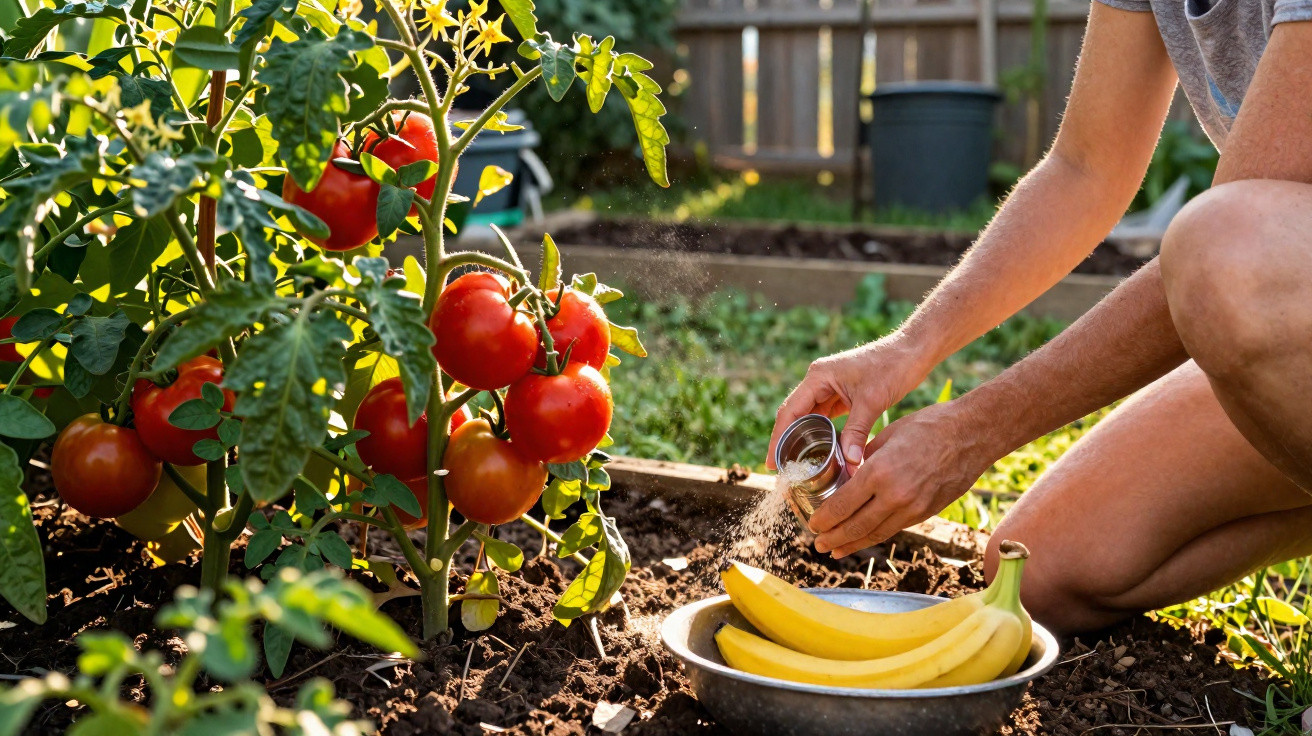
With a simple trick using two free household leftovers, this can be changed dramatically.
Lush foliage and sturdy stems – yet only three tiny tomatoes dangling from the plant. This is a familiar frustration for amateur gardeners every year. The cause is often not a mystery but a straightforward deficiency: the plant simply is not receiving enough of the right nutrients. By topping up with natural aids at the right stage, it is possible to turn a leafy giant into a tomato plant carrying fruit within a few weeks.
Why many tomatoes produce leaves rather than fruit
Tomatoes are among the hungriest vegetables to grow. A plant expected to produce several kilograms of fruit needs plenty of nutrients, in the correct balance.
- Potassium: helps fruit ripen and contributes to flavour and sweetness
- Magnesium: essential for photosynthesis and metabolism
- Nitrogen: drives leafy growth
- Phosphorus: supports roots and flower formation
Many people buy fertilisers from the garden centre that are heavily weighted towards nitrogen. The result is a tomato plant that grows vigorously, looks deep green and perfectly healthy, but produces very few flowers. Without flowers, naturally, there will be no fruit.
“What matters is not ‘lots of fertiliser’, but the right nutrient balance when fruit is forming.”
This is exactly where uncomplicated natural remedies come in – things found in almost every household and usually thrown away.
The secret duo: banana peel and wood ash
The central trick uses two leftovers that offer a surprisingly powerful boost for tomato plants: banana peels and wood ash from a stove or fireplace. Both are considered free sources packed with potassium and minerals.
How banana peels benefit tomato plants
Banana peels contain plenty of potassium, magnesium, phosphorus and a little calcium. These are precisely the nutrients tomatoes need while their fruit is developing and ripening. Used correctly, the peels encourage fruit production and improve flavour.
There are two practical ways to use them:
- Straight into the soil: Cut the peel into small pieces and work it 5–8 centimetres deep into the soil around the roots. This helps it break down quickly without smelling or attracting pests.
- Liquid feed: Leave the peels to steep in water for 24–72 hours, strain the liquid and use it for watering. Use it very sparingly for container-grown plants to avoid smells and fruit flies.
Adding more in this way every two to three weeks during July and August gives the plant the potassium boost it often lacks. The first results are generally visible after only a few weeks: more flowers, more robust fruit trusses and more even ripening.
Wood ash as a natural tomato booster
Wood ash from natural, untreated timber provides another free supply of nutrients. It contains mainly:
- plenty of potassium (potash)
- calcium
- phosphorus
- trace elements
This combination not only supports the quantity of fruit but can also reduce common issues such as the notorious blackening at the blossom end (blossom end rot), which is often associated with calcium deficiency.
“One level tablespoon of finely sieved wood ash per plant during high summer can make the difference between a meagre harvest and a plentiful one.”
For practical use in a bed or planter:
- Choose a time between mid-July and early August.
- Sieve the ash carefully, removing larger pieces and charcoal residue.
- Scatter 20–30 grams (roughly one level tablespoon) around the stem, not on the leaves.
- Work it lightly into the surface, then water thoroughly.
This application can be repeated once after around two weeks – but no more often, as ash is powerful and can make soil too alkaline over time.
The essentials matter: soil, compost and timing
Although banana peels and ash can be highly effective, they are no substitute for sound basic nutrition. Anyone seeking consistently generous harvests needs to plan nutrient supply from the outset.
Proper preparation when planting tomatoes
It is worth putting in a little extra effort when planting out young plants:
- Add a spadeful of mature compost to every planting hole.
- If desired, mix in a little well-rotted, composted farmyard manure.
- You can also add a small amount of horn shavings or horn meal as a slow-release nitrogen source.
This creates a nutrient reserve that allows the plant to grow steadily during its first few weeks. Its green growth can develop without the tomato immediately beginning to struggle from lack of food.
A tomato fertilising schedule through the year
The crucial period begins in June. At this point, tomatoes switch from leaf growth to fruit production. This general schedule has proved useful:
- Early summer (June): Feed every 14 days with gentle organic fertilisers such as nettle feed. This supports growth and resilience.
- Fruit set (from the first small tomato): Switch to potassium-rich aids – banana peels, comfrey feed and occasional wood ash.
- High summer: Reduce feeding somewhat and instead ensure an even water supply to prevent splitting and stress.
“Anyone who treats their tomatoes like a marathon runner – with a steady supply rather than brief nutrient shocks – will harvest for longer and more reliably.”
Common mistakes with natural tomato fertiliser
Household remedies can go wrong too. Three issues arise repeatedly:
- Using too much at once: Excess wood ash quickly makes soil overly alkaline, meaning the plant may absorb certain nutrients less effectively.
- Putting peels in the wrong place: Leaving banana peels on top of the soil causes smells and attracts pests. Always work them in or use them as a watering solution instead.
- Neglecting the basics: Feeding only with peels and ash while ignoring poor soil and irregular watering achieves very little.
Knowing these pitfalls makes it possible to feed plants with real precision while avoiding expensive specialist fertilisers from the garden centre.
What these active nutrients do
Among other roles, potassium regulates the plant’s water balance. Tomatoes with a good potassium supply are less likely to split, ripen more evenly and keep better after picking. Magnesium sits at the centre of the chlorophyll molecule, making it directly involved in photosynthesis. Phosphorus and calcium strengthen roots and cell walls, which in turn can limit fungal diseases.
Banana peels and wood ash provide these minerals in a form that soil organisms can use effectively. Microorganisms break down the organic material and release nutrients gradually – a far gentler process than with many synthetic products.
Other leftovers that tomato plants appreciate
Alongside peels and ash, several other kitchen leftovers can benefit tomatoes when used properly:
- Coffee grounds: Slightly acidic, they add a little nitrogen and help loosen the soil. Apply only a thin layer and mix it into the soil.
- Eggshells: Provide calcium over the long term. Crush them and work them into the soil, or add them to the compost mix.
- Onion and garlic skins: These can be boiled to make a brew that helps keep pests away to some extent.
These leftovers do not replace a complete fertiliser, but they make a sensible addition to the overall approach – especially for gardeners who want to create the most closed nutrient cycle possible in their own garden.
When this method is particularly worthwhile
The combination of banana peels and wood ash is especially useful where plants have already grown strongly but are bearing only a small amount of fruit. Anyone who can barely see the stems for foliage in July, yet finds hardly any tomatoes, is the core audience for this method.
The effect is often even more noticeable in pots and balcony gardens because plants have access to only a limited volume of soil. In these settings, careful but regular feeding with diluted banana-peel extracts and a very restrained application of ash is particularly worthwhile.

Comments
No comments yet. Be the first to comment!
Leave a Comment