
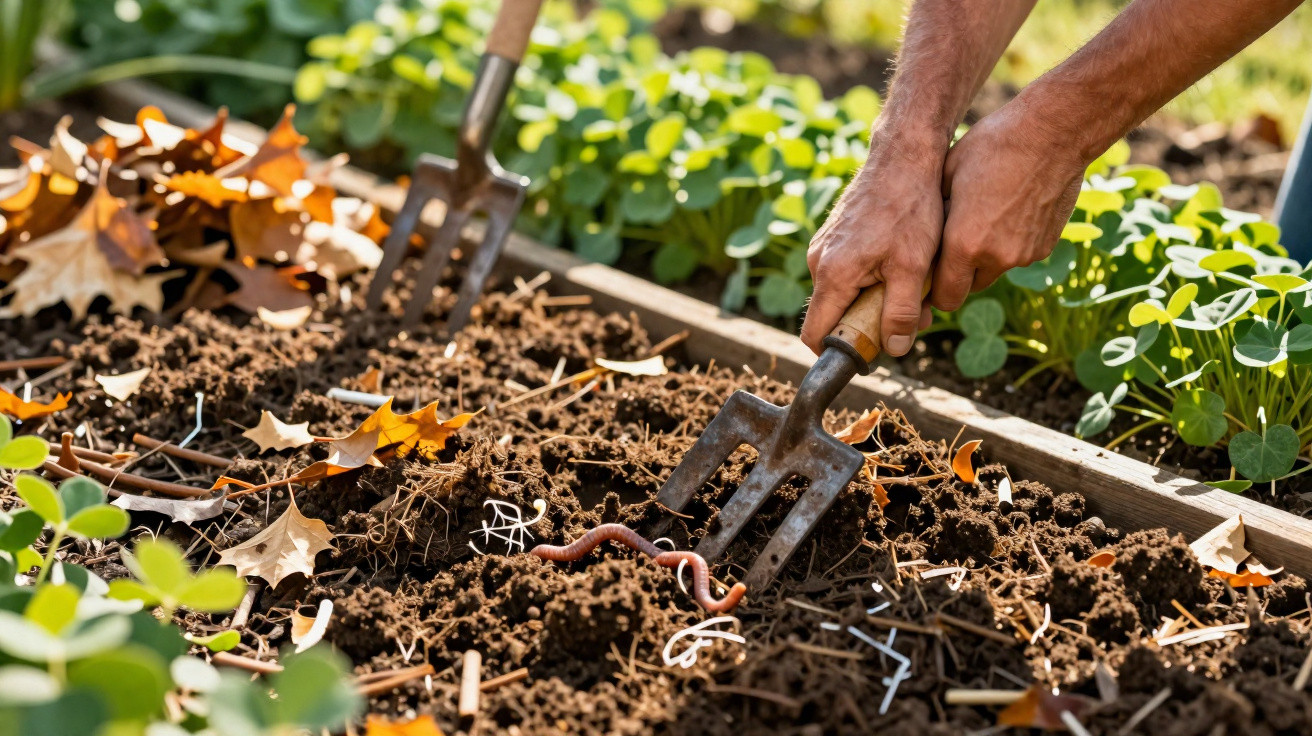
In many gardens, the same scene plays out: soil turned over from end to end, a “tidy” appearance, and an exhausted gardener convinced they have done exactly the right thing.
Tradition says to reach for the spade, turn every layer of soil and leave it smooth for the vegetable plot. Yet this rule, often passed down almost like a family commandment, is now regarded by agronomists and environmentalists as one of the biggest mistakes in home gardening.
The perfect soil myth: why we were taught to turn the earth
The belief that a good growing bed must contain loose, brown, bare soil with nothing on top is deeply ingrained. This image of a “well-organised garden” has become synonymous with competence.
Many people also link physical effort with the quality of a vegetable garden. If the painkillers have not been needed, the job can seem insufficiently serious. This is where the urge to dig deeply, break apart every clod and turn the entire bed upside down comes from.
That mindset originates in mechanised farming, where tractors work across large areas. The problem is that the logic of hectares of monoculture has been copied into a 20-square-metre back garden.
“The soil in your garden is not a miniature farm: it works more like a delicate organism, full of internal relationships that a spade can break apart.”
In agriculture, deep cultivation developed to deal with heavy machinery, vast volumes of land, particular pests and intensive production systems. In a home garden, the priority should be different: preserving life in the soil, plant diversity and natural balance.
What digging does beneath your feet
From above, it may look like nothing more than “dirt”. However, a handful of healthy soil can contain billions of micro-organisms, along with insects, earthworms, fungi and interwoven roots.
Earthworms: the natural drainage system you damage unseen
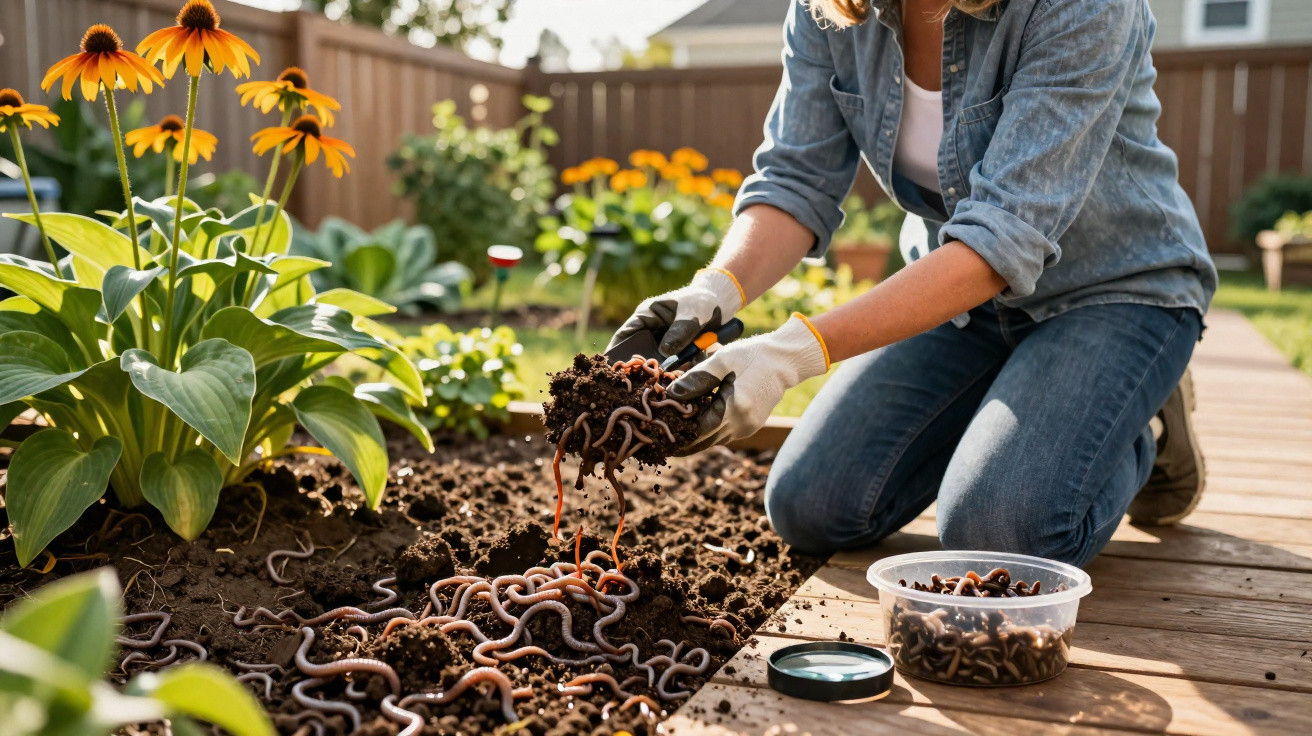
Whenever a spade enters the ground, it cuts through earthworm tunnels. These channels are a key route for water and air to move through the soil. They prevent waterlogging, improve infiltration and make the soil more porous.
When soil is turned, many earthworms are exposed to light, cold or heat and become easy prey for birds. Others have their life cycle disrupted. Fewer earthworms mean less internal soil structure and greater compaction over time.
Beneficial fungi: the “internet” severed with every hoe stroke
Below ground lies a genuine web of microscopic fungi known as mycelium. In many plants, these fungi form partnerships that help them absorb water and nutrients in exchange for sugars made through photosynthesis.
The system acts as a distribution network: one plant may “lend” phosphorus to another or receive additional support during dry spells. When a spade goes in and turns everything over, these fine threads are broken.
“Soil that is constantly turned over lives in a state of emergency, forced to rebuild connections and tunnels instead of focusing energy on producing flowers, leaves and fruit.”
The more you disturb it, the harder the soil becomes
Another harmful result of repeatedly turning the soil is the development of a so-called compaction crust at the surface: ground that becomes almost like cement after heavy rain.
Healthy soil consists of small clusters, known as aggregates, held together by clay, organic matter and substances produced by roots and living organisms. Breaking everything down into powder destroys this structure.
During the first heavy downpour, water disperses the fine particles, which settle into the pores and create a hard layer. Once it dries, water struggles to penetrate and roots suffer from a lack of oxygen.
“The paradox is straightforward: the more you pulverise soil to make it ‘loose’, the more likely it is to compact and crack afterwards.”
The gardener sees the hardened surface, decides it needs digging again and strengthens the vicious cycle. Year after year, the soil loses structure, moisture and its ability to regulate itself.
Turning up unwanted seeds: weeds are grateful
Another often overlooked point is that soil acts as a seed vault. For decades, self-seeding plants release seeds that remain dormant in deeper layers.
When the earth is turned, those seeds are brought upwards, receive light and oxygen, and awaken. That is the signal they need to germinate in large numbers.
- Grasses, nutsedge, beggar-ticks and other invasive plants quickly take over.
- You spend more time pulling unwanted plants than tending the vegetable garden.
- Stress rises, and many people give up growing food because they believe they are “bad with plants”.
By contrast, gardeners who keep the ground covered and disturb it very little leave much of this seed bank dormant, without the opportunity to sprout.
Soil addicted to fertiliser: when fertility becomes dependence
Turning the soil speeds up the decomposition of organic matter because a large amount of oxygen enters at once. The bacteria responsible for this work then accelerate, rapidly converting humus into soluble nutrients.
In the first crop, the result can feel excellent: plants grow vigorously, stay green and respond well. However, this surge comes at a high cost. Over time, the organic-matter reserves disappear and the soil becomes poor, unable to hold water and nutrients.
“Exhausted soil behaves like a patient in intensive care: it needs constant doses of fertiliser to maintain any production at all.”
Under these conditions, home gardening becomes expensive and fragile. The smallest lapse in feeding can cause a sharp drop in productivity, stressed plants and more pests.
Put down the spade: how to aerate soil without destroying it
Giving up deep cultivation does not mean neglecting the garden. The key is to replace brute force with intelligent soil management.
Broadforks, garden forks and low-disturbance tools
Tools such as a broadfork or an aerating fork can pierce and loosen the ground without inverting its layers. Push the tines into the soil, make a gentle levering movement, crack the soil open and pull the tool back out.
This improves the circulation of water and air, while microbial layers stay where they belong and earthworm tunnels remain active.
Mulch: leaves and garden waste as allies
Another highly effective approach is to keep soil covered at all times with organic material: dry leaves, straw, thoroughly dried grass clippings, coarse sawdust, shredded bark or even plain brown cardboard without coloured printing.
| Mulch type | Main benefits |
|---|---|
| Dry leaves | Plentiful in autumn, break down quickly and feed earthworms. |
| Straw | Provides good protection from sun and rain, reducing erosion and evaporation. |
| Dry grass clippings | A good nitrogen source that supports vegetable growth. |
| Brown cardboard | Blocks light, suppresses weeds and prepares soil for new beds. |
These materials create a “blanket” that stops rain from compacting the surface, retains moisture and continuously feeds soil wildlife. In time, the growing medium becomes darker, looser and richer without the need for digging.
Plants that work for you: roots, green manures and companion planting
Certain species have deep, vigorous roots that can break through compacted layers. These are known as cover crops or green manures.
Common examples for vegetable gardens include:
- Jack bean and sunn hemp, which fix nitrogen in the soil.
- Fodder radish, whose taproot reaches deep into the ground and opens up pathways.
- Millet and oats, which produce plenty of biomass for mulch.
You can sow these species in resting areas, cut them before they flower and leave the material on the soil surface. The dead roots leave internal channels behind, while the top growth becomes natural fertiliser.
Another useful method is companion planting: for instance, growing lettuce beneath sweetcorn, or climbing beans on a support alongside flowers that attract pollinators. This diverse layout tends to reduce pests, protect the soil more effectively and balance nutrient use.
A few terms worth clarifying
Two words used by agronomists often cause confusion: structure and fertility. Structure refers to the physical form of soil, including how its aggregates are arranged and how many pores and channels it contains. Fertility refers to the amount and availability of nutrients.
Soil can contain plenty of nutrients yet still have poor structure, be waterlogged or become hard, preventing roots from reaching those nutrients. This is why simply adding fertiliser does not solve the problem if years of intensive turning have destroyed the structure.
Another common expression is “seed bank”. It is not a metaphor: soil genuinely stores a huge reserve of seeds from many species. Some may remain viable for years or even decades. Whether or not you disturb the soil deeply determines how many will have the chance to germinate each season.
Practical scenarios: what a two-year transition can look like
Imagine a typical back garden with 4 x 1 metre beds that are turned over every year. During the first winter without using a spade, the gardener decides to:
- Stop turning the soil, loosening it only lightly with a fork.
- Apply a 5 to 10 cm layer of dry leaves and straw.
- Sow green manure in one of the beds and allow it to rest.
In the first year, doubts are normal: some weeds still emerge, and the garden may look “messy” compared with bare soil. By the second year, however, the difference is often obvious: fewer troublesome weeds, darker soil, roots entering more easily and less need for watering during dry periods.
Over the medium term, compaction is no longer the greatest risk; overconfidence becomes the bigger one. Soil that becomes alive again responds quickly both to good practices and to mistakes. If the gardener overuses highly concentrated fertilisers or starts turning everything over again, the microbiota feels the effect.
On the other hand, the benefits build on one another: more organic matter means a greater ability to retain water, reducing risks during short dry spells. A deeper root system helps plants withstand heatwaves. The diversity of organisms itself acts as “insurance” against pests and diseases, making explosive outbreaks less likely.

Comments
No comments yet. Be the first to comment!
Leave a Comment