
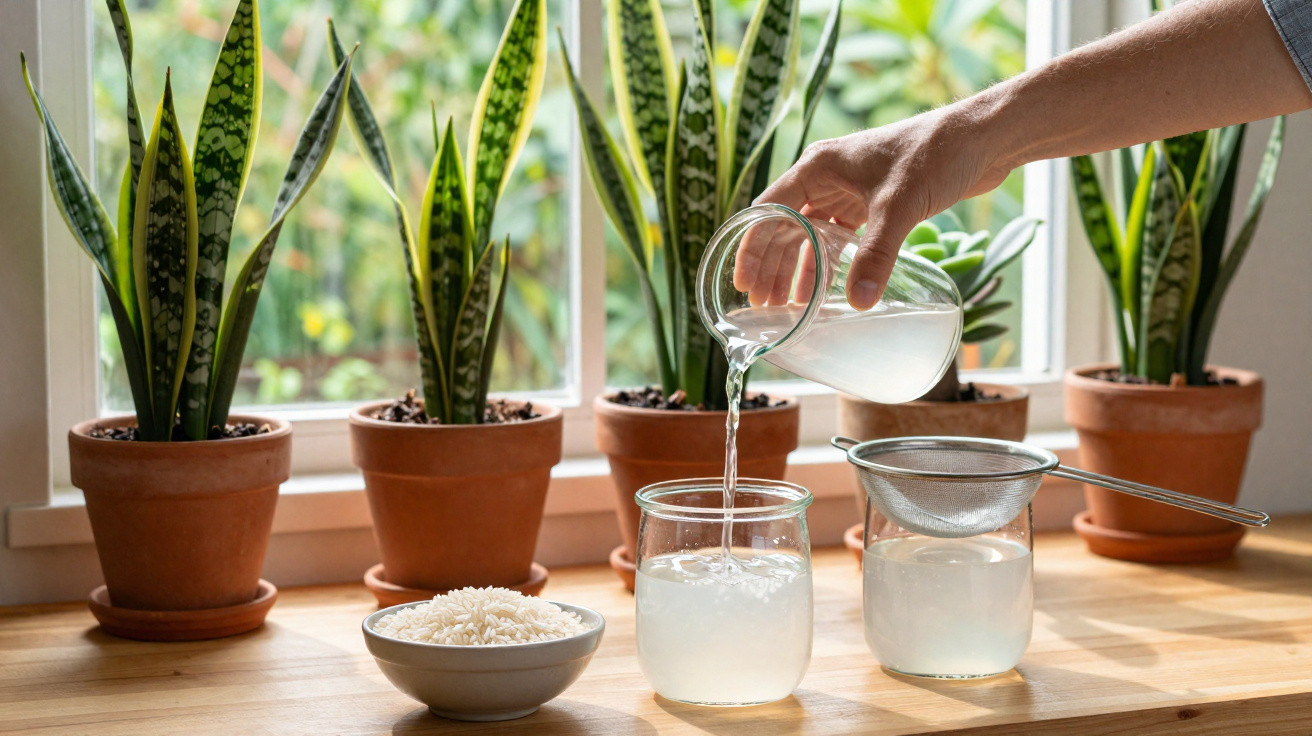
Among the most popular houseplants, the snake plant stands out for its hardiness and ability to adapt to a range of settings. Even so, it may occasionally grow slowly or look less robust, particularly after long stretches without feeding. A straightforward fertiliser such as rice water can provide an affordable way to support the plant’s nutrition and vitality.
What is rice water and how does it work on a snake plant?
Rice water for plants is the liquid left after rinsing or cooking ordinary rice, provided it contains no salt, oil or seasoning. It retains some of the starch, minerals and small quantities of vitamins found in the grain, allowing these nutrients to be reused rather than poured down the drain.
When it reaches the growing medium, rice fertiliser feeds beneficial soil microorganisms and helps the snake plant gain gradual access to nutrients. In old pots or nutrient-poor soil, this mild boost can encourage firmer leaves, richer colouring and slightly steadier growth, without the overfeeding risks associated with highly concentrated fertilisers.
How should rice water be prepared and applied to a snake plant?
As the snake plant is a succulent with rhizomatous roots, naturally suited to poor, free-draining soil, this gentle type of feed can help keep it healthy without overloading the growing medium. Preparation is uncomplicated and makes use of something already found in the kitchen, but care is needed to prevent strong smells, excessive fermentation and waterlogging.
Follow these basic steps to prepare and use rice water safely, helping to reduce the risk of problems with the roots and the indoor environment:
- Set aside the rice: use ordinary rice with no seasoning, salt or oil.
- Rinse the grains: cover them with clean water and stir to release excess starch.
- Strain the liquid: remove the rice and keep the cloudy water in a separate container.
- Leave it to stand: allow it to rest for a few hours in a well-ventilated, shaded place.
- Dilute if needed: combine 1 part rice water with 1 part clean water.
- Apply it to the growing medium: use a spray bottle or watering can, directing it only onto the soil and avoiding saturation.
How often should rice water be used on a snake plant?
Snake plants prefer periods when their soil is drier and do not cope well with too much moisture, so rice water should be used only as an occasional boost. Under normal growing conditions, once a week is the maximum application rate. Always alternate it with ordinary watering using clean water only, and ensure the pot has good drainage.
In very humid areas, places with limited ventilation or during colder periods, the interval can be extended to once a fortnight. Check that the top layer of the growing medium has dried completely first. In indoor spaces with air conditioning or heating, monitor how quickly the soil dries and adjust watering accordingly, without increasing the use of the rice fertiliser, which should remain a light supplement.
What precautions make rice water safer and more effective?
Although it is an inexpensive and simple option, rice fertiliser needs to be used carefully to avoid imbalances in the pot, including mould, unpleasant odours or insects. Do not use water that is old, smells strong or shows signs of fermentation. The soil should also stay loose and free-draining to help prevent root rot.
Additional care, together with measures such as repotting every two or three years, removing very old leaves and making moderate use of worm castings or fertilisers formulated specifically for succulents, can help keep the snake plant well nourished, resilient and attractive throughout the year in houses, flats or offices.




Comments
No comments yet. Be the first to comment!
Leave a Comment