
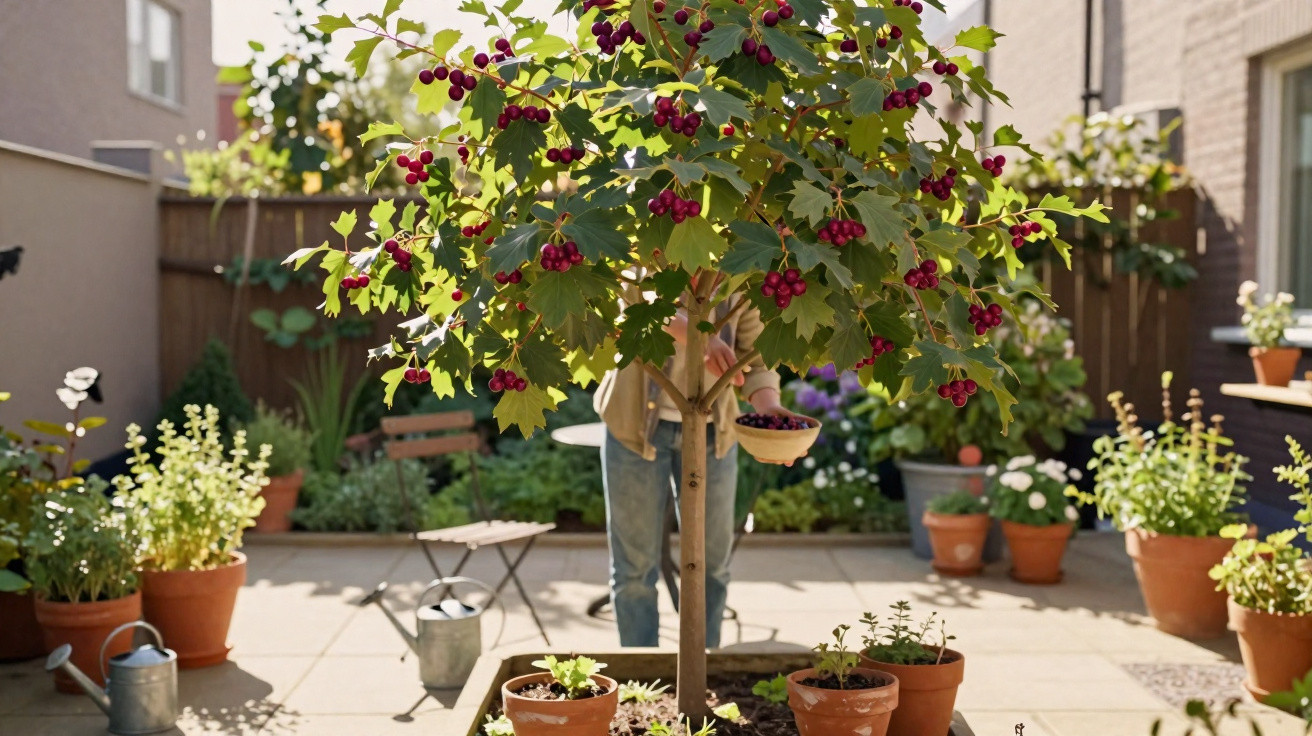
At the end of a narrow path, between a slim patio and the neighbour’s wall, there is often a patch of soil that nobody quite knows how to use. You may want to plant a tree there for dappled shade, birds and the pleasure of picking something as you pass, yet the worries soon appear: roots beneath paving, damaged pipes, leaves everywhere and branches that grow too large. In a nursery, customers almost always ask the same thing: “Don’t you have a tree that stays well behaved?” The amelanchier is frequently part of the answer. This graceful shrub provides spring blossom, small summer fruits and a gentle presence throughout the year, without becoming invasive. That restraint makes all the difference.
Amelanchier, the small tree that does not take over the whole garden
We all know how a tree planted with enthusiasm can eventually occupy the patio furniture area, the vegetable patch and sometimes even the kitchen light. The amelanchier generally avoids this outcome: depending on the species and cultivar, it usually reaches between 3 and 6 metres when mature, with a flexible habit well suited to modest plots. Its foliage does not overwhelm the space, and its roots are far less forceful than those of a willow, poplar or certain large maples. No tree should ever be planted directly beside pipework, of course, but this one is known for its restraint.
In urban gardens, Amelanchier lamarckii is among the most popular choices. In spring, it is covered in delicate white flowers; during June or July, these give way to blue-purple berries, known as serviceberries, whose colour and gently sweet flavour recall small blueberries. A family can pick a few handfuls straight from the tree, provided they get there before the blackbirds. The fruit can also be made into a tart, compote or homemade jam. The hardest part can be saving enough to fill a bowl.
Its appeal extends beyond the fruit. The amelanchier forms a relatively fine, branching root system that seeks water without producing the huge surface roots that lift some edging. Once it is properly established, usually after two or three growing seasons, it copes with reasonable dry spells. That does not mean it should be left entirely unattended during a prolonged heatwave, particularly in very free-draining soil. It manages with little, without requiring the daily watering that is always forgotten during holidays.
Planting an amelanchier well for fruit without unwelcome surprises
Choosing the right spot is the first essential step. Allow a sunny or lightly shaded position, at least 1.5 metres from a patio, wall or any known underground service, and select soil that does not remain waterlogged in winter. Dig a hole twice as wide as the root ball, loosen the surrounding earth and water generously after planting. A mulch of fallen leaves, woodchips or dried grass cuttings will then help retain moisture. A well-planted amelanchier needs little attention, which is exactly where its greatest strength lies.
A common mistake is to treat it like a heavily cropping fruit tree, pruning it hard every winter to “encourage” it. The instinct is understandable, as many gardeners have learnt this approach with apple or peach trees. However, amelanchiers respond better to light pruning. Remove dead wood, crossing branches and, where necessary, a few of the oldest stems at ground level. Heavy cutting reduces flowering and can leave it with a less natural shape. Give it some freedom: its slender branches are part of its charm, particularly when they move in the breeze.
Nursery professionals also advise selecting a cultivar to suit the available space rather than being won over by the first attractive label. The narrower Amelanchier alnifolia ‘Obelisk’ suits small gardens, while lamarckii has a fuller, highly ornamental presence.
“In a small garden, the best tree is not the one that promises the biggest harvest: it is the one you can let grow without regret,” often says a nursery professional familiar with housing-estate gardens.
- Water regularly during the first year, especially from May to September.
- Apply mulch around the base to reduce evaporation and competing weeds.
- Avoid nitrogen-rich fertilisers, which encourage long shoots at the expense of fruit.
- Pick serviceberries once they turn deep blue and come away easily.
A discreet tree that changes the way you see your garden
The amelanchier will not turn a garden into a spectacular orchard, and that may be precisely why it is so appealing. It moves through the seasons without imposing a clearing-up chore or constant monitoring. Its flowers signal the arrival of brighter days, its fruit attracts children as well as birds, and its leaves often turn orange and red before winter. In a restricted space, this series of small moments matters more than a huge yield. Planting becomes less about making every square metre profitable and more about creating a living corner at window or patio level.
Its drought tolerance also needs to be understood sensibly. A plant described as low-water is not indestructible: a recent planting quickly suffers in dry, compacted ground. Once rooted in, the amelanchier becomes considerably more self-reliant than a water-hungry tree, especially when it is mulched and growing in healthy soil. The difference is particularly noticeable in the height of summer, when the gardener has neither the time nor inclination to unroll 50 metres of hose. Deep, infrequent watering is preferable to a few drops every evening.
There is another, almost reassuring benefit: choosing a suitable species can prevent unspoken disputes with neighbours. There are fewer troublesome roots, less heavy shade, a manageable height and fruit that does not stain cars by the hundred as mulberry fruit can. It is not a miracle tree-no tree is-but it is a sensible choice for gardens where every metre matters. Wildlife enthusiasts can even leave a few fruits for birds, while those with a sweet tooth will soon learn to harvest early in the morning.
| Key point | Detail | Added value for the reader |
|---|---|---|
| Well-behaved roots | The amelanchier has a less aggressive root system than large trees known for lifting hard surfaces. A sensible distance from structures remains necessary. | It makes it possible to introduce a tree into a small garden without constantly worrying about paving or pipes. |
| Summer fruit | Serviceberries generally ripen between June and July, depending on the climate and cultivar. They can be eaten fresh or used in cooking. | The garden also becomes an easy picking space, accessible to children and enjoyable to share. |
| Good drought tolerance | After two or three years of establishment, the shrub copes better with dry periods, particularly when mulched at the base. | Less watering, fewer demands and a planting better suited to increasingly hot summers. |
Comments
No comments yet. Be the first to comment!
Leave a Comment