
If, come spring, you are left looking in dismay at fading beds and empty containers, you are far from alone. Once spring-flowering plants have made their grand display, many gardens are left with a colourless gap before roses, perennials and summer flowers take over. A little planning in March can shorten this quiet period considerably and keep the garden flowering without interruption.
Why March matters so much for gardeners
During March, the soil gradually begins to warm up and severe frosts recede in most areas. This is precisely the period that determines whether the garden is already vibrant in early summer or remains rather bare until July.
"Planting summer-flowering bulbs and tubers too late delays the whole flowering season – and costs you weeks of colour."
Specialists generally advise planting summer bulbs and tubers between early March and mid-May. March offers the greatest benefit: plants have time to establish roots undisturbed, begin growing sooner and reward the gardener with a noticeably earlier start to flowering.
Leave it until late April or even May, and much of the display will lag behind. After daffodils and tulips, beds, borders and window boxes may then remain green but produce few flowers for some time. Four carefully selected plants can tackle this issue: dahlias, begonias, lilies and peonies.
Dahlias: bursts of colour from June into autumn
Dahlias are among the most valuable summer tubers for anyone seeking an abundant, long-lasting floral display. Originating in warmer climates, they dislike sitting in cold, waterlogged soil, so they are not simply sown like marigolds; instead, they should be started early under cover.
Starting dahlias correctly in March
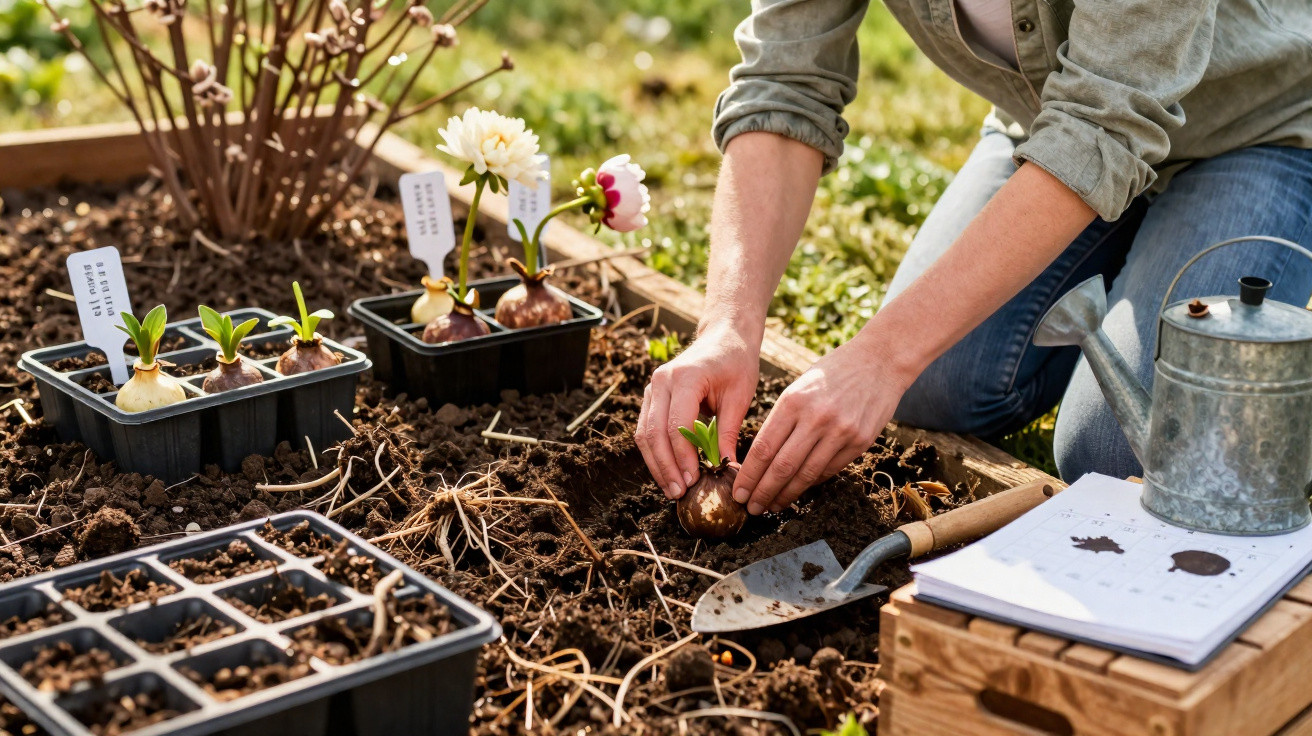
In March, it is best not to place the tubers straight into the garden. Start them first in pots or trays under shelter:
- Fill a large pot with loose, humus-rich compost.
- Position the dahlia tuber with its “neck” facing slightly upwards.
- Cover it with only a light layer of compost, water thoroughly, but do not saturate it.
- Keep it somewhere bright and frost-free, such as an unheated conservatory or greenhouse.
This allows the buds on the tuber to begin shooting in March. The young plants can establish themselves in their protected setting before being moved into borders or large containers from May, once frost is no longer expected. Gardeners using this method can often enjoy the first flowers as early as June, continuing through to October.
Dahlias are available in countless forms, including ball flowers, star-shaped varieties, cactus types and single blooms with visible centres. They work equally well in cottage gardens and sleek, contemporary planting schemes. Choose a sunny or partly shaded position and water them regularly. The tubers do not tolerate waterlogging well.
Begonias: a solution for shady balconies and north-facing spots
While dahlias favour sunshine, begonias excel in partial shade and shaded positions. They can bring colour to a north-facing balcony or darker corners of the garden.
How to start begonias in March
Begonias are also sold as tubers. They are best started in trays or pots in March:
- Fill a shallow tray or pot with light, relatively fine compost.
- Lay the begonia tubers with the hollow side uppermost.
- Dust them with only a very thin covering of compost; do not bury them deeply.
- Keep them moist but never wet, in a bright, frost-free place.
Once the first shoots emerge, it quickly becomes clear how rapidly these plants put on growth and foliage. In late spring, they can be transferred to window boxes, hanging baskets or slightly sheltered beds.
With appropriate care, begonias flower almost continuously throughout the summer. Regularly removing spent blooms and watering moderately but consistently will produce a dense cloud of flowers. They also cope with gentle sunshine while thriving in fully shaded locations, a useful advantage that few flowers can offer.
Lilies: fragrant vertical accents for garden beds
Lilies deliver more than attractive flowers. Depending on the variety, they grow between 60 and 150 centimetres tall, creating upright focal points among lower-growing perennials and ground-cover plants. Their fragrance can fill an entire terrace, especially during the evening.
Planting lily bulbs in March
Lily bulbs may be planted directly outdoors in March, provided the ground is no longer frozen for prolonged periods. A free-draining soil is essential so that the bulbs do not rot.
"Lily bulbs should be planted at a depth of two to three times their own height – this keeps them stable and prevents them from drying out."
Suitable locations include sunny beds and areas with light shade. Some varieties start flowering in late spring, while others appear in high summer. Combining several types can bridge almost the entire period between the last spring flowers and the main perennial display.
A simple planting schedule can be useful:
| Plant | Planting time | Possible start of flowering |
|---|---|---|
| Dahlia | March in a pot, into the border from May | from June |
| Begonia | March in a pot, outdoors from May | from late May / June |
| Lily | March, directly into the border | from May, depending on variety |
| Peony | March (or autumn), into the border | from the 2nd–3rd year after planting in spring |
Peonies: plant now for lavish spring displays in future years
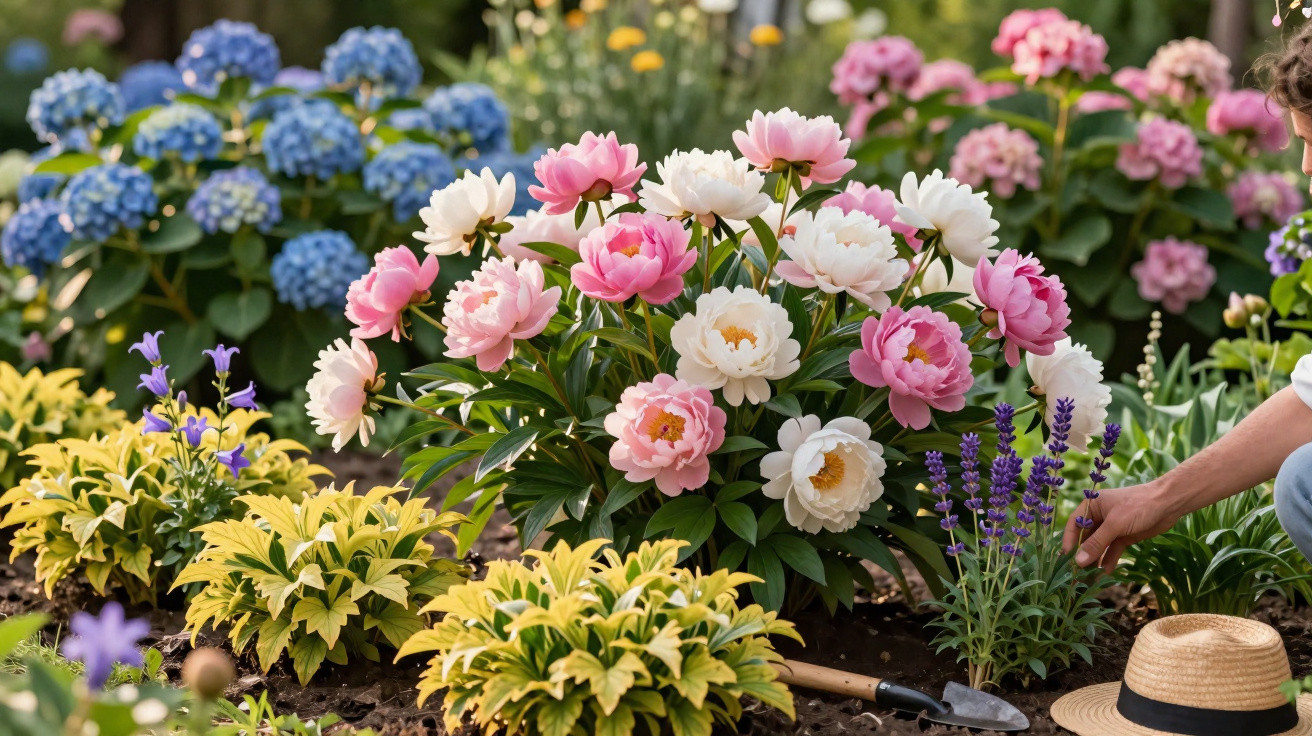
Peonies will often not solve the immediate flowering gap in their first year. They are better viewed as an investment for the future. Planting them in March prepares the way for abundant spring displays in the years ahead.
These perennials are regarded as exceptionally long-lived and resilient. Once firmly established, they can remain in the same spot for decades and become more beautiful with every passing year. However, many home gardeners underestimate how long a young plant needs before it truly gets going. A settling-in period of two to three years is normal before the plant is covered in its characteristic large, rounded flowers.
Planting peonies properly in March
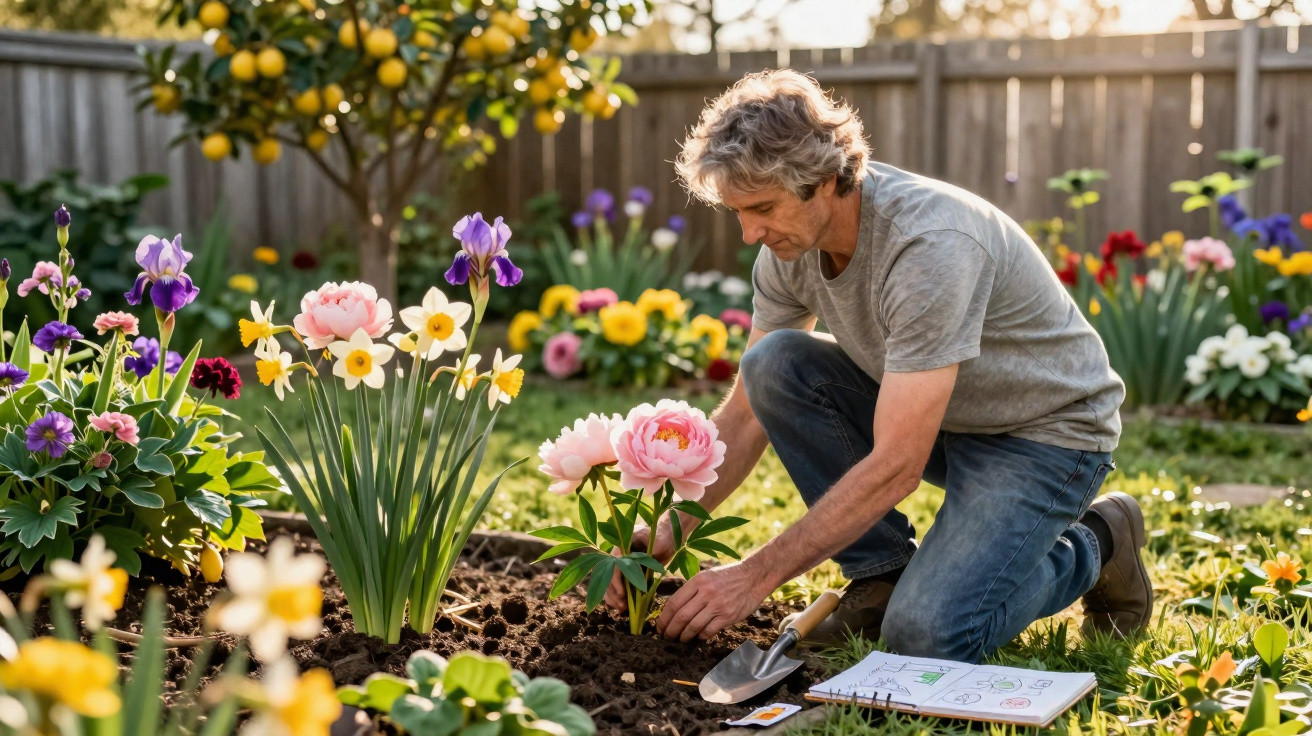
Correct depth and spacing are crucial. On herbaceous peonies, the buds, known as “eyes”, should be covered by only a very shallow layer of soil. If the plant sits too deeply, it will flower far less well.
- Select a sunny spot that is sheltered from strong winds where possible.
- Prepare deep, loose soil and remove stones and old root material.
- Set the plant so that the buds sit only a few centimetres below the surface.
- Water well and keep weeds away during the first few months.
The reward for this patience is a reliable framework for the border over many years, with peonies delivering an impressive late-spring display just as other perennials are only beginning to gather pace.
How dahlias, begonias, lilies and peonies close the garden flowering gap
Combining dahlias, begonias, lilies and peonies thoughtfully covers a wide seasonal window. Spring flowers such as tulips and daffodils set the display in motion. The earliest lilies and pre-started begonias take over immediately afterwards. Dahlias then arrive with full impact a little later, while more mature peonies join the show in the following year and dominate late spring.
"The skill lies in linking spring, early summer and high summer so that not every bed is ‘resting’ at the same time."
Conveniently, these four plant groups complement one another: begonias fill shaded spaces, dahlias and lilies relish sunshine, and peonies provide structure and permanence. Sowing a few annual summer flowers, such as zinnias or cosmos, among them makes the chain of blooms almost unbroken.
Common mistakes when planting in March
The usual errors are easy to avoid:
- Keeping tubers and bulbs too wet, which risks rot.
- Planting peonies too deeply, resulting in weak flowering or no flowers at all.
- Being impatient by cutting back or moving plants before they have established themselves.
- Choosing the wrong position, such as dahlias in permanent shade or begonias in harsh midday sun.
Thinking ahead to summer while planting in March naturally encourages more careful planning. One straightforward tip is to insert a small label showing the variety name and planting date as you plant. This makes it easier to keep track when only delicate shoots are visible in April and May.
Useful extra advice for a carefully planned summer of flowers
The terms “tuber” and “bulb” are often used interchangeably in everyday language. From a gardener’s perspective, however, they are different storage organs. Lilies have true bulbs made up of scales, while dahlias form tuberous root systems. In practical terms, the key point is that both store nutrients and produce new spring growth from these reserves. Handling them carefully during planting protects these vital stores.
If space is limited, nearly all of the plants mentioned can also be grown in containers. Use large pots with drainage holes and good-quality compost. A considered watering approach is especially worthwhile on balconies: saucers stop water draining away immediately, but they should be emptied after heavy rain so that a “bathtub” does not form.
Even a small terraced-house garden can be designed to create a remarkably dense carpet of flowers. Try a narrow terrace border planted with peonies and lilies, a row of dahlias in front, and shade-tolerant begonias around the edge. The dull gap after the spring spectacle will then almost disappear entirely. Starting now in March brings substantially more colour in the same year, while also laying the foundations for many flower-filled seasons to come.
Comments
No comments yet. Be the first to comment!
Leave a Comment