
Many amateur gardeners face the same routine every spring: planting window boxes, refilling borders, then pulling everything out again later in the year. It can be far more relaxed than that. Choose suitable perennials alongside a few self-seeding plants, and you can create a border in a single weekend that delivers an almost self-sustaining floral display for years.
How perennials save work in the garden for decades
Perennials – technically known as “plants that live for more than two years” – survive winter below ground through their roots, rhizomes or tubers. Although the visible growth may look dead in winter, the plant is storing energy beneath the soil. When spring arrives, it grows again, often more vigorously than it did the previous year.
“By planting tough perennials instead of short-lived seasonal flowers, you create a flowering foundation that needs little care and becomes stronger every year.”
Annual flowers work differently. They grow from seed, flower for a few months, produce seeds and then die entirely. They are useful for colourful containers, but in borders they create extra work and greater expense every year.
For this reason, experienced gardeners recommend building a base of perennials that can remain in place for decades, supplemented with carefully chosen plants that self-seed to provide variety.
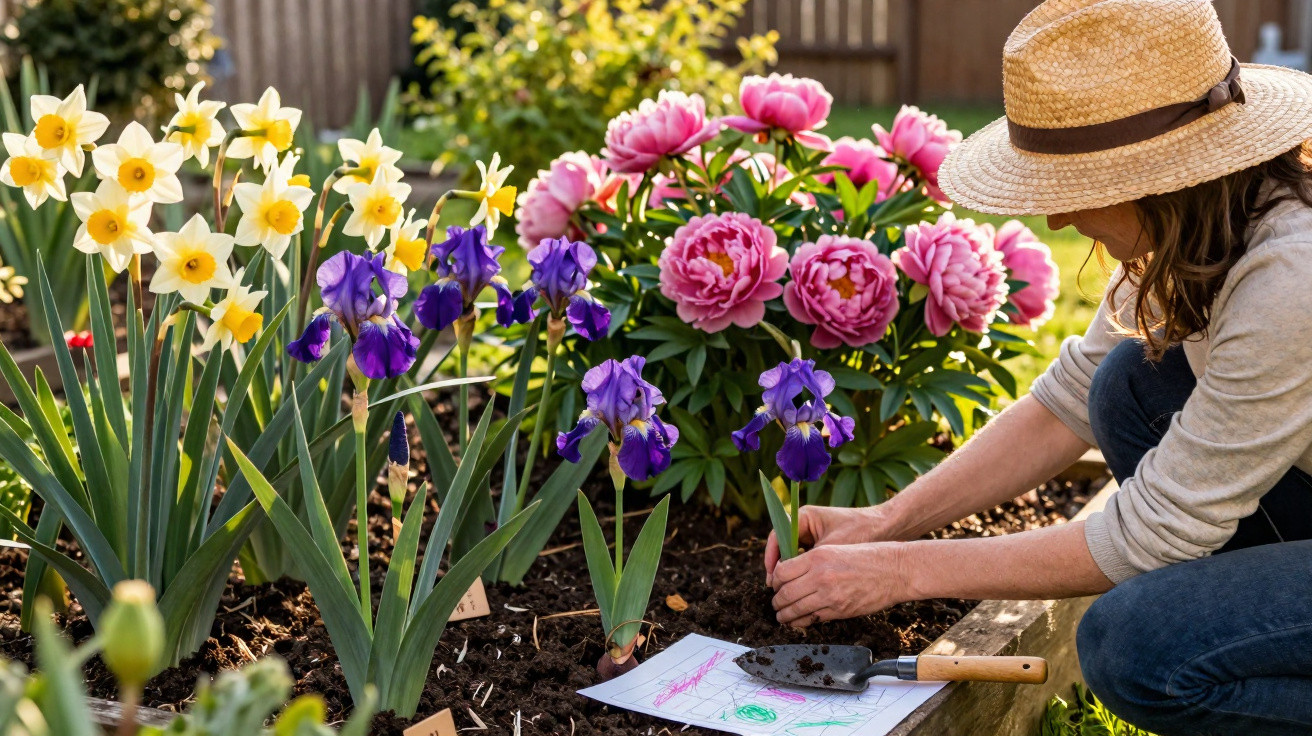
The understated star: herbaceous peonies
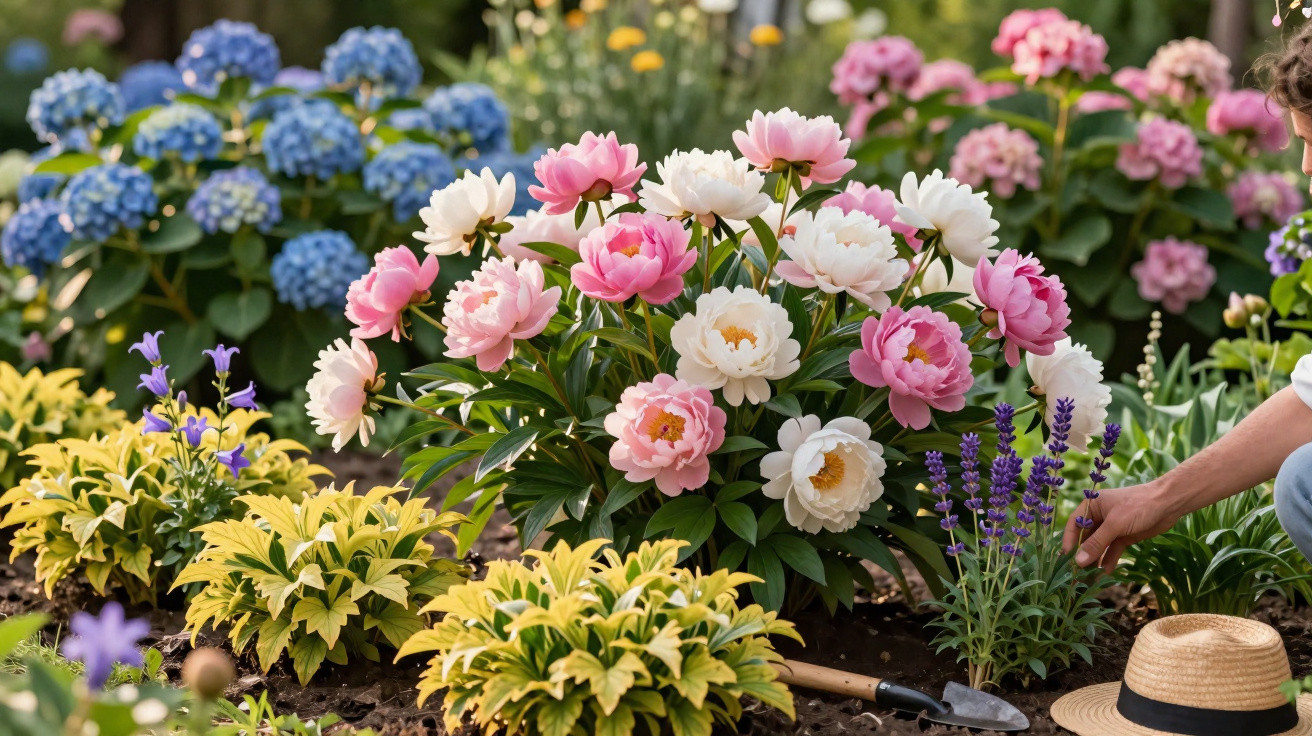
Herbaceous peonies are regarded by enthusiasts as a long-term investment. Once planted correctly, they can ideally provide enjoyment for a lifetime.
- Lifespan: up to 50 years or more in the same spot
- Flowering period: usually May to June
- Flower size: up to around 15 centimetres in diameter
- Position: sunny, free-draining and fairly nutrient-rich soil
One point is crucial: peonies hate being moved. Choose their position carefully before planting, preferably in a quiet part of the border that is not constantly dug over. Their buds should be covered with only a shallow layer of soil, no more than two to three centimetres deep. If planted lower, they often fail to flower for years.
Patience is required, as the plant takes several years to reach its full glory. In return, it will usually reward you each spring with even more flowers.
A spring display with daffodils
Daffodils are among the easiest bulbous plants to grow. They frequently emerge while the rest of the garden still has a wintry appearance.
Their secret is underground: each bulb clump repeatedly divides, producing offsets and gradually spreading. Within a few years, a handful of bulbs can turn into an entire carpet of flowers.
How to grow reliable daffodils
- Plant the bulbs in autumn, before the ground freezes.
- Set them in small clusters of five to seven, as this looks more natural than planting in rows.
- Planting depth: roughly three times the height of the bulb.
- Do not cut the foliage straight after flowering; allow it to yellow first, as it contains the energy needed for the following year.
Daffodils work well in borders, islands in lawns and large pots. Once established, they return reliably, even if you give them very little attention later on.
Adding structure with garden iris
Garden iris (Iris germanica) provides not only colour but also height in a border. It grows from sturdy rhizomes, which may sit just below the soil surface or even remain half exposed.
These storage stems make iris remarkably hardy. Once established, it copes with dry spells better than many other perennials and rarely needs watering.
Typical features include:
- stems reaching almost one metre in height
- large flowers, sometimes in two colours
- suitability for sunny, relatively low-fertility sites
- limited tolerance of competition: avoid planting it too closely with vigorous, spreading perennials
Every few years, iris clumps can be lifted, divided and replanted elsewhere. This allows you to create new elements in the garden without extra expense.
The long-lasting trio for low-effort gardeners
If you have little time, create a core border from three groups: daffodils for the start of the year, garden iris for early summer, and peonies for the main display in May and June.
| Plant | Main flowering period | Care required |
|---|---|---|
| Daffodils | late winter to spring | very low; simply leave the foliage in place |
| Garden iris | late spring to early summer | divide occasionally; otherwise little work |
| Herbaceous peonies | May to June | best not transplanted at all |
Combined properly, this trio produces flowers over several months without requiring fresh planting every year.
Annual flowers that behave like perennials
It becomes particularly interesting when you add annuals that return on their own. Several familiar species self-seed so reliably in borders that almost no intervention is needed.
These include, among others:
- various cornflower species
- cosmos
- love-in-a-mist
- sunflowers, particularly single-flowered varieties
If you leave some flowers in place until they have dried completely, the seeds will fall onto the ground. There they wait for the next spring. Some provide food for birds and insects, while the rest simply germinate again later.
“If you do not cut back every faded flower immediately, you will be rewarded next year with unexpected splashes of colour in new places.”
This gives the garden a more lively, less overly designed appearance. For many amateur gardeners, this spontaneous look is precisely the appeal of a naturalistic perennial border.
Planning a border to last for many years
A long-lasting flower border does not happen by accident. A few basic principles can prevent disappointment:
- Assess the site: is it sunny, partially shaded or shaded? Does water sit in the soil, or is it generally dry?
- Check the soil: is it sandy, clayey, very poor or nutrient-rich? Improve it with compost where necessary.
- Plan in layers: place tall perennials at the back, medium-height plants in the middle and low plants at the front.
- Stagger flowering times: combine early flowers with early-summer and summer perennials.
- Avoid overcrowding: perennials need room, and many become considerably larger over the years.
Beginners in particular often plant far too closely. The border may look excellent in its first year, but after three years the plants compete with one another for light and nutrients, and begin to weaken.
Common mistakes that shorten a plant’s lifespan
Even the toughest perennial will not last indefinitely if conditions remain unsuitable. The most frequent problems include:
- Waterlogging: many long-lived perennials are sensitive to wet roots in winter.
- Too much fertiliser: this encourages strong growth, but creates weak stems and more vulnerable plants.
- Pruning at the wrong time: removing foliage too early, before the plant has stored nutrients.
- Frequent transplanting: some species, including peonies, need a permanent home.
Knowing these pitfalls saves a great deal of frustration and lets the plants simply get on with their job.
Why less work often means more flowers
A faded border can look bleak in winter, but it serves several purposes: seed heads feed birds, hollow stems shelter insects, and dry foliage insulates the roots. Many experienced gardeners therefore wait until late winter to cut everything back, shortly before new growth begins.
The same principle applies to watering. Perennials that are indulged too often develop shallow roots and become more susceptible. Watering less frequently but thoroughly encourages deep root systems and helps plants withstand hot spells.
In the end, the initial effort pays off. A well-planned perennial border, with the right blend of long-lasting flowering plants, bulbs and self-seeding species, develops over the years into a stable system. It begins flowering by itself as winter recedes – while you can simply admire it instead of working from scratch every year.
Comments
No comments yet. Be the first to comment!
Leave a Comment