
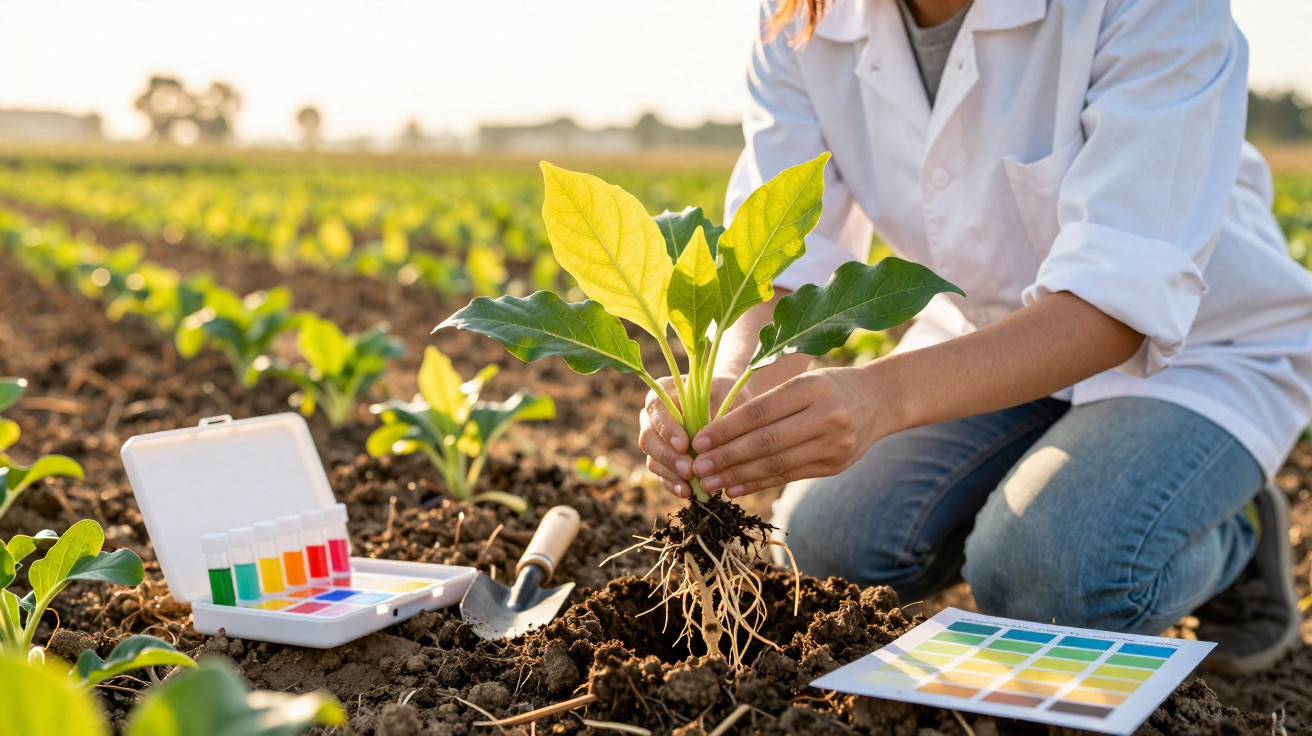
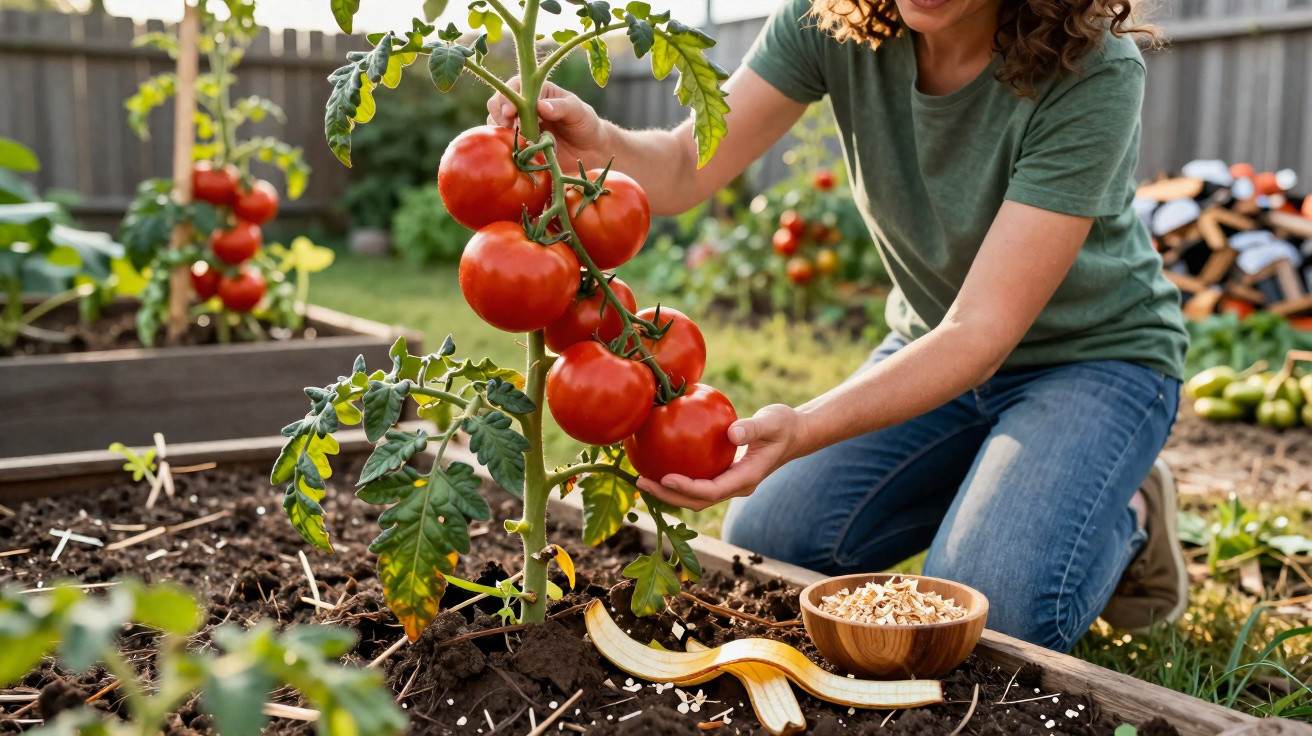
As early evening settles and the garden gradually quietens, you suddenly notice it: the tomato leaves look duller than they did yesterday. Some have turned yellowish, while others are almost blue-green. Nothing alarming, you tell yourself; the summer has been hot, and you have not had the hose out every day. Yet there is that nagging feeling that your plants are trying to tell you something you do not quite understand. We all know that moment when a leaf says more than any gardening app. You lean closer, feel beneath the leaf, rub a little soil between your fingers – and the questions begin to multiply. Why does it look like this? What is happening down in the soil we never see, but on which everything depends?
When leaves start talking: colour as a quiet warning sign
Anyone who has taken a thoughtful walk around an allotment site will recognise the contrast at once: some plots glow with rich green growth, while others look tired and almost grey-green, as though they have had a bad night. This is where the unspoken exchange between leaf colour and soil condition begins. A vivid light green may look youthful and healthy, yet it can sometimes mean nutrient deficiency. Deep green leaves with an almost bluish cast appear impressively vigorous, but may point to excessive nitrogen or cold soil. Colour does not lie; it follows biochemistry. Even so, many amateur gardeners interpret it like a vague weather forecast rather than the fairly precise diagnosis it can be.
A neighbour once told me about his roses, whose leaves suddenly developed a strong yellow colour with dark green veins one summer. At first, he blamed the heat, watered more and even misted them to protect them from the sun. Nothing changed. It was not until autumn, when almost half the foliage had become mottled yellow, that someone at the allotment mentioned “chlorosis”. Iron deficiency caused by soil that was too calcareous, with a pH value that was clearly too high. A straightforward soil test confirmed it in black and white. A year later, after adding some sulphur and organic matter, the same roses had such a deep green colour that even garden visitors stopped to admire them. A few leaf colours had revealed the condition of an entire invisible system.
Every shift in colour has a rather matter-of-fact cause: plant leaves are essentially tiny chemical laboratories in which chlorophyll, carotenoids and numerous trace elements must remain balanced. When that balance is disrupted in the soil – through too little magnesium, too much water or excessive salinity, for example – pigment production is affected. Yellow leaves often indicate chlorophyll breakdown, commonly because of nutrient deficiency or waterlogging. Reddish and purple tones frequently suggest phosphorus deficiency or cold stress. Brown edges can signal salt stress, too much fertiliser or root damage. The soil itself cannot speak, of course. But the plant translates its condition with ruthless honesty.
Learning to read colour codes: from yellow to dark green
Once you understand leaf colour, you can act like a quiet soil doctor. Uniformly yellowish-green leaves on older parts of a plant? That strongly suggests nitrogen deficiency, especially in hungry crops such as tomatoes or cabbage. Yellow leaves with vivid green veins on young shoots often point to iron or manganese deficiency, usually caused by a pH level that is too high. Reddish-purple undersides on young leaves during cool spring days can indicate phosphorus deficiency, as phosphorus is less available in cold soil. The first practical step is simple: keep a notebook, photograph the bed and briefly consult a nutrient chart instead of immediately reaching for all-purpose fertiliser.
At this stage, many people make the same well-intentioned mistake: they add more fertiliser to a system that really has a structural problem. If the soil is compacted, lacking in organic matter or regularly waterlogged, extra fertiliser helps about as much as coffee helps someone with sleep deprivation who has not eaten for days. It may provide a brief lift, but the underlying weakness remains. Let us be honest: hardly anyone diligently takes soil samples from different depths every two years and analyses pH values and humus content. Yet a small spadeful of soil, a look at its crumb structure and roots, combined with leaf colour, is manageable in everyday gardening. It is often more useful than a tenth YouTube video.
“Leaves are the mirrors of the roots – and the roots are hostages of the soil.” – an old gardener’s saying, half joke, half diagnosis
- Yellow leaves with green veins → indication of a trace-element deficiency, often a pH issue
- Dark green-blue leaves → possible nutrient excess or cold in the root zone
- Red-purple tones on young leaves → phosphorus is poorly available, often in cold or very acidic soils
- Brown leaf margins, a “scorched” appearance → salt stress, over-fertilising or uneven watering
- An overall dull grey-green look → compacted soil, excessive moisture and too little air around the roots
What pale leaves can teach us – and why it is more than appearance
Once you grasp how leaf colour and soil quality interact, you never see your garden in quite the same way again. You no longer simply pass a yellowing cucumber; instead, you ask: is the soil too calcareous? Did I apply liquid fertiliser two weeks ago, and has the microclimate now tipped out of balance? One useful approach is to create a simple annual calendar for each bed. In spring, pay closer attention to young leaves; at the height of summer, inspect margins and tips; and in autumn, watch for discolouration along the veins. Three brief inspection rounds per season are enough to spot many quiet calls for help before a plant declines.
At the same time, it helps to take some pressure off yourself. Not every yellow leaf is a crisis, and not every reddish tint is an emergency. Sometimes an older leaf has simply completed its job; sometimes one variety is more sensitive than another. The key is to identify patterns: do the colours appear across many leaves at once? Are young shoots or older growth more affected? Do the symptoms fade after a modest correction to the soil, such as compost or a slightly acidic addition to the water? Gardening remains a quiet experiment. Anyone who makes mistakes is officially part of the club.
A seasoned soil scientist once said to me: “Anyone who wants to heal the soil must first learn to observe quietly.” Leaf colours demand exactly that. They pull us away from the reflex to act immediately and encourage an almost detective-like mindset. A pale green suddenly becomes evidence of exhausted beds after years without crop rotation. Dark, lush green growth with limp shoots shows that, in our eagerness, we have scattered too much mineral fertiliser. A garden where observant eyes regularly scan the leaves is almost always a garden managed with less chemistry and greater understanding over the long term. Ultimately, the colour of your leaves is nothing less than an honest report on your soil, printed in chlorophyll day after day.
| Key point | Detail | Benefit for the reader |
|---|---|---|
| Leaf colour as a diagnosis | Yellow, dark green, red-purple leaves or brown margins provide direct clues about nutrient and soil problems | Recognise more quickly what is going wrong in the soil without immediately needing laboratory results |
| Focus on soil rather than fertiliser | The cause is often soil structure, pH level or waterlogging, rather than “not enough fertiliser” | Avoid over-fertilising, save money and build healthier garden soil in the long term |
| Observation as a routine | Regular, brief leaf checks based on the season and plant age | An early-warning system for yield losses, disease and stress-related damage |
FAQ:
- Why are the lower leaves of my tomatoes turning yellow? Nitrogen is often lacking, or the soil has become compacted and too wet through constant watering. First check whether the yellowing is even and mainly affects older leaves – if so, nutrient deficiency or stress in the root zone is likely.
- My hydrangea has pale yellow leaves with green veins – what does this mean? This is consistent with iron deficiency, usually caused by soil that is too calcareous or hard tap water. A slightly lower pH level and a specialist fertiliser containing iron can usually reduce the effect within a few weeks.
- Red or purple leaves in spring – is that dangerous? Many plants respond this way when phosphorus is poorly available in soil that is still cold. It often corrects itself once the soil warms up. If the colour remains for a long time, it is worth checking the pH level.
- Can too much fertiliser really cause leaf damage? Yes. Brown leaf edges, tips that look scorched and very dark, overly lush green growth often indicate salt stress. In this situation, thorough watering, a temporary break from fertiliser and more organic matter over the long term are often the only remedies.
- Is a professional soil analysis worthwhile for a home garden? It can be very useful for heavily used vegetable beds or plants that are constantly “temperamental”. You receive clear figures for pH, nutrients and humus, allowing you to link your observations of leaf colour with data instead of merely guessing.



Comments
No comments yet. Be the first to comment!
Leave a Comment