
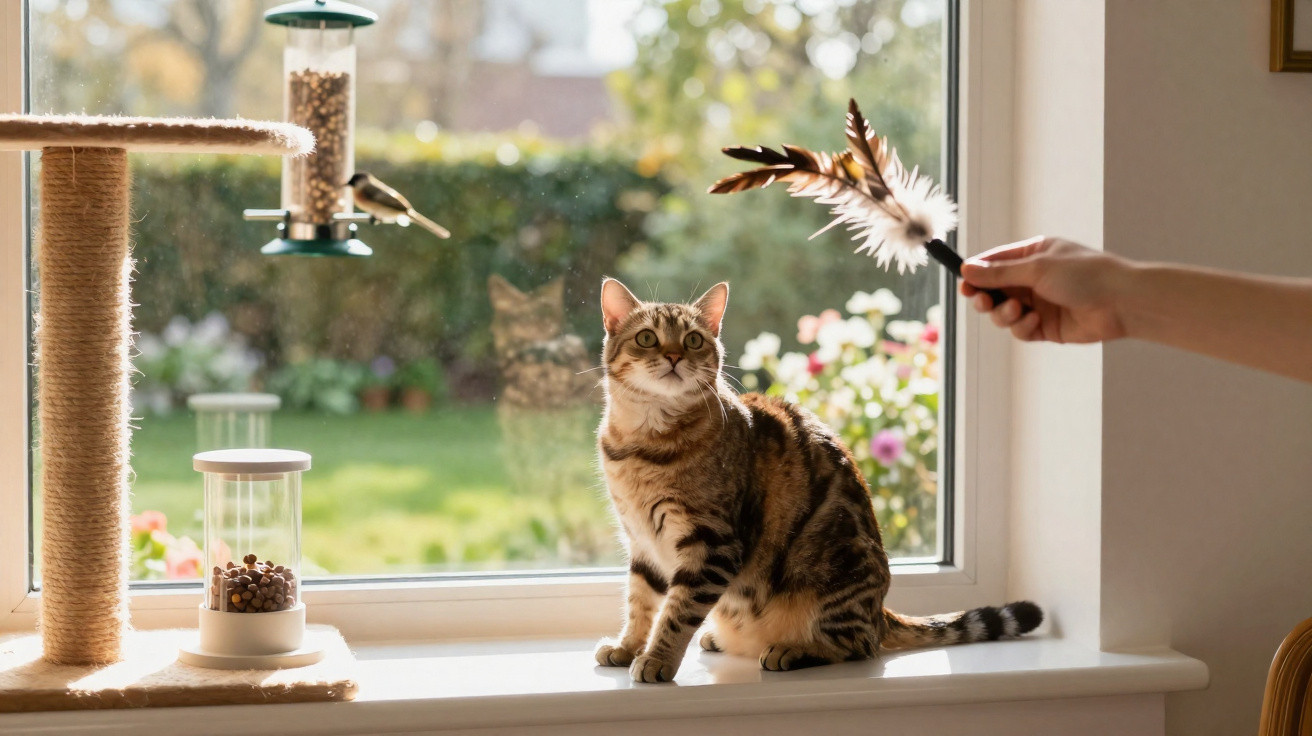
When the sun comes out, many cats want to head outdoors – yet at this particular time of year, an apparently harmless trip into the garden can have serious consequences.
The first mild days, a window left ajar, the patio door briefly open – and the cat is off, exploring rooftops and shrubs. For many owners, this seems normal, perhaps even essential: surely a cat needs freedom or it will be unhappy? In spring, though, the situation outside is very different from how it first appears. Among branches, hedges and crevices we barely notice, a quiet struggle for survival is taking place.
Spring calm in the garden – the hidden breeding season
As temperatures rise in March and April, birds enter their busiest season out of sight. Nests are built in hedges, fresh clutches lie in tree cavities, and pairs breed on roofs and in gaps in walls, fighting every day to keep their young alive. Many fledglings leave the nest before they can fly confidently. They wait in grass, flowerbeds or beneath bushes while their parents return with food.
These clumsy little balls of feathers often look abandoned, but they are not. Every undisturbed moment matters to them. A hurried hedge trim, a dog at play – or a hunting cat – can be enough to put an entire brood at risk.
“A cat attack can wipe out a complete brood – and we often do not notice it at all.”
Many bird species are already under considerable pressure. Long-term data from several European countries show that populations of familiar garden and farmland birds have in some cases fallen dramatically over just a few decades. Habitats are disappearing, pesticides reduce food supplies, and climate change places further strain on wildlife. In this difficult situation, every additional predator in the garden is another blow.
The real impact of domestic cats outdoors
It is difficult to blame the domestic cat itself. Hunting is deeply ingrained in it. Even the laziest sofa cat can become an efficient hunter as soon as something moves in the grass. Its bowl may be full, but the instinct remains: stalk, wait, leap and catch.
Studies from several countries paint a similar picture: cats mainly catch small mammals, such as mice, but a substantial proportion of their prey is birds. When the figures are extrapolated across the number of pet cats, the totals become enormous. In a country with millions of cats, the result can quickly be tens of millions of birds killed each year.
What is more, many hunting trips go unnoticed. Some cats proudly bring their catch home, while others eat or injure animals where they find them. During the breeding season, the loss of just one parent bird can be enough for the young to starve in the nest.
Why March and April are especially critical
Several factors overlap during these two months:
- Birds are in the middle of nest-building and caring for their broods.
- Fledglings are often unable to fly and sit on the ground or just above it.
- Cats are more active and spend longer outdoors as the weather improves.
- Patio and garden season begins, so doors and windows are left open more often.
For a cat, this may look like paradise. For young birds, the garden becomes a trap.
The danger is not limited to birds – cats face greater risks too
One issue many owners underestimate is that cats also face more hazards at this time. More people are out and about, roads become busier, and gardens are used more intensively. Tomcats fight over territory, making bite wounds and infections more common. Parasites such as ticks and fleas are particularly active in spring.
Many road accidents happen at night and in the early morning. Letting a cat out at precisely these times significantly raises the risk – and, in the worst case, an owner only realises this when it fails to return home.
Spring indoors: keeping your cat entertained
The good news is that cats do not necessarily need outdoor access to be happy. A thoughtfully designed indoor environment can satisfy their hunting instinct remarkably well – provided their owner gets involved.
Making your home cat-friendly
- Window spots: Sturdy cat trees or shelves by windows offer a view and a place to bask in the sun.
- Dens and hiding places: Cardboard boxes, blanket forts and small enclosed beds provide security and variety.
- Vertical spaces: Cats love perching up high. Shelves or wall-mounted platforms can make a huge difference.
It takes only simple measures to create an engaging territory. Your cat can climb, watch and retreat without harming a single fledgling.
Hunting games instead of live prey
Anyone taking a cat’s hunting instinct seriously should schedule short play sessions every day. Good options include:
- Wand toys with feathers or fabric mice moved like real prey
- Small balls or soft toy mice thrown across the room
- Puzzle feeders or treats that have to be worked for
Regularity matters more than expensive equipment. Several sessions of five to ten minutes each day are often enough to leave a cat more content and less determined to rush towards the door.
“Anyone who plays purposefully with their cat reduces frustration and lowers the likelihood that it will hunt animals outdoors or put itself in danger.”
When outdoor access cannot be avoided
Some cats have had outdoor access for years, while some owners live in circumstances where stopping it completely seems unrealistic. In these cases, the risks can at least be reduced substantially:
- Adjust the timing: Where possible, do not let your cat out early in the morning or late in the evening, when many birds are most active.
- Bell collar: A properly fitted breakaway collar with a bell can alert birds. It is important to use only collars designed to release under tension, so the cat cannot be strangled.
- Restricted outdoor access: A cat-secure garden or a large outdoor enclosure greatly limits hunting opportunities.
This will not make a hunting cat entirely “harmless”. However, every fledgling saved is a gain, especially in densely built-up residential areas where just a few nests support an entire neighbourhood.
How to make your garden more bird-friendly
Keeping your cat indoors also allows you to do more to help local birdlife recover. Even small changes make a difference:
- Avoid cutting hedges in spring where possible; wait until late summer instead.
- Leave dense shrubs in place rather than “tidying” them away, as they provide shelter.
- Provide drinking stations and small water bowls, and clean them regularly.
- Position feeding areas so that cats cannot stalk towards them unnoticed.
Those who are especially motivated can install nest boxes. These should be placed as high up and as securely away from cats as possible, with a clear flight path and enough distance from anything that can be climbed.
Why cat owners can make a real difference
Cats are often seen as independent animals that “know what they are doing”. Even so, people ultimately bear responsibility – both for their pet’s safety and for the effects of its behaviour outdoors. In a landscape where birds are already struggling, one house cat can make a noticeable difference, particularly in densely populated residential areas.
Keeping a cat largely indoors during the critical spring months does not only help blackbirds, tits and sparrows. It also protects the pet itself from accidents, illness and stress. This may initially feel restrictive to many owners. With a few new play routines and an interesting home environment, however, most cats adapt more quickly than expected.
Ultimately, it is about compromise: a few extra weeks of responsibility each year, for many small lives in the bushes – and for your own furry companion, safely falling asleep on the sofa rather than silently roaming through the shrubs at night.




Comments
No comments yet. Be the first to comment!
Leave a Comment