
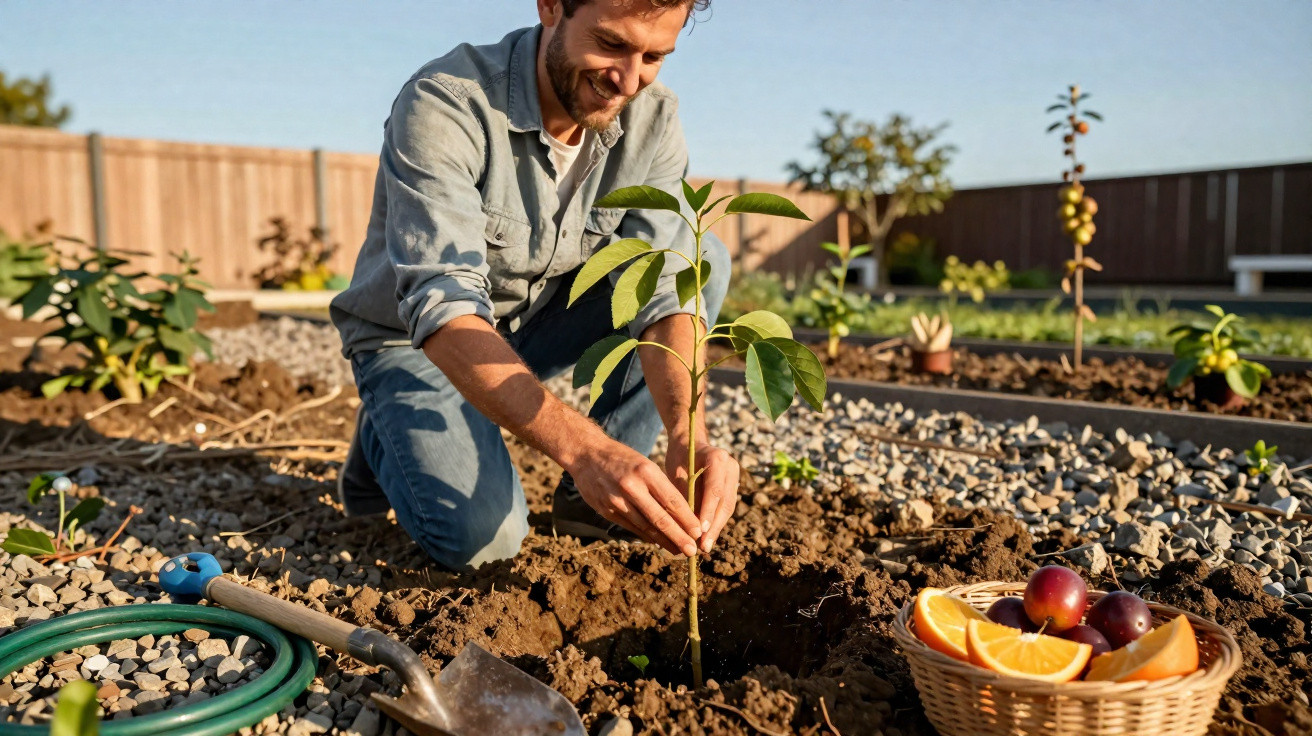
While apple and cherry trees attract attention everywhere, one fruit tree is being almost entirely overlooked, despite being ideally suited to increasingly dry summers: the jujube tree, also known as the jujube or Chinese date. Anyone who plants it during the narrow window around the end of March and follows four key principles can look forward to unexpectedly generous harvests within a few years – while using very little water, fertiliser or spraying.
The overlooked gem: what makes the jujube tree so special
An Asian visitor with remarkable adaptability
Originally from Asia, the jujube tree has been valued there as both a fruit and medicinal plant for centuries. Its fruit, frequently called Chinese dates, is not botanically a date, but its flavour is reminiscent of sweet apples with a subtle caramel note.
“Anyone looking for a hardy, future-ready fruit tree for dry summers will find the jujube an excellent choice.”
This tree is considered exceptionally tolerant of heat and performs surprisingly well in poor, dry positions. That makes it particularly appealing for gardens in this country, where traditional fruit trees are increasingly affected by drought stress.
Generous crops with minimal maintenance
Once it has established its roots properly, the tree proves remarkably undemanding. It needs little water, copes with extended dry spells and produces many small fruits. These begin ripening in late summer and, depending on the variety, continue into autumn.
- Fruit flavour: sweet, with a slight apple-like character
- Uses: eaten fresh from the tree, dried, in muesli, as a snack or in compote
- Nutrients: high vitamin C content, along with fibre and secondary plant compounds
If you enjoy making healthy snacks yourself, the fruits can be dried in an oven or dehydrator and stored as a natural “sweet treat” – with no long list of additives on the back of the packet.
Why the end of March is the ideal time to plant
Warm soil rather than a cold shock for the roots
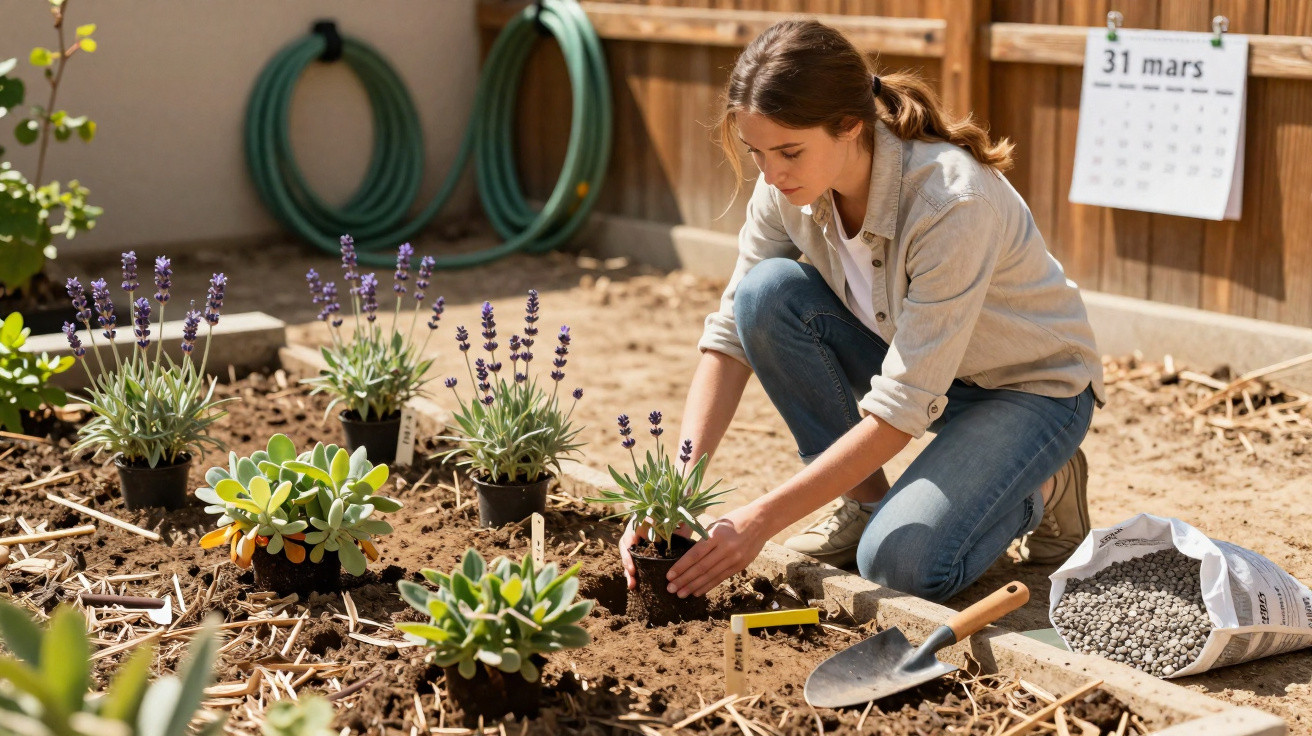
Most conventional fruit trees are planted in autumn in the UK. The jujube is an exception here. Late March through to very early April is the more suitable planting period for it.
At this point, the soil is beginning to warm noticeably. This is exactly what the still-sensitive root system needs to establish without experiencing a temperature shock. At the same time, the harshest frosts have usually passed, while late frosts tend to remain near the surface rather than penetrating deeply into the ground.
“Planting a jujube tree too early in cold, wet soil can lead to growth problems – by the end of March, it gets off to a much stronger start.”
This gives the tree a full growing season to form fine roots and anchor itself in the soil. The benefit becomes particularly clear during the dry periods that follow.
First golden rule: full sun and protection from wet conditions
Choosing a position: the brighter, the better
Jujube trees thrive in warmth. Partial shade, or even worse, a north-facing position, significantly restricts both growth and fruit production. Ideally, the tree should be positioned:
- in full sunshine from morning until evening
- in a south-facing spot beside a house wall or garden wall, which stores warmth
- somewhere sheltered from wind so that flowers and young fruits are not blown off
In cooler areas, a site directly in front of a light-coloured house wall works well. The wall absorbs solar warmth during the day and releases it again overnight, creating a microclimate the jujube tree appreciates.
Second golden rule: the soil must drain water quickly
Although jujube is highly resilient in heat, it reacts very sensitively to waterlogging. Wet roots pose a greater danger than a hot summer. Anyone with heavy, clay-rich soil should therefore take steps to improve it.
For an effective planting hole, the following approach is usually sufficient:
- Dig a generously sized planting hole, at least twice as wide as the root ball.
- Loosen the soil deeply at the base of the hole.
- Add a layer of coarse gravel or sharp sand to improve drainage.
- Refill with a blend of garden soil and sand until the root ball sits at a stable level.
“Waterlogging kills more jujube trees than frost – drainage is not a luxury, but essential.”
Where soil is especially heavy, the tree can also be planted slightly raised on a small mound. This allows rainwater to run away to the sides instead of collecting around the roots.
Third golden rule: without a companion tree, yields stay modest
Why two varieties produce far more fruit
Labels in garden centres often state that jujube is self-fertile. This is partly true: a single tree can certainly set a few fruits. However, a different approach is worthwhile for a truly rewarding harvest.
Ideally, plant at least two trees of different varieties. This encourages active pollen transfer between them, with pollinating insects constantly moving from one canopy to the other. It greatly increases the number of fruits and usually results in better-developed fruit as well.
“Two jujube trees planted side by side often outperform one large tree – pollinators then have only a ‘short hop’ to make.”
Keep your distance: room for roots and air in the canopy
Planting distance is vital if the trees are not to crowd one another. Allow four to five metres between the trunks. Although this may initially seem wasteful on a small plot, it offers several advantages:
- Roots compete less for water and nutrients.
- The canopies remain well ventilated, making fungal diseases less likely.
- Harvesting is easier because every part of the tree remains accessible.
In very small gardens, choose less vigorous varieties or use regular pruning to keep the trees more compact. However, the minimum spacing should not fall below three metres.
Fourth golden rule: water intelligently rather than constantly
The first watering after planting matters greatly
A great deal happens out of sight immediately after planting. Soil in the planting hole is often loose, leaving small air pockets between the roots. These can be eliminated with a thorough settling-in watering.
As a guide, slowly pour at least ten litres of water directly onto the root ball. The water washes fine soil particles into every gap and brings the soil into close contact with the roots. This enables them to establish contact immediately and form new fine roots.
“One deep watering after planting achieves more than weeks of dribbling water from a watering can.”
How to buffer drought without drowning the tree
During the first few weeks after planting, the jujube needs regular moisture but not permanently wet soil. The best method is to cover the ground and respond as needed, rather than watering every day.
A thick mulch layer is ideal, for example:
- clean straw
- grass clippings, allowed to dry slightly and not applied too thickly
- wood chips without leaves
Mulch limits evaporation, keeps soil temperatures stable and creates a balanced microclimate. Water only when the soil in the upper five to ten centimetres beneath the mulch feels distinctly dry – but when you do water, soak it thoroughly rather than applying small amounts.
How to tell whether your jujube tree has established well
Reading the signs from the buds
A few weeks after planting, it is worth inspecting the canopy carefully. If fresh, light-green buds form and small leaves emerge, the tree has accepted its new position. If no new growth appears, the issue is usually in the root zone, often caused by waterlogging or severely compacted soil.
The jujube does not need heavy pruning while it is becoming established. Dead or damaged shoots can be removed in late spring, but stronger shaping cuts only make sense after a year, when it is clear how the canopy is developing.
Nutrients: less is more in this case
Jujube is not a heavy feeder. Excess nitrogen fertiliser may produce plenty of foliage, but it weakens wood ripening and leaves the tree more vulnerable to frost. In many gardens, a modest application of mature compost in spring is entirely sufficient.
Mineral fertilisers are generally unnecessary. Working in large quantities of manure or highly concentrated fertiliser during the planting year can risk burning the root system. It is better to use slow-release organic fertilisers or rely solely on compost.
Why jujube is ideal for sustainable gardens
The tree fits current gardening trends remarkably well: low water use, high yields, attractive flowers for insects and an exotic yet useful role in the kitchen. Combined with other drought-tolerant trees and shrubs such as fig, almond or sea buckthorn, it can form a small “climate-change fruit garden” that copes far better with heat than traditional varieties.
Families with children gain an additional benefit from the fruit’s snack-friendly nature. It can be eaten straight from the tree, its high vitamin C content makes it refreshing, and it is considerably kinder to teeth than many shop-bought sweets. With good care, one tree produces enough fruit to provide both fresh snacking and dried stores at the same time.
With just a few carefully chosen steps – the right timing, a well-considered site, a second tree for pollination and a thoughtful watering plan – the almost forgotten jujube tree becomes one of the most exciting fruit-growing options for anyone seeking to future-proof their garden.

Comments
No comments yet. Be the first to comment!
Leave a Comment