
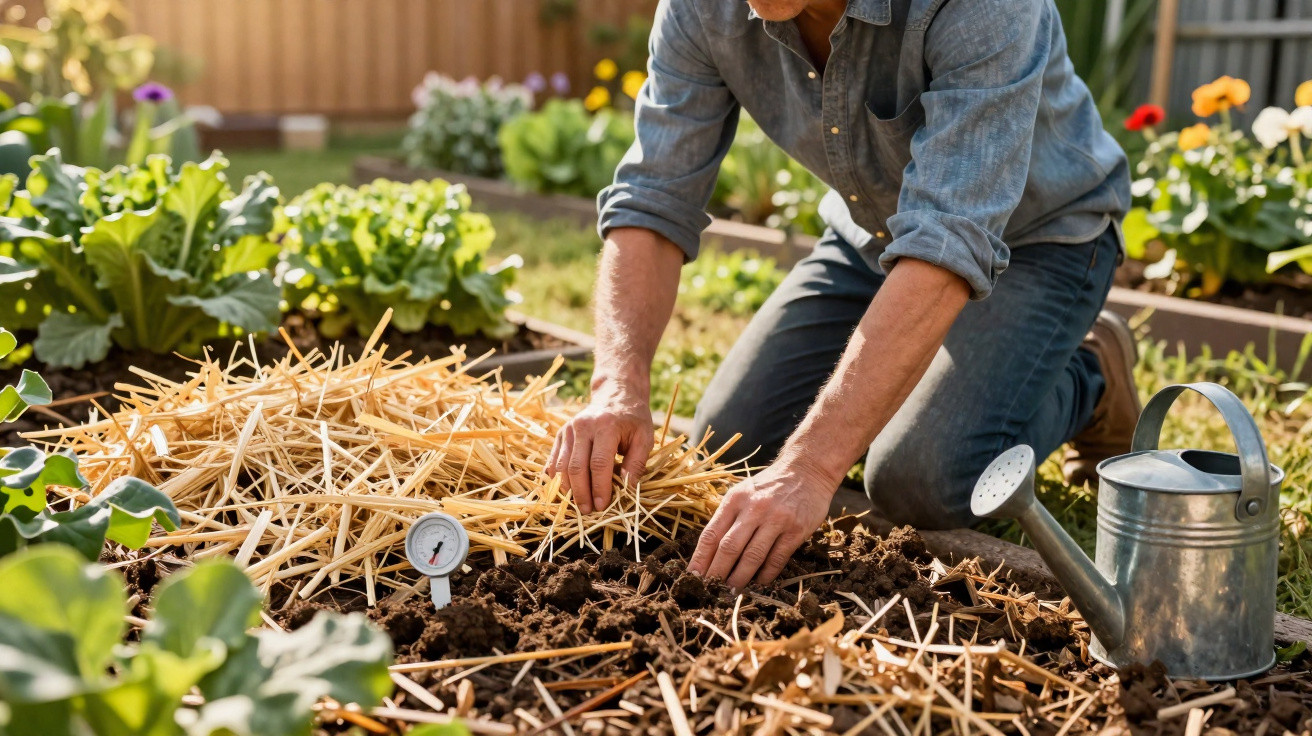
The first time you walk barefoot across an unprotected lawn in summer, the difference is immediate. The grass feels brittle, the earth beneath it is as hot as a pan left on the hob, and the surrounding plants appear to be holding their breath. Yet, a few metres away, beneath a simple cover of straw and leaves, the ground is cooler, almost moist and full of life. It is the same garden under the same sun, but the roots inhabit a completely different world.
Gardeners are increasingly recognising this divided reality.
Those who protect the soil surface are quietly coping better with heatwaves.
Why covered soil copes better with temperature shocks
Walk between two neighbouring vegetable beds at midday and you become a human thermometer. In the bare bed, heat rises from cracked earth, the air trembles, and tomatoes sag like exhausted interns. Just a couple of steps away, in a mulched bed, the air feels gentler, the soil gives slightly underfoot, and the leaves look less desperate. You can almost imagine worms chatting beneath the mulch.
That modest top layer can mean the difference between merely surviving and growing steadily.
Last July, on the outskirts of Madrid, an amateur gardener called Elena carried out a straightforward test. She pushed a cheap soil thermometer 5 cm into her exposed tomato bed: 36°C. She then measured the neighbouring bed, mulched with a mixture of shredded leaves and grass clippings: 26°C. It was the same day, at the same time, in the same sunshine.
During the heatwave’s most severe week, the uncovered bed lost three plants. The mulched bed lost none and required almost half as much water. Elena had not changed the varieties, fertiliser or watering system. She had simply stopped leaving the soil bare.
So, what happens beneath this unassuming blanket of straw or wood chips? Uncovered soil acts like a dark roof: it takes in sunlight, warms quickly, and then gives off that heat into the air and down towards the roots. Each afternoon becomes a stress test. Root activity slows, micro-organisms withdraw, and water disappears rapidly through evaporation.
Covered ground behaves in another way. Organic mulch reflects some sunlight, shades the surface, holds a slim layer of cooler air and limits evaporation. Soil temperatures vary less between the middle of the day and the night. With fewer shocks to endure, plants can continue growing instead of repeatedly recovering from the previous day’s stress.
How to protect your soil surface like a professional without making it complicated
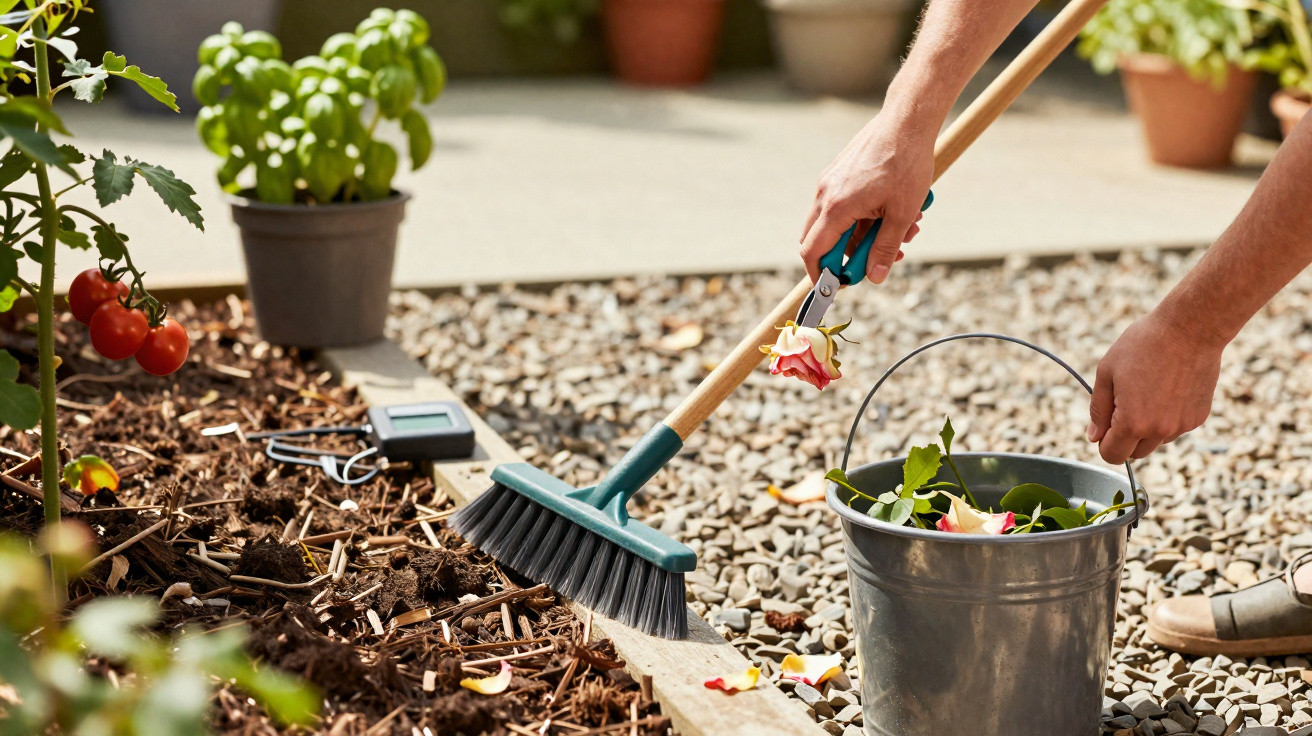
Look at your beds as though they were skin that can burn. Every patch of exposed soil is a potential hotplate. The easiest action is simply to cover it, again and again. Use whatever is available: shredded leaves, straw, chopped stems, grass clippings, or even cardboard beneath a light layer of organic matter.
Apply a layer 5–8 cm deep around plants, but leave a small clear circle around each stem so that it can breathe.
Many people mulch once, scatter a very thin layer of straw, then decide it “doesn’t work.” Their covering is too sparse, the ground still bakes, and they abandon the idea. Others heap mulch directly against damp stems, then wonder why rot arrives like an uninvited guest.
Honestly, nobody does this every day, and there is no need to. Mulching is a seasonal task rather than a daily chore. Do one proper session in spring, replenish it when gaps appear, and you are already far ahead of most gardens.
“Since I stopped seeing my soil as dirt and started seeing it as habitat, my plants just stopped panicking in August,” says Marc, a community gardener in Lyon. “I don’t have miracle varieties. I just don’t let the sun hit bare ground anymore.”
- Begin with free materials
Leaves, prunings, grass clippings and old hay are local, untidy and effective. - Keep it loose rather than compacted
Roots require oxygen, so think “blanket”, not “cement.” - Keep an eye on slugs at first
They enjoy cool shelter. Counterbalance mulch with predators and sensible spacing. - Add material rather than removing it
Allow the mulch to break down gradually, then top it up. It will become future humus. - Observe after heatwaves
Compare mulched and bare areas. Your garden will show you the difference.
Living with a garden that does not panic during every heatwave
Once you begin shielding the soil surface, a subtle change becomes apparent. Heatwaves still arrive and the sun still feels fierce, but the garden no longer resembles an emergency ward. Watering feels less urgent. Plants recover overnight rather than taking three days. In a climate that seems more unsettled every year, that calm, consistent resilience is strangely reassuring.
We have all experienced that moment after a scorching day when we step outside, expecting to find damage. Suddenly, that moment becomes less daunting.
Covered soil also alters your sense of time. Rather than responding to every punishing afternoon, you create a buffer that keeps working while you sleep, work or forget to water for a day. You begin to trust the underground world again: roots, fungi and insects carrying on in a place that no longer lurches between heat and cold, soaking wet and bone dry.
This small, low-tech practice quietly changes the pattern of the entire season.
You could try an experiment: leave one corner without mulch, protect the rest, and see the result in July. Or speak to neighbours who still cultivate and leave their soil exposed, then compare observations after the next burst of extreme heat. There is no one flawless method, no pristine garden and no trick that makes a garden climate-proof. There is only this ancient practice of covering the ground, just as forests and meadows do without a thought.
Gardeners who follow that simple principle are the ones whose soil no longer flinches when the thermometer rises.
| Key point | Detail | Value for the reader |
|---|---|---|
| Soil cover lessens temperature shocks | Mulched beds can remain up to 8–12°C cooler at root level during heatwaves | Plants experience less stress and continue growing rather than collapsing |
| Organic mulch reduces evaporation | Shade and cooler soil slow water loss and improve moisture retention | Less frequent watering, lower bills and a reduced risk of drought stress |
| Mulch supports long-term soil life | As the covering decomposes, it forms humus and supports microbes, worms and fungi | Healthier, more resilient soil that can handle extreme weather more calmly |
FAQ:
- Question 1 What is the best mulch material for protection from heat?
Choose pale, airy organic materials such as straw, shredded leaves, chopped stems or a mixture. They reflect more sunlight and remain breathable.- Question 2 How thick should mulch be to reduce temperature shocks properly?
Aim for roughly 5–8 cm. If it is too thin, the soil will still heat up; if it is too deep, it may remain overly wet, particularly in cooler climates.- Question 3 Will mulching bring in more slugs and snails?
It can provide shelter for them, especially initially. Balance the mulch with good air circulation, varied planting and natural predators such as birds, beetles and frogs.- Question 4 Can I mulch around seedlings, or only established plants?
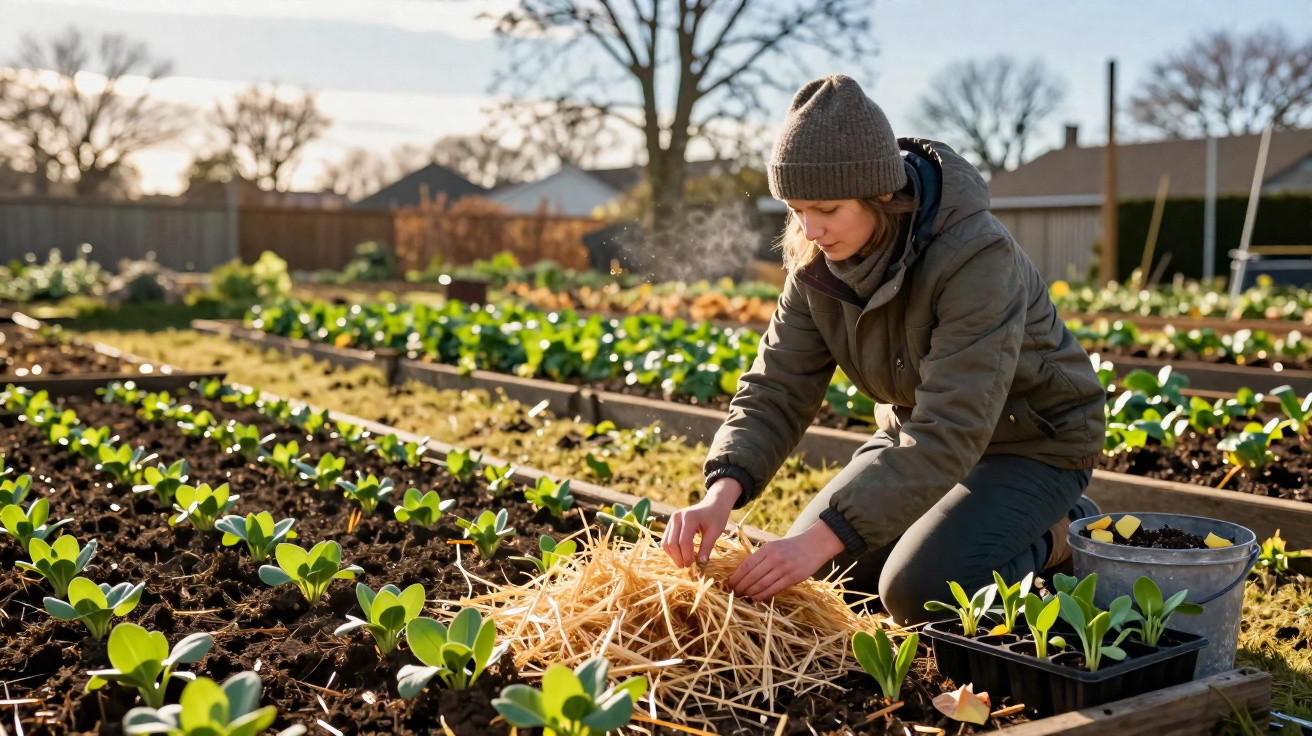
You can mulch around seedlings, but leave a small ring of bare ground around the stem and use a slightly thinner layer until they are stronger.- Question 5 Must I remove old mulch every year?
No. Let it decompose, then simply add more. The older layer becomes part of the soil’s organic matter and contributes to long-term fertility.
Comments
No comments yet. Be the first to comment!
Leave a Comment