
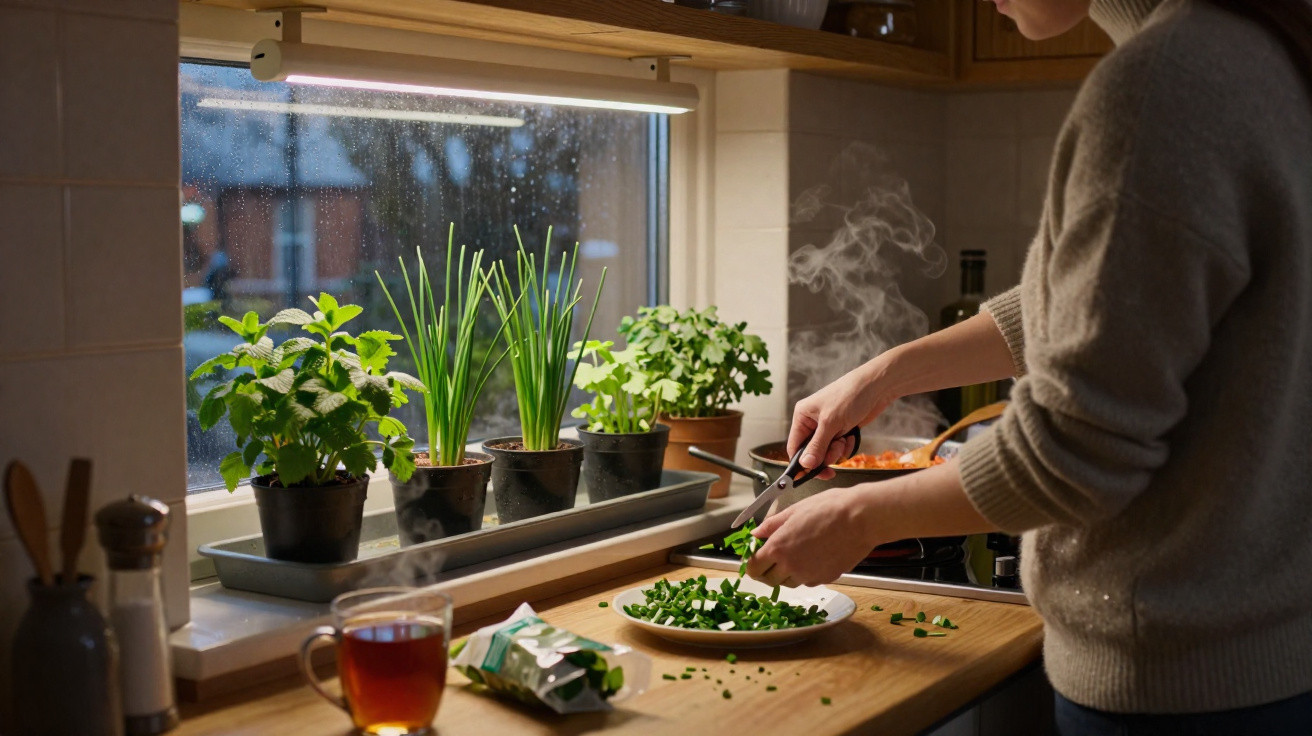
At some point towards the end of November, perhaps as you stir a gloomy jar of pasta sauce, you notice that the basil plant bought in July has discreetly died behind the toaster. Darkness arrives at 4pm, your best recipes ask for “fresh parsley”, and supermarket herbs come in plastic coffins, collapse within 48 hours and leave you feeling like a wasteful Victorian landlord. Growing your own sounds appealing, but soil, timetables and “thinning seedlings” seem about as achievable as marathon training during a snowstorm. What you want is simply something green to cut, smell and toss into a pan, without taking on another job. There is a gentler middle ground between being a committed urban homesteader and saying “I killed a cactus once”. It is the lazy winter herb garden, waiting patiently on your windowsill.
The myth of the “good plant person”
Everyone knows the feeling: a friend casually refers to their indoor lemon tree, and suddenly your shrivelled supermarket basil feels like a personal insult. We tend to assume successful plant people possess a kind of mystical self-discipline: they mist plants each morning, repot while quiet jazz plays and chat to their thyme. The rest of us refill a mug of stale bedside water and cross our fingers. That apparent gulf can feel enormous, so we decide herbs are “too much faff” and continue buying limp plastic sleeves.
Here is the modest but liberating reality: nearly everyone is making it up as they go along with plants. They overwater them, fail to organise care before holidays and search “why is my mint leggy” at midnight, exactly as you do. What separates them is not devotion but the set-up. Once I understood that, my own winter herb success became far less about remembering tasks and far more about creating a system that accommodated my laziness. Start with reasonably suitable conditions and the everyday effort becomes as routine as brushing your teeth - something completed without much thought.
Start with the cheaters’ herb trio
Herbs are not all equally accommodating, particularly indoors through a British winter. A few are drama queens, unhappy without blazing sun and flawless drainage. Others are essentially weeds wearing smarter clothes, able to recover from considerable neglect. For anyone calling themselves a lazy gardener, the first task is to improve the odds by choosing only the forgiving varieties.
The three herbs that almost refuse to die
Mint, chives and parsley make up the holy trinity for a home grower moving slowly through winter. Mint is the mate who arrives at every party and remains until the lights come up: it spreads freely, tolerates some shade and soon revives after a drink. Chives resemble calm, low-maintenance housemates, quietly occupying a corner, getting on with things and sometimes producing a delicate purple flower. Parsley is slower to establish from seed, but after it develops a proper root system, it keeps providing - especially the flat-leaf type that you scatter over everything, label “garnish” and use to feel sophisticated.
For a fourth option, coriander and basil can succeed, although they are more like high-strung friends who text “are you mad at me?” when you have not replied in 12 minutes. Each needs brighter light, steadier warmth and more reliable watering, and both sulk quickly if left dry or not cut regularly. They remain possible choices, but it is wiser to build confidence with herbs that will not take offence when a busy week means you forget they are there.
The easiest possible setup for a lazy winter herb garden
Realistically, nobody repots herbs “right after buying them” without fail. They remain in their supermarket sleeves, shivering on the windowsill while you try to work out what “well-drained compost” even means. Instead, do one afternoon of lazy preparation so that every later step feels almost effortless. It is rather like batch-cooking for the week: one lot of mess followed by plenty of simple, satisfying meals.
Pick your spot, then fit the plants to it
Standard advice says to place herbs on a sunny, south-facing windowsill, as though everyone lives in a glossy architecture magazine. Some homes have a single bleak north-facing window overlooking a car park and a pigeon. That is still workable. Perfect sunshine is unnecessary; honesty about your available light is what matters. Bright indirect light for most of the day is best, yet a reasonably bright kitchen window or shelf close to a window can also be enough if expectations stay realistic.
If your home feels more like a cave than a conservatory, plug-in grow lights can quietly become your closest ally. You do not need a hydroponic jungle; a slim LED strip or a lamp clipped to a shelf will do. Put it on an inexpensive timer, allowing it to turn on in the morning and off at night with no input from you. The first time you enter the kitchen at 5pm to find the herbs shining like a miniature indoor sunrise against the charcoal-grey world outside, you may feel quietly pleased with yourself. You have made one small, bright winter thing. That matters.
One tray, many pots, minimal chaos
The drip-tray problem is often what makes indoor gardening feel laborious: mismatched saucers, water marks across the worktop and one pot you fear moving because it might flood the toaster. The lazy solution is almost absurdly straightforward: find one shallow tray that suits the windowsill and stand every herb pot inside it. It collects excess water, appears deliberate and reduces watering to a quick pour rather than a 10-minute ballet involving mugs and cautious lifting.
There is no need for Instagram-worthy ceramic pots. Reuse old tins, choose cheap terracotta or keep the plastic pots that came with the herbs; simply make a few additional drainage holes where necessary. Stabilise any gaps with pebbles, bottle tops or anything else that prevents wobbling. Perfection is not the objective. The goal is: “I can water this half-asleep on a Monday and nothing catastrophic will happen.” That is the standard to aim for.
The 60-second watering rule
Most herbs do not die for mysterious reasons. They are killed by thirst or drowning, often at the hands of someone trying kindly to care for them. The traditional response involves pushing a finger into the compost, checking moisture and perhaps keeping a record. That is… cute. You will not do it every time, and it is unnecessary.
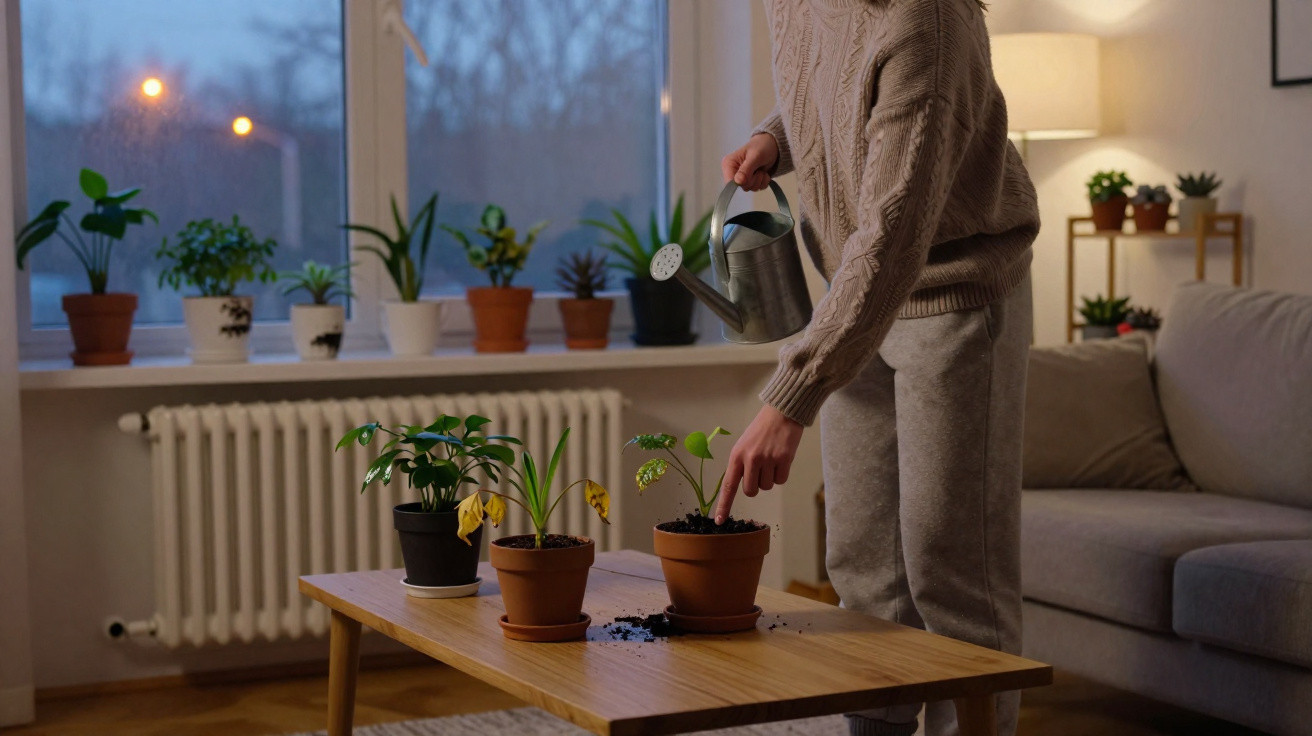
The relaxed winter approach is this: check once weekly, water when the top of at least half the pots feels dry, then stop at the first trickle into the tray. Nothing more is required. Set a phone reminder for the same day every week - Sunday morning, Thursday evening or whenever you are normally at home - and approach it as you would making tea. Walk over, press the compost with one fingertip, and water if it has the texture of a wrung-out sponge. When it feels cool and damp, miss that week.
The plants will forgive you if you occasionally miss a week, particularly in colder months, when they grow more slowly and compost retains moisture for longer. They are considerably less tolerant of permanently wet roots, which rot and leave foliage limp and yellow. If unsure, err slightly towards underwatering. More water can be added later, but a drowned plant cannot be undrowned. It is one of life’s unfair rules, much like toast invariably landing butter-side down.
Harvesting without murdering the plant
The first time you cut fresh herbs in winter can feel unexpectedly emotional. You bend over the pot with scissors in hand, caught by a small flash of guilt: are you… hurting it? Is this the end? The scent is properly green, rather than the faintly weary smell of a plastic packet. It feels oddly powerful. Then comes the worry that you have removed too much, and you search “how to cut basil without killing it” like an anxious Victorian surgeon.
Fortunately, herbs are meant to be cut. Snipping the appropriate sections encourages plants to grow bushier rather than becoming tall and spindly. For mint and basil, cut immediately above a leaf pair, allowing fresh stems to emerge from that point. With chives, trim them as you might fringe hair - a couple of centimetres above the compost rather than at the very base. Parsley prefers its outer stems to be picked first, leaving the younger central growth to continue. Think of yourself not as a predator but as a mildly clumsy barber.
One simple principle keeps everything alive: never take more than a third of a plant at once. If it looks bare and traumatised afterwards, you have gone too far. Let it recover for a week or two. Regrowth is slower in winter, so allow more patience than you would in summer. Spread picking between plants where possible, taking small amounts from each rather than destroying one exhausted parsley.
Low-effort hacks that feel almost like cheating
Indoor gardening advice often eventually reaches the point of “and then you make your own compost”, which is where most people discreetly leave. None of that is essential. A handful of tiny one-off habits can keep herbs quietly healthy while demanding almost no mental energy. These are the adjustments made on a wet afternoon and then forgotten, like shifting the sofa so you no longer stub your toe.
Give them a mid-winter snack
Potted plants are rather like guests trapped at an all-you-can-eat buffet that closed three months ago. Their original compost contains only limited nutrition, and watering gradually washes more of it away. You need not become someone with a feeding timetable, but a slow-release fertiliser pellet or a mild liquid feed once monthly can prevent pale, sulky growth. Put it in your calendar, or attach it to another monthly routine, such as paying rent.
If fertiliser feels like too much effort, repotting once during winter into fresh compost is another option. Brush away some old compost, drop the herb into a marginally larger pot with multipurpose compost, firm it down, water it and leave it alone. The plant receives fresh nutrients, you can feel virtuous for about 10 minutes, and then return to watching telly as the herbs quietly carry on.
The “no sad slime” trick
A hidden reason many people abandon herbs is the guilt attached to forgotten leftovers. You cut more than required “just in case”, it wilts at the back of the fridge and, a week later, you uncover a bag of green sludge smelling of disappointment. The low-effort answer is never to refrigerate herbs at all. Use what you cut. Leave anything else on the plant until the following day.
Should you accidentally get carried away and produce a heap of chopped mint or parsley, put it in ice-cube trays with a little olive oil or water, then freeze it. It takes 90 seconds and prevents self-loathing. Winter stews, scrambled eggs and even instant noodles taste suddenly livelier when you add a small herb cube. It is like preserving one small sensible choice for your future self.
Why this tiny patch of green matters more than it should
On certain January evenings, the kitchen contains only the quiet fridge hum and the drip from a tap that really ought to be repaired. Beyond the window, a low, flat sky seems to press against the glass. You take the scissors, bend towards the herbs and run a finger over their leaves. They release a sharp little fragrance of chlorophyll, pepper and something close to hope. For a brief moment, the world does not seem entirely grey.
Keeping herbs indoors throughout winter will not change your life, pay your bills or resolve whatever remains unanswered in your inbox. It does something more subtle instead. It breaks winter’s sameness with a small, stubborn piece of life that continues even when watering slips your mind. Whenever you stir chives into an omelette or scatter parsley across a bowl of soup, you remember that you made it happen - lazily and imperfectly, in your own somewhat chaotic kitchen.
You don’t need to be the “good plant person” to earn that little burst of green. All you require is a tray, several resilient herbs, a light that comes on while you are thinking about something else, and a willingness to cut, taste and try again when something dies. The lazy garden is forgiving in that way. On a cold Tuesday evening in February, while eating something that smells faintly of summer, you may even forgive yourself a little as well.
Comments
No comments yet. Be the first to comment!
Leave a Comment