
The first warm Saturday of spring turns garden centres into airports on the first day of a holiday. Trolleys brim with flowering geraniums, showy petunias and mysterious “full sun” perennials that simply looked attractive on the shelf. Shoppers drift through the aisles looking hopeful and slightly bewildered, choosing by colour and impulse rather than by plan. The total at the till may sting, but the image of a flourishing summer garden makes it easier to bear.
Then July comes around. Half the plants have died, the remainder are struggling, and buyer’s remorse is the only thing growing strongly.
There is a quiet truth that seasoned gardeners understand, but seldom say aloud.
Why random spring planting quietly drains your wallet
By late June, you can recognise the gardens created during a “spring shopping spree” from the other side of the street. Their beds have large empty spaces where plants have clearly failed. Their containers are crammed with plants growing into one another like an uncomfortable crowd at a concert. The straggling survivors bear little resemblance to the lush label photographs.
The money has been spent and the effort was genuine, yet the result still looks… untidy.
That is not misfortune. It is what happens when structure is absent.
Consider Lisa, who saves every garden receipt “just to keep track.” Last year, she totalled them. Her spring spending exceeded $600 on seeds, annuals, perennials, premium compost mixes, impulse-bought bulbs and three separate “miracle” fertilisers.
By August, over a third of those plants were either dead or disappointing. Some had scorched in full sun, others had rotted in dense clay, and several had simply never suited the space. Her front bed looked much as it had the previous year, only more uneven.
The figure hurt not merely because of the money, but because of the hope that had been wasted.
Buying plants before thinking through the garden is essentially botanical roulette. Every attractive pot is a guess about light, soil, watering and eventual size. Most of those guesses will be wrong, and wrong guesses cost money.
Professional gardeners reverse that order. Rather than asking, “What can I buy?”, they begin with, “What can survive here, and what story do I want this space to tell?”
That modest change in mindset separates a garden that consumes money from one that quietly increases in value year after year.
How pros structure a garden before spending a single dollar
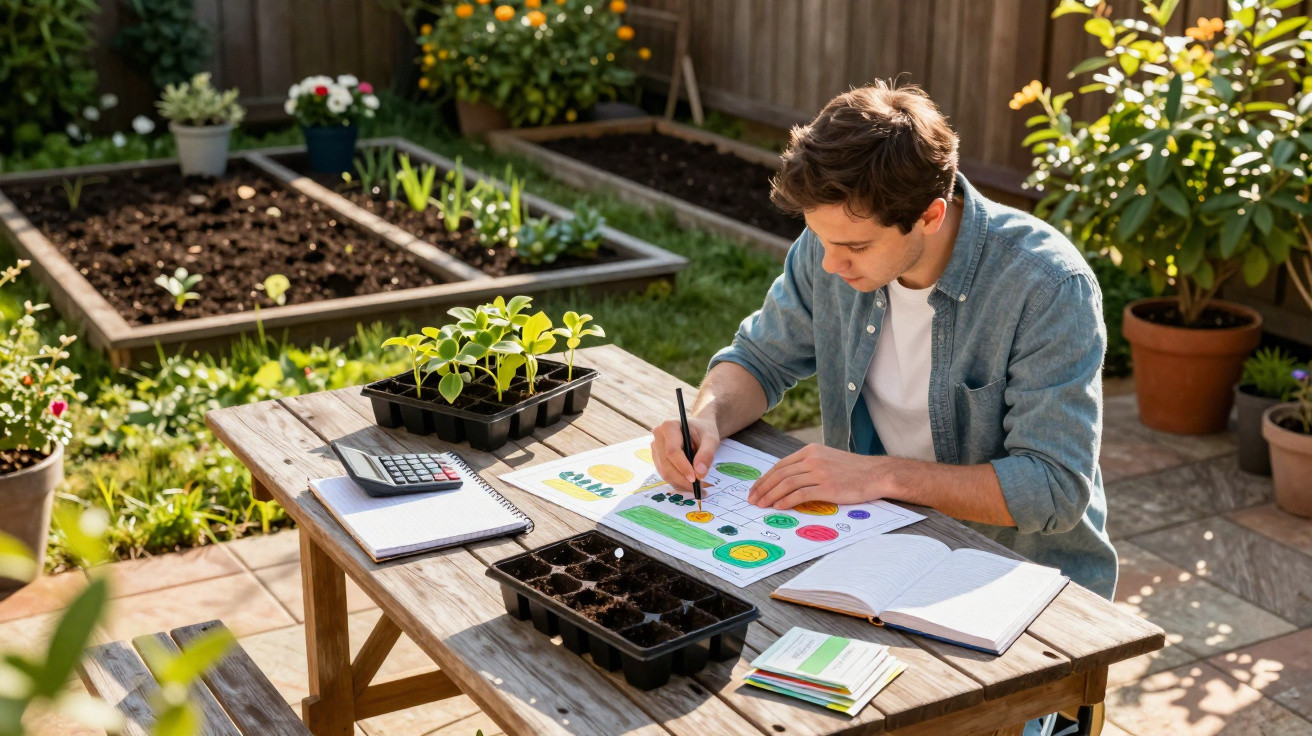
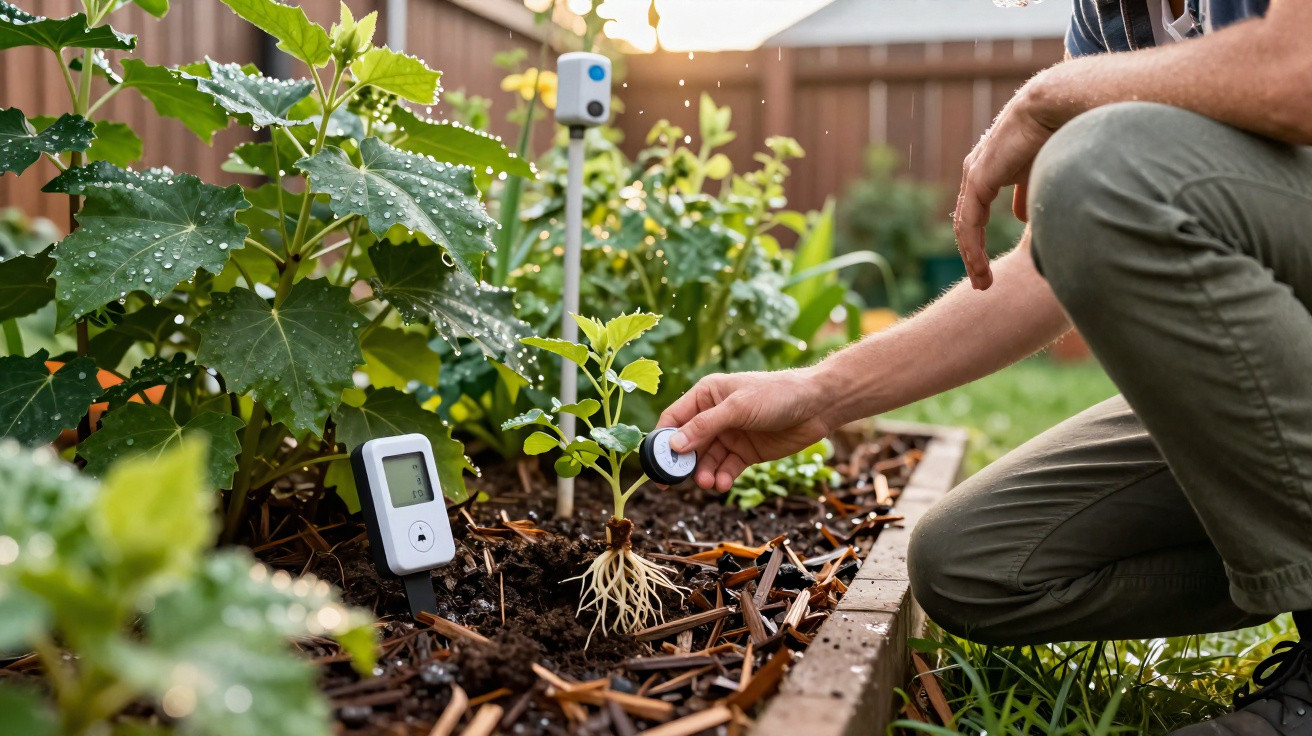
Begin with the unglamorous step professionals rely on: walk around your garden at three points in the day. Do it in the morning, at midday and in late afternoon, with your phone in hand.
Take quick photographs and write directly on them: “full sun”, “shade at 3 pm”, “puddle after rain” and “wind tunnel”. This is your actual garden, not the version you imagine having.
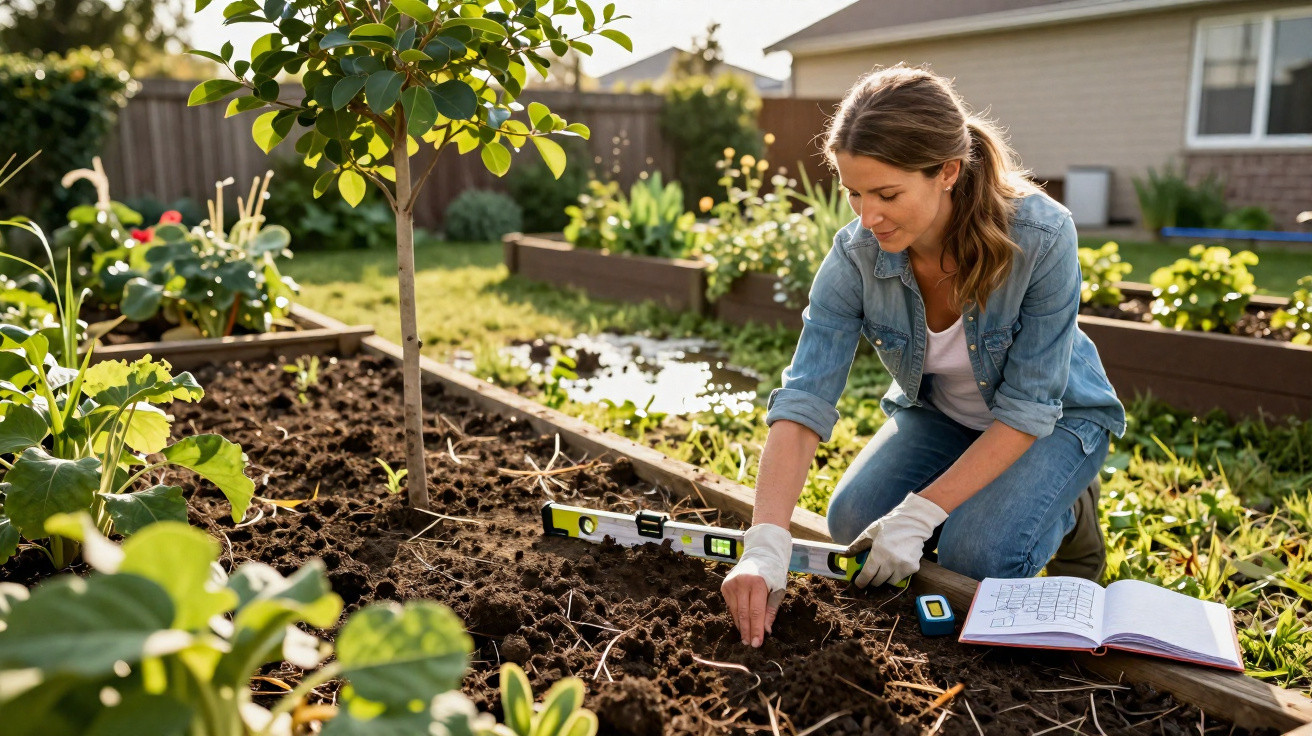
Once the patterns are clear, make a rough drawing. Boxes and circles are enough: house, path, fence, tree, sunny corner. Next, split the plot into zones: hot and dry, cool and damp, partial shade, “visible from the street” and “visible from the kitchen”.
From there, follow a straightforward professional rule: create the backbone first and add decoration afterwards. In practice, this means selecting the permanent structural plants - shrubs, small trees and evergreen forms - before considering colourful annuals.
A useful approach is the 60/30/10 rule. Roughly 60% of the space should consist of dependable structural plants. A further 30% should be perennials that flower in succession throughout the seasons. The final 10% is your “fun money” for annuals, trends and experiments.
Let’s be honest: nobody really does this every single day of the year. Yet doing it once, at the start of spring, radically changes what you buy.
Professionals also design in layers rather than lines. They arrange each bed as a small stage, with the tallest performers at the rear, medium-height plants in the centre and low, spreading varieties at the front. It sounds obvious in theory, but many amateur gardens place tall, floppy plants right beside the path.
Random planting is emotional. Structured planting is strategic.
The key is to allow emotion to determine the colours and atmosphere, while structure quietly takes care of everything else.
Simple techniques to stop wasting money and start planting like a pro
Before purchasing a single plant this spring, give your garden a “planting storyline”. Keep it to one sentence. It might be: “Calm, green structure with white and blue flowers in waves from April to October.” Or: “Low-maintenance, bee-friendly, Mediterranean feel.”
That sentence becomes your garden-centre filter. If a plant does not suit the storyline, leave it on the shelf.
Next, select three “anchor” plants to repeat around the garden. Use the same shrub by the gate and along the path, or place the same ornamental grass in three locations. Repetition can look odd on a receipt, but it looks magical in the garden.
Most people spend too much not because they love plants excessively, but because they misjudge the size those plants will eventually reach. They put in ten plants where three mature specimens would fill the area. Two years later, half of them are removed.
To prevent this, always check the mature dimensions on the label, then step back and “act it out” on the ground using your feet. Pace out both the width and height. If a plant will grow to 1 metre wide, allow it 1 metre - not the polite little 30 cm gap your mind wants to give a tiny pot.
We have all experienced that moment when a shrub the size of a toddler suddenly becomes a linebacker after one wet summer.
One plain but valuable shift can save a fortune: buy fewer plants, choose them deliberately and repeat them confidently. The garden will appear designed, and your wallet will stop bleeding.
“Most people don’t need more plants. They need a clearer idea of what their plants are supposed to do.” – a quietly exasperated landscape designer I once shadowed on a job
- Draw a simple garden map before shopping - even if it is on the back of an envelope.
- Choose one colour palette per area rather than picking up every attractive flower.
- Buy odd numbers (3, 5, 7) of each plant type to establish rhythm and unity.
- Spend on soil and mulch first, then plants - roots repay you for longer than flowers do.
- Keep a “plant parking lot” corner where new purchases remain in pots for a week before you commit.
The quiet satisfaction of a garden that grows richer, not just fuller
There is a particular confidence that comes with leaving a garden centre with half a trolley and twice the clarity. You find yourself asking different questions: not “Is this pretty?”, but “Where will you go, what job will you do, how will you age?”
The garden changes from a seasonal shopping exercise into a long-term conversation. Plants cease to be disposable decoration and begin to feel like characters invited into a shared story.
Over several seasons, the benefits become obvious. You no longer replant the same areas every year. Dead spaces become less common. The garden’s structure holds it together even when nothing is in flower. Neighbours start asking what you altered, when in fact you simply stopped altering everything every spring.
You spend less, edit more, and the garden gradually becomes both calmer and more alive.
One day, you may watch a newcomer fill an unsteady trolley with random colour and full-sun promises, and recognise your former self - hopeful, improvised and well-intentioned. That is when you will know you have crossed the invisible line between random planting and quiet, professional structure.
| Key point | Detail | Value for the reader |
|---|---|---|
| Plan zones before planting | Observe sun, shade, wind, and moisture at different times of day | Reduces plant deaths and wasted purchases |
| Use structural backbone plants | Apply the 60/30/10 rule and repeat key shrubs or grasses | Garden looks designed and matures gracefully over years |
| Buy with a clear storyline | Define mood, colour palette, and plant roles before shopping | Spends less, avoids impulse buys, and creates visual harmony |
FAQ:
- How do I start structuring a garden that’s already a mess? Begin by removing only what is clearly dead, diseased or wildly out of scale. Then sketch the area and select a few plants to repeat for structure before adding anything new.
- Is it really cheaper to buy fewer, larger plants? Often, yes, because mature-sized plants fill an area sooner and prevent you from overbuying small plants that will later need thinning or replacing.
- What’s the best first investment: plants, tools, or soil? Soil wins almost every time, because improving drainage and fertility helps future plants survive longer and reduces replacements.
- Can I still buy “just for fun” plants? Absolutely - reserve 10–15% of your budget for experiments, but keep them in a test corner or in pots before assigning them a permanent place.
- How long does it take for a structured garden to look good? With a clear plan and several backbone plants, you will notice a difference by the first summer and a genuine transformation in around three growing seasons.

Comments
No comments yet. Be the first to comment!
Leave a Comment