
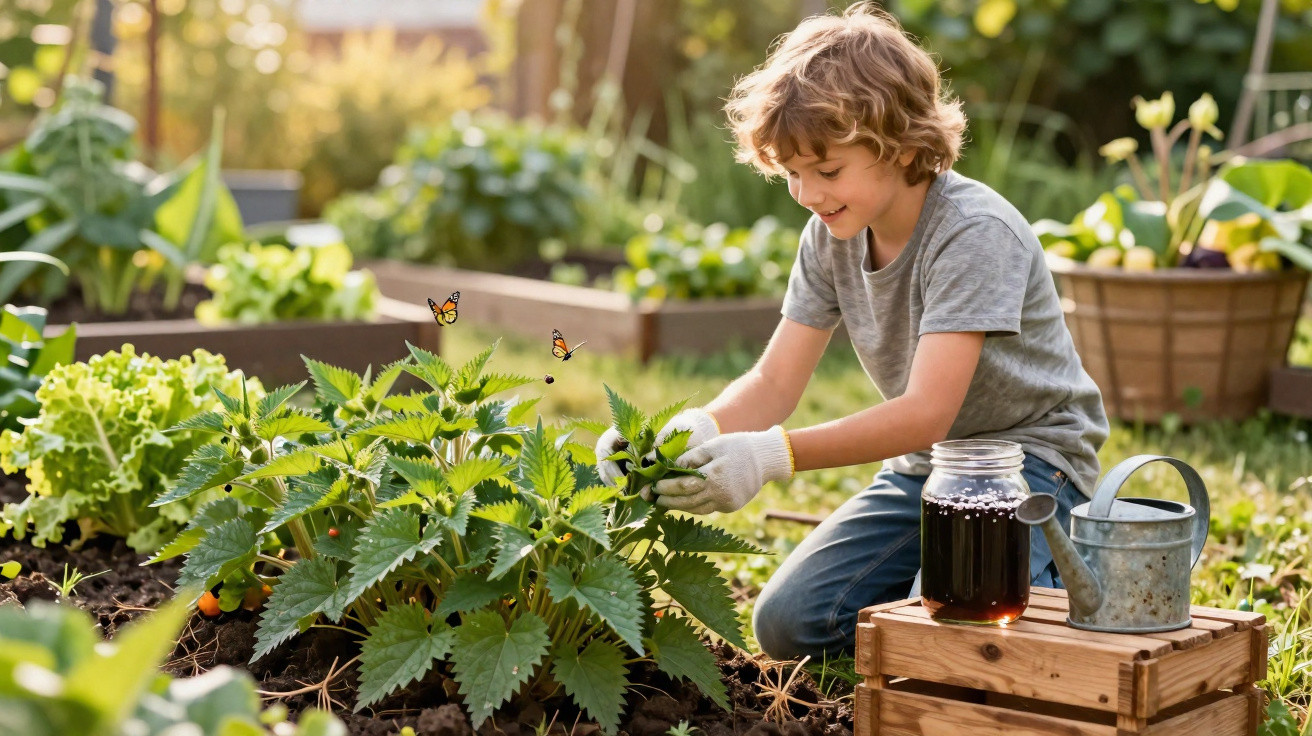
Many amateur gardeners instinctively pull up every nettle the moment it appears in a flowerbed. That is understandable: the plant stings, looks untidy and brings wasteland to mind rather than a well-kept garden. Yet anyone who removes it root and all is throwing away an entire toolkit of natural garden aids, right outside their own door.
From ‘weed’ to a vegetable garden insider tip
Traditionally, nettles are seen as a nuisance: they spread vigorously, sting whenever touched and do not fit the image of a ‘tidy’ garden at all. In natural history and ecological gardening, however, they are held in almost cult-like regard.
Below ground and in its leaves, the nettle works for the soil, plants and wildlife – free of charge and continuously.
Learning to live with nettles and use them purposefully can make a garden more resilient, more fertile and less reliant on shop-bought products from the DIY store. In particular, they offer clear benefits in a vegetable garden when allowed to grow in the right place.
Liquid fertiliser: how nettle feed enriches the soil
Nettles store considerable amounts of nutrients. Their leaves contain, among other things:
- plenty of nitrogen – essential for strong leafy growth;
- potassium – which strengthens plants and improves fruit formation;
- calcium and magnesium – which support stable cell structures;
- iron – which encourages chlorophyll production and helps prevent deficiency symptoms.
These leaves can be turned into a highly effective liquid feed that is indispensable in many organic gardens.
How to make nettle feed
You need only a few items to make a straightforward garden feed:
- A bucket or barrel, preferably not made of metal.
- Fresh nettle shoots, roughly chopped.
- Rainwater or standing tap water.
Then proceed as follows:
- Fill the bucket to around two-thirds full with nettles.
- Add water until all the plant material is well covered.
- Leave it in a warm, shaded spot for 1–2 weeks, stirring every day.
- Strain it once bubbling subsides and it has developed a strong, fermenting smell.
- Dilute it with water at roughly 1:10 before watering.
This feed is especially useful for hungry vegetable crops such as tomatoes, cabbages, squashes or celery. Their foliage becomes denser, they produce better roots and are less susceptible to disease.
Properly prepared nettle feed replaces many bought fertilisers – and costs only a pair of gloves and a little time.
When diluted and sprayed onto leaves, it also deters pests including aphids and spider mites. At the same time, it reduces the need for chemical products that can disrupt soil life and beneficial insects.
A compost boost: nettles as a natural accelerator
Anyone with a compost heap should not throw nettles away, but chop them up and mix them in. They add nitrogen to the compost, speed up decomposition and help garden waste turn into valuable humus more quickly.
This is particularly worthwhile when the heap contains lots of woody or dry material, such as prunings or fallen leaves. Nettles then balance the ratio of carbon to nitrogen.
| Material | Characteristic | Effect on the compost |
|---|---|---|
| Woody prunings, dry leaves | high in carbon, low in nitrogen | Compost decomposes slowly and remains ‘thin’ |
| Nettles, grass clippings | high in nitrogen | Decomposition speeds up, with more nutrients |
Nettles offer another advantage: their stinging hairs disappear during decomposition. Nothing will sting in the finished compost, either on your skin or on plants. You can therefore spread the material around the garden without concern.
Habitat for butterflies and beneficial insects
A productive vegetable garden relies on pollinators and natural helpers that tackle pests. This is precisely where nettles demonstrate their ecological value.
Many butterfly species lay their eggs exclusively on nettles. The caterpillars of some native species feed only on their leaves. Without this habitat, populations decline – along with part of the garden’s pollinator community.
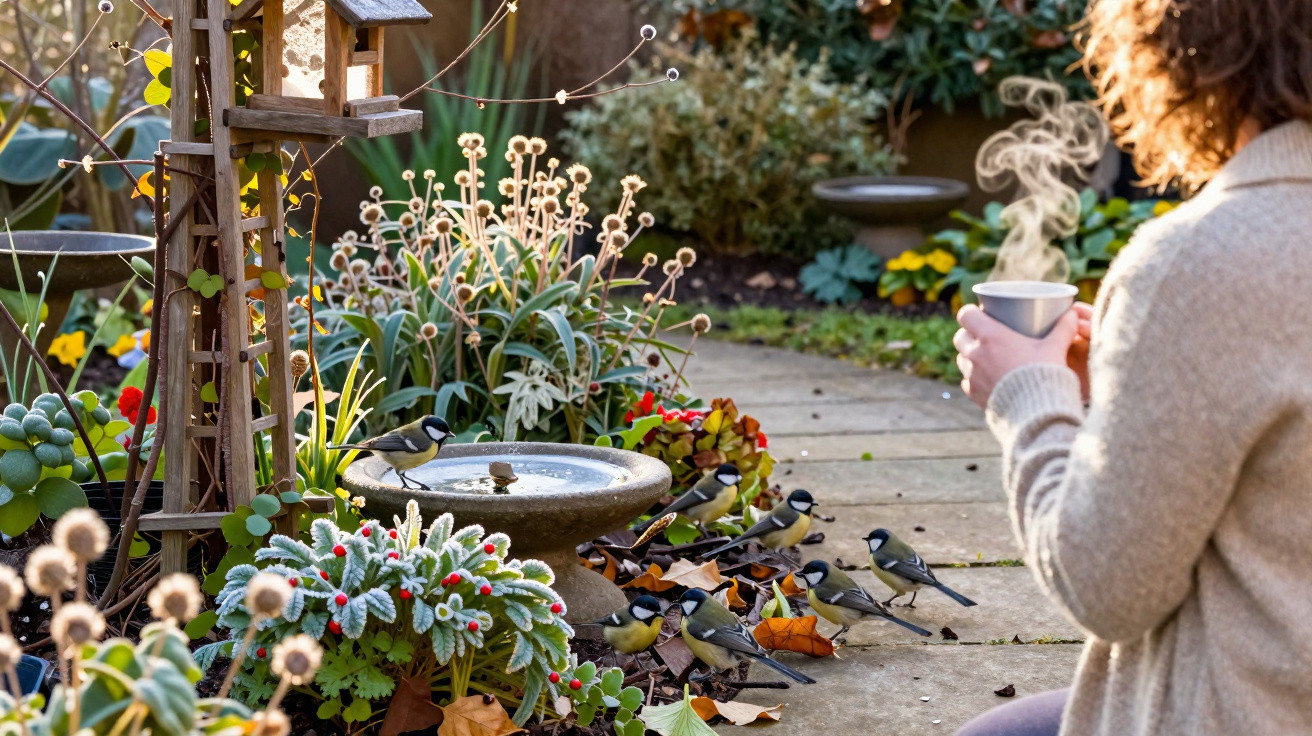
At the same time, patches of nettles attract a wide range of insects, which in turn provide food for birds or act as beneficial insects that keep pests in check. This creates a small network that makes your beds more stable without requiring your intervention.
A few square metres of a ‘wild corner’ with nettles can do more for biodiversity than many an expensive insect hotel.
A medicinal plant and superfood beside the salad bed
The nettle is not merely useful in the garden; it is also a versatile medicinal and edible plant. The young shoots, especially in spring, are suitable for the kitchen.
Ways to use nettles
- as a soup or vegetable, much like spinach;
- as a pesto with oil, nuts and cheese;
- as a tea made from dried leaves;
- in smoothies, briefly blanched and finely puréed.
The leaves contain plenty of vitamins A, C and K, substantial amounts of iron and other minerals. In herbal medicine, nettle is considered diuretic, anti-inflammatory and beneficial for strengthening hair and nails. Many people use it as part of spring cleanses or for mild fatigue.
When harvesting, it is best to wear sturdy gloves and cut only the fresh shoot tips at the top. This allows the plant to regrow while keeping it under control.
Keeping nettles in the garden without letting them take over
Of course, nettles should not be allowed to occupy your entire vegetable garden. A few simple measures make them easy to manage.
Suitable places for nettles
- a back corner of the garden;
- a narrow strip along a hedge;
- an area behind the garden shed;
- large containers or mortar tubs to contain the roots.
Restricting nettles to these areas gives you the best of both worlds: the plants have a place where they can thrive, while you have material available whenever you need it for liquid feed, compost or cooking.
Cutting them regularly before they set seed stops them from self-seeding uncontrollably. Ideally, put the cut shoots straight into the compost heap or liquid-feed barrel. In this way, the cycle is completed.
What many people overlook: what happens below ground
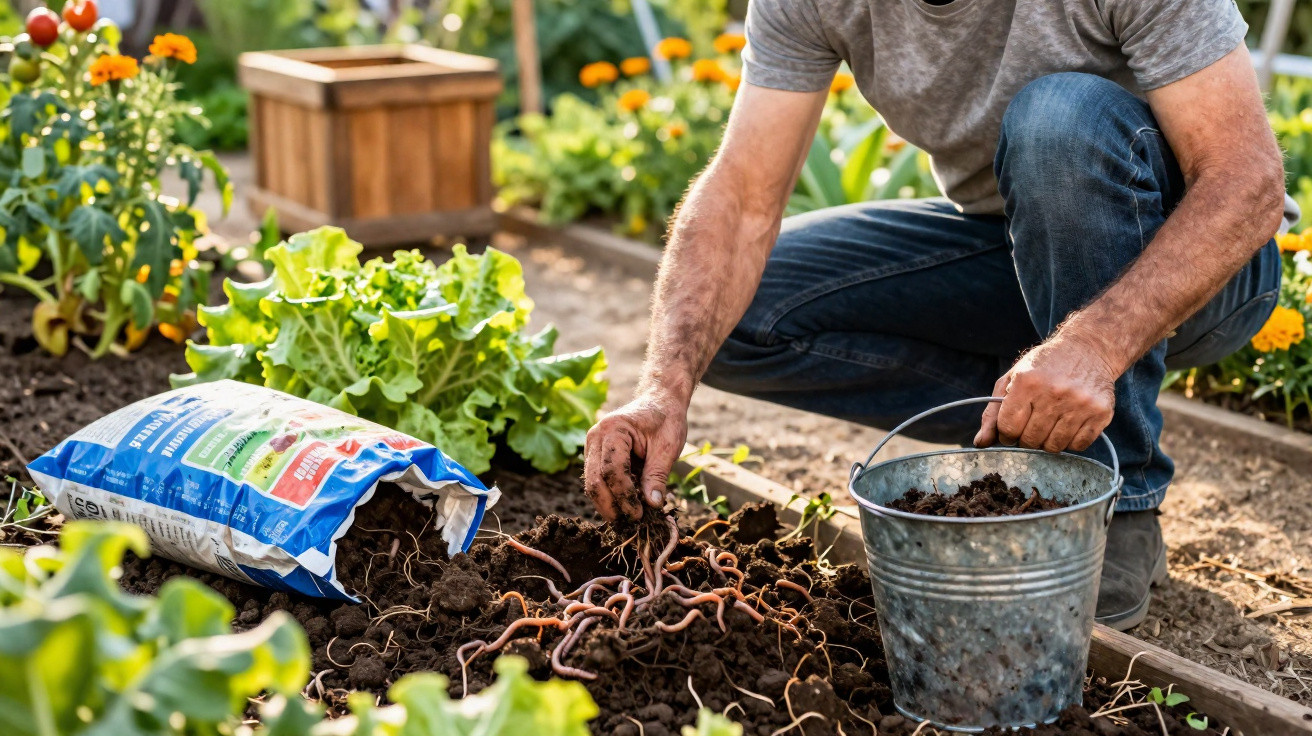
The visible stems are only one part of a nettle plant. Beneath the surface, it forms a dense network of roots and rhizomes. This loosens the soil, creates small air spaces and encourages soil life.
Earthworms and micro-organisms find better conditions in this loose environment. The result is a crumbly, well-aerated structure in which vegetable roots can grow more easily. Particularly in compacted soils, allowing nettles to grow for a period can help make the ground more alive again.
Anyone who does not pull up nettles radically, but instead leaves them in place deliberately, improves soil quality over the long term.
Practical tips for everyday gardening
A few basic rules will ensure nettles are useful rather than irritating in the vegetable garden:
- Never work in a nettle area barefoot or wearing shorts.
- Always designate an area where the plants are allowed to remain.
- Harvest one large bundle each season for liquid feed or compost.
- Remove small seedlings in vegetable beds early with a hoe.
This keeps the plant under control while still allowing it to show its strengths. For anyone wishing to avoid chemical fertilisers and sprays, nettles are a free ally.
Over time, the benefits become clear: the soil grows more fertile, harvests become more reliable, and your garden develops into a living system where not every supposed ‘weed’ has to disappear immediately. There is often more value behind the sting than first meets the eye.
Comments
No comments yet. Be the first to comment!
Leave a Comment