
The first thing that stands out is the quiet.
There is no biting chemical odour, no blue crystals bubbling away in the watering can. Instead, there is moist soil, bees humming somewhere beyond the roses, and a robin bouncing through the mulch with its head cocked, as though the garden belongs to it.
Something has changed in Claire’s compact suburban garden this spring. Her bottles once stood in a neat row like dispensary stock: weedkiller, synthetic fertiliser and disease sprays, each one claiming to deliver “instant results”. Her lawn looked green enough, but the soil below it was as solid as aged concrete.
This year, she stopped using them. One by one, the products were moved to the far end of the shed. The soil began to stir again: fine white threads appeared, along with beetles and worms, and another sort of life began returning.
It all began with one unexpectedly straightforward choice.
The everyday garden product that silently damages soil life
Visit any garden centre and it is hard to miss them, often displayed beside the tills: colourful packs of quick-release synthetic fertiliser.
Whether in granules, blue liquid or water-soluble powder, they all promise “explosive growth” and “instant green”. They offer the reassuring idea of control, particularly for new gardeners who simply want reluctant plants to start growing.
On the surface, these products do deliver. Foliage becomes fuller, lawns take on a vivid green shade and flowers appear more dramatic.
Below ground, however, a slower story is playing out – and it is not the story printed on the packaging.
Consider Mark, who had recently moved into a house with a small lawn and two weary-looking rose bushes.
The former owner had left behind a partly used bag of high-nitrogen lawn feed. Mark did what many people would: applied plenty of it, watered it in and waited. Within two weeks, the lawn had become brilliantly green.
By the middle of summer, however, cracks had begun to form in the soil and earthworms were few.
His roses seemed to demand feeding ever more frequently, almost as if they had become dependent on it. When he pushed a trowel into the ground, it met a crunch rather than a soft, crumbly texture. The roots stayed close to the upper few centimetres, where the fertiliser had landed, rather than growing down into the deeper layers where genuine resilience develops.
Synthetic chemical fertilisers work rather like energy drinks for plants. They release a sudden supply of easily absorbed nutrients into the soil water, sidestepping much of the soil food web.
As a consequence, plants communicate less with fungi and bacteria because they no longer need assistance in searching for nutrients.
Gradually, this disrupts an old and largely invisible relationship. Microbial diversity declines, fungal networks become less extensive and worms avoid salty, unforgiving conditions. Living, sponge-like soil starts to resemble a sterile growing medium instead.
Growth still happens, but the living system that allows a garden to sustain itself is slowly given up in exchange.
What changes after stopping synthetic fertiliser
Gardeners who notice the greatest improvements do not necessarily begin with grand or dramatic actions.
More often, their first move is modest, even slightly hesitant: they stop purchasing the blue products. They finish the bottle already in use without buying another, and put the spreader away at the back of the shed.
Next, they take a remarkably simple but effective step: nourishing the soil rather than only feeding the plant.
This can involve spreading homemade compost over beds, leaving chopped leaves beneath shrubs or using weak compost teas in place of synthetic feeds. These routines may seem too gentle to make much difference.
When Claire gave up synthetic fertiliser, she assumed her hydrangeas would suffer.
She had already prepared her explanation: “Well, I’m going organic, so of course the garden will look a bit worse for a while.” Yet that was not what occurred.
The earliest clue came from her compost heap.
As prunings, kitchen scraps and grass cuttings were all collected in the same place, she began applying a light layer across her borders every few months. By autumn, she spotted something unexpected: rather than sitting in puddles, water was soaking into the ground.
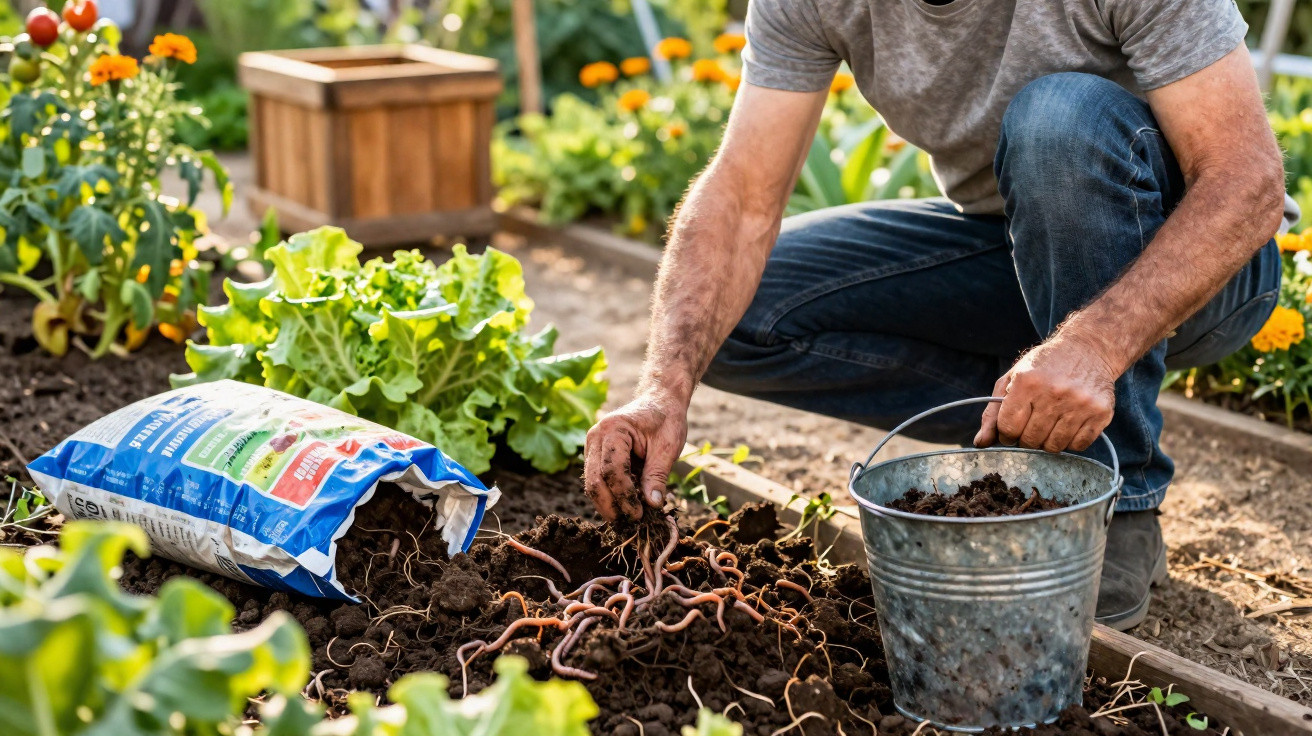
In a small raised bed where she had used only compost and leaf mould for a year, she found three times as many earthworms as in the fertilised strip beside the hedge. Those were her own observations rather than laboratory findings – a kitchen-scale experiment, but one she could literally feel with her hands.
There is a clear reason for this understated recovery. Removing fast-acting salts reduces osmotic stress on both roots and microbes.
Fungi and bacteria are able to rebuild their networks without repeated chemical disruption. Earthworms return because there is real food available: decaying plant material rather than merely mineral nutrients dissolved in water.
Across several seasons, the structure of the soil begins to alter. Aggregates develop and create spaces for water and air. Roots grow further down, following moisture through a more open and welcoming medium. This brings less need for watering, fewer outbreaks of disease and plants that are less likely to collapse at the first hint of stress.
In truth, nobody manages this perfectly every day. Still, gardeners who continue, however imperfectly, often begin saying the same thing: “My soil feels alive again.”
How to move away from synthetic fertilisers gently
Giving up does not have to mean stopping everything overnight if that feels daunting.
A practical approach is to reduce use gradually, much as you might cut down on coffee: increase the time between applications, halve the dose and reserve it for places where losses would be hardest to accept, such as treasured containers.
Where you create room for change, introduce organic practices. Apply a 1–2 cm layer of compost to beds twice a year. Spread grass cuttings thinly beneath shrubs as a living mulch. Keep autumn leaves, shred them with a mower and use them on areas where the ground appears depleted.
Every small action supports the underground community you are trying to restore.
A common mistake is expecting an immediate transformation. Gardeners may stop using synthetic feed in April but hope for overflowing borders by June.
If that result does not arrive, the pull of a quick solution can be powerful: “This isn’t working. I’ll just give it one more chemical boost.”
Soil biology works at a slower pace than advertising claims.
Some beds improve within one season, while others – particularly those that are compacted or have been heavily fed – can require two or three years of considerate care. There may be uncomfortable transitional periods, with plants that look lanky or slightly pale. That is not evidence that you have failed.
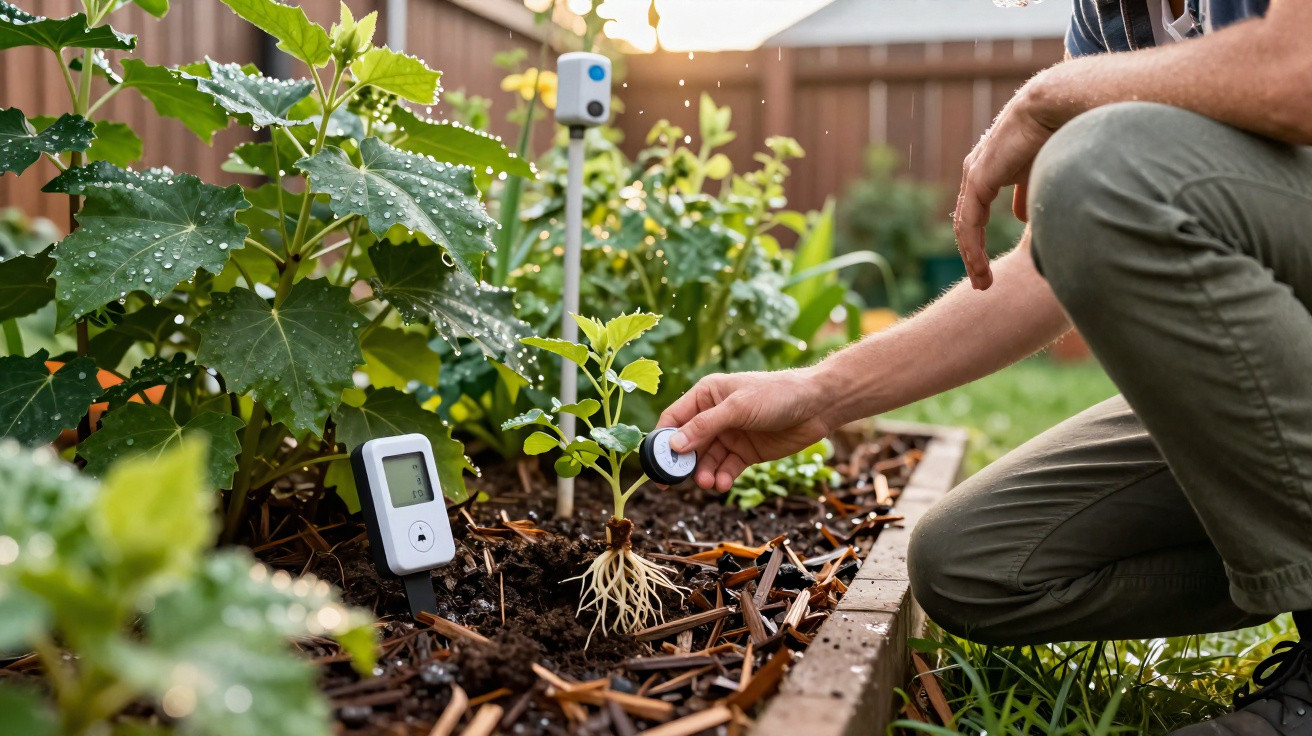
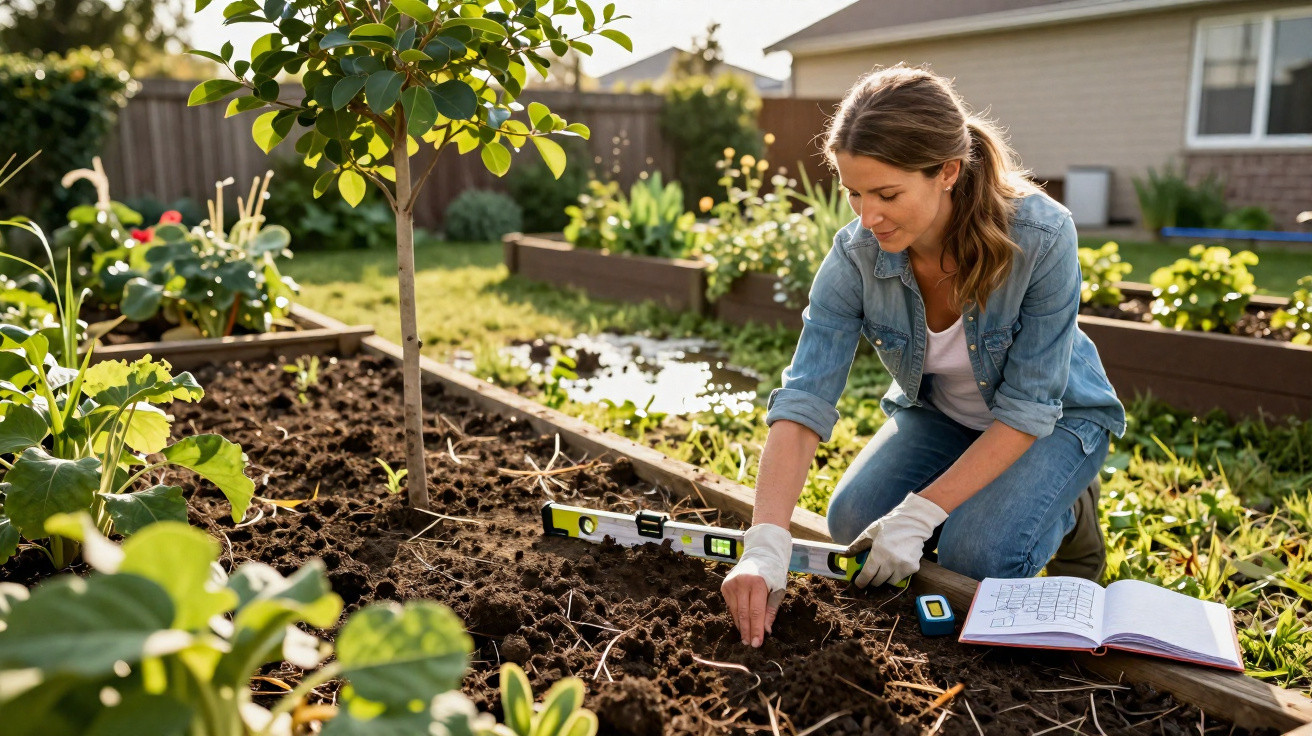
Remain observant. Dig a few small test holes and smell the earth. If it changes from grey and lifeless to darker, crumbly and earthy-smelling, you are moving in the right direction, even if the photographs for Instagram are not yet impressive.
“Once I stopped pouring the quick-fix stuff on and started layering compost, it was like changing from fast food to home cooking,” says Lena, who manages a tiny city garden behind a brick terrace. “The first year felt slow. By the third year, I was finding mushrooms in the mulch and worms curled around every root. The plants just… stopped needing me every minute.”
- Simple swaps
Exchange liquid feed for diluted compost tea, granular fertiliser for spring compost and exposed soil for leaf mulch. - New habits
Add organic matter in small, frequent amounts, from kitchen scraps placed in a compost bin to shredded prunings spread as surface mulch. - Watching for signs
Look for more worms, easier digging, fewer hardened surface crusts and improved water absorption – these provide the real “before and after” images.
A more peaceful measure of garden success
There is often a moment when you notice it, usually during a wet morning.
You press a trowel into a bed that has gone without chemical feed for several years. Instead of resistance, the soil yields softly and smells somewhere between woodland leaf litter and strong tea. Fine roots run through small soil clumps as though they truly belong there.
Nobody can see that on social media, and it cannot be bought in a branded bottle.
Even so, this is where true resilience lies. When a heatwave arrives or a storm delivers a month’s rain in one night, the hidden structure of the soil – not the latest fertiliser application – helps plants stay upright and prevents beds from becoming dust or slime.
Moving away from synthetic fertilisers is not about achieving gardening perfection or claiming moral purity.
Many capable gardeners still apply them sparingly and in targeted situations. The change underway is more nuanced: a shift from trying to control every leaf towards working with the ecosystem beneath your boots.
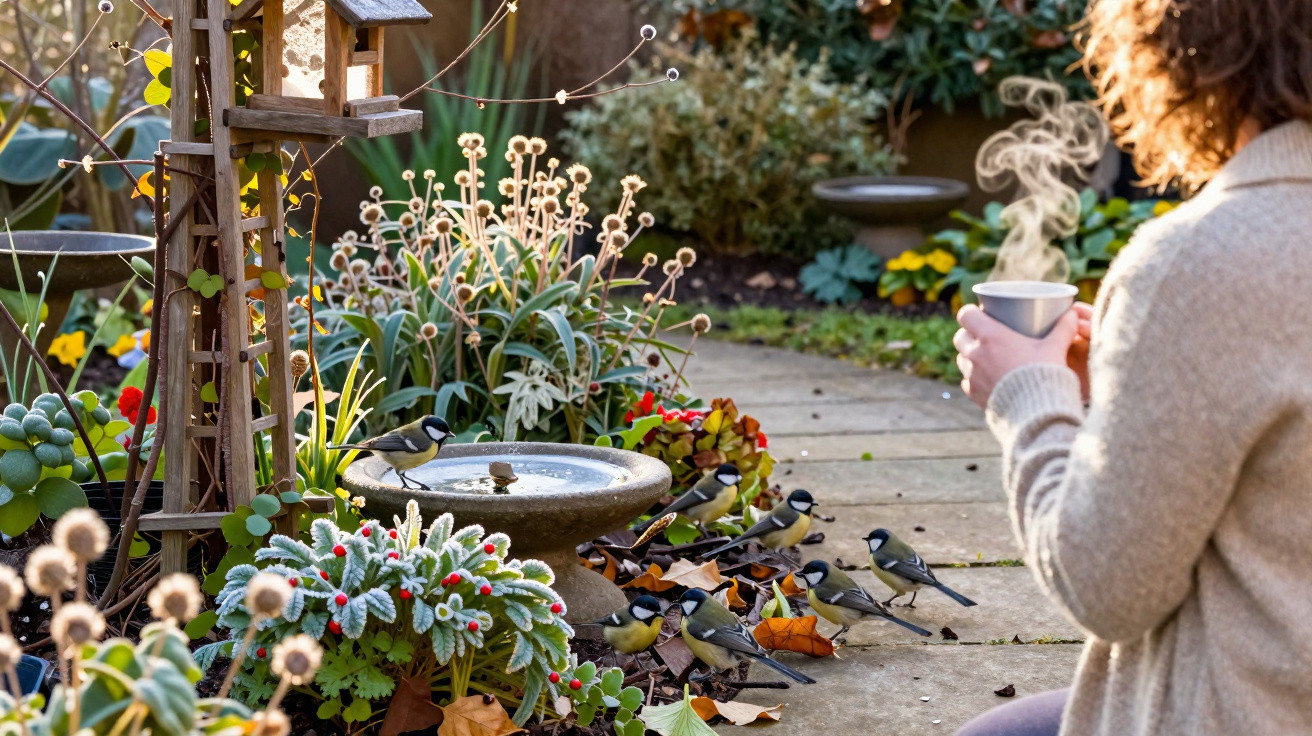
Once you have felt soil regain its springiness, it is difficult to ignore it again. You begin to notice small orange beetles, millipedes beneath stones and birds searching through the mulch for a breakfast you helped make possible.
You start to understand that what once appeared “perfect” was, in some respects, anaesthetised.
A living garden is a little rough around the edges – and that’s the point.
Most people know the feeling: standing in the garden aisle with a bottle in hand and wondering whether they are making things unnecessarily complicated, or whether this is simply what responsible gardeners are meant to do.
Yet beyond that shelf lies another quiet option, one scented with compost heaps and damp leaves, requiring more patience than a measuring cap.
There is no need to go off-grid or turn the lawn into a wildflower meadow in a single night.
You only need to choose where your allegiance sits: with the quick surge in the leaves, or with the slow, deep pulse of the soil. Gardeners who are reducing synthetic feeds are discovering that, as the soil returns to life, they do too – becoming more observant, less hurried and more attuned to the quiet drama that unfolds whenever they put a hand into the earth.
| Key point | Detail | Value for the reader |
|---|---|---|
| Reduce synthetic fertilisers | Lower the frequency and dose rather than stopping immediately | Minimises plant shock while soil biology recovers |
| Feed the soil, not only the plant | Regularly use compost, leaf mould and organic mulches | Improves structure, increases microbes and supports long-term fertility |
| Monitor living indicators | Look for more worms, easier digging and improved water absorption | Provides real evidence that the new approach is working |
FAQ:
- Question 1 Can I ever use synthetic fertiliser again once I stop?
- Question 2 How long before I see improvements in soil life?
- Question 3 Will my lawn look worse if I quit chemical feeds?
- Question 4 What’s the easiest first step for a busy gardener?
- Question 5 Is compost alone enough to feed a productive vegetable garden?


Comments
No comments yet. Be the first to comment!
Leave a Comment