
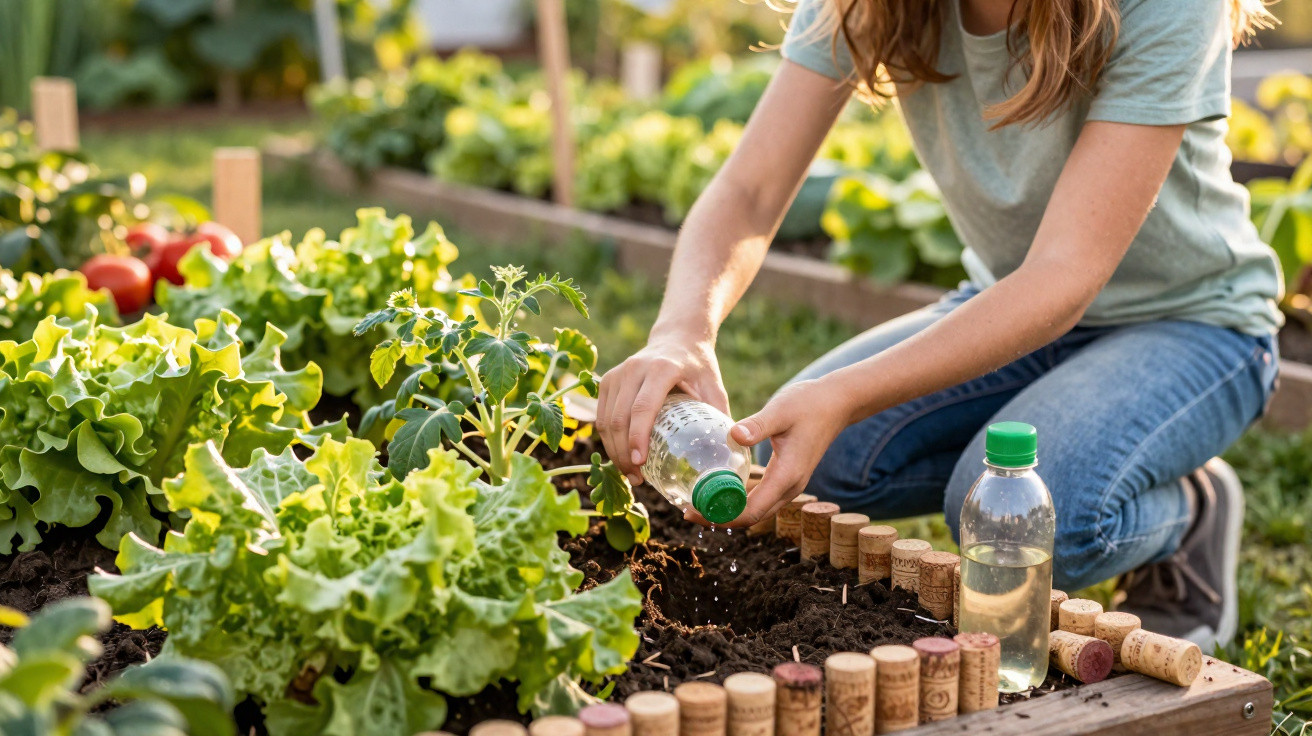
A throwaway item of all things rescued his vegetable garden: unremarkable bottle caps that would otherwise end up in household waste or recycling. With just a few simple steps, they became miniature irrigation systems, slug barriers and root protection – and suddenly he needed to water far less often while the slimy pests stayed away from the bed.
How bottle caps became discreet garden helpers
The starting point will be familiar to many amateur gardeners: seedlings were scorched by the sun, lettuces had been nibbled away overnight, and the water bill kept rising. At the same time, the kitchen was constantly producing more bottles and, with them, more caps – both plastic and cork.
At some point, a question arose: could these little cylinders be put to better use instead of simply being thrown away? The answer is yes – in a surprisingly wide range of ways.
Plastic caps are ideal for straightforward drip irrigation, while cork stoppers work as water reservoirs, mulch and natural barriers against pests.
The main benefit is that neither material breaks down immediately, both cope well with moisture, and they are easy to adapt. What many people see as rubbish can therefore become a useful aid for tomatoes, courgettes, lettuce or container plants.
Why plastic caps are ideal for drip irrigation
Plastic does not have the best reputation in the garden, but it can serve a genuinely useful purpose here. It barely changes shape in sunshine or damp conditions and remains watertight unless it is deliberately pierced. That is exactly what makes it suitable.
When screwed onto a bottle and fitted with a tiny hole, the cap acts as a flow regulator. Rather than pouring out in a rush, the water is released in small drops. This keeps the soil around the roots consistently lightly moist without turning it waterlogged.
- Water reaches the roots directly rather than sitting on the surface.
- The foliage stays dry, helping to prevent fungal diseases.
- Soil dries out more slowly between watering sessions.
- Both watering time and water consumption are noticeably reduced.
Thirsty, heavy-feeding plants such as tomatoes, cucumbers, courgettes and peppers particularly benefit from this steady supply. Instead of running around with a watering can every day, it is often enough to refill the bottle every few days.
How to make drip irrigation with a bottle and cap
A basic system needs only items found in most households:
- Plastic bottle (500 ml for young plants, 1.5 litres for larger plants)
- Matching screw cap
- Needle or thin nail
- Lighter to heat the point
- Craft knife or sharp knife
Making a bottle waterer step by step
- Heat the point: Briefly warm the needle or nail with the lighter so that it melts cleanly through the plastic.
- Pierce the cap: Make one hole in the centre of the screw cap.
- Test the water flow: Fill the bottle, screw on the cap, turn it upside down and observe it over the sink. Roughly one drop every two to three seconds is ideal.
- Adjust the hole size: Keep the hole as small as possible in very heavy, clay-rich soil. In sandy, free-draining compost or soil, it can be slightly larger so the water does not remain in the bottle for too long.
- Cut off the bottle base: Remove the bottom as evenly as possible. This makes refilling the bottle from above much easier later on.
When planting, place the bottle straight into the bed: dig a hole around 10 to 15 centimetres from the plant, press the bottle into the ground with its opening facing down to a depth of 5 to 10 centimetres, and firm the soil around its sides. The opening should point towards the roots, while the cut-off base remains above ground.
In spring, filling it once a week is usually sufficient. During midsummer heatwaves, a refill every two to three days may be worthwhile – still far less demanding than watering every day.
What cork stoppers can do in the garden
Cork stoppers offer very different benefits from plastic. Their structure is porous and springy, allowing them to hold water much like a small sponge. On hot days, this can help to moderate changes in soil conditions.
Cork also contains substances whose smell appears to unsettle some pests. Aphids, certain species of midge and ants seem less attracted to cork mulch. It is not a miracle solution, but it can form part of a wider strategy for a wildlife-friendly garden.
Shredded cork acts like a light, durable mulch: it keeps the soil looser, buffers heat and helps retain moisture for longer.
As cork is a poor conductor of heat, soil beneath a light cork layer does not warm up as intensely. Sensitive roots are therefore under less stress in summer, particularly in pots and raised beds, which can overheat quickly.
Common uses for cork in garden beds
- Mulch layer around plant bases: Scatter roughly chopped pieces to create a light covering over the soil.
- Drainage in pots: Put cork pieces in the bottom of the pot or mix them into the compost to improve drainage.
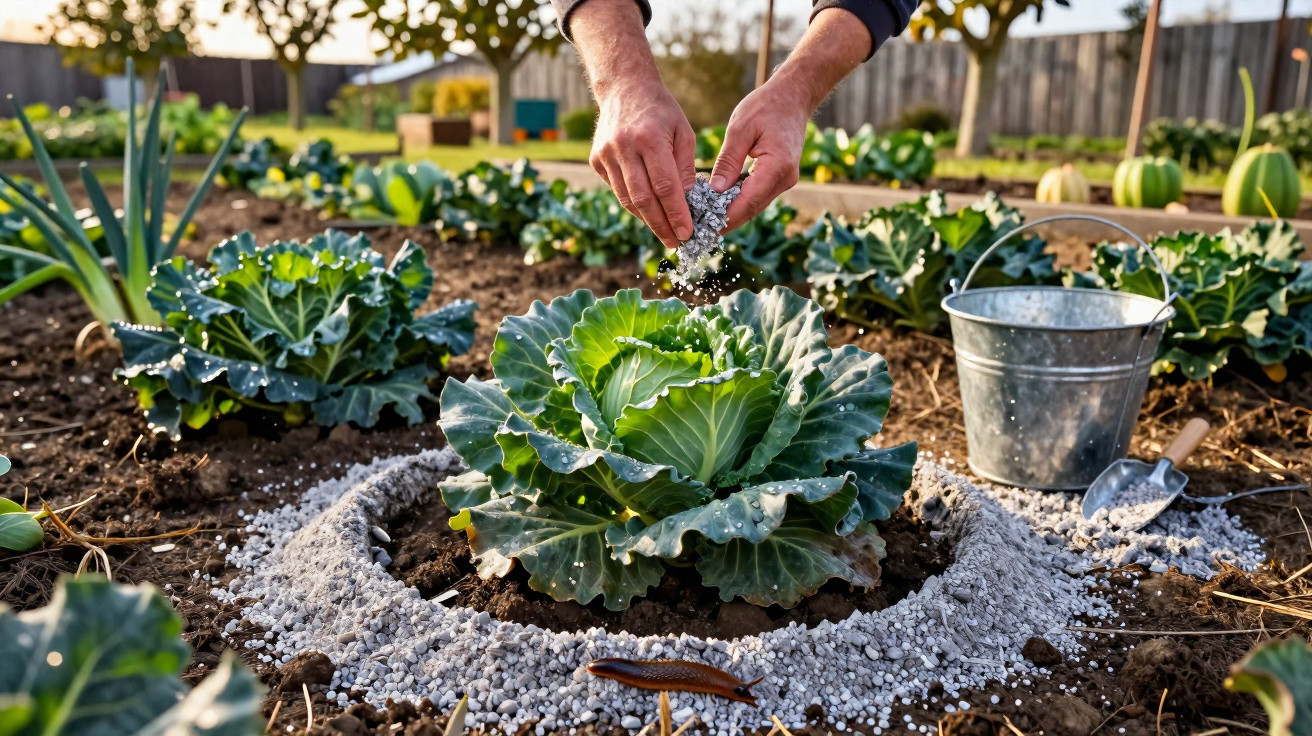
- Protective ring against slugs and snails: Arrange coarsely cut rings around plants to create an unpleasant surface to cross.
Keeping slugs away: small traps, substantial results
The second major source of frustration in a vegetable garden is the slimy night-time visitor. Bottle caps can also help protect young leaves from this problem.
Shallow plastic caps can be turned into tiny bait dishes. Fill them with beer or a sweet syrup and place them around vulnerable plants. The scent attracts the pests, which crawl into the miniature dish and are more likely to leave lettuces alone.
Cork pieces can provide an extra barrier. Cut into rough discs and laid out as a loose ring, they form an uneven, dry zone. Many slugs avoid such unpleasant surfaces and choose another route instead.
Greater safety and convenience in the garden bed
This simple bit of upcycling has another advantage: it makes the garden not only easier to maintain, but safer too. Anyone working between beds regularly in summer will know the danger posed by forgotten canes and supports.
Placing plastic caps on the ends of plant supports and canes makes them immediately more visible. This can considerably reduce the risk of impact injuries to the face or eyes. At the same time, plants are less likely to slide along the support.
| Use | Material | Garden benefit |
|---|---|---|
| Drip irrigation | Plastic cap + bottle | Even water supply, less watering work |
| Mulch and water reservoir | Cork stopper | Soil remains looser and moister, with fewer temperature fluctuations |
| Slug deterrent | Plastic and cork caps | Bait stations and uncomfortable barrier zones |
| Protecting cane ends | Plastic cap | Lower injury risk and better visibility |
Combining the method with other garden techniques
Bottle irrigation and cork mulch fit well into an overall water-saving approach. Collecting rainwater alongside these methods can make them even more effective. The bottles can then be filled directly from a water butt or cistern.
The same principle also works in raised beds. Because of their effective drainage, the soil in them dries out faster. Buried bottles ensure that water penetrates more deeply rather than dampening only the top layer. This is especially worthwhile for tomatoes or peppers in a sunny position.
One issue that concerns many people is the use of plastic. Anyone wishing to avoid buying more plastic can simply use bottles and caps already available rather than purchasing anything new. This gives the materials a second use before they enter the recycling stream.
What to consider when using bottle caps in the garden
Although this method is straightforward, a few details deserve close attention. Holes that are too large will empty the bottle quickly, and the soil may then become excessively wet. In heavy soils especially, this can encourage root rot. A little care is needed, along with a short test before putting the system into a bed.
Moderation is also advisable with slug traps: beer traps can draw animals in from further away, potentially attracting more pests into the garden. It is better to position traps very close to particularly valuable plants and inspect them regularly.
Cork should not be applied in thick layers either. A light covering is enough to protect the soil without sealing it off completely. Plant roots still need oxygen despite the mulch, otherwise they can suffer over time.
By keeping these points in mind, it is possible to achieve a great deal with very little effort and almost no expense: far less watering stress, more relaxed growth in the bed and considerably less leaf damage – using only what was an apparently worthless leftover in the kitchen yesterday.
Comments
No comments yet. Be the first to comment!
Leave a Comment