
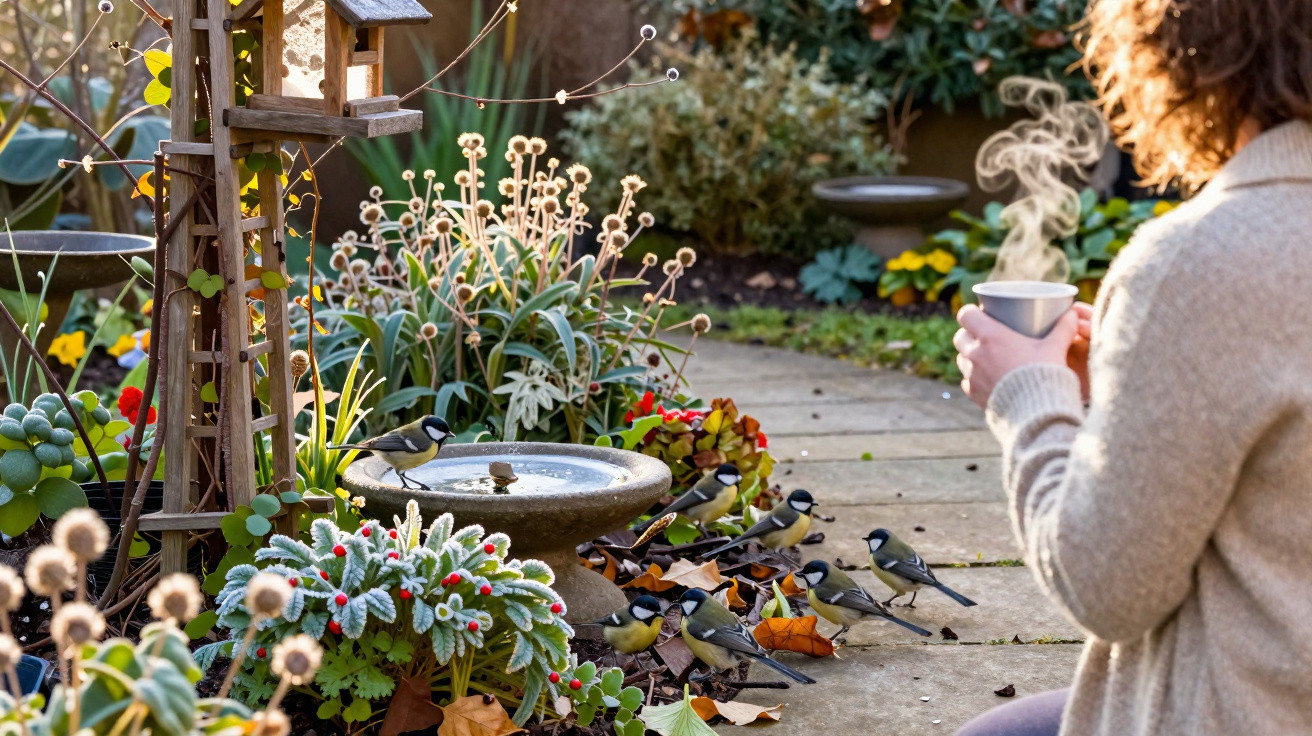
Although much of the garden appears still in midwinter, the regular movement of birds over your lawn reveals another reality. Their short visits at dawn are not accidental: they offer a clear, feathered judgement on just how welcoming your garden is for wildlife.
Why that 7am birdsong says more than you think
When birds choose to touch down in your garden at first light, it is a deliberate choice. During winter, every action uses valuable energy. A robin or tit will not spend calories passing through a “dead” area that provides neither food nor shelter.
Your morning visitors are running a free ecological audit on your garden – and their presence means it passed the test.
A garden that appears perfectly kept to people can seem unwelcoming to birds. Neatly raked borders, tightly trimmed shrubs and exposed soil provide scant cover and virtually nothing to eat. In comparison, a slightly untidy, natural-looking garden – with leaves beneath a hedge, spent seed heads left in place and thicker planting – can be full of life that birds detect even when it is invisible to you.
If birds stay awhile, moving between shrubs or carefully searching along a border, they are showing that your garden functions as a refuge: safer, warmer and more food-rich than much of the surrounding area.
Hidden food: what birds find in “messy” corners
What looks like an unfinished task to us – faded stems from last summer or heaps of leaves – can be vital to winter birds. In January and February, a garden’s true worth often lies in what you decided not to clear away.
The invisible buffet under frost and leaves
As birds search around your garden, they are looking mainly for three things:
- Seeds still attached to spent flower heads and ornamental grasses.
- Insects and larvae spending winter in bark, soil and hollow stems.
- Fruits and berries remaining after autumn.
Goldfinches and other finches will pick through old coneflower and sunflower heads. Tits investigate bark crevices for minute insects. Blackbirds and thrushes rummage through mulch and leaf litter in search of beetles and worms.
A garden rich in winter birds almost always hides a thriving “micro-fauna” under its mulch, leaves and dead stems.
This tiny wildlife community seldom persists in gardens that are heavily sprayed or constantly cleared. Steering clear of pesticides, retaining some plant material and applying mulch made from grass cuttings or shredded leaves can all build a living food store that encourages birds to return.
How your planting layout can literally save their lives
Food by itself will not draw birds into a garden; security is equally important. Bare, open areas expose them to cats, sparrowhawks and freezing winds. Instead, they seek layered vegetation that allows them to travel in brief, protected hops.
The power of vertical structure
A garden that welcomes birds generally contains several vegetation “storeys”:
| Layer | Typical plants | Why birds like it |
|---|---|---|
| Ground | Mulch, groundcovers, low perennials | Foraging for insects, worms and fallen seeds |
| Shrub | Hedges, berry bushes, evergreen shrubs | Hiding, nesting sites, berries, shelter from wind |
| Mid-height | Small trees, tall shrubs, climbers on fences | Perches, safe routes across the garden |
| Canopy | Mature trees | Look-outs, insect-rich bark, long-term nesting |
Hedgerows, varied borders and dense evergreen planting form corridors through which birds can move while remaining partly concealed. Ivy covering an old wall, thick holly or a group of laurel shrubs can provide an overnight roost, holding a small area of warmer air during icy nights.
From groundcover to treetops, varied height and density transform a decorative garden into a functioning winter habitat.
What common garden birds are really telling you
Each species can act as its own diagnostic indicator, revealing a particular advantage offered by your garden.
Reading the signs from your regular visitors
- Blue and great tits: commonly observed acrobatically exploring slender twigs and feeding stations. Seeing them suggests healthy trees and shrubs that contain hidden insects and eggs.
- Robins: these strongly territorial birds prefer leaf litter, shaded spots and soil rich in life. A robin patrolling a border can indicate a good humus layer full of invertebrates.
- Blackbirds and thrushes: attracted to soft ground, worms and fruit. Regular appearances point to a moist, well-structured, organic-rich soil layer, together with berries or fallen fruit.
- Finches (goldfinches, chaffinches): drawn to seed heads and less-tidy corners. Frequent sightings usually show that some plants have been left standing and that you have allowed a little “wild” growth at the margins.
A lively mix of species at breakfast time points to one thing: your garden offers food, shelter and variety even in the leanest months.
The same birds are likely to remember this place once the nesting season begins. A garden that sustains them in January can become a site for nesting and fledging from April onwards, helping to regulate insect populations without chemical assistance.
Small winter actions that make a big difference
Once you understand that your garden is part of the birds’ map, the aim is to keep it there – particularly in late winter, when naturally available food reaches its lowest point.
Water: the resource many gardens forget
Food is often the first consideration, yet water may be even more difficult to obtain in frosty weather. Birds require it for both drinking and preening throughout winter.
- Set out a shallow container of water and replace it every day.
- When it freezes, melt the ice with lukewarm water instead of breaking it.
- Position the container close to cover rather than in the exposed centre of the lawn.
This modest habit can ensure birds continue visiting your garden after other water sources have frozen solid.
Feeding without creating problems
Extra food can be useful, particularly in snow or during prolonged cold spells. Seed mixes, fat balls and unsalted peanuts suit many species. Position feeders in several places to lessen crowding and stress, and clean them regularly to reduce the risk of disease transmission.
Avoid cutting back all dead stems as soon as the weather begins to warm. Insects often remain sheltered within hollow stems or beneath seed heads well into early spring, while late frosts can temporarily force birds back into winter survival conditions.
Thinking ahead: designing a bird-friendly year, not just a pretty summer
Late winter is an ideal opportunity to go outdoors, observe where birds actually travel and identify the places where they never settle. Those silent areas can inform your future planting decisions.
Use the birds’ own flight paths as a design tool: they highlight gaps in cover, food and safe perches.
Where birds consistently avoid a fence line, a climber may transform it into a green route. A bleak corner could be improved with a shrub that carries berries. Selecting several plants that fruit at different points – hawthorn, cotoneaster, pyracantha and rowan – extends the food supply further into winter.
For new gardeners, a helpful phrase is “structural planting”: trees and shrubs that remain for years, creating the enduring framework of the garden. Such long-lasting plants offer birds far more than seasonal bedding displays. Pairing structural planting with a less rigorous autumn clear-up establishes a reliable pattern: more insects, more birds and less intervention needed from you.
You can also imagine a straightforward example. A lawn-only garden with sharp boundaries may attract only a handful of wary visitors on a mild day. Introduce two small trees, a mixed hedge, berry-producing shrubs and an area of perennials cut back late, and that same garden can soon support a winter feeding flock, nesting activity in spring and young birds singing by early summer.



Comments
No comments yet. Be the first to comment!
Leave a Comment