
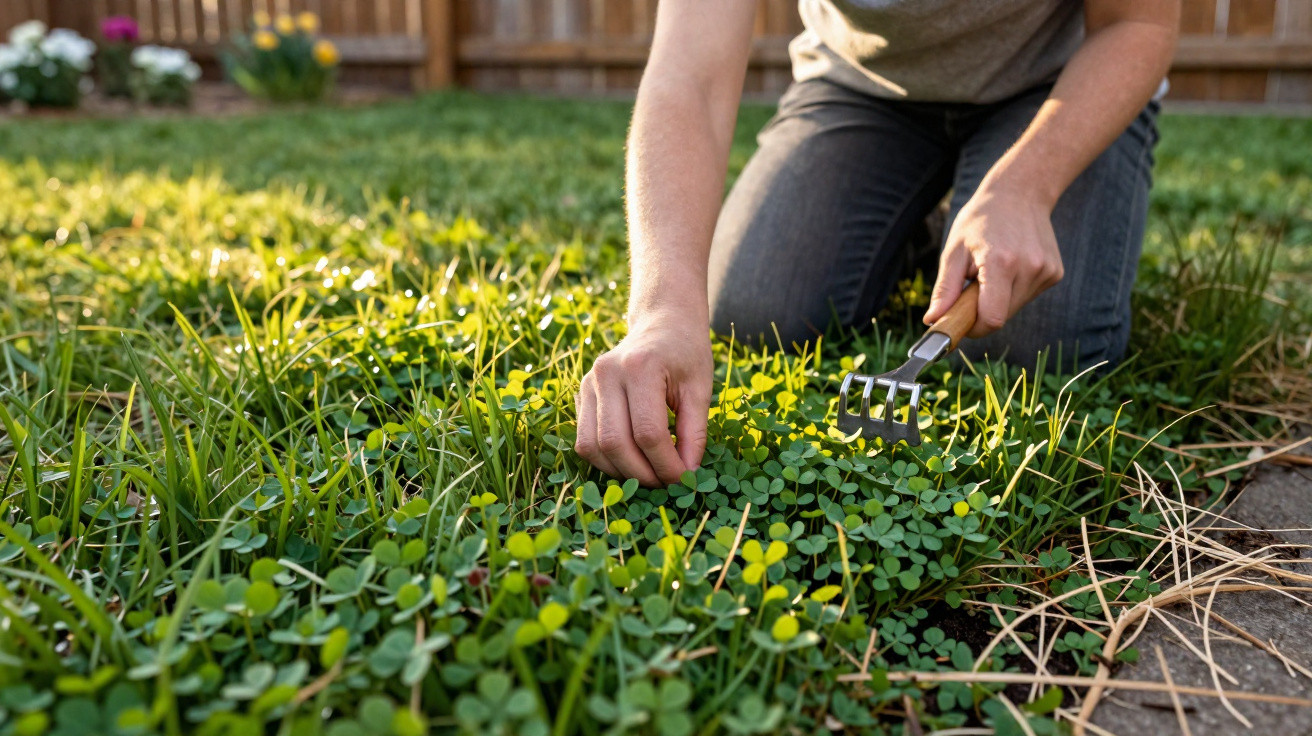
If you walk through the garden now, the signs are obvious: winter has taken its toll. Instead of an even carpet of deep green, there may be patchy areas, scorched-looking spots and dry islands. The good news is that there is no need to replace the entire lawn. One modest helper can make gaps in the grass seem to disappear in a short time, while also making the lawn more resilient to heat and drought.
Why bare patches appear in your lawn
Dry, yellow or bare areas in a lawn usually result from several causes that can compound one another:
- Winter frost and waterlogging damage grass roots.
- Summer heat and dry spells scorch the turf.
- Heavy use from children, sport or dogs compacts the soil.
- Nutrient deficiencies weaken the grasses, so they recover more slowly.
- Moss and weeds push lawn grasses out of already weakened areas.
Many amateur gardeners respond by overseeding with conventional lawn seed. Although this can help for a while, it often fails to address the underlying issue: the soil remains low in nutrients and the lawn stays vulnerable to drought. This is exactly where a small but highly effective planting trick comes in.
Microclover repairs lawn damage, reinforces the turf and adds nutrients to the soil – without the need for constant fertiliser applications.
Microclover: the small clover with a big impact
Microclover is a specially bred, very low-growing form of white clover. Unlike ordinary clover, it spreads more finely and densely, blending visually into the lawn.
Typical characteristics of microclover include:
- A growth height of only around 3 to 8 centimetres – it does not take over the lawn.
- Fine, small leaves that integrate well with the texture of the grass.
- High tolerance of foot traffic – making it ideal for family gardens.
- Adaptability to many soil types, from relatively sandy to loamy ground.
- It fixes nitrogen from the air, helping to nourish the soil.
These qualities make microclover an excellent choice for filling bare patches and making the whole lawn tougher. It acts like a natural form of “living fertiliser” among the grass.
Preparing bare lawn patches correctly
Before sowing microclover, the area needs a little preparation. Without this step, germination rates and coverage are often disappointing.
- Clear the area: Thoroughly remove old grass, moss and weeds. Dig out weed roots as completely as possible.
- Loosen the soil: Use a rake or cultivator to loosen the top 3–5 centimetres of soil. Compacted ground restricts growth.
- Level uneven ground: Fill small holes with soil and remove minor humps to create a reasonably level surface.
- Create a fine tilth: Lightly rake over the soil, breaking up any large clumps.
The better the soil preparation, the faster microclover will fill those unattractive gaps.
Sowing microclover: the trick step by step
Sowing is straightforward, but a few simple rules will ensure the result is genuinely impressive.
The ideal time of year
The best time is in spring, once there is no longer a risk of overnight frost. By then, the soil has warmed slightly and seeds germinate quickly. Early autumn is another suitable option, when the ground is still warm and rainfall is more frequent.
Choosing the right seed mix
Microclover is available as pure seed or in mixtures with lawn seed. Either can be used for bare areas. With an established lawn, a light additional sowing of clover is often sufficient.
A practical tip for spreading it:
- Mix the seeds with a little dry soil or dry grass clippings.
- This helps distribute the tiny seeds more evenly.
- Spread the mixture loosely over the prepared area by hand or with a spreader.
After sowing: firm down and water
Once the seeds have been spread, lightly roll the area or firm it down using boards or the soles of your shoes. This gives the seeds better contact with the soil.
During the first few weeks:
- Keep the soil consistently moist, without making it waterlogged.
- Water little and often rather than applying a large amount infrequently.
- Do not walk on freshly sown sections until the plants are visibly established.
Anyone using microclover in early spring gives the plants enough time to build a strong root system before the first heatwaves arrive.
How microclover changes your lawn
After a few weeks, the effect becomes visible: bare sections begin to fill in, while the overall lawn looks greener and denser. Many garden owners report that their lawns stay fresh-looking for noticeably longer during dry periods.
This is due to an interesting biological process. Microclover belongs to the legume family. Its roots host bacteria that fix nitrogen from the air and release it into the soil in a form that plants can use. The lawn therefore receives natural fertiliser directly from below ground.
| Feature | Lawn grass alone | Lawn with microclover |
|---|---|---|
| Nutrient requirement | Regular fertilising needed | Less fertiliser needed |
| Drought resistance | Quickly turns yellow in heat | Stays green longer and recovers faster |
| Tolerance of foot traffic | Sensitive under heavy use | Very robust with children and pets |
| Bare patches | Often remain visible for a long time | Fill in quickly |
Watering, mowing and feeding: caring for a lawn with microclover
Many people wonder whether a lawn containing microclover needs completely different care. The answer is no: the basic rules remain the same, but you can save yourself some work.
Watering without the stress
Thanks to deeper roots and more efficient use of the soil, a lawn with microclover dries out less quickly. There is no need to irrigate it constantly. During hot spells, it is often enough to water deeply once or twice a week, rather than lightly wetting the surface every day.
Mow as usual
Clover naturally remains low growing, so you can continue mowing as you normally would. Cutting heights of 4 to 5 centimetres are ideal. This allows the grass cover to protect the soil from drying out while keeping the clover happy.
Less fertiliser, lower costs
Because microclover supplies nutrients itself, the requirement for lawn fertiliser drops considerably. Many gardeners reduce this to one light fertiliser application per year, or manage entirely without mineral fertiliser. That is kinder to both your budget and the environment.
Having microclover in the lawn is rather like having a natural fertiliser service – free and continuously available.
Where microclover works best – and where it does not
Microclover performs particularly well where a lawn gets heavy use or where the soil is relatively poor. Typical uses include:
- Family gardens with children playing
- Areas regularly used by dogs
- Sunny to partially shaded sections of lawn
- Gardens in regions with recurring summer dry spells
Microclover is less suitable for very heavily shaded areas or formal ornamental lawns that are intended to consist of completely uniform grass only. However, it is an excellent fit for conventional utility lawns.
Risks, misconceptions and common questions
There are several concerns surrounding clover in lawns. Not all of them apply to microclover.
- “My entire lawn will soon be nothing but clover”: Microclover generally remains subtle and mixes with the grass. It can spread, but with normal care it does not crowd out everything else.
- “Clover attracts masses of insects, and I do not want to step on them”: Because of its low growth habit, microclover flowers far less than ordinary clover. Flowers are rare in lawns that are mown regularly.
- “Clover makes a lawn look untidy”: The typical appearance of a “clover patch” is barely noticeable with microclover. Many people simply see an especially lush, green lawn.
If you are unsure, begin with a small trial area, perhaps on a troublesome patch in the garden. This lets you observe directly how the grass and clover develop together.
Practical additions for a resilient lawn
Bare patches fill particularly quickly with microclover if you also consider two further points. First, an occasional soil test is worthwhile to give a broad indication of the pH level. Strongly acidic soils benefit from a little garden lime. Second, occasional scarifying helps remove moss and thatch, allowing air and water to reach the roots more effectively.
For a long-term approach, combine microclover with appropriate watering and the lowest possible fertiliser input. Step by step, this creates a robust, easy-care and visually appealing lawn that need no longer fear bare patches, even after a harsh winter or exceptionally hot summer days.




Comments
No comments yet. Be the first to comment!
Leave a Comment