
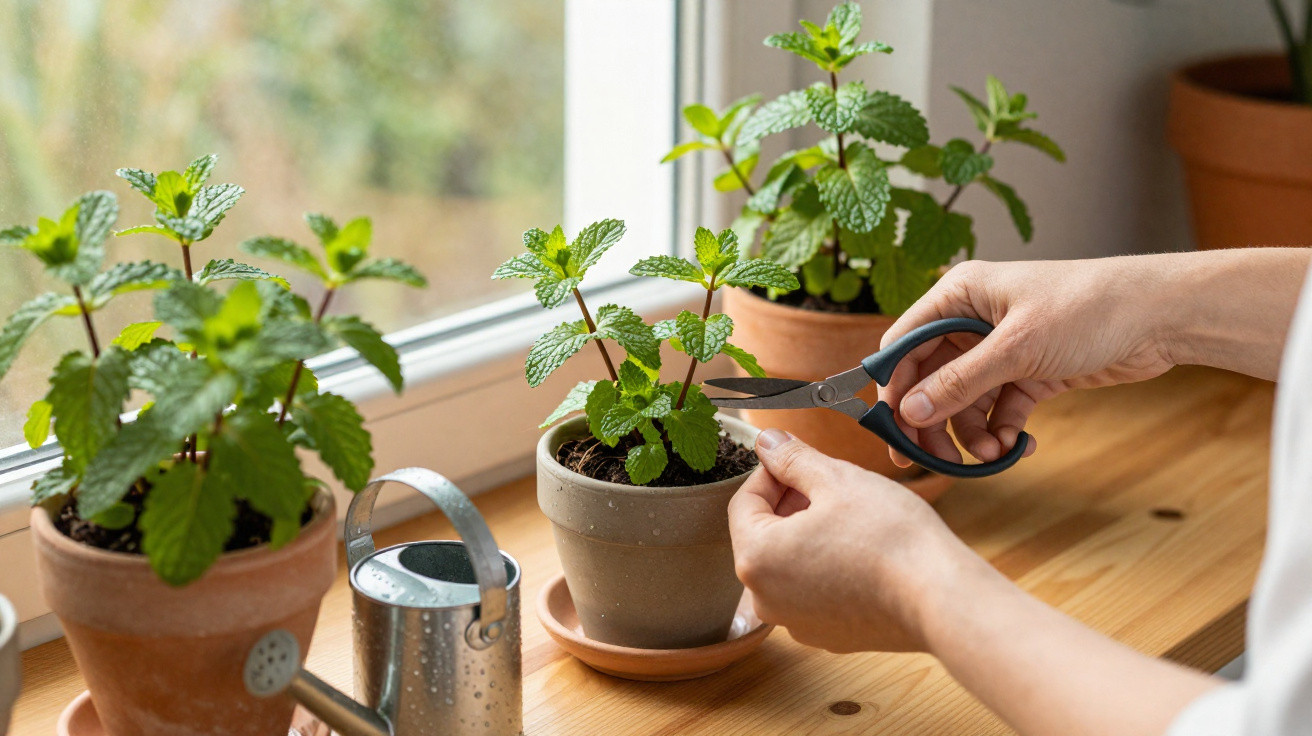
Mint grows best indoors in a bright, cool position with good air circulation, avoiding both harsh all-day sunshine and deep shade. This herb thrives in slightly moist compost, its own pot and regular harvesting, as each properly made cut encourages fresh shoots and more fragrant leaves.
Where is the best place to put mint?
The ideal spot is close to a well-lit window, where the plant can receive strong light for several hours each day. A window with gentle morning sun generally works better than a very hot sill exposed to intense direct afternoon sunshine.
In a flat, mint usually performs well in a bright kitchen, a sheltered balcony or an area near a glass door. If its stems begin to grow long, thin and widely spaced, the plant is probably getting less light than it needs.
How much light and water does mint need?
Mint copes with bright indirect light and a few hours of direct sun, but it loses strength in a dark corner. Indoors, the practical aim is to provide 4 to 6 hours of intense brightness daily, turning the pot from time to time so it develops evenly.
Several signs can help you adjust its care:
- wilted leaves and dry compost indicate insufficient water;
- yellow leaves and constantly wet soil point to overwatering;
- very long stems suggest a lack of light;
- small, less aromatic leaves indicate inadequate brightness;
- mould on the surface signals poor ventilation or excessive moisture.
How do you water mint without weakening the plant?
Mint prefers consistent moisture, but it cannot tolerate suffocated roots. Water when the top layer of compost starts to dry, keeping it moist to the touch but never waterlogged.
Mint in a pot needs drainage holes and a saucer that is always free of standing water. A light compost rich in organic matter, with good moisture retention, helps keep the leaves fresh without creating conditions that encourage root rot.
How do you stop mint from invading other pots?
Mint spreads through its roots and trailing stems, so it should not be grown in the same container as delicate herbs. Even indoors, it can take over all available space and compete for water, light and nutrients.
To keep it under control, follow these steps:
- grow mint in its own pot;
- avoid shared planters with basil, parsley or rosemary;
- prune stems that start to trail over neighbouring pots;
- divide the plant when the pot becomes too crowded;
- replace some of the compost when growth becomes weak.
How do you harvest mint to make it bushier?
Correct harvesting involves cutting the stem tips just above a pair of leaves. This encourages the plant to produce side shoots, making the pot denser and less leggy in appearance.
The most fragrant leaves develop when mint has enough light, the right amount of water and frequent pruning before flowering. In a separate pot near a bright window, with moist but not saturated compost, the plant grows abundantly and retains a strong aroma for teas, juices and fresh recipes.


Comments
No comments yet. Be the first to comment!
Leave a Comment