
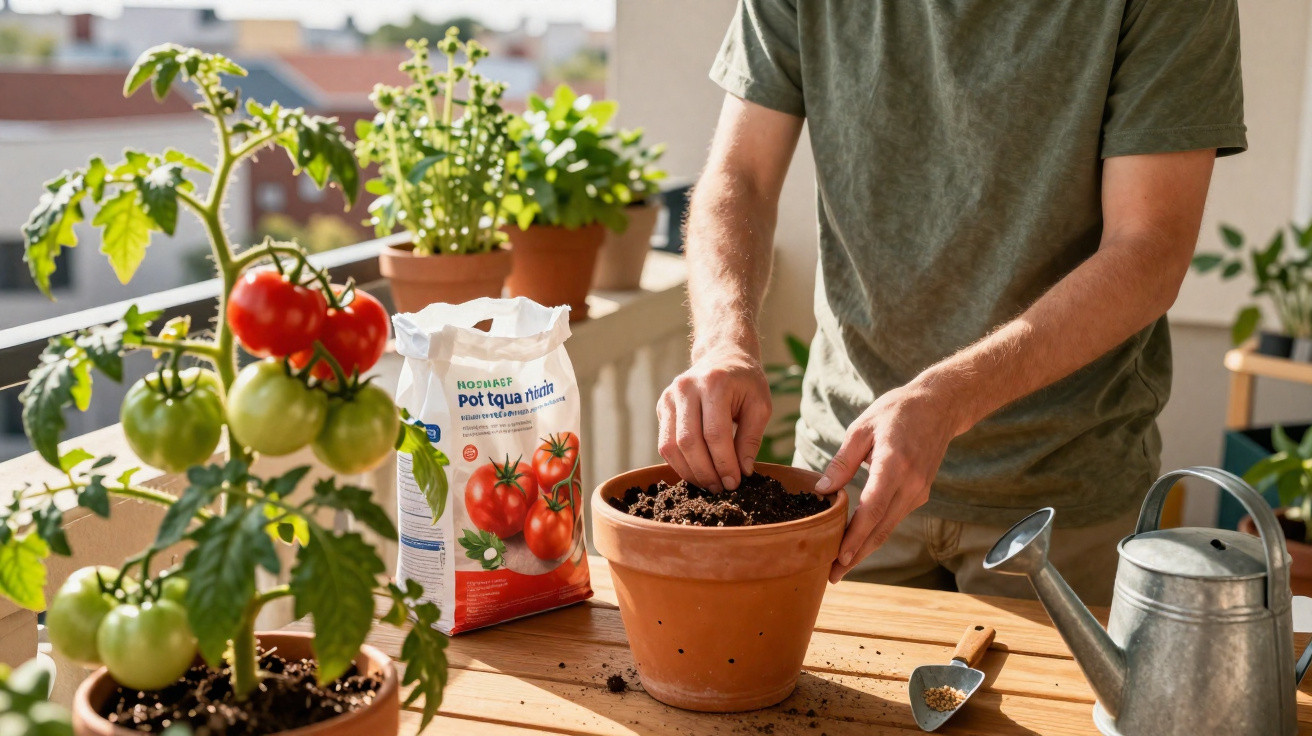
Tomatoes in pots need closer attention to soil, drainage and feeding than plants grown directly in a garden bed. Because their roots are confined within a container, the quality of the growing medium, the pot size and regular nutrient replacement determine whether the plant develops strongly, flowers well and produces fruit without deformities.
Why does soil matter so much for tomatoes in pots?
Tomatoes require a light, fertile growing medium that holds moisture without becoming waterlogged. Overly compact mixes restrict the roots, make it harder for oxygen to reach them and raise the risk of diseases caused by excess water.
For pots, the best starting point is usually a compost designed for container growing, containing organic matter, effective drainage and an open texture. Heavy garden soil can become compacted after several waterings and restrict root development.
Which pot should you choose for each tomato variety?
The required pot size depends on the variety's eventual size. Cherry tomatoes and compact types can grow in smaller containers, whereas large and indeterminate varieties need greater volume to support roots, foliage, flowers and fruit at the same time.
A useful guide is:
- compact cherry tomato: a pot holding at least 8 to 10 litres;
- medium-sized determinate tomato: a 15 to 20-litre pot;
- indeterminate or large-fruited tomato: 25 litres or more;
- any variety: a container with large drainage holes;
- tall plants: a support, stake or cage from the outset.
What type of fertiliser helps tomatoes produce better?
A tomato plant in a pot uses up nutrients quickly. At the beginning, it needs balanced nutrition to establish roots and leaves; after flowering, it requires more regular replenishment to support trusses and developing fruit.
Fertiliser can be added in two ways: use a slow-release product mixed into the growing medium at planting, then provide regular top-ups of organic compost, worm castings or fertiliser formulated for vegetables. Too much nitrogen should be avoided, as it encourages abundant foliage but few fruits.
How can you tell when the plant needs nutrients?
A tomato plant will often show when the pot no longer provides sufficient nutrition. Yellowing leaves, weak growth, flowers falling before fruit sets and undersized fruits can all indicate an imbalance in water, light or nutrients.
Some signs need particular attention:
- yellowing lower leaves may indicate nitrogen deficiency or waterlogged roots;
- dropping flowers suggest excessive heat, insufficient water or nutritional stress;
- fruit with dark patches on the bottom points to difficulty absorbing calcium, often associated with irregular watering;
- very green leaves and few fruits indicate excess nitrogen;
- slow growth may result from a pot that is too small or a poor growing medium.
How can problems be corrected without harming the fruit?
Growing tomatoes in pots works best when adjustments are made gradually. Rather than adding a large quantity of fertiliser all at once, maintain consistent watering, mulch the surface with light organic matter and apply small doses of fertiliser according to the plant's stage of growth.
Patience is essential to this careful balance between soil, water and nutrients. With a suitable pot, loose growing medium, moderate feeding and regular observation of leaves and fruit, the tomato plant grows more evenly and produces a healthier harvest indoors, on a balcony or in the garden.

Comments
No comments yet. Be the first to comment!
Leave a Comment