
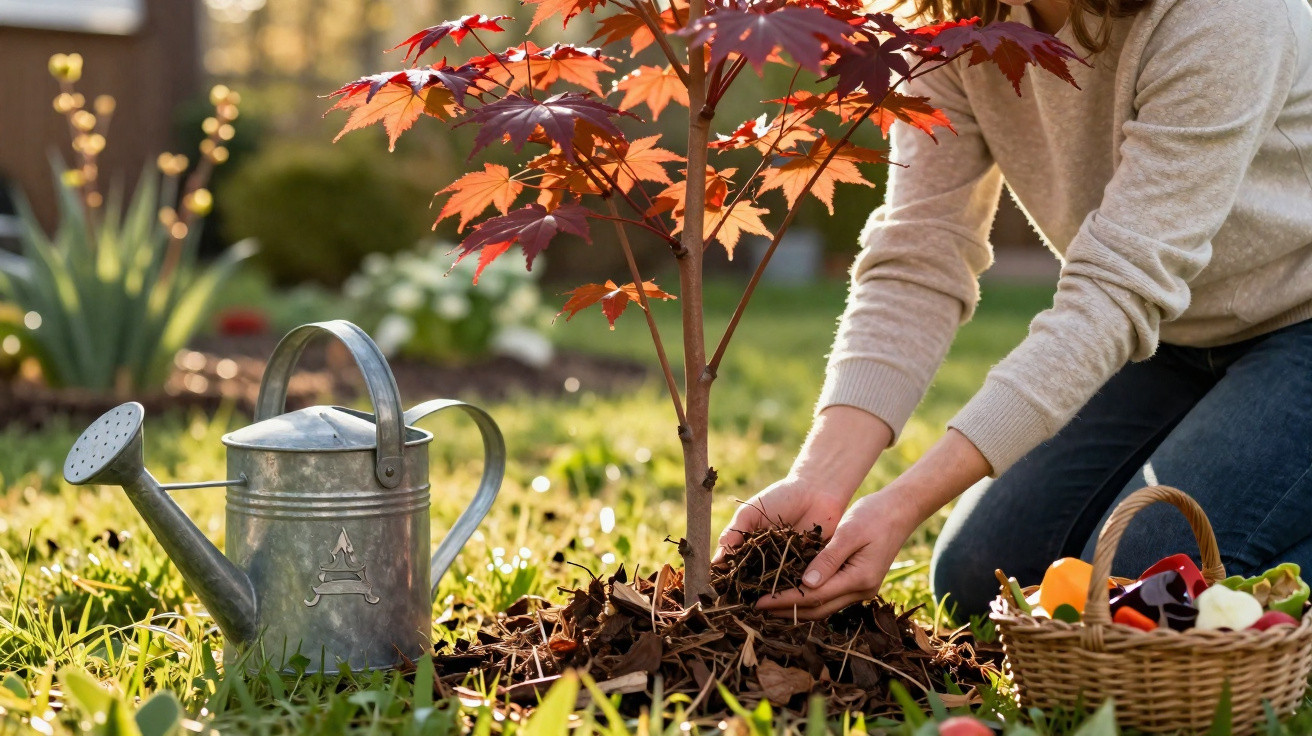
Many garden owners are surprised by the same pattern each year: in spring, the Japanese maple is slow to leaf out, then by high summer its elegant branches carry scorched leaves and limp shoots. The good news is that the difference between a struggling specimen and a dream tree often comes down to one simple job done at the trunk now, in March - using an entirely natural aid.
Why Japanese maple needs protection at ground level now
The Japanese maple, botanically Acer palmatum, has a delicate appearance - and its root system behaves accordingly. Its roots sit very close to the soil surface, making them sensitive to cold, heat and drought. In bare soil, the tree must still cope with late frosts in March, only to endure full summer heat a few months later.
These fluctuations put the tree under stress. It sheds leaves prematurely, its colours become less vivid and shoots dry out. This is especially apparent in urban gardens and containers. Anyone wishing to maintain healthy Japanese maples over many years should therefore focus less on the crown and more on the soil beneath it.
“The most important spring trick for a healthy Japanese maple takes place in the root area - not in the tree canopy.”
The natural “carpet”: mulch makes Japanese maple tougher and more attractive
Gardeners who have cultivated resilient, richly coloured Japanese maples for years nearly all rely on the same spring routine: they spread a ring of organic mulch around the trunk. This soil-covering carpet acts as a protective layer between the root zone and weather extremes.
It has three key effects:
- More even soil temperatures: the soil warms up more slowly and does not cool down as sharply.
- Steadier moisture levels: less water evaporates, so the tree can manage for longer after watering.
- Gentle nutrient supply: as mulch gradually decomposes, it feeds the maple with nutrients.
As a result, the tree grows with less stress, its leaves stay fresh and vividly coloured for longer, and dry spells are less likely to cause damage. Mulch also suppresses weeds around the trunk.
When should you apply a mulch ring?
Timing matters. March is ideal, when the soil is still cool but sap has begun to rise again within the tree. At this point, mulch helps soften sudden temperature changes.
“Mulching your Japanese maple in March sets the course for the entire summer - and often for the following winter too.”
At the start of the season, a mulch layer of roughly five to eight centimetres is sufficient. Crucially, leave the root flare - the slightly swollen area at the base of the trunk - uncovered, so the tree can breathe there and its bark does not remain permanently damp.
Which mulch is genuinely suitable for Japanese maples?
Japanese maples prefer humus-rich, slightly acidic soil that remains lightly moist but never waterlogged. The right natural material can recreate precisely these conditions. The following have proved particularly effective:
- Fine pine bark – creates a loose, mildly acidic layer and breaks down slowly.
- Well-rotted leaf mould – mature, dark compost made from autumn leaves and rich in humus.
- Wood chips (Bois raméal fragmenté) – shredded young branches that provide valuable structure and nutrients as they decay.
If there is plenty of suitable material in the garden, much of it can be reused:
- shredded, thoroughly dried leaves from the previous year
- finely chopped, well-aged hedge prunings
- thin layers of completely dried grass clippings, never fresh or applied too thickly
By contrast, hard materials that heat up strongly, or coverings that become overly dense, are unsuitable for the Japanese maple’s sensitive roots.
| Suitable mulch materials | Better avoided |
|---|---|
| Fine bark mulch products | Dark decorative gravel |
| Mature leaf mould | Volcanic stones, such as lava, pumice or pozzolan |
| Wood chips from young branches | Heavily coloured, artificial mulch coverings |
| Dried, shredded garden waste | Permanently damp bark layers directly against the trunk |
Mineral materials such as dark stones and lava absorb sunshine and can heat the root zone considerably. That may suit Mediterranean plants, but it is usually unsuitable for Acer palmatum. A soft organic layer that resembles a forest floor rather than a gravel garden is the better choice.
How to mulch your Japanese maple step by step
Japanese maple planted in a garden bed
For a Japanese maple growing in a bed, follow these steps in spring:
- Clear the area: remove weeds and old, decomposing mulch from around the trunk.
- Loosen the soil lightly: use a hand rake or your fingers to crumble only the top few centimetres, taking care not to damage roots.
- Spread the mulch: apply the material in a ring beneath the canopy, without compacting it.
- Keep the trunk clear: leave an uncovered strip of around ten centimetres immediately around the trunk.
- Water thoroughly: give it a generous watering once, allowing the mulch and soil to settle together.
The mulched area can comfortably extend beyond the tree’s current canopy spread. This also supports newly developing fine roots outside the immediate trunk area.
Japanese maple in a pot or container
Japanese maples in containers are even more sensitive, because the growing medium dries out faster and experiences greater fluctuations. The same principle applies, simply on a smaller scale:
- Carefully remove the old, crusted top layer to a depth of two to three centimetres.
- Add fresh, humus-rich compost if required.
- Apply a thinner mulch layer of three to five centimetres.
- Again, leave a small clear ring directly around the trunk.
Anyone keeping a container-grown maple on a sunny patio will often notice the difference within a few weeks: the compost stays moist for longer, the leaves appear more robust and watering intervals become longer.
Watering properly: mulch supports watering but does not replace it
Mulch is not a substitute for a watering can; instead, it makes watering more effective. A mulched Japanese maple needs noticeably less water, but still requires regular watering, particularly during hot weather.
A practical routine is:
- in spring: water deeply around twice a week
- during summer heat or dry spells: water three to four times a week, depending on the position and soil
The exact number of watering sessions matters less than their thoroughness. It is better to water less often but deeply than to dampen only the top centimetre every day. Mulch helps retain this water where it has penetrated deeper into the soil.
Common mistakes when mulching Japanese maples
Even a helpful technique can cause harm if it is applied incorrectly. Common pitfalls include:
- Mulch touching the trunk: permanently damp bark encourages fungal disease and rot.
- An overly thick layer: more than eight centimetres can restrict air circulation.
- Large amounts of fresh grass clippings: these compact, go mouldy and draw nutrients from the soil.
- Heavy, stony decorative layers: they become hot and can cause fine roots to dry out.
“The rule of thumb is this: the trunk must be able to breathe, while the root area should feel soft, humus-rich and lightly springy - like a woodland floor.”
Why Japanese maples are so sensitive: a brief look at their origins
Japanese maples originally come from regions with humus-rich forest soils. Every year, leaves, twigs and other plant matter fall onto the ground there, creating a natural mulch layer. This environment is often absent in central European gardens dominated by lawns, gravel or bare earth.
Using organic mulch replicates this natural setting. The tree feels more “at home” and responds with steadier growth and noticeably more attractive autumn colour. Varieties with especially finely cut leaves or brilliant colours benefit in particular, as they are generally more sensitive.
Mulch as part of the full care package for magnificent Japanese maples
A mulch ring is one of several measures that keep a Japanese maple strong over the long term. Other suitable conditions include:
- a sheltered site, preferably bright but without intense midday sun
- protection from wind, so the delicate leaves do not dry out
- structured but well-drained soil, or high-quality container compost
- restrained but targeted fertiliser applications in spring
Combining these conditions with a properly applied mulch ring changes the way the tree performs: less stress, fewer scorched leaf edges and a much longer display of spectacular autumn colour.
For hobby gardeners who have already struggled with supposedly “temperamental” Japanese maples, this single step in March can make a substantial difference. An organic natural carpet around the tree’s base costs little, saves water, improves the soil and can allow this ornamental maple to remain a focal point for years.
Comments
No comments yet. Be the first to comment!
Leave a Comment