
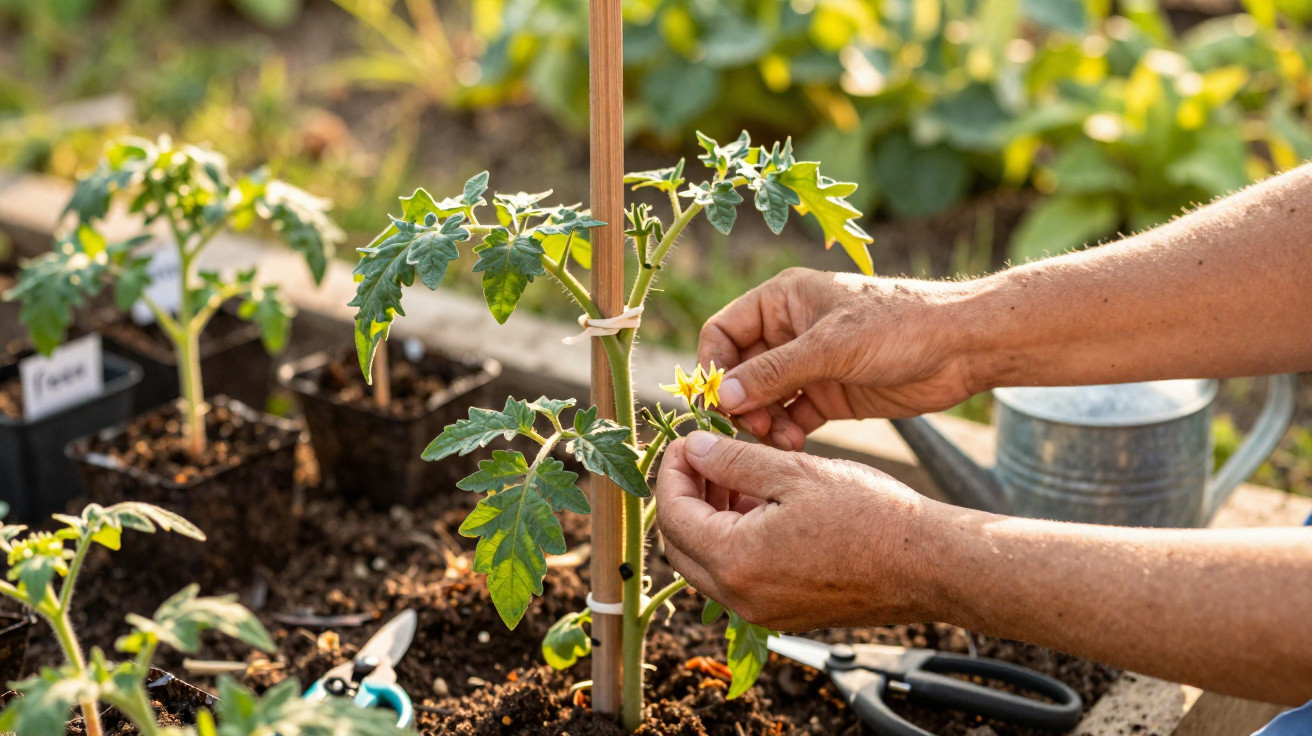
Many amateur gardeners are delighted by the first tomato flower – and, without realising it, make the season’s first mistake.
When planting young plants, most people focus on the variety, position and fertiliser. Yet almost everyone overlooks one tiny detail: the very first flower. This small bloom can help determine whether your tomatoes later produce a strong crop – or leave you harvesting only a few undersized fruits.
Why the first tomato flower can cause a problem
Every tomato plant experiences stress when it is planted out. It moves from loose potting compost into a denser garden bed, often facing different temperatures and more wind. At this point, every unit of energy available to the plant matters.
If you simply leave the first flower in place, this is what happens: the tomato immediately starts supporting a developing fruit. Rather than directing its strength into new, deep roots and sturdy growth, it is already feeding a future tomato. That slows its initial establishment.
Removing the first flower directs all of a young tomato plant’s energy into its roots and shoots – the foundation of a strong harvest.
The consequences of leaving that bloom on often do not become apparent until weeks later:
- the young plant finds it harder to establish itself
- these first fruits often remain small and less flavourful
- the whole plant structure appears weaker, while yield and consistency suffer
Although this step may sound drastic, it is more of a relief for the plant: it does not have to relocate and form fruit at the same time.
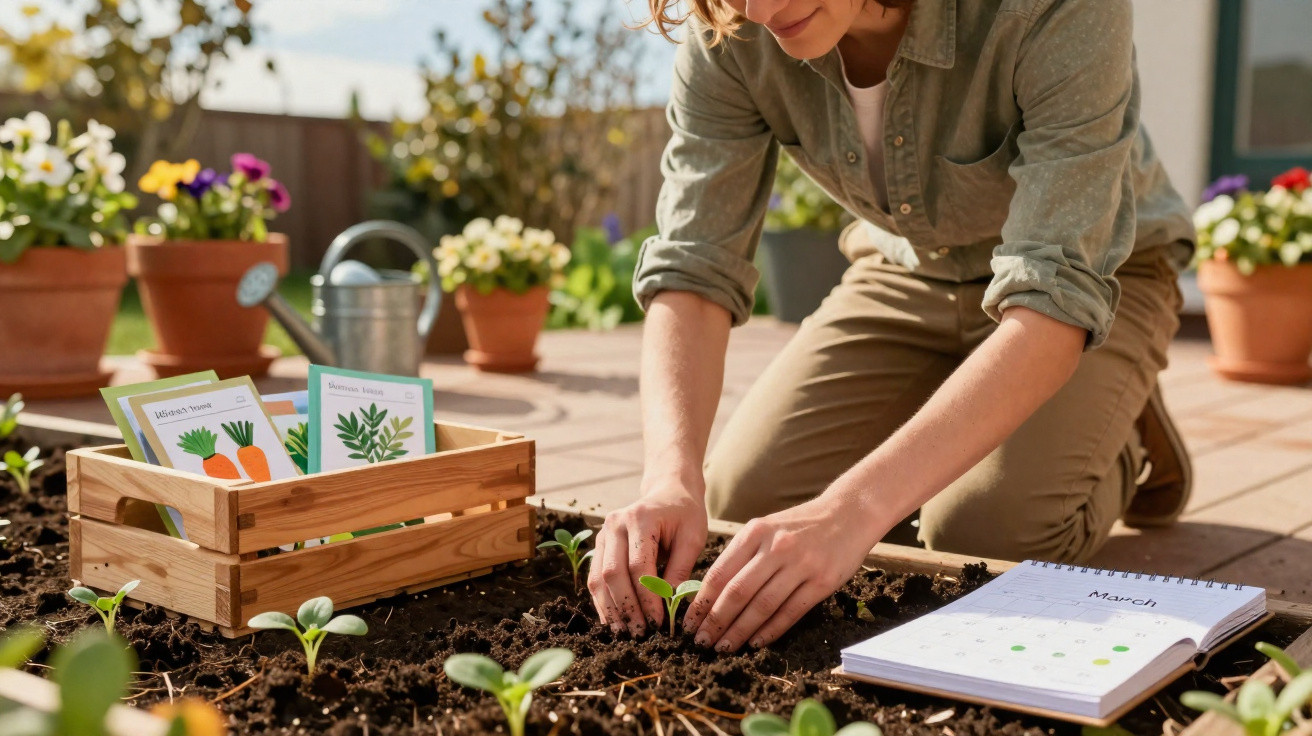
The right time to plant tomatoes outdoors
The point at which tomatoes can be planted outside depends greatly on the region. Frost and cold nights are the biggest enemies of young plants.
Broad guidance by region
- Warm regions / the south: usually from mid-April
- Coastal areas with a mild climate: early to mid-May
- Cooler regions, the north and higher elevations: often only after the traditional Ice Saints period, from late May to early June
Two temperature thresholds matter more than the date on the calendar:
- soil temperature of at least around 15 °C
- night-time temperatures consistently above 10 °C
Even a single night at 6 °C can noticeably set a plant back. It will establish itself more slowly and remain more vulnerable.
Harden plants off instead of exposing them to shock
Tomatoes raised in a warm living room or greenhouse encounter sun, wind and cooler air outdoors. Without preparation, that is pure stress.
- put the plants outside each day for roughly one week
- begin with a few hours in shade or partial shade
- gradually extend the time outdoors and increase their sun exposure
This process of “hardening off” allows the plants to adapt to real outdoor conditions. It makes them tougher and greatly reduces transplant shock later on.
Remove this exact tomato flower
The key flower is the first bloom on the lowest flower truss, usually the first small cluster of flowers on the main stem. On shop-bought tomato plants, this is often already an open or nearly open flower.
Proceed as follows:
- gently hold the flower between your thumb and forefinger
- pinch it off with a clean, firm movement
- alternatively, use small disinfected garden scissors
- make the cut directly at the base of the flower
Take care not to damage the main stem. A tear or bruise on the stem gives fungi and rot an entry point.
Flower or side shoot – how to tell the difference
Many amateur gardeners confuse flowers with so-called side shoots. These are lateral shoots that grow in leaf axils – precisely between the main stem and a side branch.
- Flower trusses: grow from the stem and carry small buds or yellow star-shaped flowers
- Side shoots: look like small extra stems with leaves but no flowers
Side shoots are removed later in the season by pinching them out, especially on tall, indeterminate varieties. The first flower, by contrast, should be removed before or while you are planting the tomato into the bed.
Remember: remove the flower before planting; manage side shoots during the season.
How to support tomatoes after planting
Once planted, a tomato usually needs ten to fifteen days for its roots to settle into the new soil. Care during this period is crucial.
Water correctly for strong roots
- water thoroughly once or twice a week rather than little and often
- avoid daily light sprinkling
- keep the area around the root ball moist, but never waterlogged
- keep the foliage as dry as possible to prevent fungal diseases
Deep watering encourages roots to grow downwards. This later makes the plant less dependent on short dry spells.
Control fruit size through the number of flowers
As soon as your tomato plant is well established, it will quickly produce new flower trusses. Those who simply let it grow unchecked often end up with many small fruits. A little control can improve quality.
A practical rule for amateur gardeners:
- leave around three to four flowers on each flower truss
- limit the total number of flower trusses per plant to five to six
This focuses the plant’s energy on fewer but more substantial tomatoes, with greater flavour and a better texture.
Use side shoots as free new tomato plants
Throwing side shoots away means wasting potential. Many of these lateral shoots can be grown on as individual plants.
- choose a healthy side shoot around eight to ten centimetres long
- place it in a glass of water in a bright spot that is not in full sun
- wait a few days for the first roots to form
- pot it into a container with compost or plant it directly into the bed
This produces new plants without any additional cost, although they will usually fruit a little later. With long-fruiting varieties, this extends the harvest season because young plants can still deliver strongly later in the year.
When the first-flower rule does not apply
Tomatoes can broadly be divided into two types: bush varieties that reach a limited height, and tall-growing varieties that continue shooting upwards throughout the season.
Bush tomatoes: slightly more forgiving
With determinate, or limited-growth, varieties, height growth stops after a short period. They branch more strongly and tend to form compact bushes. These types produce fewer side shoots, and removing the first flower is less important here. They are often grown in pots or on balconies.
Tall-growing tomatoes: removing the flower is especially worthwhile
Indeterminate varieties continue growing taller throughout the season. Removing the first flower has the greatest effect on these plants: they develop a powerful root system and strong stems that can later support many flower trusses.
Well-known varieties in this group include fleshy beefsteak types, classic cordon tomatoes and many darker specialist varieties. Anyone growing such high-performing varieties benefits noticeably from consistent pruning management at the start of the season.
Why this small early cut pays off several times over
The job takes only seconds, yet it has several positive effects:
- stronger root growth during the first few weeks
- a better start after planting out, with less of a “sluggish phase”
- sturdier stems that are more likely to withstand wind and rain
- more even fruit size and often a more intense flavour
This advantage is particularly noticeable in years with changeable weather. Plants that invest in roots from the start rather than their first fruit generally cope better with cold spells and dry periods.
If you are unsure, carry out a simple test in your own garden: remove the first flower from one plant, but leave it on the plant beside it. Differences in growth, fruit size and total yield will provide the most convincing answer – straight from your own vegetable bed.


Comments
No comments yet. Be the first to comment!
Leave a Comment