
A simple kitchen staple could change the situation entirely.
Anyone with a strawberry patch in the garden will know the frustration: nibbled fruit, hole-riddled leaves and weak-looking plants, despite fertilising, watering and mulching. Many people eventually turn to sprays in frustration, or simply give up. Yet one step involving an everyday vegetable can often make a visible difference to the health of a strawberry patch within just a few weeks.
Why strawberry plants decline so quickly
Strawberries thrive in cool, slightly damp conditions. Unfortunately, that same environment creates an ideal playground for pests and fungal diseases. Common problems in a strawberry bed include:
- Aphids and spider mites, which feed on foliage and weaken the plants.
- Slugs, which attack fruit and tender young leaves.
- Fungi such as notorious grey mould, which can rot berries before they are picked.
- Nematodes in the soil, which damage roots and leave plants looking tired and stunted.
Many amateur gardeners respond with a whole arsenal of measures: straw coverings, home remedies, organic sprays, slug barriers and protective netting. This takes time, money and patience – and the results are often limited.
The hidden ally: garlic at strawberry roots
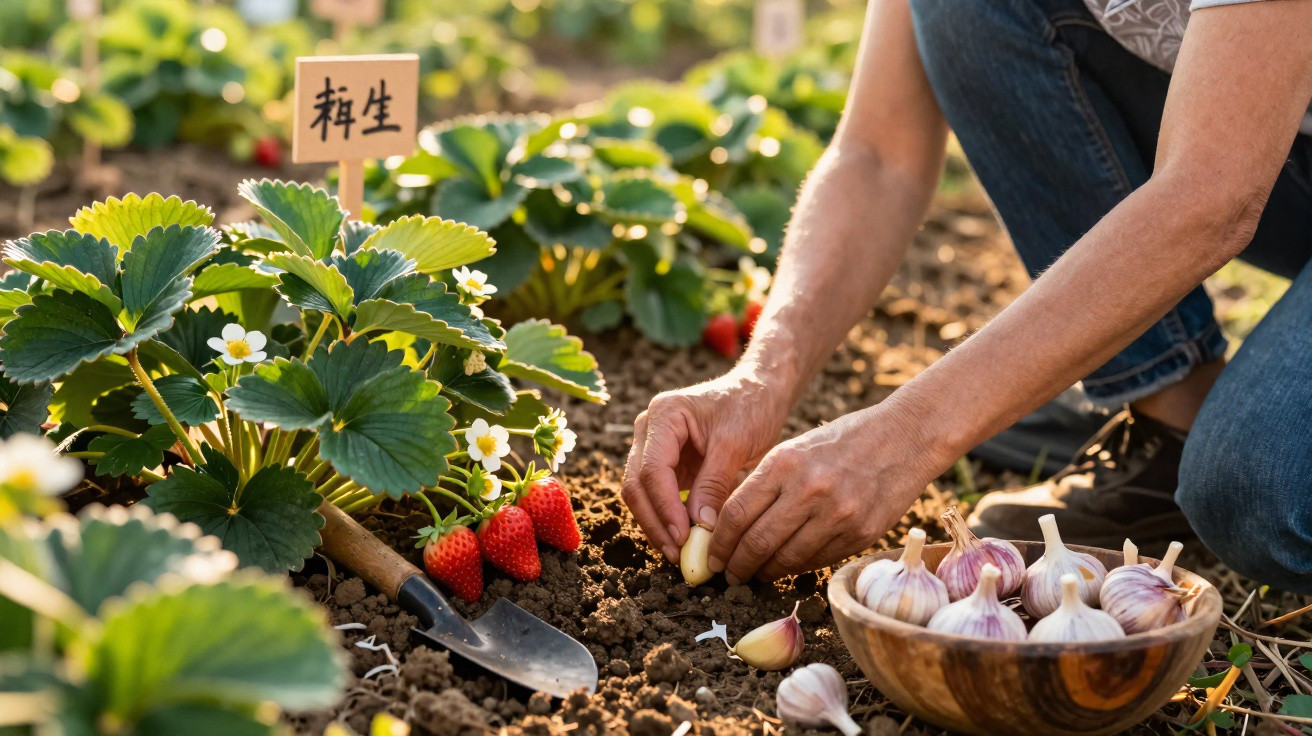
A remarkably straightforward technique has become popular among vegetable gardeners: plant a single garlic clove directly near the root zone of the strawberries. That is all it takes. No spray bottle and no costly specialist products.
One garlic clove for every one or two strawberry plants can substantially reduce pest activity in the bed – without poisons or spraying.
The chemistry behind it is easy to explain. Garlic contains allicin, among other sulphur-containing compounds. As it grows, these substances enter the surrounding soil and the air immediately around the plants. Many insects, some fungi and certain soil organisms strongly dislike these conditions.
This approach is known as companion planting or plant partnership. The strawberries benefit from a “cleaner” soil environment, while the garlic primarily acts as a natural deterrent to unwanted visitors.
How to plant garlic correctly in a strawberry bed
Choosing the right clove
Not every garlic bulb from the supermarket is equally suitable for the garden. For a genuine result, look for the following:
- The clove should be firm and plump.
- It must have no signs of mould or soft patches.
- Choose organic garlic or locally grown produce where possible, as imported bulbs can sometimes be treated to prevent sprouting.
If garlic has been chemically treated, it may sprout poorly or not at all – and without a sprouting clove, the entire method is ineffective.
Spacing, depth and timing
Planting is uncomplicated, although a little accuracy is worthwhile:
- Spacing: 5–10 cm from the crown of the strawberry plant.
- Position: point the clove upwards.
- Depth: place it 2–3 cm beneath the soil surface, with only a light covering of soil.
- Quantity: one clove is enough for one or two strawberry plants.
You have considerable flexibility over when to plant. The best times are:
- Autumn, when you are already refreshing the bed.
- Late winter, once the soil is free from frost.
- Spring, as the strawberry plants begin their new growing season.
Those starting in spring will usually notice an effect in the same season, although it builds up gradually.
What happens in the bed: effects and limitations
Nothing visibly changes straight after planting. The garlic clove needs time to root and begin growing. Once this process starts, the “protective shield” around the strawberry plants begins to develop too.
After several weeks, many gardeners report fewer nibbled berries, healthier foliage and more vigorous strawberry plants.
The possible effects at a glance:
- Less feeding damage to leaves and fruit.
- More resilient plants that are less likely to look “exhausted”.
- A lower risk of grey mould on berries, as the soil environment becomes less welcoming to certain fungi.
- No harm to bees or other beneficial insects, because nothing is sprayed.
Garlic does not, however, replace proper ongoing care. Heavy rain, overcrowded planting, an unsuitable position or persistently wet conditions can still cause problems. Some slugs will also crawl past garlic plants without any concern. The effect can therefore be noticeable, but it is not a magic trick that solves every issue overnight.
Extra benefit: a harvest and aromatic protection
Leaving the garlic plants in place provides an added reward: in summer, you can harvest the bulbs for normal kitchen use. Many amateur gardeners also cut the green shoots from time to time, using them fresh in the kitchen like spring onions.
The aroma continues to work in the bed for as long as the garlic is growing and remains in the soil. Even after flowering, many gardeners say their strawberry plants stay more robust and that the fruit develops a fuller flavour. Whether this can be measured objectively is open to question – but many feel that their berries taste “stronger”.
Making garlic part of a smart strawberry strategy
Garlic works best when it is included in a well-planned strawberry-growing approach. Useful additions include:
- Generous plant spacing, allowing foliage and fruit to dry more effectively.
- A mulch layer of straw or wood chips to reduce soil splash and prevent fruit from resting on wet ground.
- Regular removal of old, rotten or heavily affected leaves.
- Targeted watering at the roots rather than over the leaves.
Especially in small gardens, combining good care, companion planting with garlic and moderate watering produces considerably tougher plants. Anyone who has previously replanted every year can often keep a strawberry patch vigorous for several years with this method.
Common questions from everyday gardening
Does the smell affect the flavour of the strawberries?
It is a common concern: will the strawberries end up tasting of garlic? Normally, no. Garlic primarily affects the soil environment and the immediate area around the plants. The fruit does not noticeably take on its scent. Many people even find the berries especially flavoursome because healthier plants are able to ripen more fully.
Can I use garlic scraps or skins instead?
Skins and kitchen scraps are better suited to improving soil through compost, rather than acting as a targeted “protective partner”. The effect described here requires living cloves that can sprout. Only then are the desired substances released continuously into the strawberries’ surroundings.
How long does the effect last?
In principle, the influence continues for as long as the garlic is growing and remains in the soil. Many people leave the plants where they are for one to two years, adding fresh cloves between the rows when needed. After harvesting the bulbs, simply plant new ones.
Why this garlic trick is so appealing to amateur gardeners
Its greatest appeal is its simplicity: a bulb of garlic costs very little and is often already sitting in the kitchen. The task itself is minimal, requiring only one small spadeful of soil per plant. There is no protective clothing, no complicated mixing ratios and no concern about beneficial insects.
For anyone who loves strawberries but has no interest in harsh chemicals or constant spraying, this small garlic clove can be a surprisingly powerful ally. It is a practical, everyday solution for family gardens, community plots and balcony gardens, and can make the strawberry season far more relaxed.
Comments
No comments yet. Be the first to comment!
Leave a Comment