
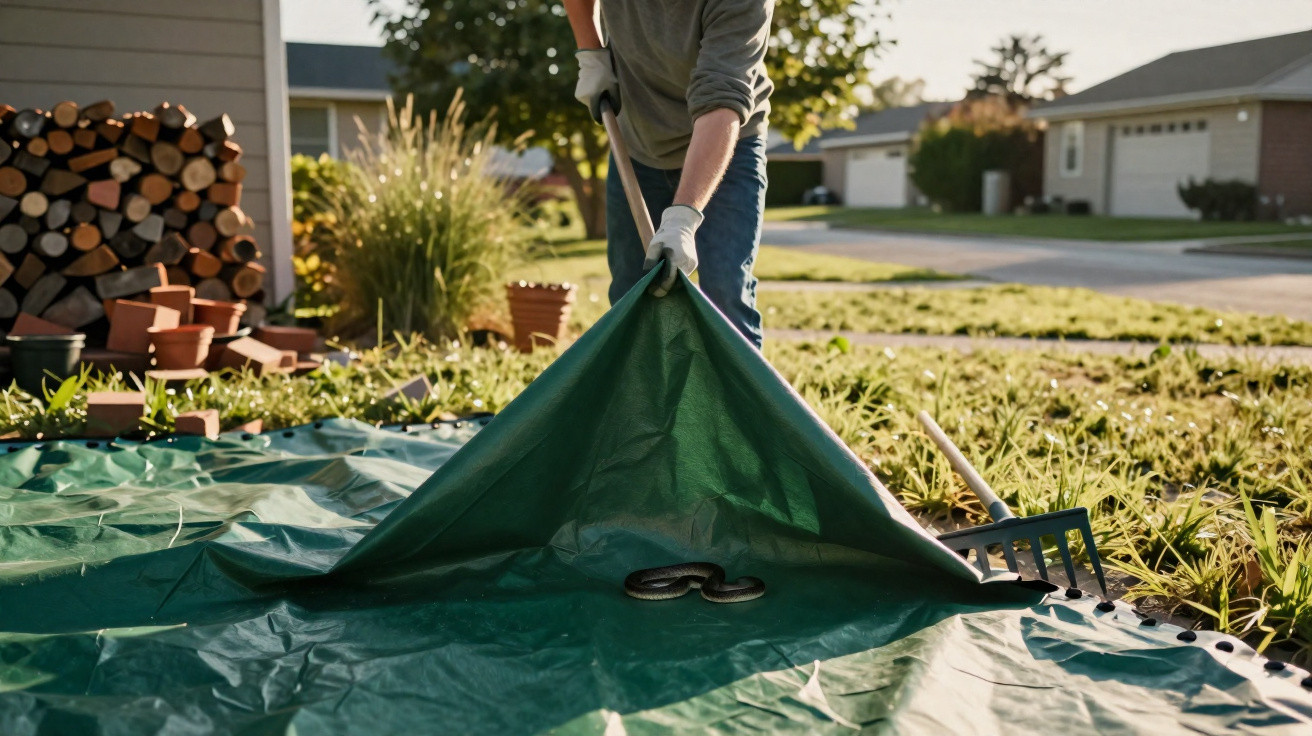
When people put out their garden furniture in spring, fire up the barbecue and mow the lawn for the first time, they can easily overlook one inconspicuous item: a flat piece of plastic or metal left carelessly on the ground. Yet this seemingly minor object can be highly attractive to snakes, drawing them close to the house, play area and patio.
How a simple garden tarpaulin becomes a snake lounge
Snakes are cold-blooded animals. They cannot regulate their own body temperature, so they rely on their surroundings. In spring, as they become more active after hibernation, they seek out warm, sheltered spots. A dark garden tarpaulin laid flat on the ground provides exactly that.
The reason is straightforward: dark plastic absorbs the sun’s warmth effectively, while the soil beneath retains heat and also holds moisture. A small, sheltered microclimate develops between the ground and the sheet – mild, damp and considerably more comfortable than the still-cool spring air around it.
A seemingly ordinary tarpaulin can create a perfect warm spot – ideal for snakes emerging from winter dormancy.
From above, it looks harmless: a black or green plastic rectangle lying on the grass. Beneath it, a harmless grass snake or smooth snake may be warming itself, sometimes only a few metres from a wall, patio or sandpit.
These common garden items are particularly attractive to reptiles
A garden tarpaulin is not the only concern. Materials left lying around for months create a range of hiding places that reptiles favour. Spring garden clear-outs often reveal just how much has accumulated.
Typical reptile magnets in the garden
- Garden tarpaulins or covering sheets spread flat on the ground
- Old corrugated metal sheets or metal panels placed directly on the soil
- Fibre-cement boards or leftover pieces from roofing and cladding work
- Wood piles resting directly on grass without a base underneath
- Compost heaps covered provisionally
All of these objects share key features: they lie flat, are left largely undisturbed and warm up in the sun. Gaps and cavities form beneath them, creating ideal daytime shelters for snakes, lizards and other small creatures.
Anyone with children, pets or who often walks barefoot in the garden should treat the immediate area around the house as part of a thorough spring clear-out and systematically remove these appealing shelters.
Making the area around your home less attractive to snakes
The good news is that a few simple steps can greatly reduce the chance of encountering a snake right by the patio door. There is no need to make the garden sterile; it simply needs to be sensibly zoned.
Practical measures around the house
- Put unused tarpaulins away: Do not leave them lying flat. Let them dry, roll them up and store them in a shed or garage.
- Raise wood off the ground: Keep logs and planks at least 20 centimetres above ground level on pallets or racks.
- Dispose of metal sheets and offcuts: Avoid storing old metal sheets and boards near patios, walls or paths.
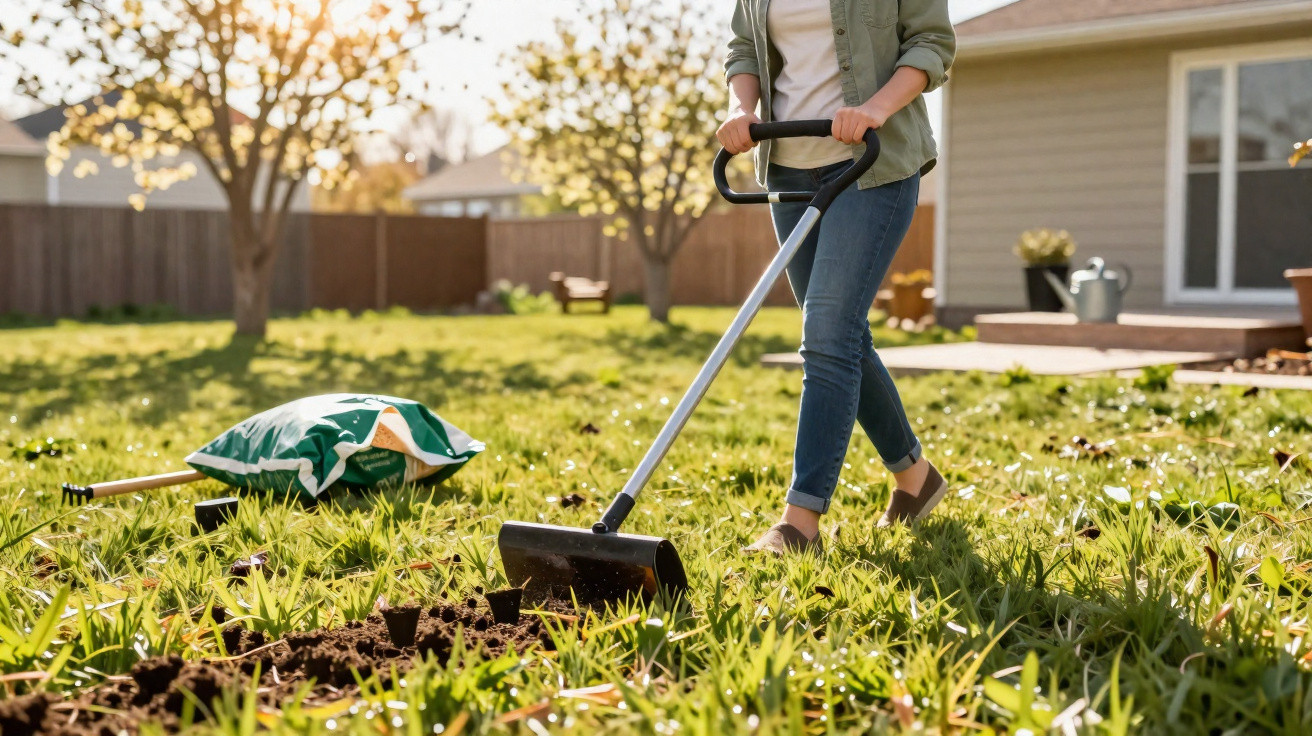
- Keep the lawn short: Mow grass around the house, play areas and pond regularly, as this removes cover for snakes.
- Limit clutter: Clear away temporary covers, forgotten building materials and makeshift storage areas promptly.
The fewer flat, warm shelters there are directly beside the house, the less appealing the area becomes to snakes.
Many garden owners report that simply storing wood off the ground and removing old tarpaulins from around the patio noticeably reduces snake sightings.
Handling tarpaulins and similar materials properly
Anyone who regularly uses protective sheets for a pool, barbecue, garden furniture or firewood should establish a set routine. Tarpaulins that repeatedly end up flat on the ground can otherwise become an ongoing problem.
How to store garden tarpaulins safely against snakes
- Brush off or shake away loose dirt from the tarpaulin.
- Hang it up or leave it spread out to dry so that mould cannot develop.
- Fold it neatly or roll it up tightly.
- Secure it with a strap or rope to stop it coming undone.
- Store it in an enclosed space, such as a garage, tool shed or cellar.
It is also advisable to clear away other flat materials at the same time, including large boards, unused panels and temporary roofing remnants. Anything that lies on the ground and warms up in sunlight should be moved away from sensitive areas.
What to do if you find a snake
Almost everyone is startled when they discover a snake beneath a tarpaulin. Panic is the biggest mistake at this point. In Central Europe, most species are harmless and bites are rare; they mainly occur when an animal is cornered or struck.
Respond safely without putting people or animals at risk
- Stay calm: Keep your distance and move children and pets away.
- Stand to one side: If the tarpaulin needs lifting, position yourself beside it rather than directly in front of it.
- Use a long handle: Carefully raise the sheet with a rake handle or broom, never with your hand.
- Leave an escape route: Do not trap the animal; leave a clear direction for it to retreat.
- Do not strike it: Snakes are strictly protected, and killing one can result in substantial fines.
The typical bite occurs when somebody reaches under an old tarpaulin without protection or lashes out at the snake in alarm.
If you are unsure which species is in the garden, contact your local authority, wildlife conservation organisations or regional reptile specialists. Many now offer advice or even a collection service if an animal is in an awkward location, such as a basement lightwell or directly by the entrance to the house.
Why a wild corner of the garden is still worthwhile
Despite these precautions, a garden should not be completely tidied away. A structurally varied area with dead wood, piles of stones and denser vegetation provides habitat for insects, birds, hedgehogs and, yes, reptiles too. The location is what matters.
Rather than removing every natural refuge, it makes sense to deliberately move them to the edge of the plot. A wild corner at the far end of the garden keeps animals away from the patio and play area without displacing them entirely.
- A natural area at the back of the garden or along the boundary
- A neat, closely maintained zone around the house, paths and seating areas
- Clearly separated storage areas for wood and building materials, ideally raised off the ground
This creates a compromise: people feel safer in the immediate living area, while wildlife still has places to shelter – simply in locations where it does not disturb anyone.
Further garden risks and sensible precautions
Tarpaulins lying flat are not relevant only to snakes. Mice, toads, insects and spiders also use them as shelter. Anyone who is particularly sensitive to such animals or has young children at home can reduce several risks at once by keeping the ground clear.
Sturdy shelving or homemade racks in the shed are practical for storing tarpaulins, boards and work materials. This keeps the floor clear, reduces trapped moisture and makes hidden animal shelters much less likely to form. It also makes the area easier to inspect and keep clean.
People who regularly walk barefoot or allow children to play in the garden should adopt a few basic habits: do not reach blindly into edges of long grass, never lift old tarpaulins with bare hands, and tap wood piles with a broom before moving them. These steps take only seconds but can prevent unpleasant surprises.
Comments
No comments yet. Be the first to comment!
Leave a Comment